


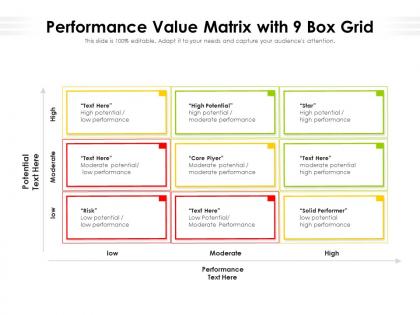
Performance value matrix with 9 box grid




Try Before you Buy Download Free Sample Product
 Impress Your
 Audience
 100%
100% Editable
 Save Hours
 of Time


Our Performance Value Matrix With 9 Box Grid are topically designed to provide an attractive backdrop to any subject. Use them to look like a presentation pro.
People who downloaded this PowerPoint presentation also viewed the following :
Performance value matrix with 9 box grid with all 2 slides:
Use our Performance Value Matrix With 9 Box Grid to effectively help you save your valuable time. They are readymade to fit into any presentation structure.
FAQs for Performance value matrix with
Honestly, you need four things working together: clear goals, regular check-ins, constant feedback, and growth planning. Goals are huge - people have to know what winning looks like and how it connects to the big picture. Skip those useless annual reviews and do weekly one-on-ones instead. Feedback keeps everyone moving in the right direction without getting lost. Development planning shows you actually care about where they're headed, not just what they're doing now. The real magic happens when these four create this cycle that feeds itself. Otherwise you're just checking boxes and wondering why nothing sticks.
So you want to cascade goals from your big company strategy down to individual people. Break your main business objectives into department goals first. Then translate those into specific targets each person can actually measure. Here's what I've noticed works - managers need to sit down and explain the "why" behind each goal. People crush it when they understand how their daily stuff connects to the bigger picture. Also, review this alignment every quarter because priorities always shift (honestly, sometimes monthly feels better but quarterly is realistic). The sweet spot? When everyone can draw a clear line from their random Tuesday tasks straight to company wins.
Dude, continuous feedback is a game changer. Your team stays on track instead of wandering around lost for months until their annual review. Plus people can actually fix things right away rather than finding out way too late they've been doing something wrong. I've seen it build way more trust too - shows you care about helping them grow vs just critiquing them once a year. Quick weekly check-ins work great, or even just shooting them a "nice work on that presentation" text when they nail something. Honestly beats the old-school approach by miles.
Honestly? Look at whether people are actually completing their goals and if your good employees stick around - retention tells you everything. Are managers having regular check-ins instead of those awful annual reviews everyone dreads? Track employee satisfaction scores too. I'm always surprised how much manager confidence matters - if they can't handle difficult conversations, the whole system falls apart. Focus on both the boring stuff (reviews happening on time) and what actually counts (people growing and performing better). Don't go crazy measuring everything though. Pick 3-4 metrics that matter and start there.
Ugh, the worst mistakes are recency bias (you only remember last month's stuff) and that halo effect thing where one amazing project makes you forget they screwed up everything else. Also people get way too vague with feedback - nobody learns from "good job" or whatever. Don't do the feedback sandwich either. It's honestly just confusing. Write stuff down all year instead of scrambling before review season. Give specific examples, not personality critiques. Regular check-ins help too so people aren't blindsided during the actual review. You want conversations happening constantly, not some annual surprise attack that stresses everyone out.
Dude, the analytics alone make it worth it - you'll actually see performance patterns instead of just guessing. Automated reminders save so much time, plus real-time goal tracking beats those ancient spreadsheets we used to suffer through. 360 feedback becomes way less awkward when it's digital too. Honestly, I'm still bitter we didn't have this stuff at my old job where I manually tracked everything like some kind of data entry monk. Start with just one tool for goals, then add more once people aren't freaking out about change. The insights you get are pretty incredible though.
So here's the thing - engaged employees actually want feedback and set bigger goals for themselves. They don't just sit through performance reviews waiting for them to end, you know? Instead they're genuinely interested in growing. Plus they'll be way more honest about what's not working and help brainstorm fixes. I've noticed engaged people almost always hit their numbers too. The weird part? If you focus on getting people engaged first, suddenly those awkward performance conversations become actually useful. It's like backwards but it works.
Here's what I'd focus on if I were you: Set up clear performance standards from day one so nobody's guessing what "good work" actually means. Train all your managers to evaluate the same way - honestly, this is where most companies mess up because Team A has totally different expectations than Team B. Do regular check-ins instead of just that dreaded annual review (people hate those anyway). And definitely create some way for employees to push back if they think their rating is unfair. Nobody wants to feel trapped with no voice in the process.
Honestly, ditch the whole annual review thing and make feedback way more regular. I do quick weekly check-ins with my people - way less awkward than you'd think. Celebrate wins publicly when they happen, and actually ask what they need from you to get better. Too many managers (myself included sometimes) just dump problems on people without offering any real help. Set clear expectations from day one, then give them the training to actually hit those targets. Oh, and ask for feedback on yourself too - it's weirdly effective. Just pick one person this week and try it.
Ugh, yeah this sucks but you gotta tackle it head-on. Have that uncomfortable conversation first - be specific about what they're screwing up. Then put together a formal improvement plan with actual deadlines, like 30-90 days max. Document EVERYTHING because trust me, you'll need it later. Check in regularly but honestly? Don't let it drag on forever. Some people just aren't the right fit. If they can't hit the goals you set, move to disciplinary action or let them go. One bad apple really does spoil the bunch - your good employees are watching how you handle this.
Oh man, those old-school annual reviews are the worst - sitting there talking about stuff that happened like 8 months ago. What's the point? Now companies are doing this ongoing feedback thing instead. Your manager actually checks in regularly about your goals and how things are going. Way better than waiting a full year to hear you screwed something up back in March, you know? It's more about helping you grow rather than just rating how you did. Honestly, if your company still only does yearly reviews, you should totally ask your manager for more regular one-on-ones. Makes such a difference.
Look, performance reviews should actually be conversations about where people want to grow, not just checking boxes. When you're talking through someone's performance, pay attention to what skill gaps or career stuff comes up - then turn those into real development goals for next time. So many places keep these processes totally separate, which honestly drives me crazy because it's such a waste. Figure out which development activities will move the needle most. Could be training, could be giving them stretch projects, mentoring, whatever. Just make sure you're connecting each goal back to actual performance improvements so you can track progress and show it's worth the investment.
Your company's culture totally determines whether performance reviews actually work or just suck. When people feel safe giving/getting feedback, they'll actually participate instead of just nodding along. But toxic or super rigid places? Everyone just counts down the minutes until it's over. Trust matters way more than the actual review format, honestly. People need to feel like they won't get thrown under the bus for being real about problems. Without that, you get this weird theater where everyone pretends everything's fine. I'd say watch how people normally give feedback day-to-day first - that'll tell you everything.
Data analytics is honestly a game-changer for catching performance stuff you'd never notice otherwise. Start with basic metrics you're already tracking - productivity trends, goal completion rates, maybe engagement scores. The cool part is connecting different data points together. Like, does that expensive training program actually work? Are certain managers just better at developing people? (Spoiler: usually yes.) I really think more companies should do this instead of just going with their gut all the time. You can spot both your superstars and people who need help way earlier. Just pick one or two metrics first, then expand from there once you get the hang of it.
Definitely stick to the SMART framework - specific, measurable, achievable, relevant, time-bound. I can't tell you how many "improve communication" goals I've seen that mean absolutely nothing when review time comes around. Get really concrete about what success looks like and how you'll track it. The goals should challenge them without being totally unrealistic, and they need to connect to actual job responsibilities. Oh, and always set clear deadlines. Honestly, the biggest thing is getting your employee involved in creating these goals together. When they help write them, they're way more likely to actually care about hitting them.
-
Unique design & color.
-
Great quality product.
-
Unique design & color.
-
Great designs, Easily Editable.