

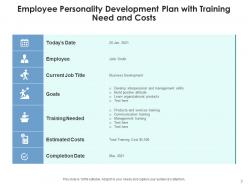
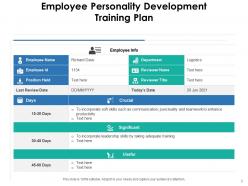
Personality development training estimated costs leadership objective success measure




Try Before you Buy Download Free Sample Product
 Impress Your
 Audience
 100%
100% Editable
 Save Hours
 of Time


Our Personality Development Training Estimated Costs Leadership Objective Success Measure are topically designed to provide an attractive backdrop to any subject. Use them to look like a presentation pro.
People who downloaded this PowerPoint presentation also viewed the following :
Personality development training estimated costs leadership objective success measure with all 12 slides:
Use our Personality Development Training Estimated Costs Leadership Objective Success Measure to effectively help you save your valuable time. They are readymade to fit into any presentation structure.
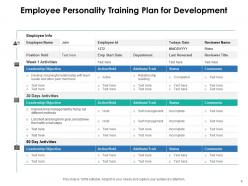
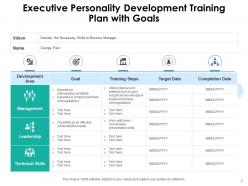
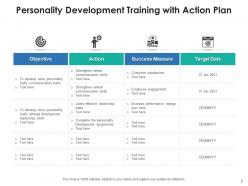
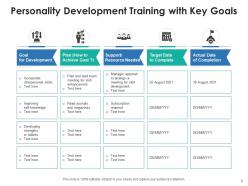
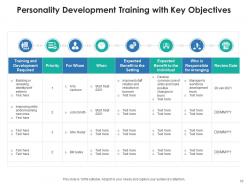
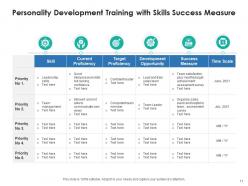
FAQs for Personality development training estimated costs leadership
**INPUT**: What factors influence the cost of personality development training programs? **OUTPUT**: Personality development training costs are influenced by program duration, trainer expertise, delivery format, group size, and customization level. Corporate programs with certified trainers typically range higher than online modules, while specialized workshops for leadership teams, sales professionals, or customer service staff command premium pricing, ultimately delivering enhanced communication skills and competitive workplace advantages. [Word count: 52 words]
Online personality development courses typically cost $50-$500, while in-person workshops range from $200-$2,000, making digital options significantly more affordable and scalable. Through virtual platforms, organizations can train multiple employees simultaneously at reduced costs, with many companies finding that online courses deliver comparable skill development while minimizing travel expenses and scheduling constraints.
Personality development training typically ranges from $200-500 for basic workshops to $2,000-5,000 for comprehensive programs, with corporate packages reaching $10,000+ for organization-wide initiatives. These investments deliver enhanced communication skills, leadership capabilities, and professional confidence, with many companies finding that strategic personality development programs ultimately improve employee performance, client relationships, and overall workplace productivity.
Yes, numerous free personality development resources exist, including online courses, educational videos, self-assessment tools, podcasts, and digital workshops from reputable platforms and institutions. While these resources deliver valuable foundational knowledge and practical techniques, their effectiveness depends on individual commitment and self-discipline, with many professionals finding that combining free materials with structured programs or mentorship enhances long-term behavioral change and skill retention.
Certification significantly impacts personality development training costs by adding credibility, validation, and market value to programs. Certified courses typically cost 30-50% more than non-certified alternatives, as they include accreditation fees, standardized assessment processes, and ongoing compliance requirements, with many professionals finding that certified training delivers enhanced career advancement opportunities and employer recognition, ultimately justifying the premium investment.
Weekend workshops typically range from $200-800, while multi-week courses cost $1,500-5,000, with format significantly impacting pricing through depth, materials, and ongoing support provided. Intensive weekend formats offer concentrated learning at lower costs, while extended programs deliver comprehensive skill-building, personalized coaching, and sustained behavioral change, ultimately providing greater long-term value for professional development investment.
Hidden costs in personality development training include follow-up coaching sessions, advanced certification fees, supplementary materials, ongoing assessment tools, and specialized workshop add-ons. These additional expenses can significantly impact budgets, with many participants finding that comprehensive skill development requires continued investment beyond initial enrollment, ultimately delivering enhanced professional capabilities and competitive advantage in an increasingly skills-focused marketplace.
Training organizations with strong industry reputations typically command higher pricing through established credibility, proven methodologies, experienced facilitators, and extensive alumni networks. These premium providers often deliver enhanced value through personalized coaching, comprehensive assessments, and ongoing support services, with many corporations finding that investing in reputable programs ultimately yields better employee engagement and stronger leadership development outcomes.
Financial aid options for personality development training include employer-sponsored professional development programs, educational grants, workforce development funds, sliding-scale fee structures, and payment plans offered by training providers. Many organizations invest in employee personality development through corporate training budgets, while community colleges and non-profit institutions often provide scholarized programs, ultimately making these transformative skills accessible across different economic backgrounds.
Common payment plans for personality development training include installment schedules, monthly subscriptions, corporate bulk packages, early-bird discounts, and flexible financing through third-party providers. These options enable individuals and organizations to access comprehensive development programs while managing budget constraints, with many training providers finding that flexible payment structures increase enrollment rates and ultimately deliver better accessibility across diverse professional backgrounds and organizational sizes.
Demographics significantly influence personality development training costs, with executive programs for senior professionals often costing 3-5 times more than entry-level training, urban markets commanding premium pricing, and specialized sectors like healthcare or finance requiring tailored content. These variations reflect market demand, purchasing power, and customization requirements, with many organizations finding that demographic-specific training delivers higher engagement rates and measurable behavioral improvements, ultimately justifying the investment differential.
Additional materials typically include personality assessment tools, workbooks, digital resources, follow-up coaching sessions, and certification materials, with costs varying significantly based on program comprehensiveness. These resources enhance learning retention and practical application, with many organizations finding that comprehensive materials deliver measurable improvements in employee confidence, communication skills, and leadership capabilities, ultimately justifying the investment through enhanced workplace performance.
Targeted niche personality development programs typically command 30-50% higher pricing than general offerings due to specialized expertise, customized content, and focused outcomes for specific industries or roles. These programs deliver enhanced value through precise skill alignment, accelerated results, and measurable ROI, with many organizations finding that specialized training for leadership tiers or customer-facing roles justifies premium investment through improved performance metrics.
Participants can expect enhanced communication skills, increased self-confidence, improved leadership capabilities, better emotional intelligence, and stronger interpersonal relationships that directly impact career advancement and workplace effectiveness. While investment varies significantly across programs and providers, many professionals find that these improvements translate into measurable outcomes like promotion opportunities, salary increases, and enhanced team collaboration, ultimately delivering competitive advantages in increasingly relationship-driven business environments.
Businesses can justify personality development training investment through enhanced communication skills, improved leadership capabilities, stronger teamwork, reduced workplace conflicts, and higher employee retention rates. These programs deliver measurable ROI by increasing productivity, streamlining client interactions, and building competitive advantage, with many organizations finding that enhanced interpersonal skills ultimately translate into better customer relationships and increased profitability.
-
Qualitative and comprehensive slides.
-
The content is very helpful from business point of view.