

Pharmaceutical Store Business Plan Comparative Balance Sheet Statement For Retail Pharmacy BP SS





Try Before you Buy Download Free Sample Product
 Impress Your
Audience
 100%
Editable
 Save Hours
of Time


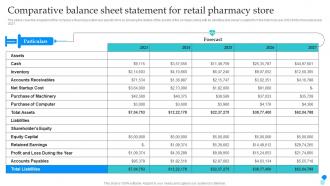
The slides cover the snapshot of the company financial position at a specific time by showing the details of the assets of the company along with its liabilities and owners capital from the historical year 2023 till the forecasted year 2027.
People who downloaded this PowerPoint presentation also viewed the following :
Pharmaceutical Store Business Plan Comparative Balance Sheet Statement For Retail Pharmacy BP SS with all 10 slides:
Use our Pharmaceutical Store Business Plan Comparative Balance Sheet Statement For Retail Pharmacy BP SS to effectively help you save your valuable time. They are readymade to fit into any presentation structure.









FAQs for Pharmaceutical Store Business Plan Comparative Balance Sheet Statement For Retail
Key components of a pharmaceutical store business plan include market analysis, regulatory compliance requirements, inventory management systems, financial projections, and operational procedures. These elements work together by ensuring regulatory adherence, optimizing supply chain efficiency, and establishing sustainable revenue streams, with many pharmacy entrepreneurs finding that comprehensive planning ultimately delivers reduced startup risks and accelerated market entry in an increasingly competitive healthcare landscape.
Market research significantly impacts pharmaceutical business success by identifying target demographics, analyzing competitor pricing strategies, understanding regulatory requirements, and revealing unmet customer needs within specific communities. Through comprehensive market analysis, pharmacy owners can optimize inventory management, develop strategic partnerships with healthcare providers, and position their services competitively, ultimately delivering improved patient outcomes and sustainable revenue growth.
When starting a pharmaceutical store, key regulations include DEA licensing, state board of pharmacy requirements, controlled substance handling protocols, prescription record-keeping mandates, and FDA compliance standards. These regulatory frameworks ensure patient safety, inventory accountability, and legal operations, with many pharmacy owners finding that early compliance planning streamlines licensing processes and accelerates store opening timelines.
Determining the ideal pharmacy location involves analyzing foot traffic patterns, proximity to healthcare facilities, demographic data, competitor density, and accessibility factors. Strategic locations near hospitals, medical centers, or senior communities often deliver higher prescription volumes and customer loyalty, with many successful pharmacies finding that convenience and visibility ultimately drive sustainable revenue growth.
Essential licenses for opening a pharmacy include state pharmacy licenses, DEA registration for controlled substances, business operating permits, sales tax permits, and specialty certifications for compounding or specialty medications. These regulatory requirements ensure compliance with federal and state laws while enabling pharmacies to dispense medications safely, with many independent and chain pharmacies finding that proper licensing streamlines operations and builds customer trust.
Effective inventory management strategies enhance pharmaceutical store profitability by reducing carrying costs, minimizing expired product losses, and optimizing stock levels through automated reorder systems and demand forecasting. These approaches streamline operations by improving cash flow, reducing waste disposal fees, and ensuring high-demand medications remain available, with many pharmacy owners finding that strategic inventory control delivers significantly higher profit margins while enhancing customer satisfaction.
Technology revolutionizes pharmaceutical retailing through automated inventory management, electronic prescription processing, robotic dispensing systems, AI-driven drug interaction checking, and integrated customer databases. These innovations streamline operations by reducing dispensing errors, accelerating prescription fulfillment, and enhancing patient safety protocols, with many pharmacy chains finding that digital integration ultimately delivers faster customer service and improved operational efficiency.
A pharmaceutical store's marketing strategy should emphasize trust-building through professional expertise, community health education, personalized customer service, and strategic partnerships with local healthcare providers. These approaches enhance credibility by showcasing licensed pharmacists, offering wellness consultations, implementing prescription delivery services, and collaborating with clinics, ultimately delivering improved patient relationships and sustained competitive advantage in increasingly health-conscious markets.
Financial projections for pharmaceutical business plans should include revenue forecasts, startup costs, operating expenses, cash flow statements, and break-even analysis. These projections enable pharmacy owners to demonstrate viability to investors, secure financing, and plan inventory management effectively, with many pharmaceutical startups finding that detailed five-year forecasts significantly enhance their competitive advantage when seeking capital.
Partnerships with healthcare providers benefit pharmacies by expanding patient referrals, enhancing medication management services, and creating integrated care pathways. These strategic collaborations enable pharmacies to offer specialized services like chronic disease management, vaccination programs, and medication therapy reviews, ultimately delivering improved patient outcomes and increased revenue streams while strengthening their position in local healthcare networks.
New pharmaceutical stores commonly face regulatory compliance complexities, inventory management difficulties, insurance reimbursement processes, competitive pricing pressures, and establishing trusted customer relationships. These challenges present both operational hurdles and strategic opportunities, with many successful pharmacies finding that investing in robust compliance systems, strategic supplier partnerships, and community-focused customer service ultimately delivers sustainable competitive advantage and long-term profitability.
Customer loyalty programs in pharmacies can be effectively implemented through prescription refill rewards, health screening discounts, medication adherence incentives, personalized health consultations, and wellness program integration. These programs enhance patient retention by offering points for purchases, automatic refill reminders, and exclusive health services, while enabling pharmacies to build stronger relationships, ultimately delivering improved medication compliance and increased customer lifetime value.
Current pharmaceutical sales trends include personalized medicine growth, digital health integration, specialty drug expansion, direct-to-consumer marketing, and telepharmacy adoption. These developments revolutionize patient care by enabling targeted treatments, streamlined prescription processes, and enhanced medication accessibility, with many retail pharmacies finding that embracing digital platforms and specialized services delivers competitive advantage in an increasingly patient-centric marketplace.
Pharmacies can diversify through over-the-counter medications, health supplements, medical devices, personal care products, and wellness services like vaccinations or health screenings. By strategically expanding into beauty products, home healthcare equipment, and specialty items, pharmacies enhance customer retention, increase revenue streams, and establish themselves as comprehensive health destinations, ultimately delivering improved profitability and competitive advantage.
Pricing strategies significantly influence consumer behavior in pharmaceuticals through accessibility, brand perception, and purchasing decisions. While competitive pricing enhances medication adherence and market share, premium pricing can signal quality, with many healthcare systems finding that transparent pricing models, insurance partnerships, and generic alternatives ultimately deliver improved patient outcomes and sustainable business growth.
-
Best Representation of topics, really appreciable.
-
It’s really cool, and you can find pretty much everything you could need for your work or school.