


Phygital Marketing Strategies To Improve Customer Engagement Rate Ppt Slide





Try Before you Buy Download Free Sample Product
 Impress Your
 Audience
 100%
100% Editable
 Save Hours
 of Time


Check out our professionally designed Phygital marketing strategies to improve customer engagement rate PowerPoint presentation. Phygital marketing strategy is a combination of physical and digital experiences to create a seamless and interactive customer journey. The main purpose of this deck is to create immersive customer interactions. Additionally, this PPT includes the marketing challenges such as a decline in customer engagement rate. Moreover, our deck covers gap analysis, the importance of phygital marketing, and global statistics. It also covers strategies to be implemented such as an omnichannel approach, the use augmented and virtual reality technology, and personalized marketing. Furthermore, the presentation exhibits a training plan for the marketing team and tools comparison for seamless operations. Also, this deck shows the budget, impact, and dashboard to measure phygital marketing performance. Lastly, this PPT module covers the case studies related to Nikes store and Starbucks mobile ordering and payment system. Get access now.
People who downloaded this PowerPoint presentation also viewed the following :
Content of this Powerpoint Presentation
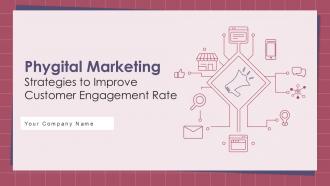
Slide 1: This slide highlights the presentation title: Phygital Marketing Strategies to Improve Customer Engagement Rate.
Slide 2: This slide states Agenda of the presentation.
Slide 3: This slide shows Table of Content for the presentation.
Slide 4: This slide highlights title for topics that are to be covered next in the template.
Slide 5: This slide showcases the key challenges and issues faced by marketeers which includes inconsistent customer experience, low engagement rate and disconnected customer data.
Slide 6: This slide showcases the decrease in customer engagement rate for four quarters.
Slide 7: This slide highlights title for topics that are to be covered next in the template.
Slide 8: This slide showcases the marketing strategies to overcome the issues faced by the company.
Slide 9: This slide highlights title for topics that are to be covered next in the template.
Slide 10: This slide showcases the benefits of implementing phygital marketing strategies aiming to retain existing customers.
Slide 11: This slide showcases the important statistics related to phygital marketing strategy adopted by company.
Slide 12: This slide highlights title for topics that are to be covered next in the template.
Slide 13: This slide showcases the phygital marketing strategies that needs to be implemented in company for better customer experience.
Slide 14: This slide highlights title for topics that are to be covered next in the template.
Slide 15: This slide showcases the in-store navigation and live phone support strategies for customer aiming to better explore the retail store.
Slide 16: This slide showcases the click and collect strategy to increase customer engagement.
Slide 17: This slide showcases the loyalty program for customers aiming to encourage their purchase decision.
Slide 18: This slide showcases the integrated data of customer in single profile that helps in providing consistent experience to customers.
Slide 19: This slide highlights title for topics that are to be covered next in the template.
Slide 20: This slide showcases the key applications of augmented reality mirrors in retail operations.
Slide 21: This slide showcases the applications of augmented reality technology in visualizing product before making purchase decision.
Slide 22: This slide showcases the major tech trends that revolutionizes displays in retail operations to captivate customers.
Slide 23: This slide highlights title for topics that are to be covered next in the template.
Slide 24: This slide showcases the different data sources to be used in recommending products which includes user, item and social media data.
Slide 25: This slide showcases the detailed plan to execute personalized services using customer analytics.
Slide 26: This slide showcases the different strategies to use geolocation data for personalized services.
Slide 27: This slide highlights title for topics that are to be covered next in the template.
Slide 28: This slide showcases the team training schedule related to phygital marketing that help employees to implement strategies effectively.
Slide 29: This slide showcases the comparative analysis of phygital marketing tools and platforms to fuel phygital transformation.
Slide 30: This slide highlights title for topics that are to be covered next in the template.
Slide 31: This slide showcases the budget allocated to implement strategies such as omnichannel approach, augmented and virtual reality technology, personalized marketing, etc.
Slide 32: This slide highlights title for topics that are to be covered next in the template.
Slide 33: This slide showcases the expected impacts of using phygital marketing strategies in traditional approach.
Slide 34: This slide showcases the increase in customer engagement rate for four quarters.
Slide 35: This slide showcases the metrics that helps in measuring retail business performance.
Slide 36: This slide highlights title for topics that are to be covered next in the template.
Slide 37: This slide showcases the dashboard to measure the performance of retail store post implementing phygital marketing strategies.
Slide 38: This slide showcases the phygital marketing dashboard to measure retail business performance.
Slide 39: This slide highlights title for topics that are to be covered next in the template.
Slide 40: This slide showcases the phygital marketing used by Nike aiming to enhance customer engagement and drive conversions.
Slide 41: This slide showcases the Starbucks’ case study for online ordering aiming to streamline customer experience and increase operational efficiency.
Slide 42: This slide contains all the icons used in this presentation.
Slide 43: This slide is titled as Additional Slides for moving forward.
Slide 44: This slide shows Click and collect process to save time.
Slide 45: This slide presents Marketing role in phygital strategy to improve customer experience.
Slide 46: This slide displays Phygital use cases across different companies.
Slide 47: This slide presents Future trend of phygital technology in retail.
Slide 48: This slide displays 3I’s of phygital marketing strategy in retail.
Slide 49: This slide represents Phygital market size analysis and forecast.
Slide 50: This slide showcases Key trends associated with phygital marketing.
Slide 51: This slide shows Phygital business model of ecommerce business.
Slide 52: This is an Idea Generation slide to state a new idea or highlight information, specifications etc.
Slide 53: This slide shows Post It Notes. Post your important notes here.
Slide 54: This is a Financial slide. Show your finance related stuff here.
Slide 55: This is a Timeline slide. Show data related to time intervals here.
Slide 56: This is a Thank You slide with address, contact numbers and email address.
Phygital Marketing Strategies To Improve Customer Engagement Rate Ppt Slide with all 64 slides:
Use our Phygital Marketing Strategies To Improve Customer Engagement Rate Ppt Slide to effectively help you save your valuable time. They are readymade to fit into any presentation structure.










FAQs for Phygital Marketing Strategies To Improve Customer Engagement
Phygital marketing differentiates itself through seamless digital-physical integration, real-time data analytics, personalized customer journeys, interactive touchpoints, and omnichannel experiences that traditional marketing lacks. These components enable retailers and hospitality brands to deliver unified experiences across online platforms, in-store interactions, and mobile applications, ultimately creating deeper customer engagement and competitive advantage in an increasingly connected marketplace.
Businesses can effectively integrate offline and online experiences through unified customer data platforms, seamless omnichannel touchpoints, consistent branding across all channels, and synchronized messaging that follows customers throughout their journey. Retailers like Sephora and banks increasingly use mobile apps that connect in-store visits with digital rewards, personalized recommendations, and real-time inventory, ultimately delivering cohesive experiences that drive customer loyalty and competitive advantage.
Data analytics drive phygital marketing by tracking customer journeys across digital touchpoints and physical locations, enabling personalized experiences, optimizing channel performance, and measuring cross-platform engagement effectiveness. Through integrated analytics platforms, retailers and banks leverage real-time insights to enhance in-store experiences, streamline online-to-offline conversions, and ultimately deliver seamless customer experiences that boost loyalty and revenue.
Brands leverage AR to bridge physical and digital experiences by overlaying interactive digital content onto real-world environments, enabling virtual product trials, immersive storytelling, and location-based engagement campaigns. Through AR applications, retailers enhance in-store navigation and product visualization, restaurants offer interactive menu experiences, and automotive companies provide virtual showrooms, ultimately delivering personalized customer journeys and measurable engagement insights.
Common phygital marketing challenges include technology integration complexities, data synchronization across channels, staff training requirements, customer experience consistency, and measuring cross-platform ROI. While these obstacles present initial hurdles, companies in retail, hospitality, and banking increasingly find that strategic planning, phased implementation, and unified analytics platforms ultimately deliver seamless customer journeys and competitive advantage.
Consumer behavior directly shapes phygital marketing success by determining channel preferences, interaction patterns, and purchase journeys across digital and physical touchpoints. Retailers analyzing shopping habits, banks studying customer service preferences, and restaurants tracking ordering behaviors can strategically blend online convenience with in-store experiences, ultimately delivering personalized engagement that drives higher conversion rates and customer loyalty.
Essential phygital marketing technologies include IoT sensors, AR/VR platforms, mobile apps, beacon technology, AI-powered analytics, and omnichannel CRM systems. These technologies streamline customer journeys by connecting online behaviors with in-store experiences, personalizing interactions through real-time data, and enabling seamless transitions between digital touchpoints, ultimately delivering enhanced customer engagement and measurable ROI across retail environments.
Phygital marketing enhances customer engagement by creating seamless omnichannel experiences, personalized interactions through data integration, and immersive brand touchpoints that blend digital convenience with physical authenticity. Retail stores using AR try-on features, restaurants with mobile ordering paired with in-store experiences, and banks offering digital-physical service combinations find that customers develop stronger emotional connections, ultimately delivering higher retention rates and increased lifetime value.
Cultural differences significantly impact phygital marketing by influencing consumer preferences for digital versus physical touchpoints, communication styles, and technology adoption rates across regions. For example, while Japanese consumers often prefer high-tech in-store experiences, Middle Eastern markets may prioritize personal relationship-building, requiring brands to customize their omnichannel approaches, ultimately delivering culturally resonant experiences and competitive advantage.
Businesses should track customer engagement across channels, conversion rates from digital touchpoints to physical purchases, dwell time in physical spaces, and omnichannel customer lifetime value. These metrics enable retailers, automotive showrooms, and hospitality brands to optimize integrated experiences, ultimately delivering improved customer satisfaction and increased revenue through seamless digital-physical interactions.
Small businesses can leverage phygital marketing by integrating affordable digital tools with personalized in-store experiences, using QR codes for product information, social media check-ins, and mobile apps for loyalty programs. Through strategic combinations of online engagement and physical touchpoints, small retailers can deliver more intimate customer relationships and localized experiences that larger brands struggle to replicate, ultimately creating competitive advantages through authenticity and community connection.
Successful phygital marketing case studies include Nike's interactive store displays with AR try-ons, Sephora's virtual makeup testing combined with in-store consultations, and Starbucks' mobile ordering integrated with physical pickup experiences. These implementations demonstrate how retailers enhance customer engagement, reduce wait times, and increase sales conversion rates, with many brands finding that seamless digital-physical integration drives significantly higher customer satisfaction and loyalty.
Social media enhances phygital marketing by creating seamless connections between digital engagement and physical experiences through location-based promotions, real-time event coverage, and interactive campaigns that drive store visits. Retailers and restaurants leverage Instagram stories, Facebook check-ins, and TikTok challenges to bridge online communities with in-store experiences, ultimately delivering personalized customer journeys and measurable engagement across both channels.
Personalization serves as the bridge connecting digital insights with physical experiences, enabling brands to deliver tailored content, customized product recommendations, targeted promotions, and individualized customer journeys. Through data analytics and AI-driven technologies, retailers like Sephora and Nike create seamless personalized interactions across touchpoints, ultimately enhancing customer satisfaction while driving higher conversion rates and brand loyalty.
Organizations ensure seamless phygital transitions by implementing unified customer data platforms, consistent branding across channels, and integrated inventory systems that synchronize online and offline experiences. Through strategic technologies like QR codes, mobile apps, and omnichannel analytics, retailers, banks, and hospitality brands deliver personalized interactions, streamlined purchasing processes, and real-time inventory visibility, ultimately enhancing customer satisfaction while driving competitive advantage.
-
Best way of representation of the topic.
-
What a stunning collection of customizable templates! Really a time-saver..