

Physical Techniques For Coping With Stress Causes And Management Of Stress





Try Before you Buy Download Free Sample Product
 Impress Your
Audience
 100%
Editable
 Save Hours
of Time


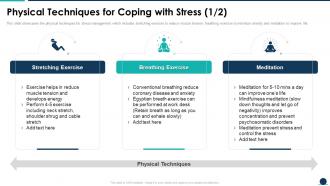
This slide showcases the physical techniques for stress management which includes stretching exercise to reduce muscle tension, breathing exercise to minimize anxiety and mediation to improve life.
People who downloaded this PowerPoint presentation also viewed the following :
Physical Techniques For Coping With Stress Causes And Management Of Stress with all 7 slides:
Use our Physical Techniques For Coping With Stress Causes And Management Of Stress to effectively help you save your valuable time. They are readymade to fit into any presentation structure.






FAQs for Physical Techniques For Coping With Stress Causes And
Effective stress management techniques include deep breathing exercises, progressive muscle relaxation, mindful meditation, regular physical activity, and strategic time blocking for priorities. These approaches streamline daily workflows by reducing cortisol levels, enhancing focus, and improving decision-making capacity, with many professionals finding that consistent implementation delivers better work performance and sustained energy throughout demanding schedules.
Mindfulness and meditation practices mitigate stress in high-pressure situations by promoting present-moment awareness, regulating breathing patterns, and creating mental clarity through focused attention techniques. These approaches enable professionals to maintain composure during critical decision-making, enhance emotional regulation under tight deadlines, and improve cognitive performance, with many organizations finding that regular mindfulness training ultimately delivers reduced burnout and increased workplace resilience.
Physical exercise reduces stress by releasing endorphins, lowering cortisol levels, improving sleep quality, and providing mental distraction from daily pressures. Cardiovascular activities like running and cycling, strength training, yoga, and high-intensity interval training deliver the most significant benefits, with many professionals finding that consistent workout routines ultimately enhance focus, productivity, and emotional resilience in increasingly demanding work environments.
Organizational skills contribute to better stress management by creating structured workflows, establishing clear priorities, and minimizing time-wasting activities that typically fuel workplace anxiety. Through systematic planning and resource allocation, professionals streamline daily operations, reduce decision fatigue, and maintain better work-life boundaries, with many organizations finding that structured employees deliver consistently higher performance while experiencing significantly lower burnout rates.
Deep breathing exercises deliver significant psychological benefits including reduced cortisol levels, enhanced emotional regulation, improved focus, decreased anxiety, and increased mental clarity. These techniques can be effectively employed during stressful moments through structured breathing patterns, mindful awareness practices, and progressive muscle relaxation, with many professionals finding that consistent application ultimately enhances workplace performance and personal resilience.
Identifying personal stress triggers involves keeping a stress journal, monitoring physical and emotional responses, and recognizing patterns in challenging situations, relationships, or work demands. Once triggers are identified, effective management strategies include developing coping mechanisms like deep breathing exercises, time management techniques, and boundary setting, with many professionals finding that combining mindfulness practices with proactive planning significantly reduces stress levels and enhances overall productivity.
Maintaining a healthy diet significantly impacts stress levels by regulating cortisol production, stabilizing blood sugar, and supporting neurotransmitter function that controls mood and anxiety responses. Foods like fatty fish, leafy greens, nuts, berries, and whole grains deliver essential omega-3s, magnesium, and antioxidants, while many organizations find that workplace nutrition programs enhance employee resilience and productivity.
Sleep serves as a critical stress recovery mechanism, regulating cortisol levels, enhancing emotional resilience, and restoring cognitive function essential for effective stress management. Quality sleep techniques include maintaining consistent sleep schedules, creating technology-free bedroom environments, and practicing relaxation methods like progressive muscle relaxation, with many healthcare professionals and corporate wellness programs finding that improved sleep hygiene significantly reduces workplace stress and enhances overall performance.
Workplace stress diminishes through open communication channels, regular feedback sessions, collaborative problem-solving, and peer support networks that encourage transparency and trust. These approaches streamline conflict resolution, enhance team cohesion, and create psychological safety, with many organizations finding that structured communication protocols ultimately deliver improved employee wellbeing and increased productivity.
Professional help for stress management offers personalized coping strategies, cognitive behavioral techniques, medication management when needed, and objective perspective on stress triggers. Through counseling and therapy, individuals develop long-term resilience skills, improved emotional regulation, and healthier relationship patterns, with many finding that professional guidance accelerates their stress recovery and enhances overall well-being.
Time management techniques prevent overwhelm by establishing clear priorities, creating structured schedules, implementing task batching, setting realistic deadlines, and building buffer time for unexpected demands. These approaches streamline workflow and enhance productivity, with many professionals finding that strategic time allocation reduces decision fatigue, minimizes last-minute pressures, and ultimately delivers better work-life balance and sustained performance levels.
Creative outlets for stress relief include painting, sketching, journaling, poetry writing, music composition, photography, crafts, and digital art creation. These activities enhance emotional processing, mindful focus, and self-expression by providing therapeutic release, reducing cortisol levels, and improving mental clarity, with many professionals finding that regular creative practice ultimately delivers better work-life balance and emotional resilience.
Social connections mitigate stress by providing emotional support, practical assistance, and shared perspectives during challenging situations, while fostering resilience through community belonging and reduced isolation. Strong support systems enable individuals to process difficulties more effectively, access diverse coping strategies, and maintain better mental health outcomes, with many organizations finding that workplace social programs significantly enhance employee well-being and productivity.
Hobbies serve as essential stress relief mechanisms by providing mental distraction, creative expression, and personal fulfillment outside work pressures. These activities enable individuals to streamline their well-being through scheduled hobby blocks, integrating interests into daily routines, and establishing boundaries between professional responsibilities and personal time, ultimately delivering improved work-life balance and enhanced mental resilience.
Setting realistic goals and expectations reduces stress by preventing overwhelming pressure, creating achievable milestones, and maintaining consistent progress momentum. This approach enables individuals and organizations to allocate resources more strategically, minimize burnout risks, and enhance overall productivity, with many professionals finding that balanced goal-setting ultimately delivers sustained performance and improved well-being.
-
Great work on designing the presentation. I just loved it!
-
Thank you for showering me with discounts every time I was reluctant to make the purchase.