

Pitchbook for management presentation powerpoint presentation slides





Try Before you Buy Download Free Sample Product
 Impress Your
 Audience
 100%
100% Editable
 Save Hours
 of Time


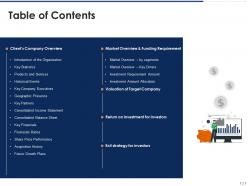
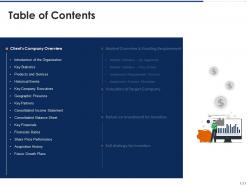
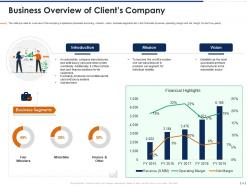
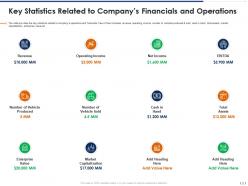
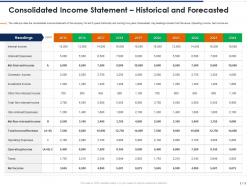
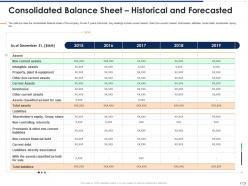
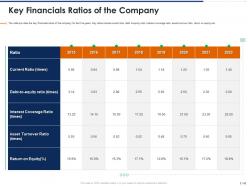
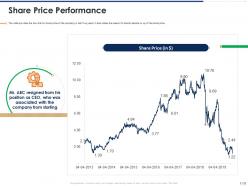
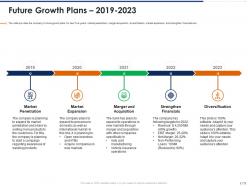
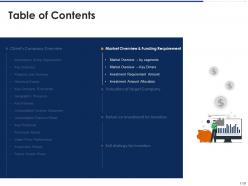
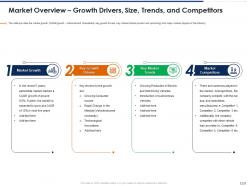
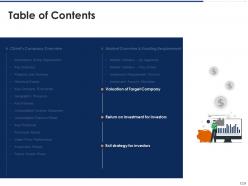
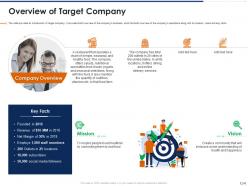
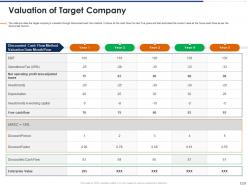
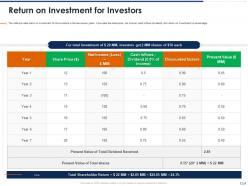
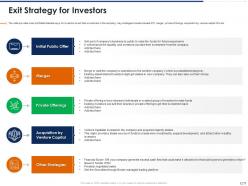
Management Presentations are used to pitch potential investors after the company has reached an agreement with potential clients. For management presentations to be comprehensive, the investment bank must work directly with its clients to ensure that the pitch contains as many details as possible about the company. This pitchbook provides details regarding clients company overview, products and services, key partners, key financials etc. This marketing presentation also provides details such as financial ratios, future growth plans, market overview by segments, key drivers etc. Some other information that this management presentation provides is related to company statistics, geographical presence, share price performance, acquisition history, key company executives, consolidated income statement, consolidated balance sheet etc. This presentation also covers information related to return on investment for investors, target company valuation and exit strategy for investors.
People who downloaded this PowerPoint presentation also viewed the following :
Pitchbook for management presentation powerpoint presentation slides with all 35 slides:
Use our Pitchbook For Management Presentation Powerpoint Presentation Slides to effectively help you save your valuable time. They are readymade to fit into any presentation structure.









FAQs for Pitchbook for management presentation
An effective pitchbook should include compelling company overview, detailed market analysis, clear value proposition, comprehensive financial projections, competitive landscape assessment, and strong team credentials. These elements work together by establishing credibility, demonstrating market opportunity, and showcasing execution capability, with many investment firms finding that well-structured pitchbooks significantly enhance investor engagement and streamline funding negotiations.
Visual design enhances pitchbook storytelling by creating intuitive narrative flow, establishing emotional connections through strategic color and imagery, and transforming complex data into digestible visual hierarchies. Through compelling infographics, consistent branding elements, and strategic white space usage, investors can quickly grasp key value propositions while maintaining engagement, ultimately delivering clearer communication and stronger funding outcomes.
Common pitchbook mistakes include overloading with excessive data, lacking clear narrative flow, using generic templates without customization, neglecting audience-specific messaging, and failing to highlight competitive differentiation. These missteps often result in presentations that confuse rather than convince, with many investment firms finding that streamlined, targeted pitchbooks significantly improve client engagement and deal closure rates.
Tailoring a pitchbook involves customizing content focus, financial metrics, risk assessments, and growth projections to match specific investor preferences and investment criteria. Venture capitalists prioritize scalability and market disruption, while private equity firms emphasize operational efficiency and cash flow stability, with many successful fundraising efforts finding that audience-specific messaging significantly enhances investor engagement and deal conversion rates.
Complex data in pitchbooks works best through visual hierarchies, clean charts, executive summaries, and logical flow from high-level insights to supporting details. Successful presentations combine compelling infographics with concise narratives, strategic use of whitespace, and consistent formatting, with many investment firms finding that storytelling approaches paired with digestible data chunks ultimately deliver clearer investor understanding and stronger engagement.
Case studies leverage credibility by demonstrating proven results, quantifiable outcomes, client testimonials, industry-specific applications, and measurable ROI across comparable scenarios. These real-world examples enable prospective clients to visualize success in their own context, while showcasing your track record in similar industries, ultimately reducing perceived risk and accelerating decision-making processes.
Branding establishes credibility, professionalism, and memorability throughout a pitchbook, encompassing consistent visual elements, messaging tone, and value proposition alignment that reinforces company identity. Strategic branding enhances investor confidence by creating cohesive narratives, with many financial firms finding that well-branded pitchbooks significantly improve client engagement and deal closure rates.
Storytelling techniques can be integrated through compelling case studies, client success narratives, data-driven storylines, and progressive problem-solution frameworks that showcase market opportunities. These approaches enhance investor engagement by transforming complex financial data into relatable narratives, with many investment firms finding that story-driven pitchbooks significantly improve presentation effectiveness and stakeholder buy-in.
Key metrics include revenue growth, market size and penetration, customer acquisition costs, lifetime value, gross margins, and burn rate projections. These financial indicators demonstrate scalability and profitability potential, with successful startups finding that combining strong unit economics with clear paths to market expansion ultimately delivers the compelling investment narrative that attracts funding.
Effectively summarizing a business model in a pitchbook requires clearly articulating your value proposition, target market, revenue streams, competitive advantages, and scalability potential. Through visual frameworks like business model canvases, strategic charts, and financial projections, companies streamline complex concepts into compelling narratives, ultimately delivering investor clarity while demonstrating operational viability and growth trajectory.
Startups benefit most from pitch deck, business model canvas, and financial projection templates that help communicate vision and secure funding, while established companies prioritize strategic planning, market analysis, and investor update templates. These different focuses reflect varying needs, with startups emphasizing growth potential and established companies demonstrating operational excellence and sustained performance.
Ensuring a consistent pitchbook narrative requires establishing a central value proposition, maintaining uniform messaging across all sections, and using consistent data points, visual themes, and terminology throughout. Strategic organizations achieve this by creating detailed content frameworks, conducting thorough reviews with stakeholders, and aligning every slide to support the core investment thesis, ultimately delivering compelling presentations that resonate with investors.
**INPUT**: What software tools are recommended for creating visually appealing pitchbooks? **OUTPUT**: Recommended pitchbook software includes PowerPoint, Canva, Adobe Creative Suite, Pitch, and specialized platforms like PitchBook itself or Beautiful.ai. These tools streamline presentation creation by offering professional templates, brand consistency features, and collaborative editing capabilities, with many investment firms finding that strategic software selection ultimately delivers faster turnaround times and enhanced client presentations.
**INPUT**: What strategies can you use to keep your pitchbook concise and focused? **OUTPUT**: Effective pitchbook strategies include prioritizing core value propositions, using visual hierarchies, eliminating redundant content, focusing on client-specific data, and maintaining consistent messaging throughout. These approaches streamline presentation flow by emphasizing key differentiators, supporting claims with targeted metrics, and structuring content logically, with many investment firms finding that focused pitchbooks ultimately deliver stronger client engagement and faster decision-making processes. [Word count: 59 words]
Feedback from previous pitchbooks can be analyzed to identify presentation gaps, content weaknesses, and messaging that resonates with investors or stakeholders. By systematically reviewing investor questions, objections, and engagement patterns, organizations can refine their storytelling approach, strengthen data visualization, and address recurring concerns, ultimately delivering more compelling presentations that increase funding success rates and stakeholder buy-in.
-
Visually stunning presentation, love the content.
-
Editable templates with innovative design and color combination.
-
Great quality product.