

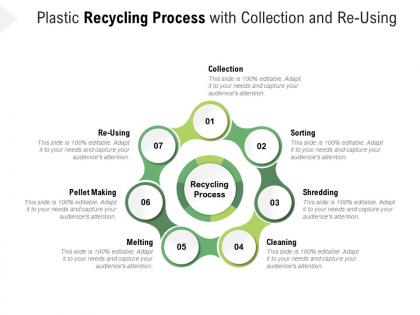
Plastic recycling process with collection and re using




Try Before you Buy Download Free Sample Product
 Impress Your
 Audience
 100%
100% Editable
 Save Hours
 of Time


Create a group that has a dominating influence with our Plastic Recycling Process With Collection And Re Using. It helps forge formidable alliances.
People who downloaded this PowerPoint presentation also viewed the following :
Plastic recycling process with collection and re using with all 5 slides:
Be accepted as a formidable competitor with our Plastic Recycling Process With Collection And Re Using. Earn appreciation as an astute businessman.



FAQs for Plastic recycling process with collection
The primary types of commonly recycled plastics include PET bottles, HDPE containers, polystyrene packaging, polypropylene products, and LDPE films. These materials streamline recycling operations by offering consistent processing characteristics, strong market demand, and established collection networks, with manufacturing industries, packaging companies, and consumer goods sectors finding that focusing on these plastics delivers cost-effective sustainability outcomes and competitive environmental advantages.
Thermoplastics can be repeatedly melted and reshaped through heating, making them easily recyclable through mechanical processes like shredding, melting, and reforming into new products. Thermosetting plastics, however, cannot be remelted once cured, requiring advanced chemical recycling methods to break down molecular bonds, with industries increasingly investing in pyrolysis and solvolysis technologies to unlock these materials' value.
Plastic identification codes enable efficient sorting by categorizing plastics into seven distinct resin types, streamlining the recycling process and ensuring materials are processed correctly. These codes help recycling facilities, waste management companies, and manufacturing plants separate PET bottles, HDPE containers, and other polymers quickly, ultimately reducing contamination, improving recycling quality, and delivering cost-effective material recovery operations.
Plastic sorting involves collection and separation, material identification through resin codes and optical scanning, density separation using water flotation, color sorting via automated systems, and contamination removal through washing processes. These technologies streamline recycling operations by enhancing material purity, reducing processing costs, and improving end-product quality, with many recycling facilities finding that automated sorting ultimately delivers higher efficiency and better market value for recycled plastics.
Contamination significantly reduces recycled plastic quality by introducing foreign materials, degrading polymer chains, and creating inconsistent material properties that compromise structural integrity and appearance. Industries like packaging and automotive manufacturing find that contaminated feedstock increases processing costs, reduces yield rates, and limits end-product applications, ultimately requiring more extensive sorting and purification systems.
Technologies improving plastic recycling include chemical recycling, AI-powered sorting systems, advanced washing techniques, pyrolysis, and molecular recycling processes. These innovations enhance efficiency by breaking down complex plastics, automating contamination detection, and enabling closed-loop manufacturing, with many packaging companies and manufacturers finding significantly reduced waste costs and improved sustainability outcomes.
Recycling plastics significantly reduces energy consumption, greenhouse gas emissions, landfill waste, and ocean pollution while conserving natural resources and petroleum. Manufacturing recycled plastic uses 70% less energy than producing virgin plastic, with industries like packaging and automotive finding that recycled materials deliver substantial carbon footprint reductions, ultimately enabling companies to meet sustainability goals while reducing environmental impact.
Companies implement effective plastic waste management through comprehensive sorting systems, employee training programs, strategic partnerships with recycling facilities, automated waste tracking technologies, and circular economy initiatives. These approaches streamline operations by reducing disposal costs, enhancing sustainability credentials, and creating revenue streams from recovered materials, with many organizations finding that integrated waste management ultimately delivers operational efficiency and competitive advantage in increasingly environmentally-conscious markets.
Global initiatives to enhance plastic recycling include extended producer responsibility programs, plastic waste import bans, circular economy legislation, advanced recycling technology investments, and international collaboration frameworks like the Global Plastics Treaty. These comprehensive approaches streamline waste management systems, encourage innovative recycling methods, and create standardized protocols across borders, with many countries finding that strategic policy combinations ultimately deliver reduced environmental impact and enhanced resource recovery efficiency.
Consumer behavior significantly influences plastic recycling rates through proper sorting practices, contamination reduction, and participation in collection programs. Many communities find that educational initiatives and convenient infrastructure enhance recycling compliance, while consumer purchasing decisions increasingly favor recyclable packaging, ultimately driving demand for sustainable materials and encouraging manufacturers to design more recyclable products.
Recyclers face contamination from mixed plastic types, food residues, labels, and sorting errors that compromise material quality and market value. These challenges require advanced separation technologies, extensive cleaning processes, and rigorous quality control systems, with many facilities finding that investing in automated sorting and chemical purification ultimately delivers higher-grade recycled materials and stronger buyer confidence.
Innovations include chemical recycling technologies, molecular-level breakdown processes, advanced sorting systems, bio-based plastic alternatives, and hybrid material development. These breakthroughs enable manufacturers to create high-quality products from recycled content, with automotive, packaging, and textile industries finding that advanced recycling delivers superior material properties while reducing environmental impact and production costs.
The plastic recycling industry presents both significant opportunities and challenges, including job creation, reduced waste management costs, and new revenue streams from recycled materials. However, it requires substantial infrastructure investment and faces market volatility, with many manufacturing sectors finding that strategic recycling partnerships ultimately deliver cost savings, regulatory compliance benefits, and enhanced sustainability credentials in increasingly environmentally-conscious markets.
Educational programs increase public awareness and involvement in plastic recycling by delivering comprehensive curriculum about environmental impacts, proper sorting techniques, and local recycling infrastructure through schools, community centers, and digital platforms. These initiatives streamline behavior change by providing clear guidelines, hands-on workshops, and measurable goals, with many municipalities finding that targeted education campaigns ultimately enhance recycling rates and reduce contamination levels.
Future trends in plastic recycling include advanced chemical recycling technologies, AI-powered sorting systems, blockchain supply chain tracking, bio-based plastic alternatives, and circular economy integration. These innovations streamline operations by enhancing material recovery rates, reducing contamination levels, and enabling real-time transparency, with many manufacturers finding that strategic adoption delivers significant cost reductions and competitive sustainability advantages.
No Reviews