

Platform Migration Powerpoint PPT Template Bundles




Try Before you Buy Download Free Sample Product
 Impress Your
 Audience
 100%
100% Editable
 Save Hours
 of Time


Our Platform Migration Powerpoint PPT Template Bundles are topically designed to provide an attractive backdrop to any subject. Use them to look like a presentation pro.
People who downloaded this PowerPoint presentation also viewed the following :
Platform Migration Powerpoint PPT Template Bundles with all 25 slides:
Use our Platform Migration Powerpoint PPT Template Bundles to effectively help you save your valuable time. They are readymade to fit into any presentation structure.
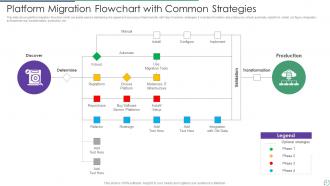
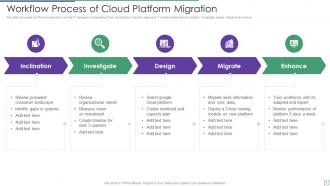
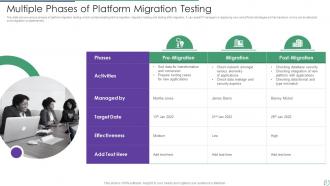
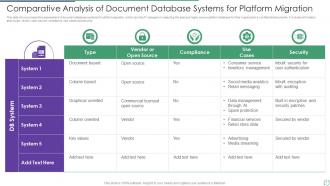
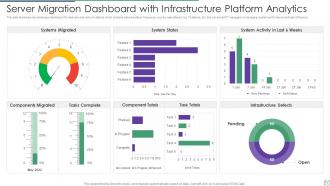






FAQs for Platform Migration Powerpoint
Key factors include scalability requirements, integration capabilities, security standards, cost structures, and vendor support quality. These considerations enable organizations to evaluate platforms systematically, with many enterprises finding that thorough assessment of data compatibility, user training needs, and migration timelines ultimately delivers smoother transitions and enhanced operational efficiency.
Companies can assess data compatibility by conducting comprehensive data audits, mapping existing data structures to new platform requirements, running pilot migrations with sample datasets, and performing format validation tests. Through systematic compatibility analysis, organizations in sectors like healthcare and finance identify potential conversion challenges early, enable seamless data transformation processes, and ensure operational continuity during platform transitions.
Platform migration risks include data loss, system downtime, compatibility issues, security vulnerabilities, and user adoption challenges. These risks can be mitigated through comprehensive data backup strategies, phased migration approaches, and thorough testing protocols, with many organizations finding that detailed planning, stakeholder training, and rollback procedures ultimately deliver smoother transitions and enhanced operational efficiency.
Platform migration enhances scalability by modernizing infrastructure, expanding processing capacity, improving integration capabilities, and enabling advanced features that support business growth. Through strategic migration to cloud-based or updated systems, organizations streamline operations, reduce maintenance costs, and access flexible resources, while positioning themselves for rapid expansion and competitive advantage in increasingly dynamic markets.
User experience plays a critical role in platform migration success by determining user adoption rates, minimizing resistance to change, and ensuring operational continuity throughout the transition process. A seamless, intuitive migration experience reduces training costs, accelerates productivity recovery, and maintains customer satisfaction, with many organizations finding that prioritizing UX during migrations ultimately delivers higher ROI and competitive advantage.
Companies ensure data integrity during migration through comprehensive data validation, automated verification tools, checksums, backup protocols, and staged migration approaches. These methods enable organizations to maintain accuracy across financial records, customer databases, and operational systems, while implementing rollback capabilities and real-time monitoring, ultimately delivering seamless transitions with minimal risk.
Common platform migration challenges include data loss risks, system downtime, compatibility issues, user resistance, and budget overruns. These obstacles can be overcome by implementing comprehensive data backup strategies, phased migration approaches, and thorough compatibility testing, with many organizations finding that detailed planning, stakeholder training, and expert consultation ultimately deliver smoother transitions and enhanced operational efficiency.
Organizations can train their teams through comprehensive onboarding programs, hands-on workshops, mentorship systems, role-specific training modules, and continuous support resources. These approaches streamline adoption by addressing individual learning styles, providing practical experience, and ensuring ongoing guidance, with many companies finding that structured training reduces resistance while accelerating productivity and platform proficiency.
Platform migration testing best practices include creating comprehensive test environments, conducting phased rollouts with small user groups, performing load and stress testing, validating data integrity, and establishing rollback procedures. These approaches enable organizations to identify potential issues early, minimize downtime, and ensure seamless transitions, with many enterprises finding that thorough testing reduces migration risks by up to 80% while delivering faster deployment timelines.
Businesses can measure platform migration success through performance metrics like system uptime, response times, user adoption rates, operational cost reductions, and customer satisfaction scores. These measurements enable organizations to quantify improvements in efficiency, identify areas requiring optimization, and demonstrate ROI, with many companies finding that comprehensive monitoring ultimately delivers enhanced competitive advantage and validates strategic investment decisions.
**INPUT**: What considerations should be made regarding regulatory compliance during platform migration? **OUTPUT**: Platform migration compliance considerations include data residency requirements, audit trail maintenance, encryption standards, access controls, and regulatory reporting continuity. Financial services and healthcare organizations find that strategic planning around GDPR, HIPAA, or SOX requirements, combined with thorough documentation and stakeholder communication, ultimately streamlines migration while maintaining regulatory standing. [Word count: 50 words]
Platform migration significantly impacts SEO through potential ranking fluctuations, URL structure changes, and temporary indexing disruptions that require careful technical planning. However, strategic migrations enable enhanced site performance, improved user experience, and better mobile optimization, with many organizations finding that well-executed transitions ultimately deliver stronger search visibility and competitive positioning.
Cloud-based platforms offer scalability, cost efficiency, automatic updates, enhanced collaboration, and reduced IT maintenance, while on-premises solutions provide greater control, security customization, and data sovereignty. While cloud solutions enable faster deployment and global accessibility, on-premises systems deliver predictable costs and compliance control, with many organizations finding that hybrid approaches maximize both operational flexibility and strategic advantage.
Third-party tools facilitate smoother migrations by automating data transfer, providing compatibility assessments, and offering specialized migration frameworks that minimize downtime and errors. These services deliver comprehensive project management, risk mitigation strategies, and technical expertise, with many organizations finding that professional migration partners ultimately reduce costs while ensuring seamless transitions across complex platform environments.
Customer feedback serves as a critical foundation for platform migration strategies, identifying pain points, feature gaps, performance issues, and user experience priorities that guide technical decisions. Through surveys, user analytics, and stakeholder interviews, organizations can prioritize migration phases, minimize disruption to essential workflows, and ensure the new platform addresses real business needs, ultimately delivering enhanced user satisfaction and operational efficiency.
-
Wonderful ideas and visuals. I'm really pleased with the templates, which are unique and up to date.
-
Placing an order on SlideTeam is very simple and convenient, saves you a lot of your time.