

Post covid 19 trends in travel industry ppt powerpoint presentation gallery graphics




Try Before you Buy Download Free Sample Product
 Impress Your
 Audience
 100%
100% Editable
 Save Hours
 of Time


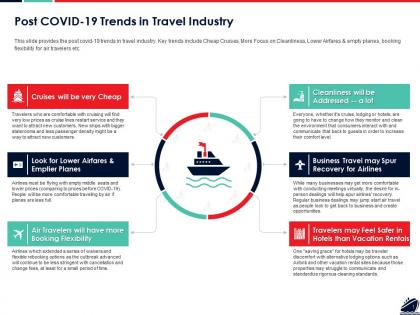
This slide provides the post covid 19 trends in travel industry. Key trends include Cheap Cruises, More Focus on Cleanliness, Lower Airfares and empty planes, booking flexibility for air travelers etc.
People who downloaded this PowerPoint presentation also viewed the following :
Post covid 19 trends in travel industry ppt powerpoint presentation gallery graphics with all 2 slides:
Use our Post COVID 19 Trends In Travel Industry Ppt Powerpoint Presentation Gallery Graphics to effectively help you save your valuable time. They are readymade to fit into any presentation structure.
FAQs for Post covid 19 trends in travel industry ppt powerpoint
Post-COVID-19 travel consumers now prioritize health protocols, contactless services, flexible booking policies, and transparent safety communications when making travel decisions. Through enhanced cleaning standards, digital check-ins, and real-time health updates, travelers increasingly seek reassurance and control over their experiences, with many finding that visible safety measures and adaptable itineraries ultimately deliver greater confidence and peace of mind.
Airlines are adopting thermal screening cameras, UV sanitization systems, contactless check-in kiosks, HEPA air filtration, and real-time health monitoring apps to enhance passenger safety. These technologies streamline operations by minimizing human contact, accelerating sanitization processes, and enabling proactive health management, with many carriers finding that enhanced safety protocols ultimately deliver increased passenger confidence and competitive advantage.
Travel companies are adapting marketing strategies by emphasizing enhanced sanitization protocols, contactless services, flexible booking policies, transparent health communications, and safety certifications prominently across digital platforms. These approaches enable travelers to make informed decisions while building trust, with many airlines, hotels, and tour operators finding that proactive safety messaging, virtual experiences, and personalized health assurances ultimately deliver increased bookings and customer confidence.
Sustainable tourism plays a pivotal role in travel industry recovery by addressing heightened environmental consciousness, rebuilding community trust, and creating resilient business models that balance profitability with responsibility. Post-pandemic travelers increasingly prioritize eco-friendly accommodations and local experiences, with destinations like Costa Rica and New Zealand finding that sustainable practices attract conscious tourists while reducing operational costs, ultimately delivering competitive advantage and long-term viability.
Domestic travel has surged significantly post-pandemic as travelers prioritize safety, flexibility, and reduced complexity, while international travel recovery remains slower due to evolving restrictions, health protocols, and economic uncertainties. Many airlines and hospitality companies have strategically pivoted resources toward domestic markets, finding that local destinations deliver stronger booking confidence, shorter planning cycles, and enhanced operational efficiency, ultimately creating new revenue streams in previously underexplored regional markets.
Remote work has revolutionized travel patterns by enabling digital nomadism, workations, and extended stays in destinations previously considered only for short vacations. Many professionals now book month-long accommodations in cities like Lisbon, Bali, and Mexico City, with hospitality providers increasingly offering co-working spaces, reliable internet, and flexible booking terms to capture this growing market.
Travel agencies are leveraging mobile apps, AI-powered chatbots, virtual reality previews, contactless booking systems, and personalized recommendation engines to enhance customer experiences. These digital platforms streamline trip planning, provide real-time updates, and deliver seamless interactions, with many agencies finding that automated services reduce wait times while enabling 24/7 customer support and personalized travel solutions.
Hotels are implementing enhanced cleaning protocols, contactless check-in and payment systems, reduced capacity in common areas, air filtration upgrades, and health screening procedures. These measures streamline operations by minimizing physical contact, accelerating service delivery, and building guest confidence, with many hospitality brands finding that transparent safety communications ultimately enhance customer loyalty and competitive positioning in recovery markets.
Contactless technologies have revolutionized travel by enabling touchless check-ins, digital boarding passes, mobile room keys, and contactless payments throughout the journey. These innovations streamline operations while enhancing safety, with airports, hotels, and airlines finding that passengers experience faster processing times, reduced wait times, and greater peace of mind, ultimately delivering improved customer satisfaction and operational efficiency.
Post-COVID travelers increasingly prioritize flexible bookings, health-focused accommodations, outdoor experiences, contactless services, and personalized itineraries over traditional package deals. These preferences drive travel companies to enhance digital platforms, streamline booking modifications, and develop wellness-centered offerings, with many hotels, airlines, and tour operators finding that customizable, safety-conscious packages deliver higher customer satisfaction and competitive advantage.
Travelers increasingly demand flexible booking options, refundable rates, free cancellation windows, and rebooking privileges without penalties, fundamentally reshaping hospitality revenue models. Airlines, hotels, and tour operators now offer extended modification periods and waiver policies as standard features, with many finding that flexible terms drive customer loyalty and booking confidence, ultimately delivering competitive advantage in an uncertain travel landscape.
The pandemic significantly impacted the cruise industry through extended shutdowns, enhanced health protocols, and reduced passenger capacity, fundamentally reshaping operational standards. Recovery trends include smaller ship experiences, domestic and regional itineraries, advanced air filtration systems, and contactless services, with many cruise lines finding that flexible booking policies and wellness-focused amenities are driving renewed consumer confidence.
Small travel businesses are adapting through specialized niche offerings, personalized customer experiences, flexible booking policies, and strategic technology adoption to enhance operational efficiency. Many boutique hotels, local tour operators, and independent travel agencies are leveraging digital marketing, sustainable tourism practices, and unique local partnerships, ultimately delivering more authentic experiences while streamlining costs to compete effectively.
Travel insurance significantly influences traveler decisions by providing essential protection against COVID-19 related disruptions, medical emergencies, trip cancellations, and unexpected quarantine costs. With many travelers increasingly prioritizing comprehensive coverage that includes pandemic-specific benefits, insurance enables confident booking decisions and delivers peace of mind, ultimately becoming a strategic necessity rather than optional consideration.
The travel industry addresses workforce challenges through enhanced employee benefits, flexible work arrangements, competitive wages, and comprehensive health protocols to attract and retain talent. Airlines, hotels, and cruise lines are investing in staff training, mental health support, and career development programs, while many organizations find that prioritizing employee well-being ultimately delivers improved customer service and operational resilience.
-
Informative presentations that are easily editable.
-
Excellent template with unique design.
-
The content is very helpful from business point of view.
-
Graphics are very appealing to eyes.
-
Perfect template with attractive color combination.