

Process alignment template powerpoint shapes




Try Before you Buy Download Free Sample Product
 Impress Your
 Audience
 100%
100% Editable
 Save Hours
 of Time


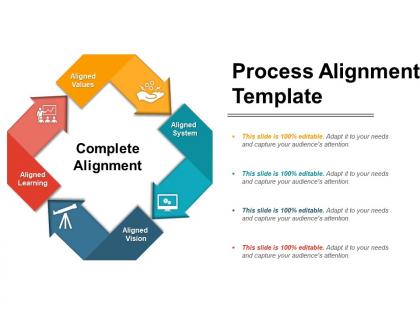
Put on this process alignment template PowerPoint shapes presentation for your business presentation to be truly effective. If you need to align your business processes with your effective business strategies and requires your processes to monitor it continuously for effectiveness, for that purpose, this business process alignment PowerPoint diagram is best suited. As business processes are core to your business; they represent how you create value, how you operate and how you interact with your customers, the alignment with the overall strategy of the business is critical and can mean the difference between double-digit growth and losing ground to the competition, in order to take the above mentioned measures, pick this alignment with business strategy PowerPoint presentation which helps you to demonstrate your new and innovative ideas to your team members and implement your business strategies. Furthermore, the usage of this PPT slide shall make work easier and works as a guide for you in measuring and enabling your processes to understand the processes in a better way and effectively. Count the advantages of using this PPT slide for your business environment and welfare. Our Process Alignment Template Powerpoint Shapes encourage candid confessions. The audience will admit they admire your every effort.
People who downloaded this PowerPoint presentation also viewed the following :
Process alignment template powerpoint shapes with all 5 slides:
Find the inspiration you desire in our Process Alignment Template Powerpoint Shapes. It ensures you feel joyous.
FAQs for Process alignment
So basically it's like creating a blueprint so everyone knows how stuff actually gets done at your company. Map out your current workflows first - you'll probably find gaps or places where teams are stepping on each other's toes (happens way more than it should). It helps standardize things and connects your day-to-day operations with bigger strategic goals. Honestly, the confusion it prevents is worth it alone. Different departments stop working against each other. Pick one process that's been driving people crazy lately and start documenting that. Trust me, you'll wonder why you didn't do this sooner.
Okay so basically it's like creating a roadmap that shows who's responsible for what and when things need to happen between teams. No more "I thought YOU were handling that" moments. The cool thing is it forces people to actually communicate during planning instead of just winging it later. Marketing finally knows when product will deliver stuff, sales understands when to bring in support - you know, revolutionary stuff like talking to each other. It gives everyone the same vocabulary too, which honestly makes such a difference. Just pick one process that's already kind of messy between departments and start there.
You need five main things: clear objectives, defined roles, step-by-step workflows, success metrics, and team dependencies. Most people mess up the objectives part by being way too vague - don't do that. Your workflow should show decision points and handoffs, not just random tasks. Communication touchpoints are huge because that's usually where everything goes sideways. Oh, and add assumptions and constraints upfront since they'll bite you later anyway. Escalation paths too. Honestly, start simple and tweak it based on what actually breaks in your team.
So basically, process alignment templates stop that annoying thing where everyone thinks they're working toward the same goal but actually aren't. They map out who's doing what, what success looks like, and how all the pieces fit together - all in one spot your team can actually see. No more "wait, I thought YOU were handling that" moments. Honestly, they work best when you fill them out as a group during planning meetings. That way you catch the disconnects early instead of three weeks later when deadlines are looming. It's like having everyone literally on the same page.
Honestly, the hardest part is just getting people to stick with it. Everyone says they'll use the template, then boom - back to their old messy ways within a week. Plus you'll definitely hit some pushback from those "but we've always done it this way" people. Don't overcomplicate it either (learned this the hard way). Too many fields and rules just pisses everyone off. Oh, and departments will somehow interpret the same template completely differently, which is... fun. Start super basic, get people excited about it first, then tweak as you go. Way easier than trying to nail perfection upfront.
So basically, these templates save you from those awful "wait, who's supposed to do this?" conversations that eat up half your meetings. They standardize how everyone tackles tasks, which sounds boring but actually rocks. You'll catch bottlenecks way earlier, cut down on people doing the same work twice, and new team members won't be totally lost their first week. The handoffs between teammates get super clear too. My advice? Map out whatever messy process you're already using, then build your template around the stuff that doesn't suck. Way easier than starting from scratch.
First thing - figure out what's actually broken in your current process. Generic templates are kinda useless tbh, so you'll need to add your own workflow steps and who does what. The approval chains are super important too, that's where things usually fall apart. Oh and definitely use the same terms your team already knows instead of fancy corporate speak. Test it on something small first because there's always weird edge cases you didn't think of. Way easier to fix issues before everyone's using it.
Dude, you absolutely need stakeholder buy-in or your template will just collect dust. The people actually doing the work know where things break down - they've lived through the mess. I've watched so many of these fail when leadership builds them alone in some conference room. Getting everyone involved early means they'll actually care about following it later. They'll spot problems you totally missed too. Don't wait until rollout to ask for input either, that's way too late. Oh and honestly? People hate being told what to do without being asked first.
Dude, flowcharts and color coding are game changers for process docs. Nobody wants to read paragraphs of boring text - I mean, I sure don't. When you map things out with swim lanes and arrows, people actually understand what's happening. Quick tip: use different colors for each department so it's obvious who handles what. Your brain just processes visual stuff faster, plus you'll remember the steps better. I swear, I've watched entire meetings turn around once someone drew the process on a whiteboard instead of just talking through it.
You want to track two things - how people are using it and if it's actually helping. Check adoption rates, how long alignment stuff takes now, and whether teams stick with it. Then measure the real impact: fewer project delays, less miscommunication, happier stakeholders. Honestly, meeting length is my favorite metric to watch - when processes work, meetings get way shorter and more focused. Don't go crazy trying to measure everything though. Pick 2-3 things you can actually track without making it a whole project itself.
Honestly? Every quarter minimum, but don't wait that long if things feel broken. I usually check mine every 2-3 months because stuff changes way faster than you'd think. Monthly reviews work if you're in one of those crazy fast-moving companies. The worst thing is letting it sit for half a year - then you're scrambling to figure out why nothing makes sense anymore. Just set a calendar reminder like you would for any boring maintenance stuff. Oh, and definitely build it into your next quarterly planning meeting so you don't forget.
Try Miro or Lucidchart for mapping out your processes - both let everyone jump in and edit at once. Google Sheets works too if you want something dead simple. Visio's solid but feels super corporate (and honestly kind of annoying unless you're already stuck in the Microsoft ecosystem). Once you've got your templates sorted, something like Asana helps track who's actually doing what. The tool doesn't really matter though. Pick whatever your team won't fight you on - you can switch later once people stop complaining about change.
Honestly, culture makes or breaks everything with these templates. I've watched teams completely ignore perfectly good processes because nobody bought into the whole "let's standardize things" mindset. Your template could be amazing, but if people hate following systems or think structure kills creativity, they'll find ways around it every time. The teams that actually succeed? They already value working together and improving stuff gradually. Start by figuring out where your culture stands first - like, do people resist change or embrace it? That'll tell you whether you're setting yourself up for success or just creating fancy documents nobody uses.
Skip the slide decks and get people actually using the templates right away - that's where the real learning happens. Focus on scenarios from their actual jobs, not some random examples that make everyone zone out. Honestly, I've watched so many of these trainings bomb because they were way too theoretical. Give them time to practice and mess up, then get feedback. Oh, and definitely pick someone in each department to be the go-to person for questions later. Follow up in a couple weeks once they've tried using everything for real - that's when the good questions come up.
So basically you map out every step and who's involved before shit hits the fan. Super boring? Yeah. But it catches stuff early - like where teams might drop the ball or dependencies could mess you up. I've seen too many projects blow up because nobody thought through the handoffs. The trick is making sure people actually take it seriously when they fill it out, not just rush through it. Once you spot the weak points, you can plan for them and assign someone to own each risk. Trust me, future you will thank present you.
-
It saves your time and decrease your efforts in half.
-
Content of slide is easy to understand and edit.
-
Great experience, I would definitely use your services further.
-
Amazing product with appealing content and design.