

Procurement KPI Performance Benchmark Procurement Spend Analysis Ppt Icons





Try Before you Buy Download Free Sample Product
 Impress Your
Audience
 100%
Editable
 Save Hours
of Time


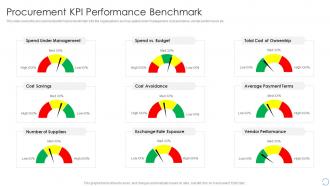
This slide covers the procurement performance benchmarks for the organizations such as spend under management, cost avoidance, vender performance etc.
People who downloaded this PowerPoint presentation also viewed the following :
Procurement KPI Performance Benchmark Procurement Spend Analysis Ppt Icons with all 7 slides:
Use our Procurement KPI Performance Benchmark Procurement Spend Analysis Ppt Icons to effectively help you save your valuable time. They are readymade to fit into any presentation structure.






FAQs for Procurement KPI Performance Benchmark Procurement Spend
Critical procurement KPIs include cost savings percentage, supplier performance ratings, procurement cycle time, contract compliance rates, and spend under management. These metrics streamline operations by reducing purchase-to-pay cycles, enhancing supplier relationships, and improving budget control, with many organizations finding that systematic KPI tracking delivers 15-20% cost reductions and significantly better vendor accountability.
Organizations can effectively track procurement lead time through automated procurement systems, supplier performance dashboards, purchase order tracking tools, and data analytics platforms that monitor each stage from requisition to delivery. These technologies streamline monitoring by providing real-time visibility, identifying bottlenecks, and generating performance reports, with many companies finding that systematic tracking reduces lead times by 20-30% while enhancing supplier relationships.
Supplier performance evaluation serves as a cornerstone of procurement KPIs by measuring delivery timeliness, quality standards, cost effectiveness, compliance adherence, and relationship reliability. These assessments enable procurement teams to identify top-performing vendors, negotiate better contracts, and mitigate supply chain risks, ultimately delivering improved operational efficiency and strategic sourcing advantages.
Cost savings can be quantified through baseline comparisons, contract negotiations analysis, supplier consolidation metrics, and year-over-year spend reduction calculations. Organizations track these savings by implementing procurement software that monitors spend patterns, contract compliance rates, and vendor performance data, with many companies finding that automated tracking systems deliver greater transparency, faster reporting, and ultimately enhanced procurement efficiency across their operations.
Procurement efficiency metrics include cycle time reduction, cost savings percentage, supplier performance ratings, purchase order accuracy, and contract compliance rates. These KPIs streamline operations by identifying bottlenecks, optimizing vendor relationships, and reducing manual errors, with many organizations finding that comprehensive measurement ultimately delivers faster procurement cycles and significant cost reductions.
Procurement KPIs align with business objectives by connecting purchasing metrics to strategic goals like cost reduction, quality improvement, and operational efficiency. Organizations achieve this through cascading corporate targets into procurement-specific measures, such as supplier diversity supporting sustainability goals, or contract compliance enhancing risk management, ultimately delivering measurable contributions to profitability and competitive advantage.
Compliance metrics in procurement KPIs ensure adherence to regulatory requirements, contract terms, internal policies, and ethical standards while minimizing legal risks and financial penalties. These metrics enable organizations to track supplier compliance rates, contract adherence, and regulatory alignment, ultimately delivering enhanced transparency, reduced operational risks, and stronger stakeholder confidence in procurement processes.
Supplier relationship management impact is measured through procurement KPIs including cost savings percentages, supplier performance scores, contract compliance rates, delivery time reductions, and quality improvement metrics. Through strategic supplier partnerships, organizations achieve 15-20% cost reductions, faster procurement cycles, and enhanced supply chain resilience, with many companies finding that collaborative relationships ultimately deliver competitive advantages and operational efficiency.
Technology solutions for tracking procurement KPIs include spend analytics platforms, supplier performance management systems, contract lifecycle management software, procurement dashboards, and AI-powered predictive analytics tools. These technologies enhance visibility by automating data collection, providing real-time performance insights, and streamlining supplier evaluations, with many organizations finding that integrated platforms deliver faster decision-making and strategic cost optimization.
Ensuring procurement KPIs remain relevant requires regular performance reviews, stakeholder feedback sessions, market trend analysis, and alignment with evolving business objectives and industry benchmarks. Organizations should conduct quarterly assessments of their metrics, incorporating input from suppliers, internal teams, and market data, while adapting to new technologies and regulatory changes that impact procurement effectiveness and strategic value.
Challenges include aligning KPIs with organizational strategy, establishing accurate baseline data, balancing cost reduction with quality maintenance, accounting for market volatility, and ensuring cross-departmental collaboration. These complexities require strategic consideration of supplier relationships, internal capabilities, and external factors, with many organizations finding that phased implementation and regular recalibration ultimately deliver more sustainable procurement outcomes.
Organizations utilize procurement KPIs by analyzing supplier performance metrics, cost trends, delivery reliability, and quality scores to strengthen their negotiating position during contract discussions. These data-driven insights enable procurement teams to identify underperforming suppliers, benchmark pricing against market standards, and leverage performance history, ultimately delivering better contract terms, reduced costs, and improved supplier accountability across their supply chain operations.
Inventory turnover rate measures how frequently procurement teams cycle through stock within a specific period, indicating efficiency in purchasing decisions, demand forecasting, and supplier coordination. This KPI enables organizations to optimize cash flow, reduce carrying costs, and minimize waste, with many retail and manufacturing companies finding that higher turnover rates deliver improved profitability and operational responsiveness.
Percentage of spend under management is calculated by dividing total managed procurement spend by total organizational spend, then multiplying by 100. This metric enables organizations to track procurement coverage across departments, identify unmanaged spending in areas like IT services or professional consulting, and optimize resource allocation, with many companies finding that higher percentages correlate with significant cost savings and enhanced supplier relationship management.
Qualitative factors like supplier innovation can be incorporated through innovation scorecards, new product development contributions, sustainability certifications, collaboration ratings, and technology adoption metrics. These measurements enable procurement teams to evaluate strategic partnerships beyond cost savings, with many organizations finding that tracking supplier creativity, responsiveness, and problem-solving capabilities ultimately delivers competitive advantages and enhanced operational efficiency.
-
Thank you for offering such helpful pre-designed templates. They are really beneficial to me in my job.
-
Excellent Designs.