

Product And Service Benchmarking Powerpoint Ppt Template Bundles





Try Before you Buy Download Free Sample Product
 Impress Your
Audience
 100%
Editable
 Save Hours
of Time


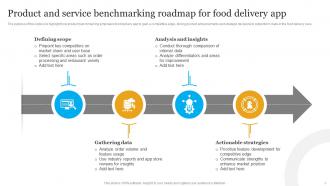
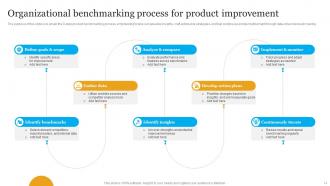
Product benchmarking is a strategic process in which a company evaluates and compares its products, services, or processes against those of its competitors or industry benchmarks to assess performance, identify areas for improvement, and gain a competitive advantage. This analysis involves a thorough examination of various factors, such as features, quality, pricing, and customer satisfaction. By understanding how their offerings measure up in the market, organizations can make informed decisions to enhance their products or services, refine marketing strategies, and stay attuned to industry trends. Product benchmarking is an integral component of continuous improvement and innovation, helping companies position themselves effectively in the marketplace. This template includes an in depth presentation on product benchmarking, featuring benchmarking analyses for music streaming apps, smartphones, and various products. It provides a comprehensive comparison template for different products, offering a product benchmarking roadmap tailored for a food delivery app. The template explores benchmarking examples for FMCG products, specifically focusing on metrics in the electric vehicle market. It delves into key metrics crucial for analyzing product benchmarking, highlighting various types of organizational product benchmarking and outlining a process for continuous improvement. The template concludes by presenting key techniques to employ benchmarking effectively for product development. Lastly, it includes a concise summary enriched with visual icons.
People who downloaded this PowerPoint presentation also viewed the following :
Product And Service Benchmarking Powerpoint Ppt Template Bundles with all 30 slides:
Use our Product And Service Benchmarking Powerpoint Ppt Template Bundles to effectively help you save your valuable time. They are readymade to fit into any presentation structure.














FAQs for Product And Service Benchmarking Powerpoint
Look at the obvious stuff first - price, features, performance, quality scores. But honestly, most companies stop there and miss the good intel. Dig into user experience data like how easy their product actually is to use, customer satisfaction numbers, support response times. Market share trends tell you a lot too. Brand perception data is where you find the real insights though. Don't go crazy measuring everything - pick maybe 5-7 metrics that actually matter for what you're trying to do. Set up a simple comparison chart and update it every few months so it stays useful.
Figure out your actual goals first - what are you trying to fix or improve? Then pick benchmarks that actually matter for those specific things. Like if you're worried about customers leaving, focus on retention metrics, not some random operational stuff that sounds impressive but won't help. Get your leadership bought in early and keep them in the loop. Trust me, I've watched teams spiral into measuring everything just because they could access the data. Regular check-ins help everyone stay focused on insights you can actually act on instead of just cool-looking charts that nobody knows what to do with.
Honestly, customer feedback is like your wake-up call for benchmarking. You might obsess over response times, but if customers actually care more about getting personalized help, you're totally missing the point. Direct feedback shows you the real pain points that make people jump ship. Market research is clutch too - it reveals which competitors customers actually see as alternatives (and trust me, it's probably not the ones you'd guess). The whole technical metrics thing falls flat if you don't know what drives satisfaction first. Just start by asking customers what matters most to them.
Start with your sales team's win/loss reports - that's where the real intel is. They know exactly who's beating you in deals. Industry reports help too, and tools like SEMrush show who's gunning for your keywords. Don't sleep on indirect competitors though - sometimes the biggest threat comes from left field. Check G2 or Capterra to see what customers are actually comparing you against (honestly, you'd be surprised). Pull together 5-8 main players and run it by sales and marketing. They'll tell you if you missed anyone obvious.
Honestly, the worst mistake is comparing yourself to companies that aren't even in your league. Like, don't benchmark against Google if you're a startup with 10 employees - totally different ballgame. Focus on businesses actually similar to yours instead. Oh, and watch out for those flashy metrics that look cool but mean nothing. I've literally watched teams get obsessed with how many features they have while their customers are complaining left and right! Figure out what actually moves the needle for your users first. Then build your framework around that, not just random data you think sounds important.
Dude, automation is a total game-changer for benchmarking stuff. Web scraping tools can grab competitor pricing automatically, and social listening platforms track how people actually feel about different brands. Real-time analytics dashboards let you compare everything without drowning in spreadsheets. The AI pattern recognition is honestly getting a little freaky - it spots trends in huge datasets that I'd completely miss. Automated reports are clutch too since you won't be stuck making PowerPoints every week. I'd start with just one tool for whatever eats up most of your time. Once you see how much faster everything gets, you can add more from there.
So there's a few ways to tackle this. Gap analysis is probably your best bet - just compare where you are vs competitors on the stuff that matters. Statistical analysis works too if you want to get into mean comparisons or regression, but honestly that might be overkill depending on what you're doing. Trend analysis shows how things change over time, which is pretty useful. You can also do ratio analysis to compare performance across different company sizes. Excel handles most of this unless you're going crazy with it. Pick like 2-3 methods that actually answer your questions instead of analyzing everything under the sun. Start simple, then dig deeper where you see the biggest gaps.
Benchmarking stops your team from getting lazy with "good enough" results. You're always finding gaps when you stack your processes against top companies or your own best work. Honestly, it beats the guesswork approach by a mile. Instead of wondering where to improve, you've got real data pointing you in the right direction. Short bursts work better than marathon sessions - I'd do quarterly check-ins where you measure against those benchmarks. Then tweak your strategy based on what pops up. It's basically a reality check that won't let you coast.
Oh man, cultural differences will totally mess up your benchmarking if you're not paying attention. Japanese customers actually want those long, detailed conversations while Americans just want things done fast. What seems like bad service might be exactly what that market expects. I made this mistake comparing our European vs US teams - completely different standards. You gotta get local people involved to define what "good service" even means there first. Then benchmark against those standards instead of using the same framework everywhere. Honestly, it's kind of obvious once you think about it, but easy to miss.
So balanced scorecards are actually pretty smart for benchmarking - they don't just look at money stuff. You get four different angles: financial, customer satisfaction, internal processes, and learning/growth. Here's the thing though - most companies obsess over profits and miss the bigger picture. Like, your competitor might have cheaper operations but their customers hate them, which is gonna bite them later. The balanced approach shows you these trade-offs you'd totally miss otherwise. Map out your metrics in each area first, then start comparing. Way more accurate than just looking at spreadsheets.
Do formal benchmarking at least once a year, but quarterly makes way more sense for your key metrics. Markets change so damn fast now - especially in tech where competitors can pivot overnight. Monthly tracking is what you really need though. Set up Google alerts, watch their pricing changes, stalk their social feeds a bit. Weekly if something big is happening. The deep-dive stuff can wait for quarterly, but don't go dark between reviews. Pick your top 3-5 competitors and just throw together a simple spreadsheet you update monthly. Nothing fancy needed.
Tell a story with your data instead of just throwing numbers at people. Lead with the big findings first. Then explain what it actually means - where you stand vs competitors, what's broken, etc. Visuals beat spreadsheets every time (seriously, nobody reads those). Double-check you're comparing similar things and admit where your data might be wonky. Oh, and don't just dump problems on them - bring 2-3 solid recommendations they can actually do something with. That's what separates useful analysis from just... more noise.
Honestly, benchmarking is like getting free intel on what's actually working out there. You compare your stuff against the big players and boom - suddenly you see features or processes you never thought of. Sometimes you'll realize your "groundbreaking" idea is already everywhere, which saves you time. I always tell people to look outside their direct competition too - adjacent industries can give you the best insights. Oh, and don't go crazy trying to analyze everyone at once. Pick maybe 3-5 companies and focus on one specific thing first. Way less overwhelming that way.
Look, competitor analysis is where you figure out who you're actually up against and what numbers to track. Pick 3-5 companies serving similar customers with roughly the same resources as you. Map out their pricing, features, customer satisfaction - the usual stuff. Their strengths show you what's possible, weaknesses reveal opportunities. Honestly, benchmarking without knowing your competition is like running a race blindfolded. You can't hit targets that don't make sense for your market. Use their data to set realistic goals you can actually work toward.
So benchmarking basically shows you where you're getting your ass kicked by competitors, which honestly can be pretty brutal to see. The data reveals what customers actually care about versus what you think they want - there's usually a huge gap there. Look for specific holes in your features or performance that need fixing. From there, you can set real targets instead of vague "let's improve everything" nonsense. I'd focus on turning those insights into measurable goals for your dev team. It's way better than just guessing what needs work next.
-
They saved me a lot of time because they had exactly what I was looking for. Couldn’t be happier!
-
I downloaded some of the presentations for work. They were simple to modify and saved me a lot of time and effort.