

Product Commercialization Marketing Management Strategy Traditional Business Process Analysis Development





Try Before you Buy Download Free Sample Product
 Impress Your
Audience
 100%
Editable
 Save Hours
of Time


Our Product Commercialization Marketing Management Strategy Traditional Business Process Analysis Development are topically designed to provide an attractive backdrop to any subject. Use them to look like a presentation pro.
People who downloaded this PowerPoint presentation also viewed the following :
Product Commercialization Marketing Management Strategy Traditional Business Process Analysis Development with all 12 slides:
Use our Product Commercialization Marketing Management Strategy Traditional Business Process Analysis Development to effectively help you save your valuable time. They are readymade to fit into any presentation structure.


FAQs for Product Commercialization Marketing Management Strategy Traditional Business
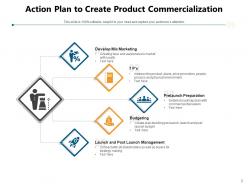
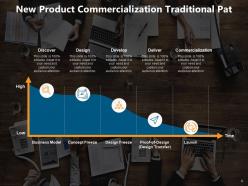
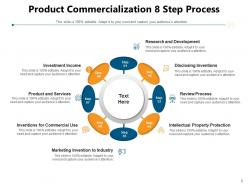
Product commercialization involves market research and validation, product development and testing, regulatory compliance and approvals, manufacturing scale-up, and comprehensive marketing strategy development. These steps work together by identifying target audiences, refining product features, ensuring legal requirements are met, establishing production capabilities, and creating go-to-market plans, ultimately delivering market-ready products that drive revenue growth and competitive advantage.
Market research influences product commercialization strategies by identifying target customer segments, validating pricing models, and revealing competitive positioning opportunities. Through comprehensive market analysis, companies streamline product launches, enhance go-to-market timing, and optimize distribution channels, with many organizations finding that research-driven strategies deliver faster market penetration and stronger customer adoption rates.
Prototyping enables successful product commercialization by validating market fit, refining functionality, reducing development costs, and accelerating time-to-market through iterative testing. Through rapid prototyping, companies across sectors like automotive, healthcare, and consumer electronics streamline design processes, identify potential issues early, and ultimately deliver market-ready products with enhanced customer appeal and competitive positioning.
Determining pricing strategy during commercialization involves analyzing competitor pricing, conducting market research, calculating cost-plus margins, testing price sensitivity, and evaluating value-based pricing models. Through strategic market analysis and customer feedback, companies can optimize pricing structures, enhance profit margins, and position products competitively, with many organizations finding that flexible pricing approaches ultimately deliver stronger market penetration and sustainable revenue growth.
Common challenges include market readiness assessment, pricing strategy development, distribution channel establishment, regulatory compliance navigation, and competitive positioning refinement. These transitions often present both operational and strategic hurdles, with many organizations finding that inadequate market research, insufficient funding allocation, and misaligned cross-functional teams can significantly delay launch timelines, ultimately requiring enhanced coordination and strategic resource planning.
Companies mitigate product commercialization risks through comprehensive market research, phased launch strategies, robust financial planning, strategic partnerships, and continuous customer feedback integration. These approaches enable organizations to identify potential pitfalls early, adjust positioning based on real market data, and build sustainable revenue streams, with many finding that diversified risk management ultimately delivers competitive advantage and accelerated market penetration.
Key factors include target customer demographics, product characteristics, competitive landscape, cost structures, and channel partner capabilities. These considerations enable companies to optimize market reach and operational efficiency, with many retail and technology organizations finding that strategic channel selection significantly impacts sales velocity, customer acquisition costs, and overall market penetration success.
New products require brand awareness building, market education, and trial incentives, while established products focus on differentiation, loyalty retention, and market share expansion. Emerging brands in sectors like fintech emphasize trust-building through transparency and partnerships, whereas established companies leverage existing customer relationships and brand equity, ultimately delivering faster market penetration and sustained competitive advantage.
Key commercialization metrics include revenue growth, market share capture, customer acquisition costs, time-to-profitability, and product adoption rates across target segments. These indicators enable organizations to assess market penetration, operational efficiency, and competitive positioning, with many companies finding that tracking both financial performance and customer engagement metrics ultimately delivers comprehensive insights for strategic decision-making and sustainable growth.
Customer feedback is crucial for product commercialization success, helping identify usability issues, market fit gaps, feature priorities, and pricing sensitivities before launch. Through beta testing, focus groups, and prototype demonstrations, companies significantly reduce market risks, enhance product-market alignment, and accelerate adoption rates, with many organizations finding that early customer input ultimately delivers competitive advantages and faster revenue generation.
Legal considerations include intellectual property protection, regulatory compliance, product liability insurance, consumer protection laws, and employment regulations. These requirements vary significantly across industries, with sectors like pharmaceuticals, financial services, and medical devices requiring extensive regulatory approvals, while consumer goods focus more on safety standards and labeling requirements, ultimately ensuring market readiness and competitive protection.
Partnerships enhance commercialization by providing access to established distribution networks, complementary expertise, shared development costs, and expanded market reach. Through strategic collaborations, companies leverage partner resources for faster market entry, reduced risk exposure, and enhanced credibility, with many organizations finding that joint ventures ultimately deliver accelerated growth and competitive advantages in increasingly complex markets.
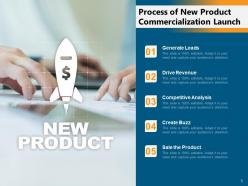
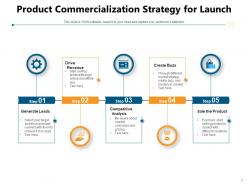
**INPUT**: What are the best practices for creating a go-to-market strategy for a new product? **OUTPUT**: Best practices for creating a go-to-market strategy include comprehensive market research, clear target audience definition, competitive positioning analysis, pricing strategy development, and multi-channel distribution planning. These strategic elements work together by identifying customer pain points, establishing value propositions, and coordinating sales and marketing efforts, with many organizations finding that integrated approaches ultimately deliver faster market penetration and sustainable competitive advantage. **Word count: 60 words**
Innovation accelerates product commercialization by streamlining development cycles, reducing time-to-market, and enhancing competitive differentiation through advanced technologies and methodologies. Through digital prototyping, automated testing, and agile development frameworks, organizations deliver faster product launches, improved market responsiveness, and stronger customer adoption rates, ultimately enabling sustained competitive advantage in increasingly dynamic markets.
Funding and investment accelerate product commercialization by enabling rapid prototyping, market research, manufacturing scale-up, regulatory compliance, and strategic marketing initiatives. These financial resources streamline development timelines, enhance product quality, and support competitive market entry, with many startups and established companies finding that strategic investment partnerships ultimately deliver faster time-to-market and sustainable growth.
-
Content of slide is easy to understand and edit.