

Product Development Strategy Powerpoint Ppt Template Bundles




Try Before you Buy Download Free Sample Product
 Impress Your
 Audience
 100%
100% Editable
 Save Hours
 of Time


Our Product Development Strategy Powerpoint Ppt Template Bundles are topically designed to provide an attractive backdrop to any subject. Use them to look like a presentation pro.
People who downloaded this PowerPoint presentation also viewed the following :
Product Development Strategy Powerpoint Ppt Template Bundles with all 17 slides:
Use our Product Development Strategy Powerpoint Ppt Template Bundles to effectively help you save your valuable time. They are readymade to fit into any presentation structure.









FAQs for Product Development Strategy Powerpoint
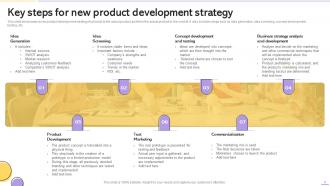
So you've got ideation first, then market research to see if anyone actually wants what you're thinking of making. After that comes concept development and prototyping - basically turning your idea into something real you can test. Testing is huge though, seriously don't rush this part like everyone does. Get feedback, tweak things, then iterate again. I always think the validation stuff early on feels boring but it's what separates successful launches from total flops. Once you've got that dialed in, you can actually launch with a decent strategy instead of just throwing stuff at the wall.
Honestly, just focus on what actually matters to your users first. I always use that impact vs effort thing - though good luck getting your team to agree on what "high impact" even means lol. Quick wins are great if they don't eat up all your dev time. Real user feedback beats internal guessing every single time. You need some kind of scoring system that looks at customer value, how hard it'll be to build, and whether it fits your strategy. But here's the thing - stay flexible because you'll definitely learn stuff that changes everything.
Look, market research is like having GPS for product development - saves you from building cool stuff nobody actually wants. Start by figuring out what problems people really have, then keep testing your prototypes as you go. I've watched so many brilliant products flop because teams thought they knew better than their customers (spoiler: they didn't). Research also shows you what competitors are doing and how to price things right. Just build those research check-ins into your timeline from the beginning. Don't be that person who treats it like an optional extra.
Build feedback loops right into development - don't just tack it on later. Regular check-ins with customers work: surveys, interviews, beta groups, whatever fits. Make it systematic though, not random. Honestly, I've watched so many teams collect tons of feedback then just... leave it in spreadsheets forever. You need a real process for prioritizing what matters and actually doing something with it. Also, tell customers how their input changed things - builds loyalty and they'll give you better feedback next time. That closing the loop part is huge but most people skip it.
Honestly, you've gotta get everyone talking from the start - like actually talking, not just assuming they're aligned. Map out who depends on who first so you can catch problems before they blow up. Weekly cross-team standups are clutch, and shared Slack channels help tons for quick updates. I'd use something like Miro for workshops too. The thing is, engineering might think they're building what design wants, but sales is promising something totally different to clients. Happens all the time. Make sure all teams are tracking the same success metrics. Otherwise you'll have three different products instead of one.
Look, you need both sides of this - stuff that tells you if you're heading in the right direction (dev velocity, user feedback, hitting milestones) and the actual results after launch (revenue, retention, acquisition costs). Most teams get obsessed with metrics that look good but don't actually mean anything. Pick maybe 3-5 things that actually move the needle for your business. I'd set up a simple dashboard and check it monthly - not daily, you'll drive yourself crazy. Track how well you executed AND whether it worked. Both matter.
Start with whatever's driving you crazy right now - don't try fixing everything at once. Figma or Sketch work great for design stuff, and Jira or Linear help track projects without the chaos. Slack's obvious for messaging, though Notion's pretty solid too if your team's into that. For user research, Maze and UserTesting are fast. The real trick is getting everyone to actually stick with the same tools (good luck with that). Zapier's clutch for connecting different platforms - saves you from doing boring manual stuff. Oh, and honestly? Sometimes the fanciest tool isn't what works best for your specific team.
Honestly, just nail down your budget and timeline first before you get excited about features. I learned this the hard way watching teams disappear into endless "research phases." Build the boring, basic version that actually works - you can add cool stuff later. Way too many products die because everyone wanted to build the Ferrari before proving people even wanted a bicycle, you know? Ship something simple that solves the real problem, then let users tell you what sucks. The question I always come back to: what's the absolute minimum that still delivers value?
Oh man, there's so many ways to mess this up lol. Don't skip user research - that's like driving blindfolded. Building random features nobody wants is another classic mistake. Scope creep will kill you too, where your "simple" thing suddenly needs 47 different features. I learned this the hard way honestly. Always set success metrics upfront or you won't know if you're winning or losing. Get stakeholders involved early! Otherwise you'll build something and they'll be like "um, this isn't what we meant." Start small, test fast, ship something basic first.
Dude, yes - build an MVP for sure. Don't spend months creating stuff people might not even use. Get your basic idea out there fast so you can see if it actually solves a real problem. I've watched so many teams skip this and totally kick themselves later. Way better to learn what sucks (and what doesn't) before you're in too deep, you know? Start super minimal - just enough to give users value. Then tweak it based on what they tell you. Saves you massive time and money down the road.
Dude, agile is a total game-changer for product development. You work in these short 2-week sprints instead of planning everything to death upfront. Gets you feedback way faster, which honestly saves your ass when you're heading in the wrong direction. Your team actually talks to each other more, and you catch the dumb mistakes early. I mean, nobody wants to build something for months just to find out users hate it. It's weirdly addictive once you get the hang of it - you can pivot so much quicker when things aren't clicking. Start small if you're jumping in.
Honestly, digital tools are a game changer for product dev. Cloud platforms let teams collaborate in real-time instead of endless email chains. Analytics give you actual user data rather than just guessing what people want. Simulation software is huge - I don't get why more companies skip it early on. It'll catch design problems before you waste money building prototypes. Speaking of prototypes, digital ones let you test ideas super fast and cheap. Map out your current process first, then figure out where these tools could speed things up or fix bottlenecks.
Honestly, sustainability changes everything about how you develop products now. You can't just tack it on at the end anymore - material sourcing, manufacturing, packaging, disposal - all of it needs thinking through from the start. Yeah, R&D costs jump initially, but you'll probably save money on waste and energy efficiency. Plus Gen Z actually cares about this stuff, so it's becoming a real competitive edge rather than just corporate virtue signaling. I'd start with a lifecycle assessment of what you're making now to see where you're screwing up the most, then tackle those areas first in your next cycle.
Honestly, competitive analysis is just stalking your competition but making it sound professional. Check out what they're building and how they price things - their premium tiers show you what features they think actually matter. I probably waste half my day browsing competitor sites, but whatever. The goal isn't copying them though. Find the gaps where you can either build something they're missing or just do it way better. It helps validate whether you're prioritizing the right stuff and actually building something different enough to matter.
Honestly, storytelling changes everything because it makes you think about actual people using your product, not just cool features. Like, when you write out how someone's day unfolds with your app, suddenly you spot all these gaps you totally missed before. Stories stick in people's heads way better than those endless feature lists too. Your team starts getting aligned around this shared vision instead of arguing over random specs. I always tell people to try writing a "day in the life" thing for their main user - sounds cheesy but it works. Plus stakeholders actually pay attention when you're telling a story versus reading bullet points at them.
-
Content of slide is easy to understand and edit.
-
Design layout is very impressive.