

Product Launch And Marketing Communication Plan




Try Before you Buy Download Free Sample Product
 Impress Your
 Audience
 100%
100% Editable
 Save Hours
 of Time


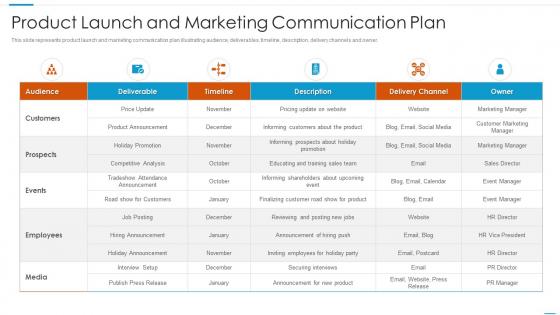
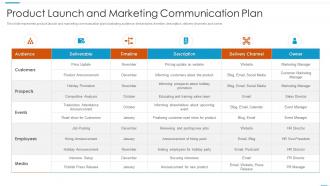
This slide represents product launch and marketing communication plan illustrating audience, deliverables, timeline, description, delivery channels and owner.
People who downloaded this PowerPoint presentation also viewed the following :
Product Launch And Marketing Communication Plan with all 6 slides:
Use our Product Launch And Marketing Communication Plan to effectively help you save your valuable time. They are readymade to fit into any presentation structure.





FAQs for Product Launch And
Honestly, most teams mess this up by skipping the basics. First figure out who you're actually selling to - like, be specific about it. Then nail your value prop so people actually give a damn. Here's where it gets tricky though: you need everything hitting at once. PR, social, email, sales calls - coordinate that timing or you'll just fizzle out. Oh and don't forget the boring stuff like prepping your sales team on the pitch. Your support people better be ready too because nothing kills momentum like confused customers. It's all about that concentrated push instead of dragging it out forever.
Honestly, market research is like having a cheat sheet for your launch. It shows you exactly who wants your stuff and what they'll actually pay for it. You can figure out where your audience hangs out online, what problems keep them up at night, and which features matter most to them. The best part? You'll uncover where your competitors are totally dropping the ball. Instead of throwing darts in the dark, you'll know the right channels, timing, and how to position everything. Start with some surveys and focus groups - sounds boring but the insights will shape your pricing and copy way better than guessing would.
Honestly, segmenting your audience is like the difference between shotgun marketing and actually hitting your target. You'll message completely differently to each group because they care about totally different things. A startup founder wants to hear about efficiency gains, while an enterprise buyer is worried about security and compliance. I learned this the hard way on my first launch - wasted so much budget trying to please everyone at once. Pick 2-3 main segments and craft specific messaging for each one. Different pain points, different benefits you highlight, sometimes even different pricing. It's way more work upfront but your conversion rates will thank you.
Figure out where your customers actually hang out first. LinkedIn? TikTok? Or are they still obsessed with checking email? Don't just chase whatever seems cool right now - go where they go. Your budget matters too since paid ads will drain your wallet crazy fast. I'd test maybe 2-3 channels max instead of trying everything at once. You'll burn out otherwise. Stay consistent with whatever you pick and track the results religiously. Once something's clearly working, that's when you double down and maybe add another channel. Way better than spreading yourself too thin from day one.
Track your sign-ups and downloads first, but activation rates matter way more - are people actually using the thing? Customer support tickets can be gold mines honestly, sometimes angry users tell you exactly what's broken. I'd watch retention super closely too since early churn is brutal. Revenue's obviously important but I always look at user behavior patterns first. Oh and set up your tracking dashboard before you launch - trust me on this one, you don't want to be digging through data when everything's on fire. Feedback scores help too but they're kinda lagging indicators.
Figure out exactly what problem you're solving and who has it. Your value prop needs to answer "why should I care?" in one clear sentence - focus on what they get, not what your product does. Skip the buzzword nonsense (nobody wants "synergistic solutions," trust me). Numbers work way better than vague promises: "Save 2 hours daily" crushes "increase efficiency." Test it with real potential customers, not just your coworkers who'll lie to be nice. The goal? People should think "finally, someone gets my problem" instead of "that's neat I guess."
OK so you'll want to build up excitement like 4-6 weeks before launch - that's the sweet spot I've found. Start with teaser posts and behind-the-scenes stuff on social. Countdowns are kinda cheesy but they actually work really well. Get your email list hyped with "coming soon" vibes - people eat up that exclusive feeling. Maybe do early access for your VIP customers or some influencers? Oh and definitely try a soft launch first with a smaller group. You need those real testimonials, not the fake-sounding ones. Hit up industry blogs for coverage too. The whole point is staying consistent across everything so you're not just shouting into the void.
First thing - figure out what your company actually wants to achieve this quarter. Market expansion? New customers? Whatever it is, that's your north star. Honestly, the best thing I ever started doing was grabbing coffee with sales, marketing, and whoever else before locking anything down. People get weird when they're not looped in early. Your metrics need to match what leadership genuinely cares about - revenue, users, brand stuff. Put together a simple doc showing how your launch hits their goals. Run it by your team first though, because there's always something you'll miss.
Honestly, the worst thing you can do is launch without actually knowing who you're selling to - like, really knowing them, not just guessing. Timing screws people over constantly too. Either they rush out half-baked stuff to beat competitors or they totally miss when their audience actually wants to buy. Testing is where teams get way too excited and skip steps (been there). Your messaging can't be confusing either - people won't figure it out for you. Oh, and make sure your sales team knows how to pitch it! Sounds obvious but... yeah. Start with talking to real customers first, then build from there.
Honestly, start teasing way before launch - behind-the-scenes stuff gets people hooked. Don't just spam your followers with "buy this!" posts though, that's annoying as hell. Share the real story behind why you made it. Partner with influencers who actually fit your vibe - fake endorsements are so obvious. Create a hashtag and get people posting about it themselves. Oh, and this is huge - actually respond when people comment! Social media isn't a billboard, it's supposed to be social. Most brands mess this up completely.
Honestly? Give yourself at least 3-4 months or you'll be stressed out of your mind. First month, nail down your market research and positioning - boring but crucial stuff. Then spend month two on marketing materials and building some buzz (this part's actually fun). Month three gets hectic with partnerships, press stuff, and prepping your sales team. Final month is go-time: campaigns launch, PR kicks in, and you're basically glued to your laptop watching metrics. Oh, and definitely work backwards from your date because something always goes wrong. Trust me on this one - I've watched too many rushed launches crash and burn!
Just start grabbing feedback from everywhere - surveys, support tickets, even random social media posts about you. Your customer success people are honestly your best resource since they're chatting with users all day anyway. Set up those automated emails at 7 and 30 days, but the real gold comes from hopping on calls with customers who'll actually talk to you. Sort the feedback by what's broken most often and what hurts the worst. Then - and this part's crucial - tell people what you fixed based on their input. Don't be one of those companies that just collects data and does nothing with it.
Honestly, soft launches are clutch for catching problems before they explode in your face. You'll get real feedback from actual users instead of just guessing what people want. Bugs get spotted early, messaging gets tweaked, and you're not blowing your whole marketing budget on something that might flop. The buzz factor is pretty sweet too - nothing beats having real customers validate your idea. I'd start with maybe 100-200 people max, then use whatever data you collect to fix pricing, features, all that stuff. Way smarter than going big right out the gate and hoping for the best.
Get your sales team up to speed at least two weeks out - product features, pricing, all that stuff. Mock calls are clutch for practicing objections and demos. I swear by making a simple FAQ sheet with competitive advantages because they'll be glued to it those first couple weeks (learned this the hard way). Target customer profiles should be crystal clear too. Oh and set up some way for them to ping you with unexpected prospect questions - there's always curveballs you didn't think of. Having all the sales collateral locked and loaded before launch day will save you so much stress.
Honestly, influencer marketing is probably your best bet right now. People just tune out regular ads completely - like I can't even remember the last ad I actually paid attention to. But when someone I follow recommends something? That hits different. Find creators whose followers match who you're trying to reach. Don't just go for whoever has a million followers if their audience isn't your people. You want them to actually use your stuff and genuinely like it. Real partnerships work way better than obvious sponsored posts. Oh, and start reaching out like 6-8 weeks early so they're not rushing to make content.
-
Great product with effective design. Helped a lot in our corporate presentations. Easy to edit and stunning visuals.
-
Out of the box and creative design.