

Product Requirement Priority Tabular Mobile App Development Play Store Launch




Try Before you Buy Download Free Sample Product
 Impress Your
 Audience
 100%
100% Editable
 Save Hours
 of Time


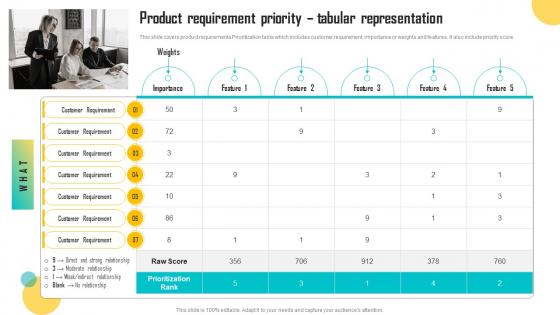
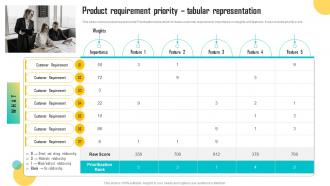
This slide covers product requirements Prioritization table which includes customer requirement, importance or weights and features. It also include priority score
People who downloaded this PowerPoint presentation also viewed the following :
Product Requirement Priority Tabular Mobile App Development Play Store Launch with all 6 slides:
Use our Product Requirement Priority Tabular Mobile App Development Play Store Launch to effectively help you save your valuable time. They are readymade to fit into any presentation structure.





FAQs for Product Requirement Priority Tabular Mobile App Development
So there's a few ways to tackle this. MoSCoW method is probably the easiest - just bucket everything into Must have, Should have, Could have, Won't have. Great for getting stakeholders on the same page. Value vs effort matrices are solid too, helps you spot those quick wins. The Kano model's really cool for understanding what'll actually make customers happy, but honestly it's kind of a pain to set up. Story mapping works if you're thinking through user flows. I usually mix like 2-3 approaches - start with MoSCoW to weed stuff out, then do some value/effort scoring. Way more confidence that way.
Look, stakeholder input can totally derail your priorities if you're not smart about it. Everyone's gonna have opinions - customers, sales team, engineers, executives. But here's what I learned the hard way: some people just love pushing their favorite features no matter what. Map out who actually has influence versus who just talks loudly. Then use something like RICE scoring to make it objective. I used to just collect feedback and hope for the best, but you really need structure so you can actually defend your choices later. Otherwise you'll be changing direction every week.
Customer feedback is your best guide for figuring out what to build next. Use it to check if your assumptions are right and find the real pain points people have. Too many teams (mine included, honestly) waste time on features users never wanted because we didn't ask soon enough. Set up surveys, interviews, and track how people actually use your stuff. Then sort the feedback into themes and rank your requirements by how often customers mention them. It's pretty straightforward once you get into the habit of doing it consistently.
So MoSCoW is this prioritization thing where you sort features into Must have, Should have, Could have, and Won't have. Pretty simple concept but it actually works. What I love about it is the "Won't have" bucket - finally somewhere to dump all those random ideas without people getting offended. No more of that "everything's critical" BS from stakeholders either. Just grab your team, list out all the features you're considering, then argue about which category each one belongs in. The fights over Must vs Should are always entertaining but you'll get there eventually.
Yeah totally! Actually works way better than sticking to just one framework. I'd start broad with something like MoSCoW to sort your features into buckets. Then get more specific - use RICE scoring on your "Must Haves" to really rank them. Kano model stuff can layer on top if you want to understand what'll actually delight users. Just don't go overboard with like 5 different frameworks or you'll be scoring features forever instead of shipping them. Pick maybe 2-3 that look at different angles rather than doing the same analysis twice. Makes the whole process way less of a headache.
Dude, you'll end up building random features nobody wants while users are literally begging for basic stuff that works. Seen it happen so many times - teams spend forever on some shiny dashboard while their main product is totally broken. Your budget gets wasted, deadlines get missed, and everything feels equally "urgent" because there's no real ranking system. Scope creep becomes a nightmare. Honestly, just sort things into three buckets: must-have, should-have, and nice-to-have. Sounds simple but it'll save your sanity. Trust me on this one.
Think of market trends as your reality check for feature planning. You're seeing AI everywhere or mobile-first design taking over? Those features need to move up your list because that's where users expect things to go. Nobody wants to ship something that already feels behind the times - learned that one the hard way! Pick 2-3 good trend sources you actually trust (not just whatever's trending on LinkedIn). Check your roadmap against them every quarter. The trick is focusing on trends that actually match your specific users, not just chasing every shiny new thing the industry's talking about.
Honestly, I'd focus on business value first - revenue impact, cost savings, that kind of stuff. User impact matters too (how many people affected and how badly). RICE framework is solid if you want something structured - Reach, Impact, Confidence, Effort. Don't forget technical feasibility though. Sometimes you fall in love with a feature that'll take your engineers six months to build, and it's just not worth it. Oh, and pick like 2-3 metrics max and stick with them. You'll drive yourself crazy trying to measure everything perfectly.
Connect every product decision back to your actual business goals - sounds obvious but most teams totally miss this. Document what you're trying to achieve (with real numbers), then create scoring criteria that map features to those outcomes. Meet with stakeholders regularly or you'll end up like my last team... built an entire dashboard nobody wanted because we assumed what leadership cared about. Weighted scoring or value vs effort matrices help make these conversations way less subjective. Your roadmap should clearly show why you're doing Feature X before Feature Y. Makes everything so much easier when people can see the business logic.
Honestly, the biggest issue is everyone's working off different assumptions about what matters most. Like, one person thinks feature X is critical for users while someone else is focused on completely different business goals. Without those random coffee chats or quick desk visits, you lose so much context that usually helps with these calls. Async communication makes it worse - important nuances get buried in email threads that go nowhere. I'd set up dedicated priority sync meetings (not just regular standups) and maybe try something like RICE scoring so at least you're all using the same criteria to rank stuff.
Honestly, every 2-4 weeks works for most teams. I'd just sync it up with your sprint planning since you're already meeting anyway. Weekly feels like overkill unless you're dealing with some crazy fast-moving stuff or just launched something. My take? Start bi-weekly and see how it goes - you can always adjust if things are shifting around more than expected. The trick is staying flexible without driving your team nuts with constant priority changes. Oh, and if your market's pretty stable, you might even get away with monthly reviews.
Honestly, user personas are a game-changer for this. They stop you from building random "cool" features that nobody actually needs. Here's what works: rank your personas by how much they're worth to your business first. Then when you're torn between features, just ask which persona benefits most and how badly they need it. I've watched teams burn through months on stuff that seemed awesome but solved zero real problems. Map every potential feature back to specific persona goals - if it doesn't clearly fix something your core users are struggling with, skip it. Sounds obvious but you'd be surprised how often people forget this basic step.
Dude, clear priorities are everything for hitting your deadlines. Your team actually ships stuff faster when they know exactly what they're building next - no second-guessing or wasted effort. The worst thing? Scope creep mid-sprint. I've watched so many teams completely torpedo their timelines because someone kept changing what was "urgent." You'll also avoid getting blocked on dependencies if you sequence things right from the start. Pick your top 3-5 features and then just... stick with them. I know it's tempting to shuffle priorities weekly, but don't. That's where teams go to die.
Oh man, this happens ALL the time and it's such a headache. Sales wants shiny new features to close deals. Engineering's obsessing over fixing old code. Marketing needs something flashy for their next campaign. You've got to set clear criteria upfront that everyone actually buys into - revenue impact, customer happiness, strategic fit, whatever makes sense. Make the decisions transparent and data-based instead of just whoever yells loudest (though honestly, sales usually wins that contest). Regular cross-department meetings help where people can fight for their stuff, but tie final calls back to your framework.
Honestly, I'd start with whatever your team already uses well. Productboard and Aha! are the heavy hitters - they've got scoring systems and stakeholder dashboards built in. But sometimes a simple spreadsheet with weighted criteria does the job just fine (I know, I know, sounds boring but it works). Notion's pretty solid for this stuff too. Jira has prioritization features if you're stuck in that world anyway - though I find their interface kinda clunky for this. The key is picking something that won't create more friction. You can always upgrade later when you need fancier collaboration tools or more complex scoring methods.
-
I'm happy to discover your PowerPoint presentations and templates. They met my expectations precisely. Very innovative!
-
SlideTeam makes creating presentations easy. Unlimited products, premium quality designs and affordable.