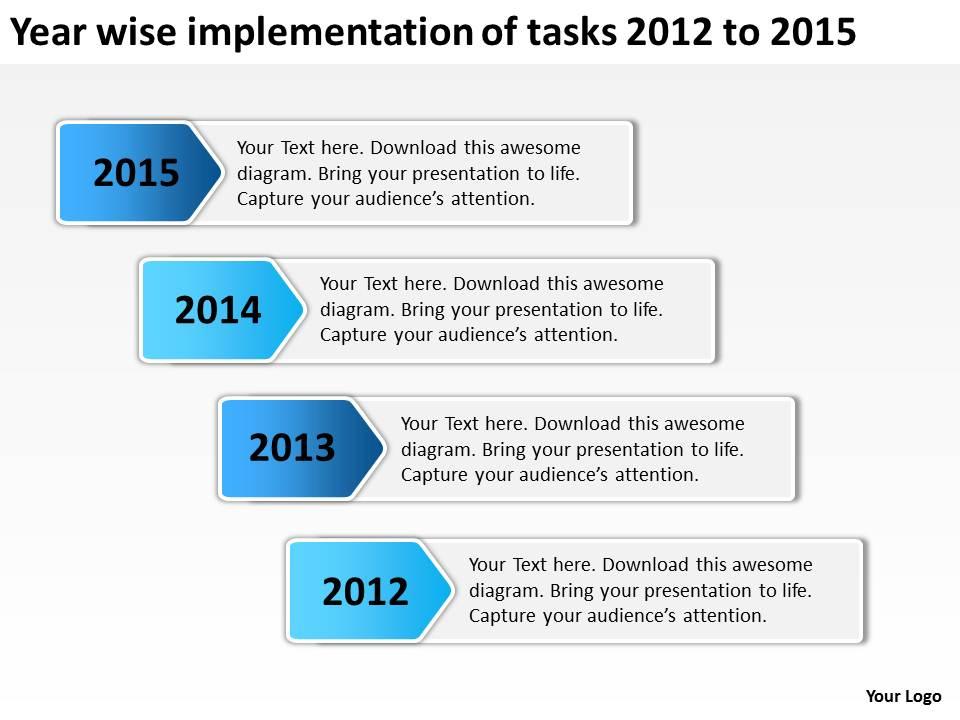
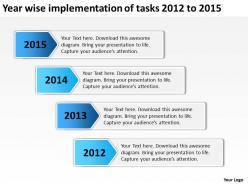
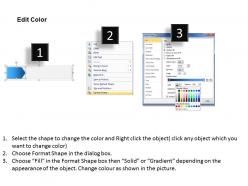
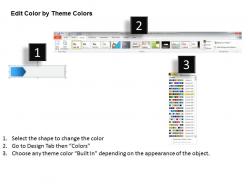
Product roadmap timeline year wise implementation of tasks 2012 to 2015 powerpoint templates slides
Try Before you Buy Download Free Sample Product
Audience
Editable
of Time
Co-opt our product roadmap timeline Year wise implementation of tasks 2012 to 2015 powerpoint templates slides into your team. They will prove a worthy asset.
People who downloaded this PowerPoint presentation also viewed the following :
Product roadmap timeline year wise implementation of tasks 2012 to 2015 powerpoint templates slides with all 5 slides:
Some people like to create their presentations from scratch but there are many reasons why they shouldn?t. Professionally designed product roadmap timeline Year wise implementation of tasks 2012 to 2015 powerpoint templates slides ensure slides are consistent from top to bottom.
FAQs for Product roadmap timeline year wise implementation of tasks 2012 to 2015
Key components include strategic objectives, feature releases, development milestones, resource allocation timelines, and stakeholder dependencies. These elements work together by aligning cross-functional teams, establishing clear priorities, and communicating progress transparently, with many organizations finding that comprehensive roadmaps enhance decision-making speed and ultimately deliver stronger product-market alignment.
PowerPoint templates enhance product roadmap visual appeal by providing professional layouts, consistent formatting, color-coded timelines, structured milestone markers, and clear hierarchical information display. These design elements streamline complex project data into digestible visual narratives, enabling stakeholders to quickly grasp development phases, resource allocation, and strategic priorities, ultimately delivering more effective presentations and stronger stakeholder alignment.
Timeline formats enhance product roadmap clarity by providing chronological visibility, milestone tracking, dependency mapping, and stakeholder alignment capabilities that other formats often lack. These structured presentations enable teams to visualize development phases, anticipate resource requirements, and communicate progress more effectively to executives and cross-functional teams, ultimately delivering improved project coordination and strategic decision-making across organizations.
Different industries utilize product roadmap timelines by adapting frameworks to sector-specific needs, with technology companies emphasizing feature releases and sprint cycles, healthcare organizations focusing on regulatory compliance milestones, and manufacturing firms highlighting production phases and supply chain dependencies. These customized presentations enable stakeholders across banking, retail, and pharmaceutical sectors to visualize strategic priorities, resource allocation, and delivery schedules, ultimately enhancing cross-functional alignment and accelerating decision-making processes.
High-quality product roadmap timeline PowerPoint templates should include customizable timeline layouts, milestone markers, priority indicators, resource allocation sections, and stakeholder communication tools. These features streamline strategic planning by enabling clear visual progress tracking, flexible formatting for different audiences, and seamless integration with existing workflows, ultimately delivering enhanced project transparency and stakeholder alignment across organizations.
Color schemes and design choices significantly impact audience understanding by enhancing information hierarchy, improving retention, and reducing cognitive load through strategic visual cues. Well-designed templates with consistent color coding help audiences quickly identify priorities, track progress phases, and distinguish between different product categories or timelines, ultimately delivering clearer communication and more effective stakeholder alignment across complex roadmap presentations.
Best practices for customizing product roadmap timeline templates include aligning visual elements with brand colors, adjusting timeframes to match project phases, prioritizing feature clarity through consistent formatting, and incorporating stakeholder feedback loops. These customizations enhance communication by streamlining executive presentations, facilitating cross-team alignment, and delivering strategic transparency, with many organizations finding that well-customized roadmaps accelerate decision-making processes.
Stakeholders can effectively collaborate using product roadmap timeline templates by establishing shared visibility into project milestones, dependencies, and resource requirements across departments. These templates facilitate alignment between product, engineering, marketing, and executive teams through centralized planning workflows, regular checkpoint reviews, and transparent priority tracking, ultimately delivering faster decision-making and reduced miscommunication throughout development cycles.
Common challenges include unclear prioritization, misaligned stakeholder expectations, insufficient detail for decision-making, and poor visual communication of dependencies and timelines. Well-designed templates mitigate these issues by providing structured frameworks that ensure consistent information hierarchy, clear milestone visualization, and standardized formatting, ultimately enabling more effective stakeholder alignment and strategic decision-making across product development cycles.
Scalability is crucial in product roadmap timeline presentations as it demonstrates how features, resources, and market expansion will grow systematically over time. Templates address this by providing flexible frameworks with modular sections, progressive milestone structures, and adaptable timelines that accommodate evolving requirements, with many organizations finding that well-designed templates streamline updates while maintaining strategic clarity across development phases.
Interactivity transforms product roadmap presentations by encouraging audience participation through live polls, Q&A sessions, clickable timeline elements, and collaborative feedback tools. These engagement techniques help presenters gauge stakeholder understanding, address concerns in real-time, and build consensus around strategic priorities, with many product teams finding that interactive presentations significantly improve buy-in and accelerate decision-making processes.
Incorporating milestones into PowerPoint templates enhances product roadmap clarity by creating visual checkpoints that highlight key deliverables, critical decision points, and phase completions throughout the development cycle. These strategic markers enable teams to track progress more effectively, communicate dependencies clearly to stakeholders, and maintain alignment across departments, with many organizations finding that milestone-driven roadmaps significantly improve project transparency and accelerate decision-making processes.
Common mistakes when creating product roadmap timeline PowerPoint presentations include overcrowding slides with excessive detail, using inconsistent visual formatting, failing to align timelines with stakeholder expectations, and neglecting to build in flexibility for scope changes. Through strategic template selection and clear milestone prioritization, product teams streamline communication, enhance stakeholder buy-in, and maintain strategic focus, ultimately delivering more cohesive roadmaps that adapt to evolving business requirements.
Incorporating feedback loops into product roadmap timelines enables teams to identify issues early, validate assumptions, and adjust priorities based on real user data and stakeholder input. These iterative checkpoints streamline development by reducing costly late-stage changes, enhancing product-market fit, and ultimately delivering solutions that better meet customer needs, with many organizations finding significantly improved success rates.
Current product management trends influencing roadmap timeline templates include agile methodologies, outcome-based planning, cross-functional collaboration, data-driven decision making, and customer-centric development cycles. These approaches streamline template designs by emphasizing flexible sprint structures, measurable KPIs, and stakeholder alignment features, with many organizations finding that modern templates enhance strategic visibility, accelerate product delivery, and ultimately deliver competitive advantage through better resource allocation.
-
Excellent
-
Great product with highly impressive and engaging designs.
-
Very unique and reliable designs.