


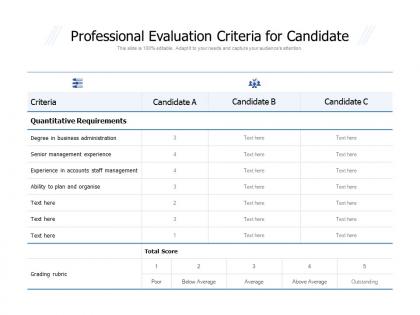
Professional evaluation criteria for candidate




Try Before you Buy Download Free Sample Product
 Impress Your
 Audience
 100%
100% Editable
 Save Hours
 of Time


Catalyze change with our Professional Evaluation Criteria For Candidate. They give a boost to forward looking ideas.
People who downloaded this PowerPoint presentation also viewed the following :
Professional evaluation criteria for candidate with all 2 slides:
Our Professional Evaluation Criteria For Candidate are advocates for change. They encourage folks to follow different approaches.
FAQs for Professional evaluation
Dude, start with decision-making skills and emotional intelligence - those are must-haves. Can they handle unclear situations and talk to different people without being weird about it? I've watched so many smart people completely fail at leadership because they sucked with people. It's kinda sad honestly. You also want someone who develops their team instead of just bossing them around. Check if they're adaptable too. When things go sideways, do they pivot or freeze up? During interviews, make them give real examples of this stuff - hypotheticals are useless.
Ask behavioral questions that show how they actually work with people - like when they've disagreed with a team or handled tough feedback. My go-to is "what energizes you at work" because people get so honest with that one. Get other team members involved in interviews too so you're not just going off your own gut feeling. Oh and don't fall into the trap of hiring people exactly like yourselves - you want someone who'll bring something new to the table, not just fit in perfectly. Cultural fit is more about work style than personality clone, if that makes sense.
Honestly? It's all about the role level. Senior people need to jump in fast and lead others, so experience wins there. But for junior to mid-level spots, I'd go with potential every time. Some of my best hires had messy resumes but crazy good learning attitudes - way better than the "perfect" candidates. You want someone who adapts quickly and actually grows. Here's what works: make a little scoring sheet before you start interviews. Weight experience vs potential based on what that specific job actually needs. Sounds nerdy but it keeps you honest about what matters most.
Dude, you gotta start asking behavioral questions - they're game changers. Instead of "How would you handle an angry customer?" try "Tell me about a time you dealt with a difficult customer." You'll get actual stories, not just rehearsed BS everyone memorizes. Real situations show you how they think under pressure. Their communication style comes through naturally. Plus you can spot the people who are just winging it (honestly, happens more than you'd think). Use that STAR method thing to dig deeper - situation, task, action, result. Throw in 3-4 behavioral questions per interview and you'll finally see who these people actually are.
Honestly, I'd split this into two totally different approaches. Tech people? Hit them with actual coding challenges and see how they think through problems logically. You're looking for solid programming skills, whether they get system design, and if they can explain complex stuff clearly. Creative roles are way trickier though - I always look at their portfolio first, then give them a real brief to tackle. Watch how they handle feedback too, that's huge. Both types need to play nice with teams, but creatives need that special spark you can't really teach. Skip the generic interview questions and build specific tests for each role type instead.
Honestly, just weight them based on what actually makes people succeed in that job. Technical roles? Go 60% hard skills, 40% soft skills. Leadership positions are the opposite though - flip that ratio completely. Think about your best performers and what got them there. Create rubrics for both areas so you're not just making stuff up in interviews. Practical assessments work great for testing hard skills. Behavioral questions help with the soft stuff, plus see how they vibe with the team. The trick is being deliberate about measuring both instead of accidentally focusing too much on one side.
Structured interviews are your best bet - same questions for everyone, with scoring rubrics so you're not just winging it. Also, try blind resume reviews where you strip out names and other identifying stuff. Work samples are honestly game-changers because you'll actually see what people can do instead of just hearing them talk about it. Get a panel together for interviews since one person's bias is pretty much inevitable. Oh, and document everything with standardized forms - sounds boring but it saves you later. Having multiple people involved helps a ton. Just don't let "culture fit" turn into "do I want to grab beers with this person."
Dude, adaptability is huge - probably top 3 things to look for. Everything's changing so fast these days, and people who freak out when priorities shift or new systems drop? They're gonna have a rough time. You want someone who actually gets excited about change instead of panicking. When you're interviewing, ask about times they had to learn something brand new super quickly. Or when their whole job suddenly went a different direction. Good candidates treat curveballs like puzzles to figure out. Major red flag though - anyone who's obsessed with "that's not how we used to do it."
Look at time-to-hire and offer acceptance rates first - those tell you if your process is actually working. Quality of hire is harder to pin down but track 90-day reviews and retention rates. Interview-to-hire conversion matters too. Oh, and definitely survey candidates about their experience because word gets around fast if your process sucks. Manager satisfaction scores help you see if you're sending them decent people. I'd compare interviewer scores to make sure everyone's on the same page. Pick maybe 3-4 of these and check monthly. You'll start seeing patterns pretty quick.
Oh definitely do reference checks! They're like getting the behind-the-scenes scoop on what someone's really like to work with. Your interviews can only tell you so much, right? But references will spill on stuff like - do they actually meet deadlines, how do they handle stress, are they a team player or kind of a nightmare. I've seen people dodge bullets because a reference was like "yeah... they had some issues with showing up on time." Ask specific questions too, not just the generic "would you hire them again" thing. It's your last chance to make sure you're not making a huge mistake before you extend an offer.
Watch out for affinity bias - that's when you favor people who remind you of yourself. Then there's the halo effect where one impressive thing makes you overlook red flags. "Cultural fit" is honestly just hiring people you'd grab drinks with half the time. Confirmation bias kicks in too. You form a quick opinion then hunt for proof you're right. Oh, and don't assume someone's career gap means they're lazy - maybe they were caring for family or whatever. Best fix? Write down the same questions for everyone beforehand. When you debrief afterward, talk about actual examples instead of just vibes.
Yeah, leadership skills totally change by industry. Tech moves crazy fast, so you want people who adapt quickly and think outside the box. Healthcare? That's all about ethics and handling emergencies - someone literally dies if you mess up. Financial services gets obsessed with risk management and staying compliant with regulations. Manufacturing is different again - safety first, then operational stuff. Honestly, the basics like communication never change though. You just gotta figure out which technical skills matter most for your specific sector and weight those heavier when you're evaluating candidates.
Honestly, emotional intelligence can make or break a hire - I've watched super talented people crash and burn because they couldn't handle team drama or keep their cool when things got messy. For leadership roles especially, it's often more crucial than raw skills. During interviews, dig into how they've dealt with conflict or motivated others through tough times. Behavioral questions work great here - "walk me through a disagreement you had with a coworker" reveals so much about their people skills. You're basically looking for someone who can read the room, manage their own reactions, and not be a nightmare to work with.
Honestly, team interviews are so much better than doing them solo. You'll catch way more about a candidate when multiple people are involved. Like, maybe you're great at spotting technical skills but miss red flags about attitude - having others there fills those gaps. One person's bias won't tank a good candidate either. The trick is giving everyone specific things to evaluate instead of just winging it. I learned this the hard way after some messy hiring decisions. Structure it so each interviewer owns different areas, then debrief together afterward. You get a much clearer picture of who they really are.
There's actually some pretty interesting stuff happening beyond regular video calls. Async video responses let people record answers when they're comfortable, which honestly seems way less stressful. Collaborative tools like Miro work great for watching how someone tackles problems in real-time. Virtual escape rooms sound ridiculous but they're weirdly good at showing teamwork skills. AI coding tests and peer programming are getting popular too - oh, and some companies are even doing VR stuff now. Mix maybe 2-3 approaches since remote hiring makes it harder to get a real read on people. I'd pick one new thing to test next quarter and compare how it goes versus your usual process.
No Reviews