

Project activities resource portfolio dashboards






Try Before you Buy Download Free Sample Product
 Impress Your
Audience
 100%
Editable
 Save Hours
of Time


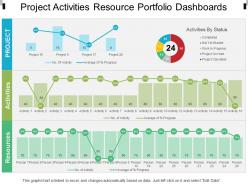
Choose our project activities resource portfolio dashboards PowerPoint template and attract the attention of your team. This is a modernly designed PPT slide using excel linked charts. Charts are used for creating visual explanation of data and presenting business information in a simple and easy to understand way. When preparing business reports or business presentations the first step is deciding on the format of the charts you are going to use. Our project activities resource portfolio dashboards PowerPoint slideshow is commonly used to represent data that shows changes over time, which helps people visualize trends. Our data driven project activities resource portfolio Presentation visual slide is easy to understand and fully modifiable. The graphics are also beneficial for analyzing your business data and drawing out conclusions for future. So, make sure you use our overwhelming project activities resource portfolio dashboards PPT design and track your business performance in future. Check in to our Project Activities Resource Portfolio Dashboards world. Luxuriate in the facilities offered.
People who downloaded this PowerPoint presentation also viewed the following :
Project activities resource portfolio dashboards with all 6 slides:
Our Project Activities Resource Portfolio Dashboards are truly broad minded. They accept and cater for any viewpoint.


FAQs for Project activities
Start by mapping what you've actually got - people, money, equipment, time. Then figure out how to spread it across your tasks. Most projects crash here if you're not paying attention. Track your utilization rates and build in buffer time because surprises always happen. Scheduling's huge too - can't have everyone fighting over the same designer when deadlines hit. I learned this the hard way on my last project. Set up regular check-ins to see how you're doing versus the plan. Be ready to shuffle things around when stuff inevitably changes.
Honestly, start by figuring out what you actually have vs what you need - most places are terrible at this basic stuff. Focus on high-impact things first. Yeah, cutting the "nice to have" projects sucks but you gotta do it. Track your ROI with real data so you know where time and money are actually paying off. Cross-train people because when Sarah's out sick, you don't want everything falling apart. Oh and set up monthly check-ins to shuffle things around based on what's working. The whole thing's pointless if you're not adjusting as you go.
Dude, resource management without tech is basically impossible now. AI predicts what you'll need before you even know it. Cloud platforms pool everything together so you're not juggling fifty different systems. Real-time dashboards show you exactly where things are breaking down - honestly saved my ass so many times. The analytics part is crazy good at catching patterns you'd totally miss manually. My advice? Don't try to overhaul everything at once. Pick whatever's driving you nuts right now and automate that first. You'll wonder why you waited so long.
Resource conflicts are your biggest nightmare - trust me on that one. Poor visibility into who's doing what makes it worse, plus scope creep will demolish your budget faster than you think. Real-time planning tools help a ton, and you've gotta set those project boundaries super early or you'll regret it. Regular stakeholder check-ins save your sanity too. When people actually know who's allocated where, the drama drops way down. Even a basic resource calendar beats flying blind if you don't have the fancy software yet.
Honestly, once you start looking at the actual data, it's wild how wrong your assumptions can be about resource usage. You'll spot demand patterns you never noticed and catch bottlenecks before they wreck everything. Historical trends help predict what's coming next too. Way better than just guessing or relying on those ancient reports nobody updates. My advice? Don't overthink it - just pick whatever resource is driving you crazy right now and dig into those numbers first. The whole "gut feeling" approach only gets you so far, you know?
Honestly, remote management is tricky but totally doable. Regular one-on-ones are huge - don't skip those. I'd set up Slack or Asana to keep everyone looped in without being that annoying micromanager (nobody wants that boss). Give people space to work but be super clear about what you expect and when. Coffee chats over Zoom sound cheesy but they actually help maintain real relationships. Oh, and feedback loops - address stuff quickly before it becomes a bigger mess. Start by looking at how often you're actually talking to your team right now. You might need more touchpoints than you think.
Honestly, resource management is what keeps businesses alive long-term. Poor management = wasted money, burnt-out employees, and environmental damage that'll bite you later. But when you actually optimize materials, energy, and staff properly? You spend less while getting better results - which obviously improves profits and reduces your carbon footprint. Think of it like Marie Kondo-ing your operations, except way more important for your bottom line. I'd start by figuring out where you're hemorrhaging resources right now. That audit alone will probably shock you.
Track every dollar like your life depends on it - seriously, no wishful thinking allowed. Always keep 6-12 months runway saved up. Spend on stuff that actually brings in money first, not some bougie office space (learned that one the hard way watching other teams crash and burn). Check your burn rate weekly, not monthly - things move way too fast to wait. Yeah, setting up financial controls feels annoying early on, but trust me on this. Most crucial thing? Know exactly when you'll be broke so you can fundraise or pivot before you're screwed.
Start with utilization rates - how much time your resources are actually working vs sitting around doing nothing. Capacity metrics matter too, like actual output compared to what you could theoretically hit. I'd track cost per unit and how efficiently you're spreading resources across teams. Throughput and cycle times are honestly underrated for spotting bottlenecks. Quality metrics are crucial though - doesn't matter if you're running at 100% if everything's trash. Oh, and resource allocation efficiency across projects. These basics will show you where to dig deeper.
Honestly, you'll avoid so much headache if you just get everyone talking to each other regularly. Different departments always have creative solutions you'd never think of alone. Set up monthly 30-minute meetings with key people from each team - sounds boring but trust me, it works. You'll catch bottlenecks early, avoid buying the same stuff twice, and actually know what resources everyone needs. Plus departments can share resources instead of hoarding them. It's wild how much smoother things run when the left hand knows what the right hand is doing, you know?
Okay so risk management is like your backup plan when you're dividing up money and people. Map out what could go sideways first - then you can dodge those problems or have Plan B ready. Don't dump everything into one project (learned that the hard way). Without checking for risks beforehand, you'll get blindsided by budget disasters or total resource waste. Honestly, most people skip this step and regret it later. Start by figuring out your biggest weak spots in upcoming work, then build some extra cushion into your planning.
Honestly, automation is a game-changer for this stuff. Start with scheduling software that matches people to tasks based on their skills and when they're free. Inventory systems can reorder supplies automatically when you're running low. Project management tools will shift resources around when deadlines change - which happens way more than it should, let's be real. Time tracking and expense reports? Those basically handle themselves now. Your team will love not doing manual data entry anymore. I'd pick one thing that's currently driving you crazy and automate that first. Once it's working smoothly, you can tackle the next headache.
Dude, training your people is huge for getting the most out of your resources. When they actually know what they're doing with tools and can spot wasteful processes, everything just runs smoother. Fewer screw-ups too, which honestly saves a ton of money and headaches. Most companies skip this step then can't figure out why their fancy new systems aren't working. I'd start by figuring out where your team's knowledge gaps are - like maybe they're amazing at the technical stuff but terrible at planning. Then focus your training budget on whatever's costing you the most right now.
Honestly, you've gotta split your focus between what's screaming at you today and what'll matter in three years. Lock away 10-15% of your budget for long-term stuff and don't touch it - I know it's tempting when everything feels like a fire drill. Most "urgent" things really aren't though, we just tell ourselves they are. Every quarter, step back and check if you're accidentally sabotaging your bigger goals. Map out where your money's going now versus your 3-year vision. You'll probably hate what you find, but at least you'll know where the gaps are.
Honestly, the biggest thing is just checking if you're burning people out while others slack off - happens more than you'd think. Don't optimize everything for this quarter if it'll bite you later. Your team will tell you what's up if you actually ask and listen to their concerns about workload balance. Also think about who gets affected by your decisions, especially people who don't have much say in the process. I learned this the hard way managing my old team. Short version: fairness and sustainability beat quick wins every time.
No Reviews