

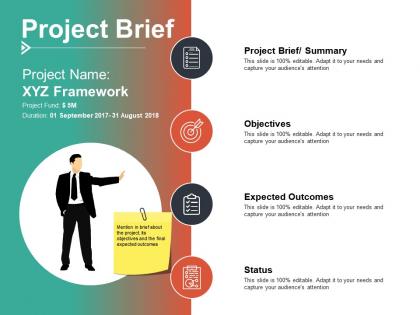
Project brief objectives ppt powerpoint presentation show vector




Try Before you Buy Download Free Sample Product
 Impress Your
 Audience
 100%
100% Editable
 Save Hours
 of Time


Arouse the desire to improve human existence with our Project Brief Objectives Ppt Powerpoint Presentation Show Vector. Instigate folks to join.
People who downloaded this PowerPoint presentation also viewed the following :
Project brief objectives ppt powerpoint presentation show vector with all 5 slides:
Join the drive with our Project Brief Objectives Ppt Powerpoint Presentation Show Vector. Display interest in acting for the common good.
FAQs for Project brief objectives ppt powerpoint
Okay so for project briefs, you definitely need the basics: goals, who you're targeting, timeline, budget, what you're actually delivering. Don't forget constraints and how you'll measure success - otherwise you're just guessing if it worked. Roles and responsibilities are huge too. I learned this the hard way when everyone just assumed someone else was handling the final review. Be specific enough that a random person could read it and get what's happening. Templates are your friend here - just tweak them for each project instead of starting from scratch every time.
Honestly, clear objectives are like giving your team a roadmap instead of just saying "figure it out." You want goals that are specific enough that anyone could explain them to their mom, you know? When decisions get messy (and they will), you can just ask "does this actually help us hit our target?" It's pretty simple but works. Without them, everyone's just doing their own thing and pulling in different directions. I've seen projects go completely sideways because nobody really knew what they were aiming for. Make your objectives concrete - not some vague "improve user experience" nonsense.
Dude, seriously - start with a solid project brief and you'll thank yourself later. Gets everyone aligned right away so stakeholders actually know what they're contributing to instead of just winging it. No more of those painful meetings where people argue about completely different things because nobody's clear on the actual goal. When stakeholders get the "why" behind what you're doing, they're way more likely to have your back when stuff inevitably goes sideways. I learned this the hard way on my last project - should've done this from the start. Clear brief upfront = smoother everything.
Honestly, just go with the SMART framework thing. Your goals need actual numbers and deadlines - like "boost customer satisfaction from 7.2 to 8.5 by Q3" instead of just "improve satisfaction." I've seen way too many briefs that are super vague about this stuff. Each goal should answer "how much" and "by when." Figure out what you'll track too - surveys, KPIs, whatever makes sense. The whole point is being specific enough that anyone can look at your results later and know immediately whether you nailed it or not.
Business impact first, then worry about what's actually doable. Focus on whatever's gonna move the revenue needle or seriously improve user experience - that's your must-have stuff. After that, check if you've got the resources and time to pull it off. Honestly, those impact vs effort grids are kind of basic but they work. Pick maybe 2-3 main things max, otherwise your team gets scattered everywhere. I've seen so many projects fail because people try doing everything at once. Oh and make sure you can actually measure success on each one - sounds obvious but you'd be surprised how often that gets skipped.
Dude, your project brief is honestly a lifesaver for catching risks early. Makes you think through all the ways things can go sideways - budget, timeline, resources, the whole mess. It's like doing a reality check before you're already in deep. Having clear boundaries stops scope creep too, which will kill your project faster than anything else. When stakeholders start asking for random changes (and they will), you can just point back to what everyone agreed on. Oh, and definitely include a proper risk section and get people to actually sign off on it. Trust me on this one.
Honestly, start by figuring out what your company's actually trying to accomplish this year. Revenue goals, big strategic stuff, whatever keeps the executives up at night. Then connect your project to those things directly - like really directly, not some vague hand-wavy connection. I always think "will leadership actually care about this outcome?" Short sentences help here. Map your deliverables to real organizational results they can measure. Oh, and definitely write those connections down in your project brief. Sounds obvious but you'd be surprised how many people skip that step. Makes it way easier to defend your project later when someone questions the budget.
Ugh, the worst thing teams do is write these super vague objectives like "improve customer satisfaction." Like... how exactly? By how much? You need to be specific about what you're actually trying to achieve. Make it measurable so you're not guessing later whether you hit the mark. Also don't try to cram like 5 different goals into one objective - honestly just makes everything messy. I always tell people: if you handed this to a random coworker, would they know what success looks like? If not, you're probably being too general. Oh and decide upfront how you'll track progress. Trust me on this one.
Honestly, I check mine monthly at minimum - some projects need weekly reviews though, especially if things are moving crazy fast. Major milestones are obvious times to reassess, but don't wait for those. Market stuff changes, your stakeholders suddenly have new priorities (classic), and scope creep is real. The trick is catching drift early instead of scrambling later. Weekly might sound excessive but trust me, it's way better than realizing you've been chasing the wrong goals for months. Just build these reviews into your calendar now and make sure your team knows they're not pointless meetings.
You've got some solid options here. Asana and Monday.com have decent templates, or just grab a Google Doc template if you want something simple. Don't get stuck hunting for the "perfect" one though - I've watched people waste weeks doing that lol. Focus on hitting the main stuff: project goals, scope, timeline, who's involved, and how you'll measure success. Miro's pretty good if your team's into the visual brainstorming thing. But honestly? Just pick one template, tweak it so it works for your team, then use that same format for everything going forward.
Don't wait until everything's set in stone - do feedback sessions while you're still planning objectives. Hit up people one-on-one first because honestly, group settings make everyone way too polite. Then pull the team together to talk through what you heard. Ask stuff like "what are we missing?" instead of vague questions that get you nowhere. Write it all down and actually use their ideas when you finalize things. People get so annoyed when they give input and nothing changes. Send a quick summary afterwards showing what shifted based on their feedback - makes a huge difference for next time.
Honestly, skip the big dramatic presentation thing. Send them a short brief first, then schedule a quick meeting to go over it. People's attention spans are shot these days - use bullet points and simple diagrams instead of walls of text. You'll want to drop the PM jargon too and speak like a normal person. Different people care about different stuff, so adjust your pitch accordingly. Oh, and always wrap up by checking they actually get what you're asking for and see what they need from you. Multiple touchpoints beats one massive info dump every time.
Honestly, your objectives are gonna dictate everything else - they're like your north star for spending decisions. A 6-month product launch? That's a totally different beast than some 2-year research thing in terms of team size and timeline. I made this mistake before and it was rough. Map out what each objective actually requires first - then work backwards to build your budget. The more specific you get upfront, the easier it'll be when you're asking stakeholders for money. Plus you won't end up with random people doing tasks they're not meant for.
Okay so here's the thing - ditch words like "improve" or "enhance" because they're basically meaningless. Start with action verbs instead: "Increase," "Reduce," "Complete." Write your objectives like you're explaining them to your mom who has zero clue what your project does (honestly, most stakeholders don't either). Keep it short and direct. You'll want clear success metrics and deadlines so everyone knows when you're actually done. Quick test: hand it to someone random and see if they get what you're trying to accomplish. If they look confused, you need to be way more specific.
Look, getting different people involved when you're setting goals will totally change how you think about stuff. Your designer might catch UX issues you completely missed. Finance will point out budget problems that seem super obvious to them but went right over your head. It's kinda embarrassing how much you realize you don't see! But that's the whole point - you end up with way better success metrics and spot problems before they blow up. Plus you're actually addressing what stakeholders really need instead of just what your little bubble thinks matters. Definitely worth bringing in those outside voices early.
No Reviews