

Project Comms Plan Powerpoint Ppt Template Bundles





Try Before you Buy Download Free Sample Product
 Impress Your
 Audience
 100%
100% Editable
 Save Hours
 of Time


Our Project Comms Plan Powerpoint Ppt Template Bundles are topically designed to provide an attractive backdrop to any subject. Use them to look like a presentation pro.
People who downloaded this PowerPoint presentation also viewed the following :
Project Comms Plan Powerpoint Ppt Template Bundles with all 21 slides:
Use our Project Comms Plan Powerpoint Ppt Template Bundles to effectively help you save your valuable time. They are readymade to fit into any presentation structure.
-
Project Comms Plan
-
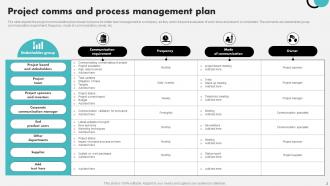
Project comms and process management plan
-
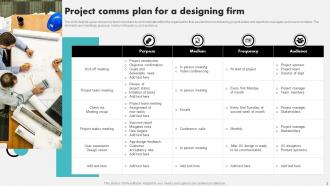
Project comms plan for a designing firm
-
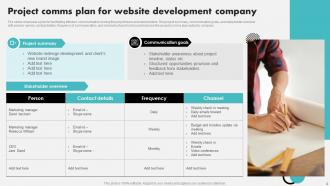
Project comms plan for website development company
-
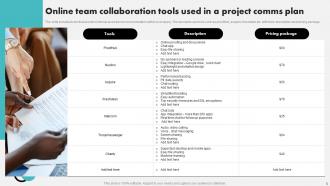
Online team collaboration tools used in a project comms plan
-
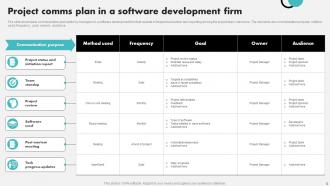
Project comms plan in a software development firm
-
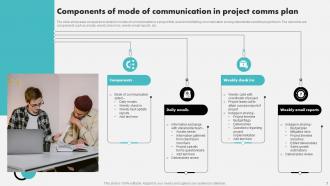
Components of mode of communication in project comms plan
-
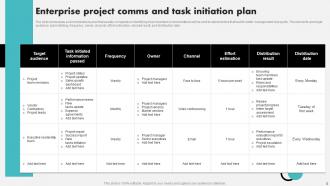
Enterprise project comms and task initiation plan
-
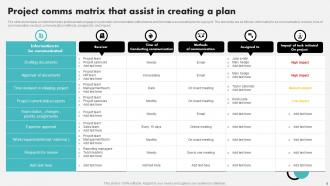
Project comms matrix that assist in creating a plan
-
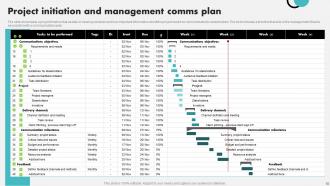
Project initiation and management comms plan
-
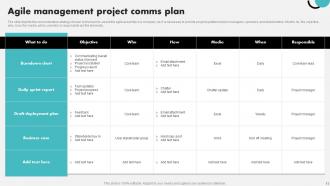
Agile management project comms plan
-
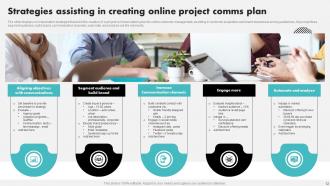
Strategies assisting in creating online project comms plan
-
Content management project comms plan icon
-
Project comms and strategic plan icon
-
Marketing and sales management project comms plan icon
-

Thanks for Watching
-

-

-

-

-

FAQs for Project Comms Plan Powerpoint
Key components of an effective project communication plan include stakeholder identification, communication objectives, message formats, delivery channels, frequency schedules, and feedback mechanisms. These elements work together by ensuring relevant information reaches appropriate audiences through optimal channels, while establishing clear expectations and accountability measures, ultimately delivering improved project transparency, enhanced team coordination, and reduced miscommunication risks across organizational levels.
Stakeholders can be identified through organizational mapping, impact analysis, and influence assessment, then categorized by their project involvement level, decision-making authority, and communication needs. This strategic approach enables project managers to tailor messaging frequency and formats, ensuring key executives receive strategic updates while operational teams get detailed progress reports, ultimately enhancing project transparency and stakeholder engagement.
Effective project communication tools include Slack, Microsoft Teams, Asana, Trello, and Zoom for real-time collaboration and task management. These platforms streamline coordination by centralizing messaging, file sharing, and progress tracking, with many organizations finding that integrated communication ecosystems reduce email overload, enhance team transparency, and ultimately deliver faster project completion and improved stakeholder engagement.
Project communication frequency depends on project complexity, stakeholder roles, and timeline urgency, typically ranging from daily standups for core teams to weekly progress reports for management and monthly summaries for executives. Strategic communication schedules enhance transparency, maintain stakeholder engagement, and minimize project risks, with many organizations finding that consistent, well-timed updates ultimately deliver improved project outcomes and stronger stakeholder confidence.
Clear messaging strategies include establishing standardized communication protocols, implementing regular check-in meetings, utilizing collaborative platforms, creating shared documentation systems, and defining role-specific reporting structures. These approaches streamline information flow by reducing miscommunication, enhancing transparency, and ensuring consistent updates, with many organizations finding that structured communication ultimately delivers improved project outcomes and stronger team alignment.
A communication plan adapts through flexible stakeholder matrices, escalation protocols, and regular review cycles that accommodate scope changes. When projects pivot, teams update notification schedules, modify reporting structures, and adjust messaging frequency, with many organizations finding that agile communication frameworks enable faster decision-making and maintain stakeholder alignment throughout transitions.
Visual communication enhances project understanding by simplifying complex information, improving stakeholder engagement, reducing miscommunication, and accelerating decision-making processes through charts, dashboards, and infographics. Through visual project tracking tools, teams streamline status updates, milestone reporting, and resource allocation, while stakeholders quickly grasp progress metrics, ultimately delivering faster approvals and enhanced project transparency.
Feedback mechanisms can be integrated through structured surveys, regular check-in meetings, digital collaboration platforms, anonymous suggestion systems, and real-time project dashboards. These approaches streamline communication by enabling continuous dialogue, identifying bottlenecks early, and enhancing team alignment, with many organizations finding that systematic feedback loops ultimately deliver improved project outcomes and stronger stakeholder engagement.
Poor communication in project management creates risks including missed deadlines, budget overruns, scope creep, team conflicts, and stakeholder dissatisfaction. These communication breakdowns ultimately lead to reduced project success rates, damaged client relationships, and decreased team productivity, with many organizations finding that structured communication protocols significantly minimize these risks while enhancing overall project delivery efficiency.
Cultural differences can be addressed through standardized communication protocols, flexible timing accommodations, multilingual resources, cultural sensitivity training, and regular feedback mechanisms. Through strategic scheduling that respects global time zones and cultural holidays, international teams enhance collaboration, minimize misunderstandings, and streamline project delivery, with many organizations finding that inclusive communication frameworks ultimately deliver stronger stakeholder engagement and competitive advantage.
**INPUT**: What metrics should be used to assess the effectiveness of a communication plan? **OUTPUT**: Communication plan effectiveness metrics include response rates, message comprehension scores, stakeholder engagement levels, feedback quality, and information retention rates. These measurements enable project managers to streamline communication channels, enhance stakeholder alignment, and minimize project delays, with many organizations finding that systematic tracking ultimately delivers improved project outcomes and stronger team collaboration. [Word count: 54 words]
**INPUT**: How can you ensure that all stakeholders receive the information they need? **OUTPUT**: Effective stakeholder communication requires mapping stakeholder information needs, establishing clear communication channels, and creating regular reporting schedules tailored to different audience requirements. This strategic approach enables project managers to deliver targeted updates through appropriate mediums, whether executive dashboards for leadership or detailed progress reports for team members, ultimately ensuring transparency and alignment across all organizational levels. [Word count: 58 words]
Common pitfalls include unclear stakeholder identification, inconsistent messaging across channels, poor timing coordination, inadequate feedback mechanisms, and neglecting cultural considerations. These oversights often result in project delays, stakeholder confusion, and reduced team alignment, with many organizations finding that proactive communication planning significantly enhances project outcomes and stakeholder satisfaction.
Project managers balance transparency with confidentiality by establishing clear information hierarchies, using role-based access controls, and creating tiered communication strategies that share appropriate details with relevant stakeholders. Through strategic segmentation of sensitive data, organizations maintain team alignment while protecting proprietary information, ultimately delivering enhanced trust and operational security across project lifecycles.
Technology serves as the backbone for remote project communication through video conferencing, instant messaging, collaborative platforms, project management software, and cloud-based document sharing. These tools streamline coordination by enabling real-time updates, centralized information access, and seamless collaboration across time zones, with many distributed teams finding that integrated communication ecosystems ultimately deliver enhanced productivity and stronger project outcomes.
-
“I required a slide for a board meeting and was so satisfied with the final result !! So much went into designing the slide and the communication was amazing! Can’t wait to have my next slide!”
-
The slides come with appealing color schemes and relevant content that helped me deliver a stunning presentation without any hassle!