

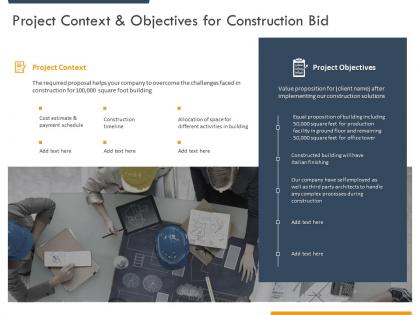
Project context and objectives for construction bid ppt powerpoint presentation layouts microsoft




Try Before you Buy Download Free Sample Product
 Impress Your
Audience
 100%
Editable
 Save Hours
of Time


Our Project Context And Objectives For Construction Bid Ppt Powerpoint Presentation Layouts Microsoft are explicit and effective. They combine clarity and concise expression.
People who downloaded this PowerPoint presentation also viewed the following :
Project context and objectives for construction bid ppt powerpoint presentation layouts microsoft with all 2 slides:
Give your audience a fulfilling experience. They will find our Project Context And Objectives For Construction Bid Ppt Powerpoint Presentation Layouts Microsoft elevating.


FAQs for Project context and objectives for construction bid ppt powerpoint
Make sure you cover project scope, timeline with milestones, and a clear cost breakdown. Your team's experience matters - show it off. Safety protocols and quality plans are huge, honestly they can make or break your bid. Risk management is where so many people mess up, so include contingency stuff. Oh and materials sourcing strategy too, especially with how crazy supply chains have been lately. Charts and photos from similar projects help a ton. Don't forget clear next steps at the end. You want them thinking "yeah, this person gets it" when they're done reading.
Start with the exact problem they're dealing with, then show how you fixed something similar. Walk through it like a mini case study - what happened, how you handled it, boom, results. I've watched so many contractors totally whiff this by staying vague. Get specific with your timelines and actual numbers. What obstacles did you hit? How'd you work around them? Throw in real project photos too. The key is connecting each story back to their situation - like "here's how we'll nail the same thing for you." Makes it way more convincing than generic BS.
Dude, you definitely want project renderings or 3D models - those are game changers. Timeline charts showing construction phases work great too. Before/after shots from your past jobs are solid gold. Floor plans and site layouts help way more than just describing everything. People absolutely love cost breakdowns - they want to see where every dollar's going. Drone footage looks sick if you've got it (maybe overkill but whatever). Don't forget crew photos and equipment shots - builds trust. Oh, and keep text big enough to actually read. You don't want them squinting while you're trying to impress them.
Honestly, just figure out what each group actually gives a shit about. Clients want timelines and budgets - show them how you'll fix their problems. Investors? ROI numbers and risk plans, obviously. Regulatory folks are obsessed with compliance and safety stuff (tedious but necessary). I bombed hard once using the same pitch for everyone - terrible idea. What works is having slide pieces you can swap around. Keep your main project info but switch up the "here's why you should care" parts. Way easier than starting from scratch each time.
Ugh, the worst thing you can do is lowball your costs - I learned that one the hard way. Clients spot generic templates from a mile away, so customize each proposal. Honestly, some people submit bids with math that doesn't even add up, which is just embarrassing. Don't promise stuff you can't deliver either. Vague timelines will bite you later. Always build in buffer time for when things go sideways (and they will). Oh, and proofread everything twice - typos make you look sloppy. Just be realistic about what you can actually pull off.
Gantt charts are perfect for this - they show your timeline with all the milestones and dependencies mapped out. Clients eat that visual stuff up. For budgets, go with interactive dashboards or pie charts that split everything into categories like labor, materials, equipment. Honestly? A good visual will destroy spreadsheets every single time when you're presenting to stakeholders. PowerPoint charts work fine, but Tableau and Power BI are way better if you've got access. The trick is making your complex data super easy to digest quickly. Oh, and always lead with your strongest numbers first - then build your whole story around what makes you guys different from the competition.
Dude, you gotta do your homework first - that's what wins bids. Dig into their past projects, budget stuff, who makes the decisions. So many contractors just wing it and then act shocked when they lose! Look up their company culture, recent news, maybe even stalk the people you'll be pitching to (kidding... sort of). When you actually know what's bugging them, you can speak directly to their problems instead of giving some cookie-cutter presentation. Honestly, spend a few hours researching before you even start writing. It makes all the difference.
Dude, photos are everything - show them stuff you've done that's similar to their project. Name-drop clients they'd recognize if you can. Here's what most people mess up though: be honest about potential problems upfront instead of pretending everything will be perfect. Clients freak out way less when you're real with them from the start. Bring your project manager to the meeting too, shows you're not just some guy making promises. Have your timeline mapped out with backup plans ready. And yeah, give them your actual cell number - but only if you'll really answer it lol.
Definitely prep for the hard stuff first - costs, timelines, why your team's the right fit. Have real examples ready, not just generic answers. When they push back, don't get defensive (hardest part honestly). Actually listen to what they're saying, then respond with facts or case studies that address their specific worry. Not sure about something? Just say you'll get back to them - way better than winging it and sounding like an idiot. Ask follow-up questions too, sometimes their real concern isn't what they first mentioned. Oh, and bring backup docs just in case.
Look, presentation matters WAY more than people think. I've watched solid contractors bomb bids just because their proposals looked like garbage - seriously happens all the time. Clean fonts, good photos of your work, easy navigation. Clients see messy materials and assume you'll run their project the same way. Pretty unfair honestly, but that's reality. You don't need to go crazy, just make it look like you gave a damn. Consistent headings, decent images, highlight the important stuff. Takes extra time but it's worth it when you're competing against sloppy proposals.
Run through it 3-4 times minimum before you go in there. I do the mirror thing first - sounds ridiculous but honestly it helps with timing. Then practice with your whole team so you're not stepping on each other during transitions. Record yourself on your phone too, you'll catch all those "ums" you didn't realize you were doing. Make sure everyone's clear on when they jump in. Oh and definitely use your actual slides when you practice - nothing worse than tech issues killing your flow right when you hit your stride. Do a quick run-through that morning to stay sharp.
Hit them up within 48 hours - that's when it's all still fresh. I'd honestly go with a quick phone call if you can swing it; people are way more honest when they're talking versus typing out an email. Ask about your presentation flow, the technical stuff, and how your pricing stacked up. Some clients will ghost you (whatever), but the ones who talk usually drop some real insights. What worked? What was confusing? How'd you compare to the competition? Throw it all in a spreadsheet or something. After a few proposals, you'll start seeing patterns and actually know what to fix next time.
Don't hide your best stuff until slide 15 - put it right up front! Make a whole "Why Us" section with real examples and numbers. Got faster delivery? Special equipment? Local connections that actually matter for their job? Show it with before/after pics or case studies instead of boring bullet points. Honestly, most companies just list generic benefits that could apply to anyone. Connect your strengths directly to what they're dealing with. Make it super obvious that picking someone else would be a mistake they'd regret.
Honestly, just weave 2-3 case studies right into your main proposal sections - don't shove them in the back where they'll get ignored. You want projects that actually match what they're doing. So if it's a school reno, show them your school project that finished early and under budget. I always start with the problem we tackled, quick rundown of how we handled it, then hit them with real numbers (15% cost savings, finished 2 weeks ahead, whatever). Just make sure you can actually use client names and photos first - learned that one the hard way. The whole point is proving you've done this exact thing before, not just showing off random work.
Honestly, sustainability stuff is where it's at right now - everyone wants LEED certs and carbon footprint talk. Digital tech is massive too, so definitely mention BIM modeling and drones for surveys. Modular construction saves crazy amounts of time, which is clutch with the whole labor shortage mess we're dealing with. COVID really screwed up supply chains so that's still a big concern for clients. Smart building integration is everywhere now too, though sometimes I think it's a bit overhyped. Just pick like 2-3 trends that actually match their project and show you've got experience with this modern stuff.
No Reviews