


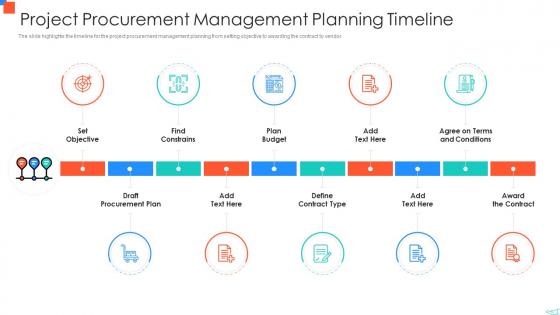
Project Procurement Management Planning Timeline




Try Before you Buy Download Free Sample Product
 Impress Your
 Audience
 100%
100% Editable
 Save Hours
 of Time


The slide highlights the timeline for the project procurement management planning from setting objective to awarding the contract to vendor.
People who downloaded this PowerPoint presentation also viewed the following :
Project Procurement Management Planning Timeline with all 6 slides:
Use our Project Procurement Management Planning Timeline to effectively help you save your valuable time. They are readymade to fit into any presentation structure.





FAQs for Project Procurement
Key components include procurement strategy development, vendor selection criteria, contract management frameworks, risk assessment protocols, and performance monitoring systems. These elements work together by establishing clear procurement processes, ensuring competitive vendor evaluation, and maintaining contract compliance, with many organizations finding that structured procurement planning reduces project costs by 15-20% while accelerating delivery timelines.
Assessing and selecting vendors involves evaluating technical capabilities, financial stability, past performance records, cultural fit, and pricing structures through comprehensive RFP processes. Organizations typically use scoring matrices, reference checks, and pilot projects to compare candidates, with many project managers finding that strategic vendor partnerships ultimately enhance project outcomes while reducing risks and costs.
Market analysis plays a crucial role in project procurement management by identifying qualified suppliers, assessing market conditions, evaluating pricing trends, and determining optimal procurement strategies. Through comprehensive market research, project managers can negotiate better contracts, mitigate supply chain risks, and ensure competitive pricing, ultimately delivering cost savings and enhanced project outcomes while minimizing procurement-related delays.
Effective supplier contract negotiation strategies include conducting thorough market research, leveraging competitive bidding, establishing long-term partnership frameworks, implementing performance-based pricing models, and creating flexible terms for scope changes. These approaches enable organizations to secure favorable pricing, ensure quality standards, and build strategic supplier relationships, with many companies finding that collaborative negotiation ultimately delivers cost savings while maintaining service excellence and operational flexibility.
Ensuring compliance requires establishing clear procurement policies aligned with regulatory requirements, conducting regular audits, implementing approval workflows, and maintaining comprehensive documentation throughout the process. These frameworks streamline operations by standardizing vendor evaluation, contract management, and risk assessment procedures, with many organizations finding that automated compliance tracking ultimately delivers reduced legal exposure and enhanced operational transparency.
Outsourcing project components presents risks including vendor dependency, quality control issues, communication gaps, intellectual property concerns, and cost overruns. These challenges can be mitigated through comprehensive vendor vetting, detailed service level agreements, regular performance monitoring, and maintaining strategic oversight, with many organizations finding that diversified supplier portfolios and clear governance frameworks ultimately deliver competitive advantage while minimizing operational vulnerabilities.
Technology streamlines procurement management through automated workflows, AI-powered vendor analysis, cloud-based contract management, real-time spend tracking, and integrated approval systems. These digital solutions enhance efficiency by reducing manual paperwork, accelerating approval cycles, and providing data-driven insights, with many organizations finding that automated procurement delivers faster sourcing and significant cost reductions.
Key supplier performance metrics include quality scores, on-time delivery rates, cost variance analysis, compliance adherence, and responsiveness measurements. These indicators enable organizations to assess vendor reliability comprehensively, with many procurement teams finding that combining financial metrics with operational performance data delivers better supplier relationships and ultimately reduces project risks while enhancing overall delivery outcomes.
Project managers balance cost and quality through strategic supplier evaluation, competitive bidding processes, value engineering, and long-term partnership development. By implementing rigorous vendor assessment criteria, negotiating volume discounts, and focusing on total cost of ownership rather than initial price, organizations achieve optimal procurement outcomes while maintaining quality standards and building sustainable supplier relationships.
Stakeholder engagement in procurement ensures alignment between project requirements, vendor capabilities, and organizational objectives through comprehensive communication, feedback collection, and collaborative decision-making. This strategic approach minimizes scope changes, reduces vendor disputes, and accelerates approval processes, with many organizations finding that early stakeholder involvement ultimately delivers smoother implementations and stronger vendor relationships.
Cultural differences significantly impact global procurement strategies through varying negotiation styles, relationship-building expectations, communication preferences, decision-making processes, and contract interpretations. Organizations must adapt their approaches by understanding local business customs, building trust through cultural sensitivity, and developing flexible procurement frameworks that accommodate regional practices, ultimately enabling stronger supplier relationships and more successful international partnerships.
Best practices for managing contract disputes include establishing clear communication channels, documenting all interactions, engaging in early mediation, maintaining professional relationships, and involving legal counsel when necessary. These approaches streamline resolution by preventing escalation, preserving vendor partnerships, and minimizing project delays, with many organizations finding that proactive dispute management ultimately delivers cost savings and stronger long-term supplier relationships.
Sustainability integrates into project procurement through vendor assessment criteria emphasizing environmental practices, social responsibility requirements, lifecycle cost analysis, and sustainable material specifications. Organizations increasingly evaluate suppliers on carbon footprint reduction, ethical labor practices, and circular economy principles, with many construction and manufacturing companies finding that sustainable procurement delivers long-term cost savings while enhancing brand reputation.
Techniques for managing procurement scope changes include change control boards, formal change request processes, contract amendment procedures, stakeholder impact assessments, and scope baseline reviews. These approaches streamline modifications by establishing clear approval workflows, documenting cost implications, and maintaining vendor alignment, with many organizations finding that structured change management ultimately delivers better project outcomes and stronger supplier relationships.
Establishing clear communication channels requires defining communication protocols, assigning dedicated liaison roles, implementing collaborative platforms, scheduling regular check-ins, and creating escalation procedures for urgent issues. These structured approaches streamline information flow by eliminating bottlenecks, ensuring transparency, and maintaining accountability, with many organizations finding that consistent supplier communication ultimately delivers faster project timelines and stronger vendor relationships.
-
Designs have enough space to add content.
-
Amazing product with appealing content and design.