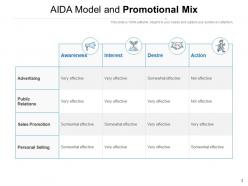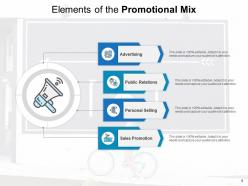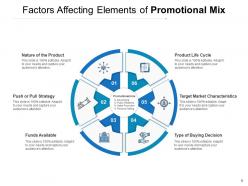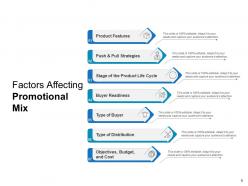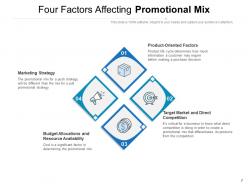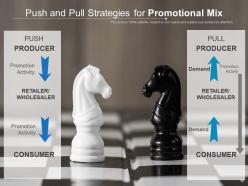
Promotional Mix Advertising Icon Model Elements Selling Factors Affecting
Try Before you Buy Download Free Sample Product
Audience
Editable
of Time
Thoughts acquire harmony with our Promotional Mix Advertising Icon Model Elements Selling Factors Affecting. The audience will appreciate your composition.
People who downloaded this PowerPoint presentation also viewed the following :
Promotional Mix Advertising Icon Model Elements Selling Factors Affecting with all 12 slides:
Our Promotional Mix Advertising Icon Model Elements Selling Factors Affecting are excellent for composing your thoughts. They will generate harmony with the audience.
FAQs for Promotional Mix Advertising Icon Model Elements
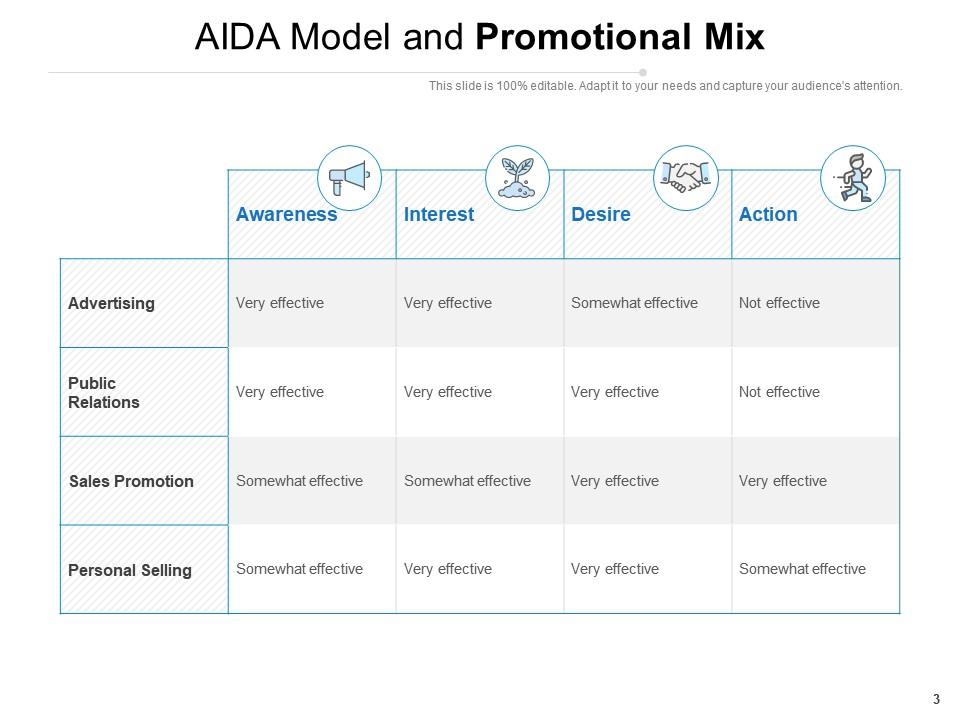
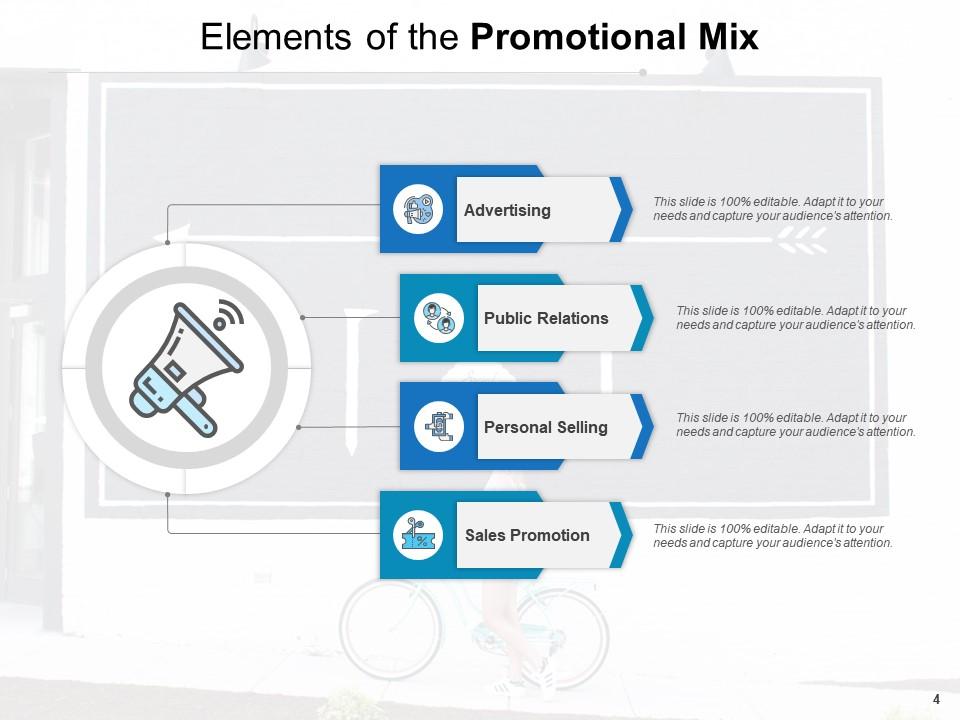
The promotional mix includes advertising, personal selling, sales promotion, public relations, and direct marketing. These components work synergistically to enhance brand visibility, engage target audiences, and drive conversions, with many organizations finding that strategic integration across multiple channels delivers increased market penetration and competitive advantage.
The promotional mix varies significantly across industries based on target audiences, regulatory environments, and customer buying behaviors, with B2B sectors emphasizing personal selling and trade shows while consumer goods rely heavily on advertising and sales promotions. Healthcare and financial services face strict compliance requirements limiting certain tactics, whereas retail and hospitality leverage digital marketing and experiential promotions, ultimately requiring strategic adaptation to maximize customer engagement and competitive advantage.
Social media can be integrated through targeted advertising, influencer partnerships, content marketing, customer engagement campaigns, and real-time feedback collection. These platforms enable businesses to amplify traditional promotional efforts by creating interactive experiences, building brand communities, and delivering personalized messaging, with many organizations finding that social integration significantly enhances reach while reducing overall marketing costs.
Public relations builds brand credibility and trust through earned media, crisis management, stakeholder communications, and thought leadership initiatives within the promotional mix. Unlike paid advertising, PR delivers authentic third-party endorsements and long-term reputation management, with many organizations finding that strategic PR campaigns enhance customer loyalty while reducing overall marketing costs.
Businesses can measure promotional mix effectiveness through metrics like return on investment (ROI), conversion rates, brand awareness surveys, customer acquisition costs, and sales attribution analysis. By tracking these indicators across different channels, companies can identify which promotional elements deliver the strongest results, optimize resource allocation, and ultimately enhance their competitive advantage while maximizing marketing spend efficiency.
Common challenges include budget constraints limiting campaign reach, difficulty measuring ROI across multiple channels, ensuring consistent messaging throughout diverse platforms, coordinating timing between different promotional activities, and selecting optimal channel combinations for target audiences. These obstacles require strategic resource allocation, integrated tracking systems, and careful market analysis, with many organizations finding that centralized campaign management and data-driven decision making ultimately deliver more cohesive promotional strategies and measurable results.
Target audience significantly influences promotional mix choices by determining channel preferences, message tone, content complexity, and budget allocation across different marketing vehicles. Understanding demographic characteristics, purchasing behaviors, and media consumption habits enables marketers to strategically combine advertising, sales promotion, and digital outreach, with many organizations finding that audience-aligned promotional strategies deliver higher engagement rates and ultimately enhance conversion outcomes.
Digital marketing significantly transforms traditional promotional mix elements by enhancing targeting precision, enabling real-time engagement, and providing measurable analytics across advertising, sales promotion, and public relations. Through social media campaigns, email marketing, and programmatic advertising, companies streamline customer acquisition costs while delivering personalized experiences, with many retailers and financial services finding that integrated digital approaches ultimately drive higher conversion rates and stronger brand loyalty.
Seasonal promotions significantly reshape promotional mix allocation by requiring increased advertising spend, enhanced social media engagement, and strategic pricing adjustments during peak periods. These campaigns enable retailers, hospitality businesses, and e-commerce platforms to maximize revenue during high-demand windows, while optimizing resource distribution across channels, ultimately delivering improved market penetration and competitive positioning.
A blend of online and offline promotional strategies maximizes reach, enhances brand credibility, and creates multiple customer touchpoints across diverse demographics. This integrated approach enables businesses to leverage digital precision targeting while maintaining traditional media's trust-building power, ultimately delivering broader market penetration, reinforced messaging, and improved ROI through comprehensive audience engagement.
Businesses can tailor their promotional mix for international markets by adapting messaging to local cultures, selecting region-appropriate channels, adjusting pricing strategies, and customizing product positioning for different consumer behaviors. Companies like McDonald's and Coca-Cola successfully localize advertising content, distribution methods, and promotional timing while maintaining brand consistency, ultimately delivering enhanced market penetration and competitive advantage across diverse global markets.
Current trends shaping promotional mixes include artificial intelligence-driven personalization, omnichannel integration, influencer marketing expansion, interactive content formats, and data-driven attribution modeling. These developments enable marketers to deliver more targeted campaigns, seamlessly connect touchpoints across digital and traditional channels, and measure ROI more accurately, with many organizations finding significantly improved customer engagement and conversion rates.
Businesses evaluate promotional mix effectiveness through key performance indicators like conversion rates, customer acquisition costs, brand awareness metrics, and ROI analysis across different channels. By conducting regular A/B testing, analyzing customer journey data, and tracking campaign performance, companies can identify which promotional elements deliver the strongest results, ultimately reallocating resources toward high-performing strategies while optimizing underperforming channels for maximum competitive advantage.
Consistency in messaging across a promotional mix builds brand recognition, reinforces key value propositions, and creates unified customer experiences that strengthen market positioning. This strategic alignment enhances consumer trust, reduces confusion during purchase decisions, and amplifies campaign effectiveness, with many organizations finding that consistent messaging delivers significantly higher brand recall and conversion rates.
Budget constraints significantly influence promotional mix composition by determining channel selection, campaign scope, and resource allocation across advertising, sales promotion, public relations, and direct marketing elements. Organizations with limited budgets often prioritize cost-effective digital channels like social media and email marketing over expensive traditional advertising, while larger budgets enable integrated campaigns combining multiple touchpoints, ultimately delivering broader market reach and enhanced brand visibility.
No Reviews