


Pushing Marketing Message Through Outbound Marketing Channel MKT CD V




Try Before you Buy Download Free Sample Product
 Impress Your
 Audience
 100%
100% Editable
 Save Hours
 of Time


Outbound marketing strategy aims to reach potential customers and increase awareness about the brand. Grab our Pushing marketing message through outbound marketing channels template. It helps promote new products and services, generating new leads through nontargeted marketing campaigns. Our Traditional marketing deck initially showcases key benefits and processes to formulate an outbound marketing campaign. It also shows an implementation of traditional and digital outbound marketing techniques. Online strategies include native, display, social media, and advertising to reach potential customers in markets. Additionally, our Digital advertisement PPT presents the execution of traditional marketing techniques, which can help to reach local audiences. After executing the strategies, it highlights the timeline to run and manage the outbound marketing campaigns. Further, our Inbound marketing module shows budget allocation and roles, plus the responsibilities of employees to execute outbound marketing strategies. Lastly, it evaluates the results and impact of implementing outbound promotion strategies and contains dashboards to analyze the effectiveness of outbound advertisement strategy implementation. Access this powerful deck right away.
People who downloaded this PowerPoint presentation also viewed the following :
Content of this Powerpoint Presentation
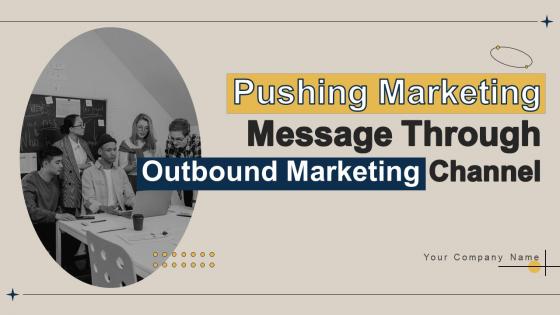
Slide 1: This slide introduces Pushing marketing message through outbound marketing channels. Commence by stating Your Company Name.
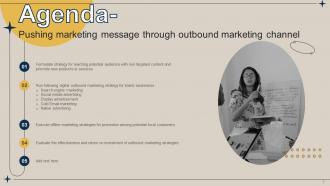
Slide 2: This slide depicts the Agenda of the presentation.
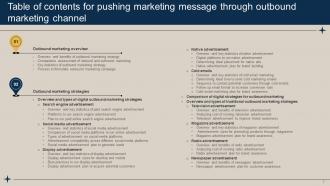
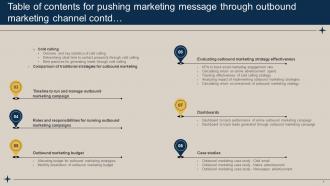
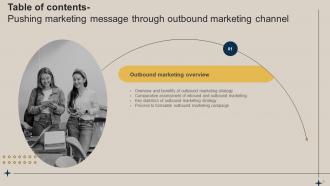
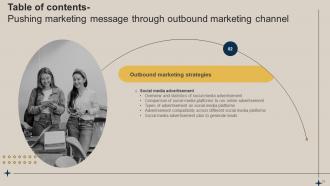
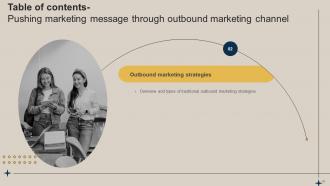
Slide 3: This slide incorporates the Table of contents.
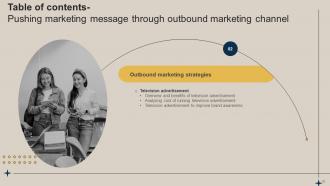
Slide 4: This is yet another slide continuing the Table of contents.
Slide 5: This slide highlights the Title for the Topics to be covered further.
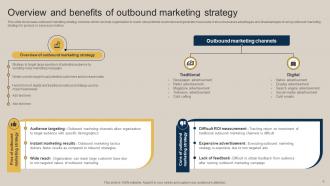
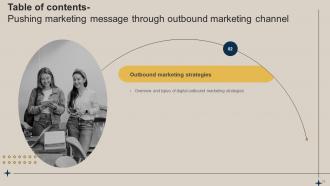
Slide 6: This slide presents the Overview and benefits of outbound marketing strategy.
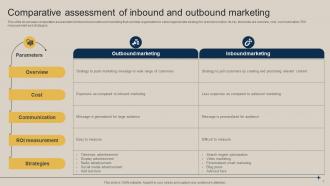
Slide 7: This slide showcases comparative assessment of inbound and outbound marketing.
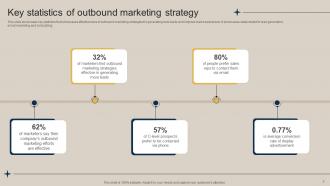
Slide 8: This slide highlights the Key statistics of outbound marketing strategy.
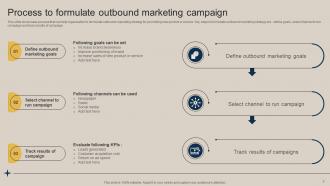
Slide 9: This slide showcases process that can help organization to formulate outbound marketing strategy for promoting new product or service.
Slide 10: This slide indicates the Heading for the Contents to be discussed in the following template.
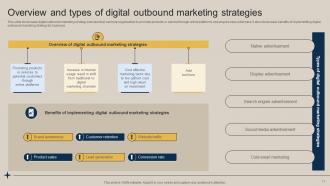
Slide 11: This slide presents the Overview and types of digital outbound marketing strategies.
Slide 12: This slide depicts the Title for the Ideas to be covered in the following template.
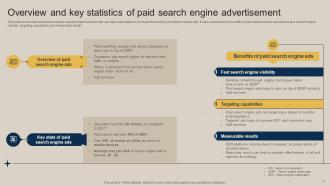
Slide 13: This slide highlights the Overview and key statistics of paid search engine advertisement.
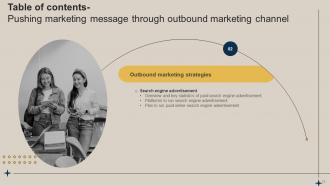
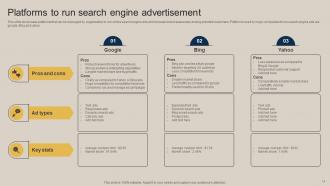
Slide 14: This slide states the Platforms to run search engine advertisement.
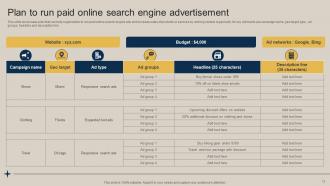
Slide 15: This slide reveals a Plan to run paid online search engine advertisement.
Slide 16: This slide presents a Roadmap to formulate content marketing plan.
Slide 17: This slide mentions the Heading for the Ideas to be discussed in the next template.
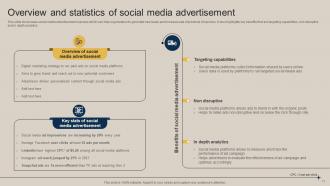
Slide 18: This slide showcases the Overview and statistics of social media advertisement.
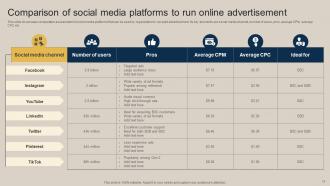
Slide 19: This slide displays the Comparison of social media platforms to run online advertisement.
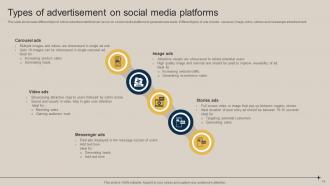
Slide 20: This slide states the Types of advertisement on social media platforms.
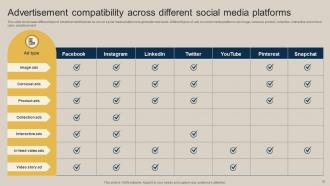
Slide 21: This slide showcases different type of advertisement that can be run on social media platforms to generate new leads.
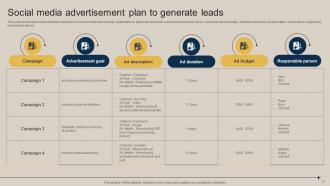
Slide 22: This slide talks about Social media advertisement plan to generate leads.
Slide 23: This slide includes the Title for the Contents to be covered further.
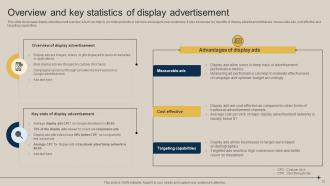
Slide 24: This slide presents the Overview and key statistics of display advertisement.
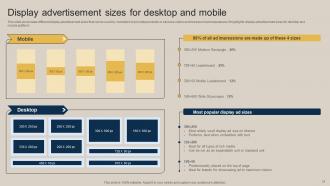
Slide 25: This slide represents the Display advertisement sizes for desktop and mobile.
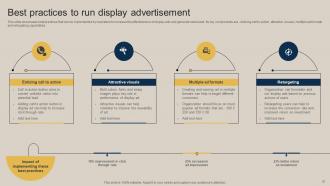
Slide 26: This slide exhibits the Best practices to run display advertisement.
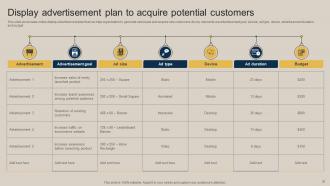
Slide 27: This slide portrays the Display advertisement plan to acquire potential customers.
Slide 28: This slide contains the Heading for the Topics to be discussed next.
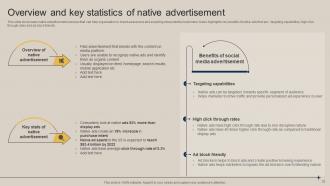
Slide 29: This slide indicates the Overview and key statistics of native advertisement
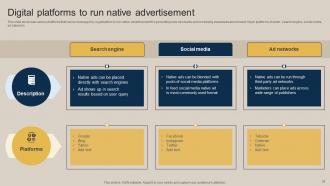
Slide 30: This slide shows the Digital platforms to run native advertisement.
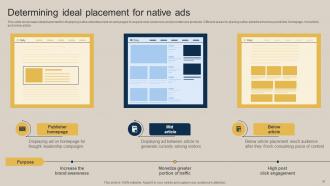
Slide 31: This slide deals with Determining ideal placement for native ads.
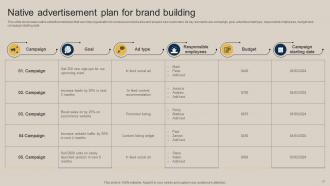
Slide 32: This slide reveals Native advertisement plan for brand building.
Slide 33: This slide includes the Title for the Topics to be covered in the following template.
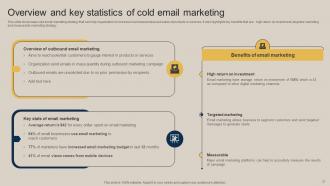
Slide 34: This slide exhibits the Benefits of email marketing
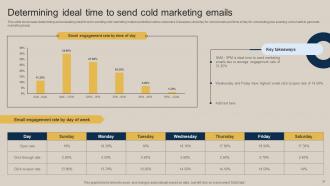
Slide 35: This slide deals with Determining ideal time to send cold marketing emails.
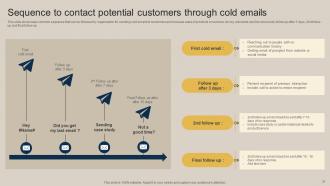
Slide 36: This slide portrays the Sequence to contact potential customers through cold emails.
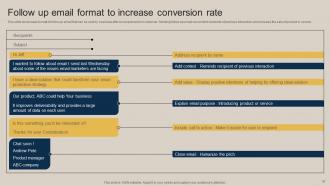
Slide 37: This slide showcases format of follow up email that can be sent by business after no response from customer.
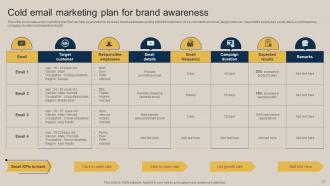
Slide 38: This slide reveals the Cold email marketing plan for brand awareness.
Slide 39: This slide indicates the Heading for the Contents to be discussed further.
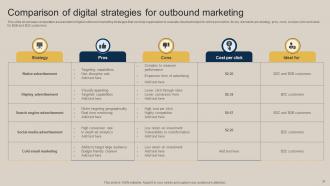
Slide 40: This slide shows the Comparison of digital strategies for outbound marketing.
Slide 41: This slide mentions the Title for the Ideas to be covered next.
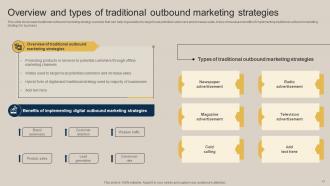
Slide 42: This slide highlights the Overview and types of traditional outbound marketing strategies.
Slide 43: This slide depicts the Heading for the Ideas to be discussed further.
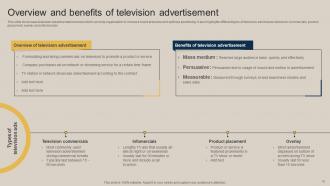
Slide 44: This slide showcases television advertisement overview which can help organization to increase brand presence and optimize positioning.
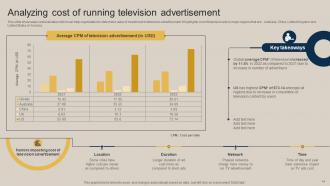
Slide 45: This slide focuses on Analyzing cost of running television advertisement.
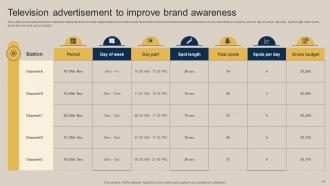
Slide 46: This slide indicates the Television advertisement to improve brand awareness.
Slide 47: This slide presents the Title for the Contents to be covered in the following template.
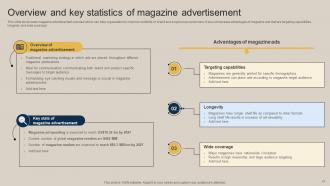
Slide 48: This slide highlights the Overview and key statistics of magazine advertisement.
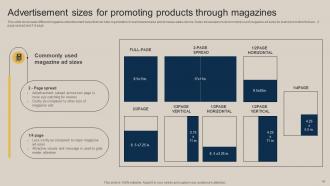
Slide 49: This slide displays the Advertisement sizes for promoting products through magazines.
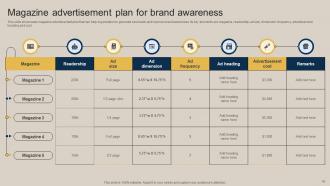
Slide 50: This slide showcases magazine advertisement plan that can help organization to generate new leads and improve brand awareness.
Slide 51: This slide highlights the Heading for the Topics to be discussed further.
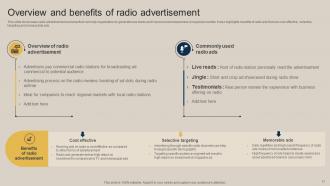
Slide 52: This slide reveals the Overview and benefits of radio advertisement.
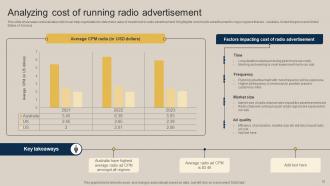
Slide 53: This slide focuses on Analyzing cost of running radio advertisement.
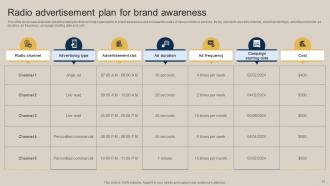
Slide 54: This slide presents the Radio advertisement plan for brand awareness.
Slide 55: This slide depicts the Title for the Topics to be covered next.
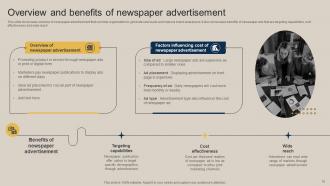
Slide 56: This slide showcases overview of newspaper advertisement that can help organization to generate new leads and improve brand awareness.
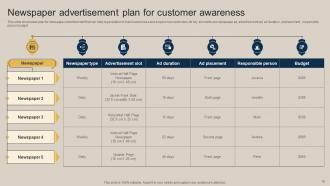
Slide 57: This slide portrays the Newspaper advertisement plan for customer awareness.
Slide 58: This slide exhibits the Heading for the Ideas to be discussed further.
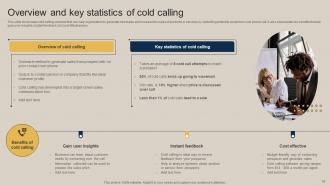
Slide 59: This slide highlights the Overview and key statistics of cold calling.
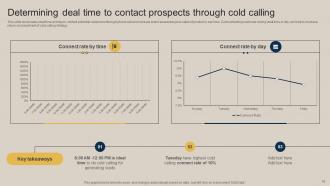
Slide 60: This slide emphasizes on Determining deal time to contact prospects through cold calling.
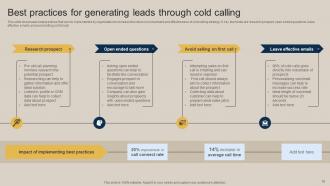
Slide 61: This slide depicts the Best practices for generating leads through cold calling.
Slide 62: This slide displays the Title for the Contents to be covered next.
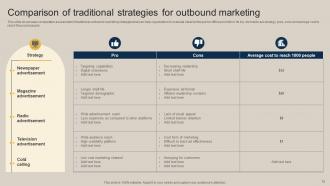
Slide 63: This slide reveals the Comparison of traditional strategies for outbound marketing.
Slide 64: This slide states the Heading for the Topics to be discussed further.
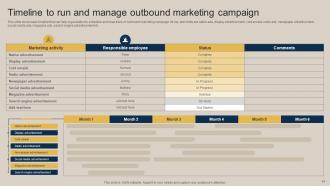
Slide 65: This slide shows the Timeline to run and manage outbound marketing campaign.
Slide 66: This slide indictaes the Heading for the Topics to be discussed in the following template.
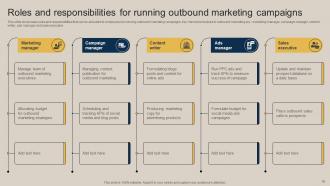
Slide 67: This slide lists the Roles and responsibilities for running outbound marketing campaigns.
Slide 68: This slide mentions the Title for the Topics to be covered in the next template.
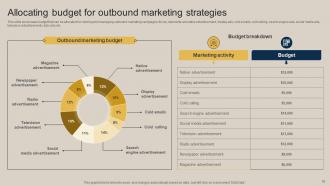
Slide 69: This slide focuses on Allocating budget for outbound marketing strategies.
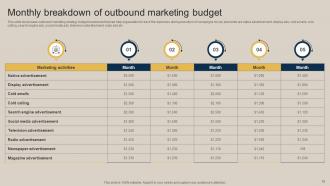
Slide 70: This slide illustrates the Monthly breakdown of outbound marketing budget.
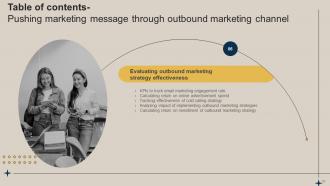
Slide 71: This slide portrays the Heading for the Contents to be discussed further.
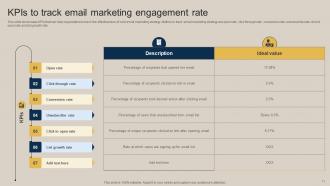
Slide 72: This slide reveals the KPIs to track email marketing engagement rate.
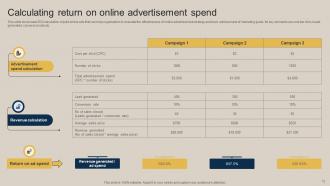
Slide 73: This slide deals with Calculating return on online advertisement spend.
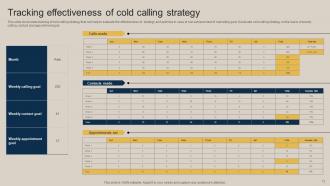
Slide 74: This slide showcases tracking of cold calling strategy.
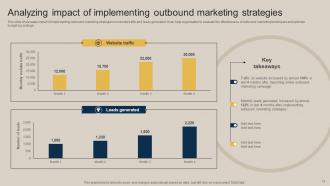
Slide 75: This slide states the impact of implementing outbound marketing strategies on website traffic and leads generated.
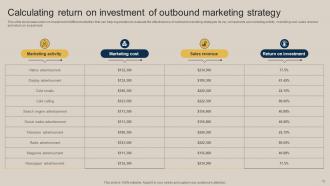
Slide 76: This slide focuses on Calculating return on investment of outbound marketing strategy.
Slide 77: This slide includes the Title for the Ideas to be covered next.
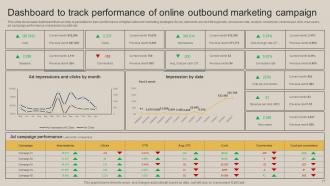
Slide 78: This slide showcases dashboard that can help organization to track performance of digital outbound marketing strategies.
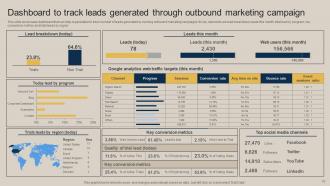
Slide 79: This slide illustrates the Dashboard to track leads generated through outbound marketing campaign.
Slide 80: This slide indicates the Heading for the Ideas to be discussed in the following template.
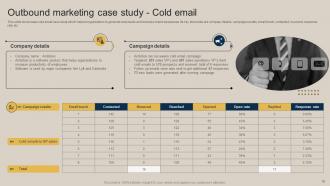
Slide 81: This slide presents the cold email case study which helped organization to generate new leads and increase brand awareness.
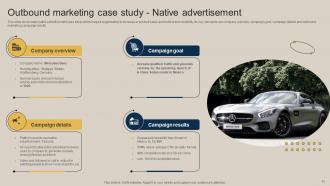
Slide 82: This slide states native advertisement case study which helped organization to increase in product sales and build brand credibility.
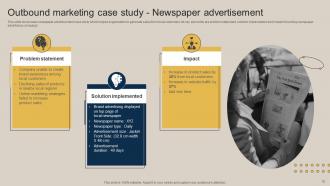
Slide 83: This slide mentions newspaper advertisement case study which helped organization to generate sales from local customers.
Slide 84: This is the Icons slide containing all the Icons used in the plan.
Slide 85: This slide is used for depicting some Additional information.
Slide 86: This is the About us slide for stating your company-related information.
Slide 87: This slide incorporates the organization's Timeline.
Slide 88: This is the 30 60 90 days plan for effective planning.
Slide 89: This slide elucidates the Line chart.
Slide 90: This slide illustrates the Clustered column chart.
Slide 91: This is the Venn diagram slide.
Slide 92: This slide contains the Post it notes for reminders and deadlines.
Slide 93: This is the Puzzle slide with related imagery.
Slide 94: This is the Idea generation slide for encouraging fresh ideas.
Slide 95: This is the Thank you slide for acknowledgement.
Pushing Marketing Message Through Outbound Marketing Channel MKT CD V with all 92 slides:
Use our Pushing Marketing Message Through Outbound Marketing Channel MKT CD V to effectively help you save your valuable time. They are readymade to fit into any presentation structure.








FAQs for Pushing Marketing Message Through Outbound Marketing Channel
Basically, outbound means you're hitting people up first - cold calls, emails, whatever. Inbound is when you put stuff out there and let them come to you. Outbound's nice because you control the timing, but man, it can feel super pushy. Like you're bothering people during dinner or something. With inbound, it takes forever to get rolling but the leads are actually interested already. Honestly? Most companies that are doing well mix both. You don't have to pick just one approach - that'd be kinda limiting yourself.
Okay so first thing - figure out exactly who you're trying to reach before you start posting everywhere. Create those detailed customer profiles, you know? Demographics, what problems they're dealing with, where they actually spend time online. Then pick your platforms smart. Like, executives aren't scrolling Instagram much, but they're definitely on LinkedIn and at industry events. Match your message to both the audience AND where you find them. Don't just throw generic stuff everywhere and hope something sticks - that's such a waste of time. Test different groups with A/B campaigns, see what actually works, then focus your energy there.
Honestly, traditional media isn't dead yet - TV, radio, and print still pack a punch for building credibility. Digital's great but sometimes feels a bit... hollow? The magic happens when you mix them though. Run a radio spot that sends people to your website, or use print ads to back up what you're already saying in emails. I wouldn't bet everything on traditional media alone, but don't ignore it completely either. Start with small test campaigns first. See what clicks with your audience, then go bigger from there.
Honestly, forget the vanity metrics - they're just feel-good numbers. What you really want is response rates, how many people actually convert from first contact to qualified leads, and your cost per acquisition. Email open rates and call connection rates matter too (though half the time "delivered" emails just sit there unread, which is annoying). Pick maybe 3-4 core metrics first instead of trying to track everything at once. You can always dig deeper later. The real win is tracking your whole funnel from that first touchpoint all the way to when deals actually close.
Yeah, cold calling totally works if you're not lazy about it. Do your homework first - stalk their LinkedIn, see what's happening at their company, find mutual connections. I swear people still pick up the phone (crazy, right?). But here's the thing - don't just blast through some random list like it's 1995. Make it personal based on what you dug up online. Then hit them up through email and social too. It's gotta be part of your whole game plan, not just one desperate phone call.
Dude, the biggest thing I see is people sending the exact same boring message to everyone. Do some actual research first - like, spend 2 minutes looking at their company or recent posts. Most people give up way too early too. You need like 5-8 touchpoints minimum, but everyone quits after the second "no response." Also stop obsessing over open rates - who cares if they opened it if nobody's buying? Segment your lists better. Write something specific about their business or role. Generic messages are basically spam at this point, and everyone can smell them from a mile away.
Honestly, most people get this backwards - they run outbound and inbound like they're completely different strategies. Big mistake. Your outbound should basically push people toward the same content that's already working for inbound. So if you've got a blog post that converts well, promote it through targeted ads or mention it in cold emails. Same with webinars or whatever. I always tell people to audit their best-performing inbound stuff first, then figure out how to drive more eyeballs to it through outbound. Way more effective than starting from scratch with totally separate campaigns.
Honestly, start with HubSpot or Salesforce for your CRM - they're both solid for tracking leads. Mailchimp's great for email sequences, saves you from manually sending follow-ups all day. For finding contacts, ZoomInfo works well, and LinkedIn Sales Navigator is decent but yeah, it gets expensive quick. I'd probably just stick with regular LinkedIn at first tbh. Calendly's clutch for scheduling meetings automatically. Get some kind of analytics tool too so you can see what's not complete garbage. Don't go crazy buying everything at once though - pick like two tools max to start.
Okay so first thing - segment your audience by industry, company size, or role. Then actually customize the messaging for each group. Drop in their company name, maybe reference some recent news about them, or call out problems their specific industry deals with. Dynamic email content is clutch here - you can automatically swap different case studies or features based on who's receiving it. Even tiny stuff like mentioning their city or a mutual connection you have makes a huge difference in response rates (honestly surprised me how much). Just don't go crazy with it - stick to 2-3 personalization things per campaign or you'll drive yourself nuts.
Look, brand rep is everything for outbound. When people trust you, they'll actually answer your calls instead of screening you out. Good reputation = instant credibility, even on cold outreach. It's honestly like getting a referral without having one, if that makes sense. But here's the thing - if your brand seems shady or desperate, you're screwed before you say hello. Prospects smell that stuff from miles away. My advice? Get solid testimonials and case studies first. Makes your whole pitch way more believable when you've got real proof backing it up.
So basically, you gotta match your outreach to where people actually are in their buying process. Cold prospects? Hit them with broader stuff like display ads or intro emails. Once they're warming up, get more specific - send personalized demos or relevant case studies. When they're ready to decide, that's when you do direct calls and proposal follow-ups. But here's where everyone screws up (and I've done this too) - they blast "buy now" messages at people who barely know they exist. You can't rush someone from stranger to customer in one email. Match your message to their headspace, not yours.
SaaS companies absolutely kill it with outbound - same with financial services and manufacturing. Longer sales cycles work in your favor there. Real estate agents are crushing it too since they're going after specific buyer profiles with serious money involved. Healthcare and professional services do well, basically anything that's not some random $5 purchase. You need decent deal values though, since outbound costs way more per lead than inbound stuff. Honestly, if your average customer's worth less than a grand, I'd probably focus on other channels first. The math just doesn't work otherwise.
Honestly, data analytics is a game changer - it shows you exactly who to target and when. Look at your past campaigns to see which channels and audiences actually converted well. Track email opens, call responses, all that stuff so you can tweak things as you go. Way better than just guessing what'll work, you know? Oh and definitely get proper tracking set up first if you haven't already - you need that baseline data or you're basically flying blind. Makes such a difference once you start seeing the patterns.
Dude, just get permission first - like, actually ask people before you start emailing them. Be honest about who you are and why you're hitting them up. Mass blasting random people is honestly just annoying at this point. Make unsubscribing dead simple too. Oh and don't ignore GDPR or CAN-SPAM rules because those'll bite you later. Really though, would you want to get whatever message you're about to send? If it feels spammy to you, it probably is. Treat people like humans instead of targets and you'll do way better.
Honestly, the best thing I've done is actually create content that backs up my cold outreach. Like, instead of sending boring generic pitches, I'll reference a blog post or case study I made that hits their exact problem. Works way better than random emails - people actually reply when there's real value there. I use my content as social proof in emails, share guides on calls, sometimes even do quick video messages about my latest research. Oh and the trick is making it feel natural, not like you're just dumping attachments on them. It's basically turning your content into conversation starters instead of... well, spam.
-
The content is very helpful from business point of view.
-
Spacious slides, just right to include text. SlideTeam has also helped us focus on the most important points that need to be highlighted for our clients.