


Quality Management In Sports Club Powerpoint Presentation Slides





Try Before you Buy Download Free Sample Product
 Impress Your
 Audience
 100%
100% Editable
 Save Hours
 of Time


Introducing Quality Management In Sports Club Powerpoint Presentation Slides. This presentation will benefit sports club organizations that want to open a new club branch in a new location. The sports quality management PPT presentation will also help club administration to attract new customers by running a marketing campaign. The sports club overview section will help the organization in representing their sports club business model and structural model along with the information about management teams and their responsibilities. The roles and responsibilities section will allow the organization to communicate roles and responsibilities both as a team and as an individual. Organizations can shed light on their sports club facilities and offering through the facilities and offerings section. The evolutionary phases of the club section will highlight the evolving stages of the sports club starting from the beginner stage to the corporate stage. Organizations may represent their stakeholder’s expectations through stakeholders’ expectations from the club section. The business goals section will help the organization to illustrate both long term and short-term goals of the sports club. The organization will be able to maintain equipment condition and gym safety with the help of a checklist for managing the sports club section.
People who downloaded this PowerPoint presentation also viewed the following :
Content of this Powerpoint Presentation
Slide 1: This slide introduces Quality Management in Sports Club. State your Company name and begin.
Slide 2: This slide displays Agenda of Sports Management
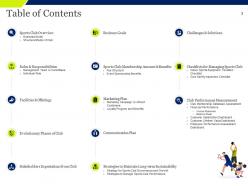
Slide 3: This slide displays Table of Contents.
Slide 4: This slide displays Table of Contents.
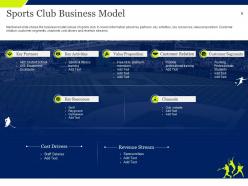
Slide 5: This slide shows the business model canvas of sports club. It covers information about key partners, key activities, key resources, value proposition. Customer relation, customer segments, channels, cost drivers and revenue streams.
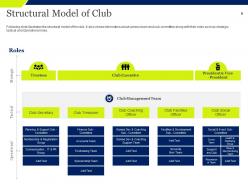
Slide 6: This slide illustrates the structural model of the club. It also shows information about various team and sub-committee along with their roles such as strategic, tactical and
Slide 7: This slide displays Table of Contents
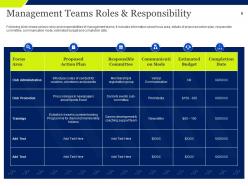
Slide 8: This slide shows various roles and responsibilities of management teams. It includes information about focus area, details of proposed action plan, responsible committee, communication mode, estimated budget and completion date.
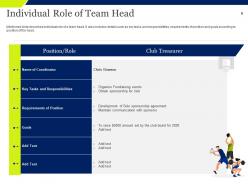
Slide 9: This slide describes individual role of a team head. It also includes details such as key tasks and responsibilities, requirements of position and goals according to position of the head.
Slide 10: This slide displays Table of Contents.
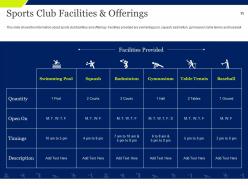
Slide 11: This slide shows the information about sports club facilities and offerings. Facilities provided are swimming pool, squash, badminton, gymnasium, table tennis and baseball.
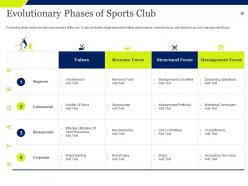
Slide 12: This slide covers evolutionary phases of the cub. It also includes stage wise information about values, revenue focus, structural focus and management focus.
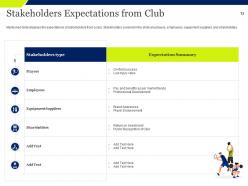
Slide 13: This slide displays the expectations of stakeholders from a club. Stakeholders covered in the slide are players, employees, equipment suppliers and shareholders.
Slide 14: This slide displays Table of Contents.
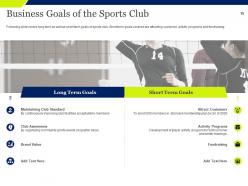
Slide 15: This slide covers long term as well as short term goals of sports club. Short term goals covered are attracting customer, activity programs and fundraising.
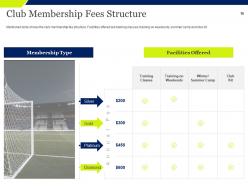
Slide 16: This slide shows the club membership fee structure. Facilities offered are training classes, training on weekends, summer camp and club kit.
Slide 17: This slide covers club membership sponsoring amount and benefits. Benefits covered are logo display on website, printed logo on club kit, event passes and discount on
Slide 18: This slide displays Table of Contents
Slide 19: This slide explains marketing campaign of the sports club. It includes information about campaign focus, its goal, budget, target market, marketing medium, strategy and outcome
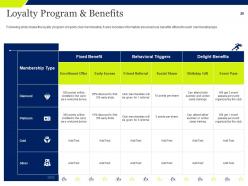
Slide 20: This slide shows the loyalty program of sports club membership. It also includes information about various benefits offered to each membership type.
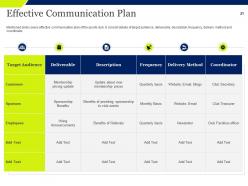
Slide 21: This slide covers effective communication plan of the sports club. It consist details of target audience, deliverable, description, frequency, delivery method and coordinator.
Slide 22: This slide displays Table of Contents
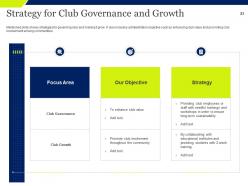
Slide 23: This slide shows strategies for governing club and making it grow. It also includes administration objective such as enhancing club value and promoting club involvement among communities.
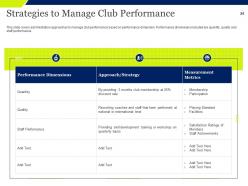
Slide 24: This slide covers administration approaches to manage club performance based on performance dimension. Performance dimensions included are quantity, quality and staff performance.
Slide 25: This slide displays Table of Contents
Slide 26: This slide covers possible challenges faced by sports club and right solutions to overcome them. Challenges covered are lack of trained staff, competition from new clubs,
Slide 27: This slide displays Table of Contents
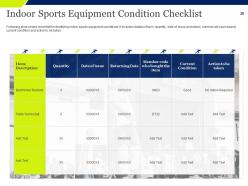
Slide 28: This slide shows checklist for identifying indoor sports equipment conditions. It includes details of item, quantity, date of issue and return, member who purchased, current condition and action to be taken.
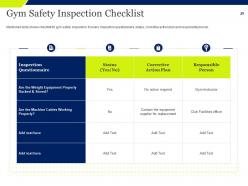
Slide 29: This slide shows checklist for gym safety inspection. It covers inspection questionnaire, status, corrective action plan and responsible person.
Slide 30: This slide displays Table of Contents.
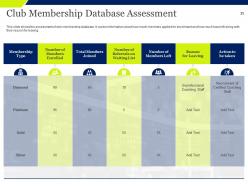
Slide 31: This slide shows the assessment of club membership database. It covers information about how much members applied for enrollment and how much have left along with their reason for leaving.
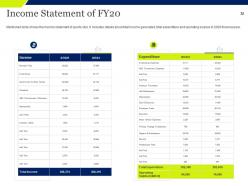
Slide 32: This slide shows the income statement of sports club. It includes details about total income generated, total expenditure and operating surplus in 2020 financial year.
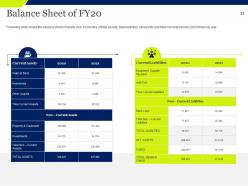
Slide 33: This slide shows the balance sheet of sports club. It includes of total assets, total liabilities, net assets and total members fund in 2020 financial year.
Slide 34: This slide displays Table of Contents
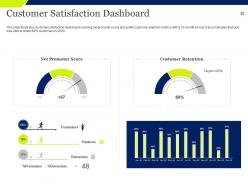
Slide 35: This slide illustrates customer satisfaction dashboard covering net promoter score along with customer retention metrics with a 12-month format. It also indicates that club was able to retain 89% customers in 2020.
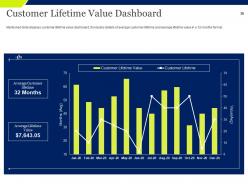
Slide 36: This slide displays customer lifetime value dashboard. It includes details of average customer lifetime and average lifetime value in a 12 months format.
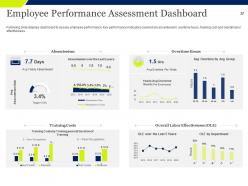
Slide 37: This slide displays dashboard to assess employee performance. Key performance indicators covered are absenteeism, overtime hours, training cost and overall labor effectiveness.
Slide 38: This is Icons Slides for Quality Management in Sports Club.
Slide 39: This slide is titled as Additional Slides for moving forward.
Slide 40: This is About Us slide to showcase Company specifications.
Slide 41: This is Our Mission slide with Vision, Mission and Goal.
Slide 42: This slide displays RoadMap process.
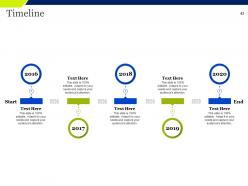
Slide 43: This slide shows Timeline process.
Slide 44: This is 30 60 90 Days Plan slide.
Quality Management In Sports Club Powerpoint Presentation Slides with all 44 slides:
Use our Quality Management In Sports Club Powerpoint Presentation Slides to effectively help you save your valuable time. They are readymade to fit into any presentation structure.
-

Quality Management In Sports Club Powerpoint Presentation Slides
-

Quality Management In Sports Club Powerpoint Presentation Slides
-
Quality Management In Sports Club Powerpoint Presentation Slides
-

Quality Management In Sports Club Powerpoint Presentation Slides
-
Quality Management In Sports Club Powerpoint Presentation Slides
-
Quality Management In Sports Club Powerpoint Presentation Slides
-

Quality Management In Sports Club Powerpoint Presentation Slides
-
Quality Management In Sports Club Powerpoint Presentation Slides
-
Quality Management In Sports Club Powerpoint Presentation Slides
-

Quality Management In Sports Club Powerpoint Presentation Slides
-
Quality Management In Sports Club Powerpoint Presentation Slides
-
Quality Management In Sports Club Powerpoint Presentation Slides
-
Quality Management In Sports Club Powerpoint Presentation Slides
-

Quality Management In Sports Club Powerpoint Presentation Slides
-
Quality Management In Sports Club Powerpoint Presentation Slides
-
Quality Management In Sports Club Powerpoint Presentation Slides
-

Quality Management In Sports Club Powerpoint Presentation Slides
-

Quality Management In Sports Club Powerpoint Presentation Slides
-

Quality Management In Sports Club Powerpoint Presentation Slides
-
Quality Management In Sports Club Powerpoint Presentation Slides
-
Quality Management In Sports Club Powerpoint Presentation Slides
-

Quality Management In Sports Club Powerpoint Presentation Slides
-
Quality Management In Sports Club Powerpoint Presentation Slides
-
Quality Management In Sports Club Powerpoint Presentation Slides
-

Quality Management In Sports Club Powerpoint Presentation Slides
-

Quality Management In Sports Club Powerpoint Presentation Slides
-

Quality Management In Sports Club Powerpoint Presentation Slides
-
Quality Management In Sports Club Powerpoint Presentation Slides
-
Quality Management In Sports Club Powerpoint Presentation Slides
-

Quality Management In Sports Club Powerpoint Presentation Slides
-
Quality Management In Sports Club Powerpoint Presentation Slides
-
Quality Management In Sports Club Powerpoint Presentation Slides
-
Quality Management In Sports Club Powerpoint Presentation Slides
-

Quality Management In Sports Club Powerpoint Presentation Slides
-
Quality Management In Sports Club Powerpoint Presentation Slides
-
Quality Management In Sports Club Powerpoint Presentation Slides
-
Quality Management In Sports Club Powerpoint Presentation Slides
-
Quality Management In Sports Club Powerpoint Presentation Slides
-

Quality Management In Sports Club Powerpoint Presentation Slides
-

Quality Management In Sports Club Powerpoint Presentation Slides
-

Quality Management In Sports Club Powerpoint Presentation Slides
-

Quality Management In Sports Club Powerpoint Presentation Slides
-
Quality Management In Sports Club Powerpoint Presentation Slides
-

Quality Management In Sports Club Powerpoint Presentation Slides
FAQs for Quality Management In Sports Club
Sports clubs can implement continuous improvement, customer-centricity, data-driven decision making, staff training excellence, and standardized processes to enhance operations. These principles streamline member experiences, optimize resource allocation, and improve service delivery, with many clubs finding that systematic quality management ultimately delivers higher member satisfaction, operational efficiency, and competitive advantage in an increasingly demanding sports industry landscape.
Sports clubs can measure member satisfaction through surveys, feedback forms, retention rates, facility usage analytics, and direct interviews with departing members. These assessment methods enable clubs to identify service gaps, optimize facilities, and enhance programming, with many recreational facilities finding that regular satisfaction monitoring leads to improved member retention, increased referrals, and ultimately stronger community engagement.
Leadership and governance establish quality standards, strategic direction, resource allocation, and accountability frameworks that drive organizational excellence throughout sports clubs. Effective governance bodies create policies for athlete development, facility management, and stakeholder engagement, while strong leadership ensures consistent implementation across all departments, ultimately delivering enhanced member experiences, competitive performance outcomes, and sustainable organizational growth in an increasingly competitive sports landscape.
Technology enhances quality management in sports clubs through automated member feedback systems, performance analytics platforms, facility monitoring sensors, and integrated management software. These solutions streamline operations by tracking member satisfaction, optimizing facility usage, and monitoring equipment maintenance schedules, with many clubs finding that digital integration delivers improved member experiences and operational efficiency.
Best practices for continuous improvement in sports club settings include regular performance analytics, member feedback systems, staff training programs, facility maintenance schedules, and technology integration. These approaches streamline operations by enhancing member experiences, optimizing resource allocation, and improving service delivery, with many clubs finding that systematic data collection and member engagement ultimately delivers higher retention rates and competitive advantage.
Sports clubs ensure compliance with industry standards by implementing comprehensive quality management systems that include regular audits, staff training programs, safety protocol documentation, and performance monitoring mechanisms. Through systematic approaches like ISO certification processes, clubs can streamline regulatory adherence while enhancing member experiences, with many organizations finding that structured compliance frameworks ultimately deliver operational efficiency and competitive advantage in an increasingly regulated sports industry landscape.
**INPUT**: What strategies can be employed to foster a culture of quality among coaches and staff? **OUTPUT**: Fostering a quality culture among coaches and staff involves comprehensive training programs, regular performance assessments, clear communication protocols, collaborative goal-setting, and recognition systems that reward excellence. These strategies enhance team cohesion, player development, and operational efficiency, with many sports organizations finding that consistent quality initiatives ultimately deliver improved athletic performance, stronger member retention, and sustained competitive advantage. [Word count: 60 words]
Consumer expectations drive quality management in sports clubs by demanding superior facilities, personalized services, and seamless member experiences. Sports clubs increasingly invest in modern equipment, staff training, and digital platforms to meet these rising standards, with many facilities finding that proactive quality improvements enhance member retention, reduce complaints, and ultimately deliver competitive advantages in crowded markets.
**INPUT**: What metrics should be used to evaluate the effectiveness of training programs in sports clubs? **OUTPUT**: Training program effectiveness metrics include performance improvement scores, injury reduction rates, athlete retention percentages, skill acquisition timelines, and fitness benchmark achievements. These comprehensive assessments enable sports clubs to streamline program development, enhance athlete experiences, and deliver measurable results, with many organizations finding that data-driven approaches ultimately improve competitive outcomes while maximizing training investments. **Word count: 56 words**
**INPUT**: How can feedback from athletes help in refining quality management processes? **OUTPUT**: Athlete feedback directly identifies gaps in training programs, facility management, equipment quality, and support services, enabling data-driven improvements to overall club operations. Through regular surveys and performance discussions, sports clubs can enhance training methodologies, optimize resource allocation, and streamline communication processes, ultimately delivering better athletic outcomes and competitive advantages. **Word count: 54 words**
Sports clubs face challenges including limited budgets for quality systems, resistance from staff accustomed to informal processes, difficulty measuring intangible services like member satisfaction, and balancing competitive performance with operational excellence. These obstacles can be overcome through phased implementation starting with high-impact areas, comprehensive staff training that emphasizes member retention benefits, and strategic use of technology for data collection, with many clubs finding that quality management ultimately delivers enhanced member experiences and improved financial performance.
Strategic partnerships enhance quality management in sports clubs by providing access to specialized expertise, advanced technologies, and shared resources that individual clubs might not afford independently. Through collaborations with sports medicine providers, technology companies, and training organizations, clubs can streamline operations, improve athlete performance tracking, and deliver superior member experiences, while reducing costs and gaining competitive advantages in an increasingly professional sports landscape.
Quality management significantly enhances a sports club's reputation by ensuring consistent member experiences, maintaining superior facilities, implementing transparent communication processes, and delivering reliable services across all touchpoints. Through systematic quality frameworks, clubs streamline operations while reducing complaints and increasing member satisfaction, with many organizations finding that this strategic approach ultimately attracts premium memberships and strengthens community standing.
Member engagement and community involvement serve as critical quality indicators through feedback collection, retention rates, participation levels, and satisfaction surveys that directly reflect service effectiveness. Active community involvement enhances club reputation, attracts new members, and creates accountability standards, with many sports organizations finding that engaged communities drive continuous improvement, operational excellence, and sustainable growth through word-of-mouth promotion and member loyalty.
Data analytics assists sports clubs in quality management by tracking member satisfaction, facility utilization, equipment performance, staff effectiveness, and operational efficiency metrics. Through predictive analytics and real-time dashboards, clubs can identify service gaps, optimize resource allocation, and enhance member experiences, while many facilities finding that data-driven insights ultimately deliver improved retention rates and competitive advantage.
-
Awesomely designed templates, Easy to understand.