


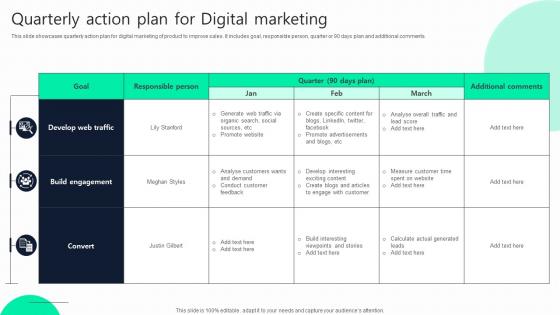
Quarterly Action Plan For Digital Marketing




Try Before you Buy Download Free Sample Product
 Impress Your
 Audience
 100%
100% Editable
 Save Hours
 of Time


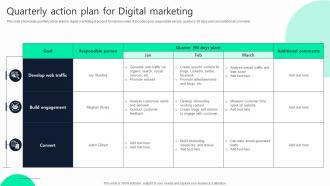
This slide showcases quarterly action plan for digital marketing of product to improve sales. It includes goal, responsible person, quarter or 90 days plan and additional comments.
People who downloaded this PowerPoint presentation also viewed the following :
Quarterly Action Plan For Digital Marketing with all 9 slides:
Use our Quarterly Action Plan For Digital Marketing to effectively help you save your valuable time. They are readymade to fit into any presentation structure.








FAQs for Quarterly Action Plan
Start with who you're actually trying to reach and what you want to accomplish - everything else builds from there. Map out your channels (social, email, paid stuff, content) with real timelines and campaigns. Budget breakdown by channel is huge. Honestly, most people totally blow off the tracking part but you'll thank yourself later during those fun quarterly meetings. Competitor research matters too. Oh and seasonal stuff if that applies to your business. Build in testing time throughout, not just at the end when you're scrambling.
Honestly, I'd start with your yearly revenue goal and just work backwards from there. Break it into quarters, then pick 3-4 metrics that actually matter - conversion rates, lead quality, customer acquisition costs. Skip the vanity stuff like follower counts (trust me on this one, wasted so much time there). Each goal needs a deadline and someone who owns it. The real trick? Always include at least one metric that ties directly to revenue. Your leadership team couldn't care less about engagement rates, but show them how your digital work impacts the bottom line and suddenly you're their favorite person.
Honestly, just match when your people are actually buying stuff. New Year hits different - everyone's broke from holidays but motivated by resolutions. Spring/summer is perfect for launches. Even B2B gets weird spikes during back-to-school season (don't ask me why, but it happens). Holiday season is obvious money time. But here's the thing - forget what everyone else says about "peak seasons." Dig into YOUR data from last year. Find your top 3 months for conversions, then start building campaigns like 6-8 weeks before those dates hit again. Way more useful than following generic retail calendars.
Honestly, competitive analysis is like having a cheat sheet for your industry. Look at what your competitors are doing – which platforms they're posting on, what content gets engagement, where they're spending ad money. You'll start noticing patterns and gaps pretty quickly. I get weirdly excited when I find something everyone else is sleeping on (like maybe TikTok for B2B). Use what you learn to set realistic benchmarks and steal ideas – not copy, but get inspired. Then turn those insights into actual quarterly goals. It's basically free market research if you think about it.
Customer personas are basically your north star for the whole quarterly plan. They tell you which channels to focus on, what content to make, how to split your budget. Map out where your ideal customers actually spend time online and what'll resonate with each group. I've watched too many teams skip this and just throw content everywhere - total waste. Your personas should drive everything from Facebook targeting to when you send emails. Oh and pro tip: start every planning meeting by asking "would Sarah the startup founder even give a damn about this?" Works every time.
Start with quarterly themes - that's your foundation. Everything else builds from there. So if Q2 is about customer wins, make sure your blogs, social posts, emails all tie back to that story. Honestly, most people skip this step and wonder why their content feels scattered. I always work backwards from quarterly goals first, then fill in the content calendar. Your LinkedIn posts should connect to your newsletters, which connect to your case studies... you get the idea. It's basically about making everything feel like it's part of one bigger conversation instead of random stuff.
So I'd track both performance stuff and leading indicators to see what's actually working. Your main ones should be conversion rates, customer acquisition cost, and revenue attribution. Traffic numbers matter too, but honestly those can be super deceiving if people aren't actually buying anything. For leading indicators - email open rates, social engagement trends, pipeline velocity. Oh and definitely set up tracking before the quarter starts or you'll be scrambling later (learned that one the hard way). Stick to maybe 5-7 metrics tops, otherwise you'll get overwhelmed and lose sight of what actually moves the needle.
Honestly, I'd throw 60-70% at whatever killed it last quarter. The rest? Split between testing new stuff and pumping more into channels that are showing promise. I used to spread everything evenly like peanut butter - terrible idea. Feed what's already working but leave space to mess around. Your cost per acquisition numbers will tell you where to focus. Oh, and keep like 10-15% on the side for when something randomly explodes or completely dies mid-quarter. You'll thank me later.
Okay so for quarterly planning, you definitely need a project management thing - Asana or Monday.com work great for tracking all your campaigns. Content-wise, CoSchedule is solid but honestly? Sometimes I just use Google Sheets because it's simpler and doesn't crash on me lol. Google Analytics is obviously a must, plus something like Hootsuite for scheduling posts ahead of time. Canva's perfect for quick graphics when you need them. But seriously, don't go overboard - I made that mistake once and ended up with like 8 different tools. Stick to 3-4 max or you'll hate yourself.
Reserve about 20-30% of your budget for a "rapid response" fund - trust me on this one. Also keep some campaign slots open so you can pivot fast. I totally missed the TikTok wave because we'd already blown our entire budget (still kicking myself over that). Monthly reviews work way better than waiting till the quarter ends. You'll catch trends early and can actually do something about them. Start small with testing, then scale what's working instead of throwing huge money at unproven ideas. Oh, and make your campaigns modular - you can pause or double down without scrapping everything.
Honestly, start with your Google Analytics and social media data - that stuff tells the real story of what flopped vs what killed it. Survey your customers too (they actually love giving opinions, weirdly). Your CRM probably has gold buried in there about which campaigns brought in decent leads. Oh, and definitely talk to your sales people - they hear all the complaints and praise that never shows up anywhere else. I'd throw everything into a basic spreadsheet so you're not digging through random folders when planning starts again.
Look at what worked last quarter first - which posts got engagement, when people were actually online, all that stuff. Then plan around the seasons, you know? January's all about new year energy, but December's obviously holiday madness. Honestly, these algorithm changes are so annoying but that's why I swear by quarterly planning. You can pivot faster when Instagram decides to completely change how they show posts (again). Match your content to what's coming up - holidays, industry stuff, product drops. Oh, and definitely update your hashtags based on what actually performed. Start reviewing last quarter's wins this week so you're not scrambling.
Okay so first thing - map everything to your big quarterly stuff like launches and holidays. Space your major campaigns like 2-3 weeks apart though, people get annoyed if you're constantly hitting their inbox. I'm obsessed with nurture sequences right now, they convert so well, so definitely squeeze one in monthly. Your content themes should match whatever else marketing is doing so it all feels connected. Oh and build A/B testing right into your calendar from the start - subject lines, send times, all that. Then just review your numbers each month and tweak accordingly.
Honestly, you gotta dive into those quarterly numbers and see what's actually paying off. Check your cost-per-acquisition and conversion rates by campaign - if search is killing it but display sucks, move that money around. Social can be so weird quarter to quarter too, never know what'll hit. Look at which landing pages worked best and steal those insights for your next creative push. ROAS by audience segment will tell you everything. I'd block out some time this week to audit the whole mess and shift budgets before Q4 starts. Better to do it now than scramble later.
Get everyone talking right away - have each person share their wins and struggles from last quarter. Use something like Miro so people can actually contribute instead of zoning out while one person drones on forever. Assign owners for each project before you leave (this is super important or stuff just dies). Document everything somewhere everyone can access - trust me, someone will definitely ask "wait what was our Instagram plan again?" like two weeks later. Oh and make sure people can actually edit the final doc, not just view it. Nothing worse than having to hunt down the one person with access when you need to make changes.
-
You can rely on SlideTeam whenever you run out of designs for your presentation. Thank you so much SlideTeam!
-
Enough space for editing and adding your own content.