

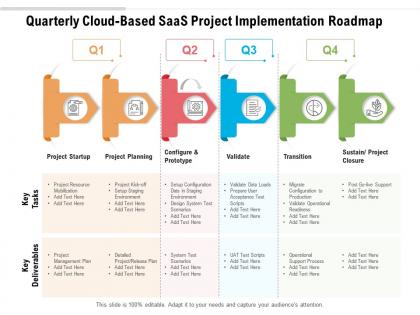
Quarterly cloud based saas project implementation roadmap




Try Before you Buy Download Free Sample Product
 Impress Your
Audience
 100%
Editable
 Save Hours
of Time


Visualize your work plan and communicate your ideas impactfully with our pre designed Quarterly Cloud Based SaaS Project Implementation Roadmap. Showcase the detailed overview of the project, the key deliverables, and the milestones to be achieved with the help of our fully customizable PowerPoint layout. You can easily emphasize on the project goals and discuss all the activities involved in an easy to comprehend manner by utilizing our professionally designed PPT theme. This roadmap PowerPoint layout is a perfect strategic planning tool that can help in keeping the project on track. With our attractive PowerPoint theme, you can articulate the workflow, track the work progress, and have a clear vision of the goal to be achieved. Download this versatile Quarterly Cloud Based SaaS Project Implementation Roadmap and save your hours of work.
People who downloaded this PowerPoint presentation also viewed the following :
Quarterly cloud based saas project implementation roadmap with all 2 slides:
Use our Quarterly Cloud Based SaaS Project Implementation Roadmap to effectively help you save your valuable time. They are readymade to fit into any presentation structure.


FAQs for Quarterly cloud based saas
So you've got five main phases to think about: discovery/planning, picking your vendor, migrating data and hooking everything up, training people, then going live and tweaking things. Here's the thing - most teams totally rush the discovery part, but that's where you map out how things actually work now. After that comes vendor selection (honestly the fun part), then all the technical stuff of moving data around. Oh, and don't forget training! I learned that one the hard way on a project last year. I'd pad each phase with 2-3 weeks buffer time because something always goes sideways.
Honestly, you need to check four main things before diving in. First, look at your tech setup - is your internet actually reliable? Because trust me, cloud software is useless if you're constantly dropping connection. Also evaluate how your team handles change and new digital tools. Some people adapt quickly, others... not so much. Don't forget to review any compliance stuff that might limit your SaaS options. Budget-wise, factor in both upfront costs and monthly fees - they add up fast. I'd create a simple scoring system for each area so you can spot problems early.
Honestly, start with security stuff and whether it plays nice with what you're already using. Can it scale up when you grow? Good question to ask upfront. The real cost goes way beyond subscription fees btw - factor in training, setup, all that. Their support team matters SO much more than people realize. You will definitely need them eventually. Check out reviews and see if they've been around. Oh, and run a pilot first - never commit without testing it properly. Just rank what matters most to your specific situation and go from there.
Ugh, data migration is going to be your biggest nightmare - seriously, double whatever timeline you're thinking. Users will hate change no matter what, so get them involved early when you're picking the system. Integration stuff always bites you too because APIs never work quite how you expect. I'd map out everything you do now first, then take your sweet time planning. Oh, and definitely have a backup plan for when things go sideways during migration. Trust me, rushing this will just create way more problems down the road. Better to move slow and actually get it right.
Dude, get your stakeholders involved from the very beginning - this literally makes or breaks everything. If people aren't bought in, you'll hit walls constantly. The folks who'll actually use this system daily? They know stuff about current workflows you'd never think of. Plus they'll catch problems before they cost you serious money. Leadership skipping this step is how I've watched projects completely implode. Map out who matters most and pull them into requirements, testing, all of it. Oh and don't forget training planning - that's where things usually go sideways if people feel left out.
Dude, change management will make or break your SaaS move - I can't stress this enough. Get people on board early and actually explain why you're doing this whole thing. The technical stuff might work perfectly, but if your team isn't ready? You're screwed. I've watched so many companies nail the implementation then face total user revolt because they forgot about the human side. Train everyone before launch, not after. Oh, and definitely get some cheerleaders in each department - they'll do half your work for you. Don't save change planning for last either. Start it alongside the technical stuff or you'll regret it.
Pick your power users first - they'll become your biggest advocates and help iron out the kinks. Don't do marathon training sessions; people's brains check out after like 20 minutes max. Focus on specific workflows instead of everything at once. The vendor's training materials are fine as a starting point, but you've gotta customize examples to match what your team actually does day-to-day. Schedule weekly check-ins for the first month. Oh, and definitely assign someone as the ongoing support person - nothing kills adoption faster than training people then leaving them hanging when they hit roadblocks.
Track the stuff that actually matters - user adoption, system uptime, how fast people get value from it. Business-wise, look at cost savings vs your old setup and productivity gains. Honestly, don't go crazy with metrics or you'll drown in data. Pick maybe 5-7 that your stakeholders care about and throw them on a simple dashboard. Check weekly for the first couple months so you can spot problems early. User satisfaction scores are huge too - happy users mean leadership will see the ROI. That's what keeps projects funded, you know?
Honestly, customization will wreck your timeline and budget if you're not careful - we're talking 2-3x blowups easily. Each custom feature means more dev time, testing, and maintenance headaches that you just don't get with standard setups. You'll need specialized people too, which gets pricey. The worst part? Stakeholders always want "just one more thing" without getting how it all snowballs. I learned this the hard way on my last project actually. Start vanilla first, then only customize stuff that actually matters for your goals. Trust me on this one.
First thing - do a data audit and you'll be shocked how much garbage you can just delete instead of migrating. Map your fields to the new platform early, then run a pilot with like 10% of your data. Clean everything BEFORE you move it (learned this the hard way). Oh and definitely plan for downtime during the actual switchover - users always freak out but it's unavoidable. Set up checkpoints so you can catch issues as you go. Most crucial part though? Have your rollback ready and don't delete old backups until you're totally sure it worked.
First thing - check their security certs like SOC 2 and ISO 27001. Figure out what data you're actually moving and how sensitive it is (yeah, boring but trust me on this). Your contract needs solid data ownership language and breach notification stuff. MFA and proper access controls are non-negotiable from the start. Also dig into their backup and disaster recovery - some vendors are sketchy about this part. Oh, and create one of those responsibility matrices so nobody's pointing fingers later when something goes sideways. Basically just don't assume they've got everything covered.
Dude, integrating your SaaS tools is honestly a game changer. No more copying data between systems like some kind of digital pack mule. Everything flows automatically, so your team isn't doing the same data entry twice (which drives everyone insane). You'll actually see what's happening across all your platforms since they're finally talking to each other. Way fewer mistakes too when humans aren't manually moving stuff around. Oh, and you'll get better bang for your buck from all that software you're paying for. Just figure out which systems share data most often first—that's where you start.
Quarterly reviews are the bare minimum, but honestly it really depends on your situation. Fast-moving company or crazy industry? Monthly makes way more sense. Watch for the big triggers - priorities shifting, new stakeholder demands, or when you hit those unexpected roadblocks nobody saw coming. I've watched teams cling to outdated roadmaps for months (such a waste). Build flexibility in from day one. Don't be scared to pivot when the numbers tell you to. Oh, and set those calendar reminders now or you'll totally forget.
Dude, you HAVE to test with real users - I can't stress this enough. Run usability tests, send surveys, dig through support tickets. Talk to people directly. I've watched so many teams think they nailed it, then launch to crickets because they never actually asked users what they wanted. Start gathering feedback super early, not after you've built everything. Get a pilot group going and actually listen to what they tell you - their suggestions should totally shape your rollout. Don't just collect feedback to check a box, ya know?
Honestly, pick a SaaS provider that won't crumble when you actually start getting users - I've seen companies pick the cheapest option and regret it big time. Make sure they've got flexible pricing so you're not getting gouged later. Clean data setup from day one will save you so much headache down the road, trust me. Also negotiate contract terms that don't punish you for growing (seems obvious but you'd be surprised). Oh and definitely run some fake load tests early. You don't want to be that startup that goes viral and immediately crashes.
No Reviews