

Real Estate Building Management Proposal Powerpoint Presentation Slides




Try Before you Buy Download Free Sample Product
 Impress Your
 Audience
 100%
100% Editable
 Save Hours
 of Time


Property management proposal helps landlords and property owners effectively manage their properties. Grab our professionally crafted Real Estate Building Management Proposal. It incorporates services like marketing and advertising of available properties and tenant screening plus selection. Our Building Administration deck showcases rent collection and property maintenance. It further highlights the regular inspections to ensure proper management of the property. The proposal also details investment for property management and pricing packages. Our Property Tenant proposal further contains client testimonials with terms and conditions. Additionally, it elucidates the Gantt chart with the timeline and Companys contact details. Lastly, the deck aids in obtaining top notch property management services and ensuring the satisfaction of both landlords and tenants. Download this 100 percentage editable presentation and get access to our highly researched and skillfully designed product.
People who downloaded this PowerPoint presentation also viewed the following :
Content of this Powerpoint Presentation
Slide 1: This slide introduces Real Estate Building Management Proposal. State your company name and begin.
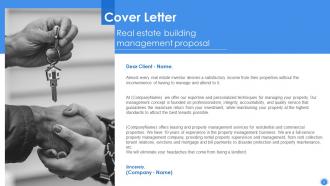
Slide 2: This slide shows Cover Letter for Real estate building management proposal.
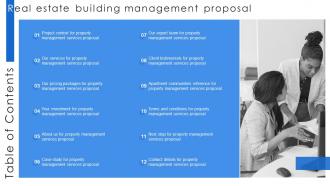
Slide 3: This slide incorporates the Table of Contents.
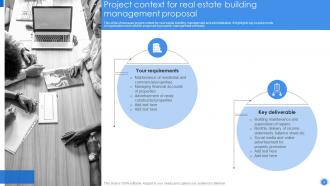
Slide 4: This slide showcases project context for property management and administration.
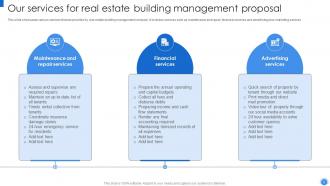
Slide 5: This slide displays the various services that are provided by property management company.
Slide 6: This slide states the various packages that are provided by property management company to its clients.
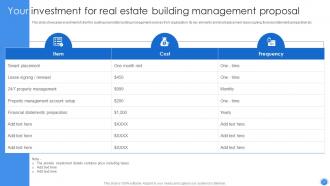
Slide 7: This slide elucidates the investment of client for availing property management services from organization.
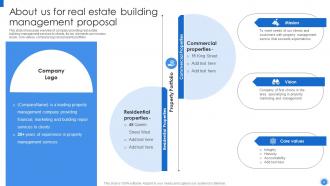
Slide 8: This slide reveals the overview of company providing property management services to clients.
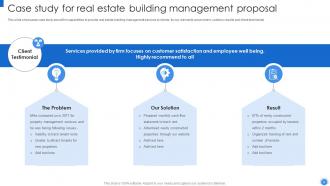
Slide 9: This slide shows the case study about firm capabilities to provide property management services to clients.
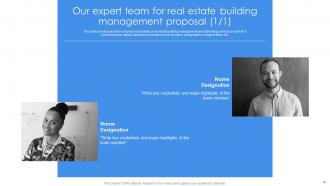
Slide 10: This slide depicts the team of company providing property management and marketing services in market.
Slide 11: This is yet another slide continuing the team related information.
Slide 12: This slide exhibits testimonials of clients that have availed property management services in past.
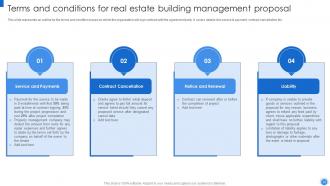
Slide 13: This slide represents an outline for the terms and condition based on which the organization will sign contract with the agreement party.
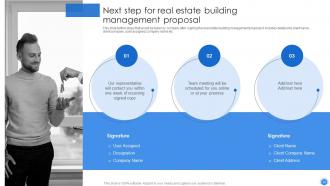
Slide 14: This slide highlights the further steps that would be taken by company after signing the property management proposal.
Slide 15: This slide presents the Organization's Contact details.
Slide 16: This is the Icons slide containing all the Icons used in the plan.
Slide 17: This slide elucidates the Additional information.
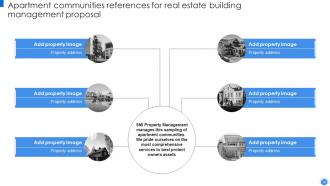
Slide 18: This slide deals with the Apartment communities references for property management proposal.
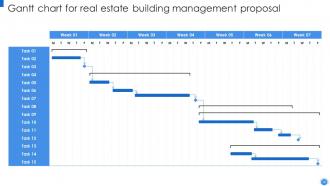
Slide 19: This is the Gantt chart with related imagery.
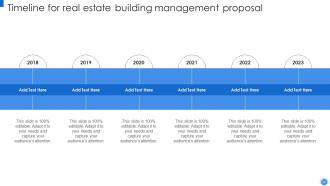
Slide 20: This slide presents the Timeline of the organization.
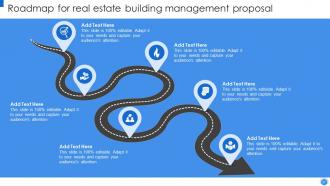
Slide 21: This slide depicts the Company Roadmap.
Slide 22: This slide represents the Company's mission, vision, and goals.
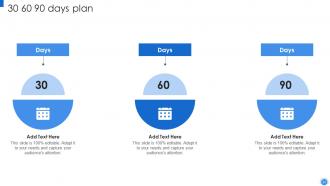
Slide 23: This slide elucidates the 30 60 90 days plan for efficient planning.
Real Estate Building Management Proposal Powerpoint Presentation Slides with all 28 slides:
Use our Real Estate Building Management Proposal Powerpoint Presentation Slides to effectively help you save your valuable time. They are readymade to fit into any presentation structure.










FAQs for Real Estate Building Management Proposal
Real estate managers oversee property operations, tenant relations, financial management, maintenance coordination, and regulatory compliance across residential and commercial properties. These professionals streamline operations by negotiating leases, managing budgets, coordinating repairs, and ensuring legal adherence, with many property owners finding that experienced managers ultimately deliver higher occupancy rates, reduced costs, and enhanced asset value.
Technology enhances property management efficiency by automating routine tasks, streamlining tenant communications, and providing real-time analytics on property performance, maintenance needs, and financial metrics. Through smart building systems and mobile platforms, property managers can reduce operational costs, accelerate maintenance responses, and deliver better tenant experiences, ultimately improving occupancy rates and profitability.
Property managers should track occupancy rates, rent collection efficiency, tenant retention rates, maintenance response times, and operating expense ratios. These metrics enable streamlined operations by identifying revenue optimization opportunities, reducing turnover costs, and enhancing tenant satisfaction, with many real estate firms finding that consistent tracking ultimately delivers improved cash flow and competitive market positioning.
Market trends significantly influence real estate management strategies by dictating pricing decisions, investment timing, property development focus, and tenant acquisition approaches. Through data analytics and market forecasting, property managers adapt portfolio strategies, optimize rental rates, and adjust maintenance priorities, while anticipating demographic shifts, ultimately delivering enhanced returns and competitive positioning in increasingly dynamic markets.
Tenant communication serves as the foundation of effective property management by building trust, preventing conflicts, and ensuring timely issue resolution. Through regular updates, responsive maintenance coordination, and transparent lease processes, property managers enhance tenant satisfaction, reduce turnover costs, and maintain higher occupancy rates, with many real estate firms finding that proactive communication strategies ultimately deliver stronger rental income and long-term property value appreciation.
Real estate managers can enhance tenant retention rates by prioritizing responsive maintenance services, implementing competitive pricing strategies, fostering strong communication channels, and creating community-building initiatives within properties. Through proactive engagement and technology-enabled service platforms, many property management companies find that addressing tenant concerns quickly, offering lease renewal incentives, and maintaining well-appointed common areas ultimately delivers higher occupancy rates and increased profitability.
Real estate managers face challenges including regulatory compliance, tenant retention, maintenance cost escalation, technology integration, and market volatility. These obstacles impact operations through increased administrative burdens, higher vacancy rates, and reduced profitability, with many property management firms finding that strategic technology adoption and proactive tenant engagement ultimately deliver enhanced operational efficiency and competitive advantage.
Maintenance and repair are critical to property management success, directly impacting tenant satisfaction, property values, asset longevity, and operational costs. Proactive maintenance strategies enable property managers to minimize emergency repairs, reduce long-term expenses, retain quality tenants, and ultimately maximize return on investment while maintaining competitive market positioning.
Best practices for conducting property inspections include establishing systematic checklists, scheduling regular intervals, documenting findings with photographs, prioritizing safety assessments, and maintaining detailed records. Through comprehensive inspections covering structural, mechanical, and aesthetic elements, property managers streamline maintenance planning, minimize costly repairs, and enhance tenant satisfaction, with many real estate organizations finding that proactive inspection protocols ultimately deliver improved asset values and operational efficiency.
Local legislation significantly affects property management through tenant protection laws, rent control regulations, safety compliance requirements, eviction procedures, and licensing mandates. These regulations vary by jurisdiction, with cities like San Francisco and New York having stringent rent stabilization rules, while other markets maintain more flexible frameworks, ultimately requiring property managers to adapt operational strategies and ensure legal compliance for sustainable business practices.
Emerging sustainable real estate management trends include energy-efficient building technologies, green certification programs, smart building automation, renewable energy integration, and waste reduction strategies. These approaches streamline operational costs, enhance property values, and meet increasingly stringent environmental regulations, with many commercial property owners finding that sustainable practices ultimately deliver competitive advantage and attract environmentally conscious tenants.
Real estate managers can leverage social media through targeted property listings, virtual tours, neighborhood showcases, client testimonials, and market insights across platforms like Instagram, Facebook, and LinkedIn. These strategies enhance property visibility, build trust with potential buyers and tenants, and establish market authority, with many agencies finding that consistent social engagement accelerates sales cycles and expands their client base significantly.
Luxury property management typically delivers higher profit margins through premium pricing, specialized services, and upscale amenities, while affordable property management relies on volume, operational efficiency, and streamlined processes. Through strategic positioning, luxury properties command significantly higher fees and tenant retention rates, whereas affordable properties achieve competitive advantage through cost optimization and scalable systems, with many real estate firms finding diversified portfolios maximize overall returns.
Real estate managers can effectively assess rental pricing by conducting comprehensive market analysis, evaluating comparable properties, analyzing local demand patterns, considering property amenities and condition, and reviewing seasonal trends. Through strategic pricing tools and market data platforms, property managers optimize rental rates while maintaining competitive positioning, ultimately maximizing revenue streams and occupancy rates in increasingly dynamic markets.
Economic fluctuations significantly impact real estate management through shifting property values, varying demand patterns, changing interest rates, and evolving rental markets. During economic downturns, property managers adapt by implementing flexible leasing strategies, optimizing operational efficiency, and diversifying revenue streams, while economic growth periods enable expansion opportunities, with many firms finding that proactive financial planning ultimately delivers resilience and competitive advantage.
-
Professional and unique presentations.
-
Keep doing the good work guys. Surpass the needs and expectations always!!