

Reducing Staff Turnover Rate With Retention Tactics Powerpoint Presentation Slides





Try Before you Buy Download Free Sample Product
 Impress Your
Audience
 100%
Editable
 Save Hours
of Time


Retaining the best employees is still one of the organizations biggest challenges, and a lower staff retention rate can significantly reduce the companys sales and profit. Check out our professionally designed Reducing Staff Turnover Rate with Retention Tactics PowerPoint Presentation, which includes the current organization scenario and a complete employee retention program. The Purpose of this deck is to reduce the employee turnover rate, and improve employee satisfaction, productivity, and customer experience rate. It exhibits the major retention strategies that will assist corporates in boosting employee job satisfaction and creating a positive work environment. This PPT covers the Training and development programs, employee health and well-being, work-life balance, and monetary and non-monetary incentives. Additionally, it includes a section on different tools through which human resource managers can boost employee productivity, addressing the challenges managers face in retaining staff and its solutions. At last, through key performance indicators KPI metrics and dashboards, HR managers can analyze the success of retention strategies on employee performance. Get access now.
People who downloaded this PowerPoint presentation also viewed the following :
Content of this Powerpoint Presentation
Slide 1: This slide displays the title Reducing Staff Turnover Rate with Retention Tactics.
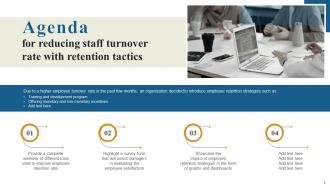
Slide 2: This slide displays the title Agenda.
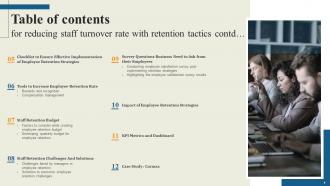
Slide 3: This slide exhibit table of content.
Slide 4: This slide display table of content that is to be discuss further.
Slide 5: This slide display table of content that is to be discuss further.
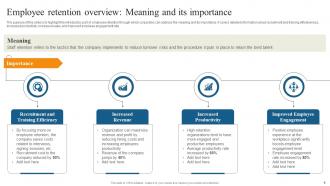
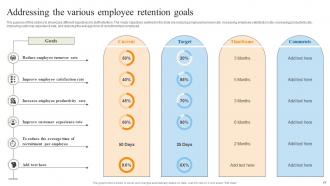
Slide 6: The purpose of this slide is to highlight the introductory part of employee retention through which corporates can address the meaning and its importance.
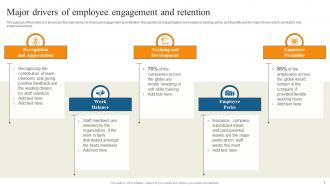
Slide 7: The purpose of this slide is to showcase the main drivers of employee engagement and retention.
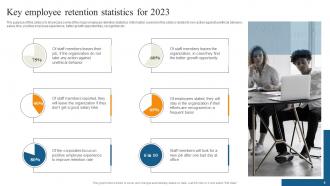
Slide 8: The purpose of this slide is to showcase some of the major employee retention statistics.
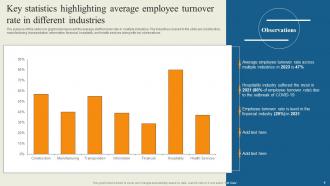
Slide 9: The purpose of this slide is to graphically represent the average staff turnover rate in multiple industries.
Slide 10: This slide display table of content that is to be discuss further.
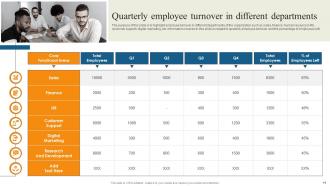
Slide 11: The purpose of this slide is to highlight employee turnover in different departments of the organization.
Slide 12: The purpose of this slide is to outline different questions which can be asked by HR professionals during the exit interview round.
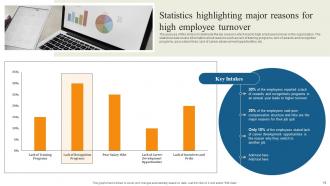
Slide 13: The purpose of this slide is to delineate the top reasons which lead to high employee turnover in the organization.
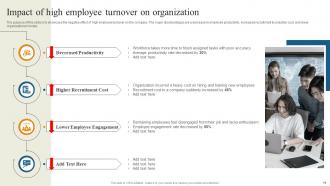
Slide 14: The purpose of this slide is to showcase the negative effect of high employee turnover on the company.
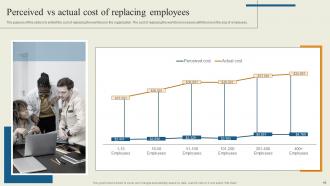
Slide 15: The purpose of this slide is to exhibit the cost of replacing the workforce in the organization.
Slide 16: This slide display table of content that is to be discuss further.
Slide 17: The purpose of this slide is to showcase different objectives for staff retention.
Slide 18: This slide display table of content that is to be discuss further.
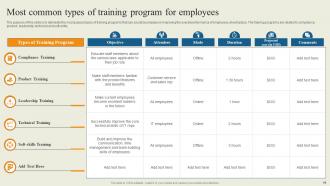
Slide 19: The purpose of this slide is to delineate the most popular types of training programs that can assist businesses in improving the overall performance of employees.
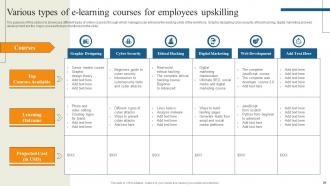
Slide 20: The purpose of this slide is to showcase different types of online courses through which managers can enhance the existing skills of the workforce.
Slide 21: This slide display table of content that is to be discuss further.
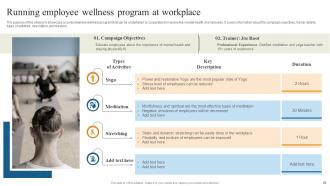
Slide 22: The purpose of this slide is to showcase a comprehensive wellness program that can be undertaken by corporates to improve the mental health of employees.
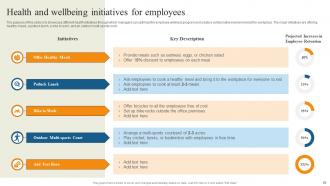
Slide 23: This slide is to showcase different health initiatives through which managers can optimize the employee wellness program and create a collaborative environment.
Slide 24: This slide display table of content that is to be discuss further.
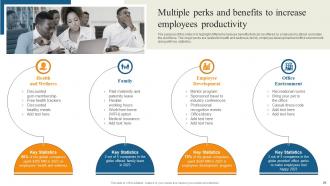
Slide 25: The purpose of this slide is to highlight different employee benefits that can be offered by employers to attract and retain the workforce.
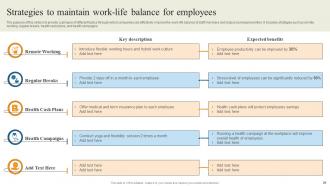
Slide 26: This slide is to provide a glimpse of different tactics through which companies can effectively improve the work-life balance of staff members.
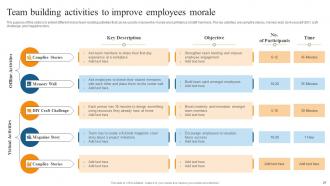
Slide 27: This slide is to exhibit different indoor team-building activities that can be used to improve the morale and confidence of staff members.
Slide 28: This slide display table of content that is to be discuss further.
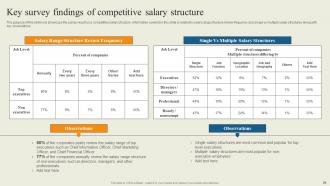
Slide 29: The purpose of this slide is to showcase the survey result on a competitive salary structure.
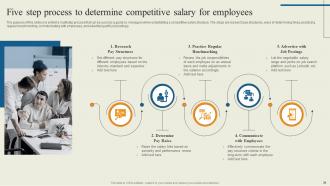
Slide 30: The purpose of this slide is to exhibit a multistep process that can be used as a guide by managers when establishing a competitive salary structure.
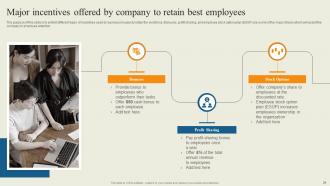
Slide 31: The purpose of this slide is to exhibit different types of incentives used by business houses to retain the workforce.
Slide 32: This slide display table of content that is to be discuss further.
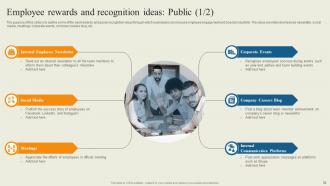
Slide 33: This slide is to outline some of the best rewards and public recognition ideas through which businesses can increase employee engagement and boost productivity.
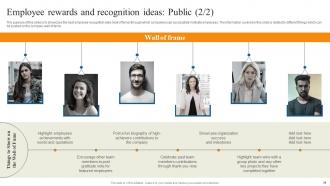
Slide 34: This slide is to showcase the best employee recognition idea (wall of fame) through which companies can successfully motivate employees.
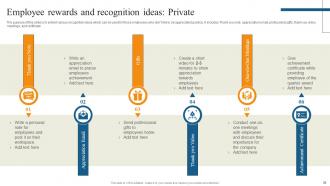
Slide 35: This slide is to exhibit various recognition ideas which can be used for those employees who don’t like to be appreciated publicly.
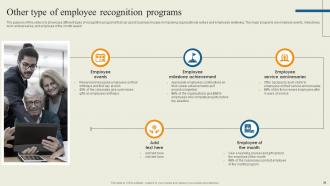
Slide 36: This slide is to showcase different types of recognition programs that can assist business houses in improving organizational culture and employees wellbeing.
Slide 37: This slide display table of content that is to be discuss further.
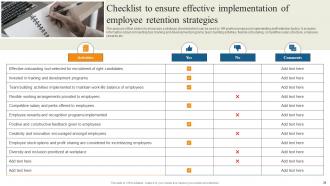
Slide 38: The purpose of this slide is to showcase a strategic checklist which can be used by HR professionals post implementing staff retention tactics.
Slide 39: This slide display table of content that is to be discuss further.
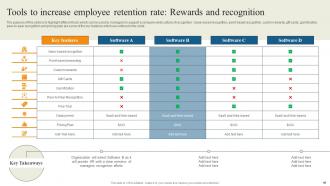
Slide 40: This slide is to highlight different tools which can be used by managers to support a company-wide culture of recognition.
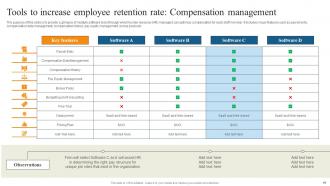
Slide 41: This slide is to provide a glimpse of multiple software tools through which human resource (HR) managers can optimize compensation for each staff member.
Slide 42: This slide display table of content that is to be discuss further.
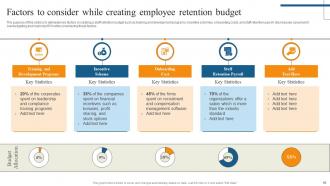
Slide 43: The purpose of this slide is to delineate key factors in creating a staff retention budget such as training and development programs, incentive schemes.
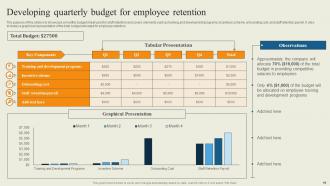
Slide 44: This slide is to showcase a monthly budget sheet used for staff retention and covers elements.
Slide 45: This slide display table of content that is to be discuss further.
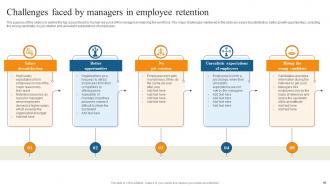
Slide 46: This slide is to outline the top issues faced by human resource (HR) managers in retaining the workforce.
Slide 47: This slide is to outline different solutions which will assist businesses in overcoming the staff retention challenges.
Slide 48: This slide display table of content that is to be discuss further.
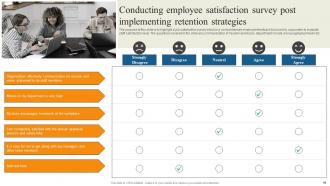
Slide 49: This slide is to highlight a job satisfaction survey which is a comprehensive employee feedback tool used by corporates to evaluate staff satisfaction level.
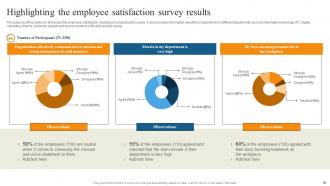
Slide 50: This slide is to showcase the employee satisfaction results post conducting the survey.
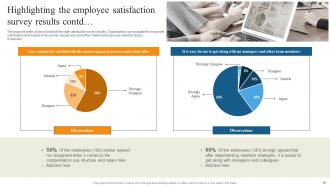
Slide 51: The purpose of this slide is to exhibit the staff satisfaction survey results.
Slide 52: This slide display table of content that is to be discuss further.
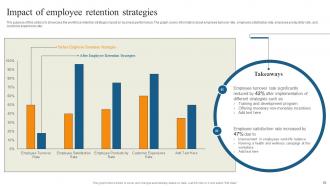
Slide 53: The purpose of this slide is to showcase the workforce retention strategic impact on business performance.
Slide 54: This slide display table of content that is to be discuss further.
Slide 55: This slide is to delineate different key performance indicators (KPI) which will assist HR professionals to measure the success of staff retention tactics.
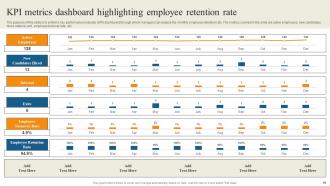
Slide 56: This slide is to exhibit a key performance indicator (KPI) dashboard through which managers can analyze the monthly employee retention rate.
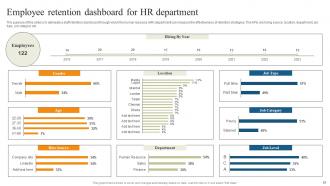
Slide 57: This slide is to delineate a staff retention dashboard through which the human resource (HR) department can measure the effectiveness of retention strategies.
Slide 58: This slide display table of content that is to be discuss further.
Slide 59: This slide is to highlight the case study of CarMax (US-based company) employee retention strategies which had a positive impact on their sales.
Slide 60: This is the icons slide.
Slide 61: This slide presents title for additional slides.
Slide 62: This slide display SWOT analysis.
Slide 63: This slide display Meet our team.
Slide 64: This slide presents your company's vision, mission and goals.
Slide 65: This slide display the title About us.
Slide 66: This slide display Venn diagram.
Slide 67: This slide depicts posts for past experiences of clients.
Slide 68: This is thank you slide & contains contact details of company like office address, phone no., etc.
Reducing Staff Turnover Rate With Retention Tactics Powerpoint Presentation Slides with all 73 slides:
Use our Reducing Staff Turnover Rate With Retention Tactics Powerpoint Presentation Slides to effectively help you save your valuable time. They are readymade to fit into any presentation structure.

















FAQs for Reducing Staff Turnover Rate With Retention Tactics
Dude, culture is literally everything when it comes to keeping people around. If your workplace feels toxic, even your rock stars will bounce - I've seen it happen so many times. But when people actually feel respected and like their work matters? They'll stick through the rough patches. You want psychological safety where people can speak up without getting burned. Clear communication helps too, obviously. And don't forget genuine recognition - not just those cringe "pizza party" rewards. It's wild how much these things actually impact whether someone stays or starts updating their LinkedIn. Culture beats salary more often than most managers realize.
Look, good onboarding is honestly everything - it shows new people you actually care about them succeeding. You want a real plan that introduces company culture, gets them meeting the right folks, and sets them up for some quick wins early on. I've watched way too many places just dump people in with zero guidance and then act shocked when they bail after two weeks. People need to feel connected to where they work, you know? They should be able to picture themselves growing there. Map out their first 90 days with actual milestones and regular check-ins.
Dude, you've gotta show people they can actually grow there. Regular check-ins about their goals are clutch - not just "how's work going" but like, where do they want to be in two years? Give them projects that'll stretch their skills, maybe pair them with mentors from other departments. Oh and definitely post internal jobs before going external. People hate feeling stuck. Honestly, most managers are terrible at this - they just assume people are happy until they quit. Map out some potential paths for your team members and actually talk to them about it. Half the time they don't even know what's possible.
Honestly, engaged employees just don't leave as much - it's your best bet for cutting turnover. People who actually like their jobs aren't spending their lunch break scrolling LinkedIn, you know? The numbers are pretty wild too - companies with good engagement see turnover drop by 40% or more. Regular one-on-ones help a ton. So does giving people work that actually matters to them. Oh, and here's the thing - you've gotta listen when they complain about stuff. Maybe start with a quick survey to see what motivates your team?
Dude, flexible work is huge for keeping good people. Trust me on this one. When employees can control their schedule or work remotely, they feel actually valued - not just like another cog in the machine. I've watched companies lose amazing talent over stupid rigid policies about being in the office 9-5. Your best performers? They've got options. Flexibility might be what keeps them from jumping ship. The numbers don't lie either - way less turnover when companies offer it. Just ask your team what kind of flexibility would actually help them.
Honestly, recognition programs work because people just want to feel like their work matters. Make it specific though - not just "great job" but actually call out what they did well. I'd start with something simple like peer shoutouts or monthly recognition stuff. You can always add bigger perks later, like bonus money or extra vacation days. The timing really matters too - don't wait months to acknowledge good work. Oh, and whatever you pick has to feel authentic to your team's vibe. Generic corporate praise is almost worse than nothing.
Honestly, feedback and reviews are huge for keeping people around. Your team needs to know you're paying attention to their growth, not just waiting to pounce when they mess up. People quit all the time because they feel invisible - I've watched it happen way too much. Consistent check-ins make employees feel valued and give them clarity on where they stand. The magic happens when you turn reviews into real conversations about their future at the company. Just don't make it some boring checklist thing where you do all the talking, ya know?
Oof, turnover is brutal on budgets. You're typically looking at 50-200% of someone's annual salary when they leave. Recruiting, interviews, onboarding, training - it adds up fast. Then there's lost productivity while the new person figures things out, plus overtime for everyone else covering extra work. Multiple people leaving? Yeah, those costs stack quickly. I'd honestly start tracking what each departure actually costs you by role (might surprise you how much). Once you see those real numbers, spending money on keeping people around starts making way more sense than constantly replacing them.
Honestly, it all comes down to making people feel like they actually matter. Mix up your hiring panels and leadership first - that's huge. One-on-ones are everything (seriously, don't skip these), and employee resource groups help tons with building community. Watch out for bias creeping into performance reviews too. Clear advancement paths matter, but they can't just work for one type of person. Your work-life policies need to fit different situations, not just the "traditional" employee. Oh, and set up anonymous feedback - you'll catch problems way before someone's already mentally checked out. Consistency beats doing some big diversity training once a year.
Check your HRIS first - might already have what you need. Culture Amp and Officevibe are solid picks if you want something more robust. 15Five's pretty good too. Honestly, those Slack mood bots work better than I expected for daily check-ins, though they feel kinda silly at first. Start quarterly to get your baseline, then shift to monthly pulse surveys once people get used to it. Don't go crazy with features - pick whatever your team won't ignore after the first week. Teams also has mood tracking if you're already living in Microsoft world.
Communication is seriously the biggest factor in keeping people around. Your team needs to feel heard, otherwise they'll just leave for somewhere better. I learned this the hard way at my last job - so many good people quit because management never listened or explained what was happening. Weekly check-ins work great. Two-way feedback is crucial too. When people understand the bigger picture and know their voice matters, they actually want to stay. Those "wait, nobody told me about this" moments? Total morale killers that'll send your best employees running.
Honestly, most companies totally screw up onboarding - they do like a week and call it good, then act shocked when people quit after two months. You really need to stretch that out to at least 90 days with regular check-ins. Focus on three main things: proper onboarding that actually lasts, ongoing skill workshops, and training that shows clear career paths. That last part is key - don't just do random professional development stuff. Make it connect to real advancement opportunities in your company. Oh, and train your managers too. People don't quit jobs, they quit terrible bosses. Start by looking at what you're doing now for onboarding and figure out how to extend it.
Honestly, mentorship programs are like giving people a roadmap for where they can go in your company - and that keeps them around way longer. Your mentees get someone who's been there, done that, and can actually help them figure out all the unspoken rules (which, let's be real, every workplace has tons of). Plus mentors usually love it too because they feel useful again. The trick is making it structured enough that people actually follow through - set some goals, do regular check-ins, that kind of thing. Otherwise it just fizzles out after like two meetings.
Dude, your boss makes or breaks everything. People don't quit jobs - they quit terrible managers. I've watched this happen so many times it's not even funny. Supportive leaders who actually listen? Their teams stay forever. Micromanagers though... good luck keeping anyone decent. Regular check-ins help a ton, plus recognizing when someone does good work (seems obvious but apparently isn't). Oh and psychological safety is real - when people feel safe to mess up and learn, they'll stick around way longer. Honestly after salary, leadership's probably the
-
Like always a great experience with you guys. Always there on the drop of hat to help.
-
A big thanks to SlideTeam! An incredible and diverse library of templates helped me with my business project presentation.