

Regular timeline roadmap diagram 0314





Try Before you Buy Download Free Sample Product
 Impress Your
 Audience
 100%
100% Editable
 Save Hours
 of Time


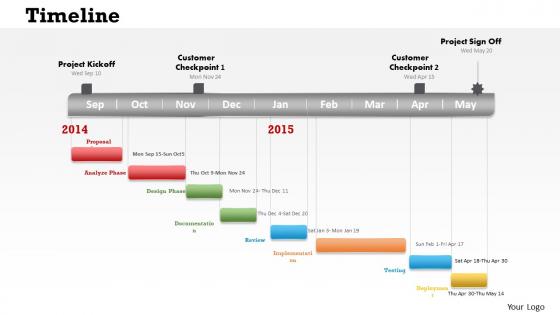
When you want to sum up entire yearly data, through presentation example, you tend to get a cluttered screen with haphazard portrayal of information. To overcome this issue, we bring you regular roadmap presentation templates PowerPoint presentation which allows you to share maximum amount of data on screen in a very synchronized and disciplined manner. The nature of the provided PPT slide design permits the exhibition of company content from multiple angles. This presentation diagram is specifically very useful for representation of annual reports. One can provide a bird’s eye view of the entire business through this PPT slide template. The business analyst rocks the stage with this level-headed PowerPoint slide presentation example which winds up the entire business goals and business deliverables on single screen. So, if you have monthly report on targets and achievements for entire year or six months, just download this PPT show and let the timeline presentation visual communicate with audience themselves. Your audience will echo your views. Our Regular Timeline Roadmap Diagram 0314 will create that effect.
People who downloaded this PowerPoint presentation also viewed the following :
Regular timeline roadmap diagram 0314 with all 5 slides:
Discard old ways with our Regular Timeline Roadmap Diagram 0314. Ring in the new with your ideas.

FAQs for Regular timeline
Honestly, you need three things: clear timelines, defined outcomes, and getting everyone on the same page. Work backwards from your vision to show how you'll get there. Major milestones matter, but don't promise stuff your team can't actually pull off - trust me on that one! Hit the resource needs and risks early. Here's the thing though - people want enough detail to feel confident without getting buried in boring specifics. Focus on what you'll actually achieve, not just features. Wrap up with next steps and how you'll track everything. Oh, and make it visual if you can.
So basically, different industries just build their roadmaps around what actually matters to them. Tech companies do those sprint things with crazy fast iterations. Manufacturing? They need way longer phases because of all the compliance stuff and testing. Healthcare is honestly a nightmare - everything revolves around regulatory checkpoints that take forever. Retail's all about hitting those seasonal launches at the right time. The trick is figuring out what success looks like for your specific situation first. Then just work backwards from there to set up milestones that aren't total BS. Your roadmap should match how your industry actually operates, not some generic template.
White space is your best friend here. Nobody wants to decode a rainbow spreadsheet disaster - I've seen too many of those. Pick maybe 3-4 colors max and make each one mean something specific (teams, priority levels, whatever). Your stakeholders should grasp timelines instantly. Use bars or shapes that actually show time moving forward. Readable fonts, good contrast, the basics. Oh, and test it first! If someone squints at your roadmap or goes "huh?", you've overcomplicated it. Simple beats clever every time.
Honestly, roadmaps are like magic for chaotic projects. Get everyone in a room first to build it together - that's half the battle right there. Once people can actually see how their piece fits into the bigger picture, they stop working against each other. Make sure you show the dependencies and milestones clearly, plus how each team contributes. I've watched this turn around projects where people had zero clue what they should be prioritizing. Oh, and don't just create it and forget about it - keep updating the thing regularly or people will tune out. Visibility is everything.
Don't get stuck planning every tiny detail upfront - you'll just end up changing everything anyway. Treat your roadmap like a living document, not gospel. Big mistake I see all the time? Product managers who don't loop in engineering and sales early enough. Their roadmaps crash and burn. Focus on outcomes instead of specific features. Keep things high-level. Monthly reviews with your team are clutch - actually update based on what you're learning. That flexibility will save your butt when priorities shift (and they always do).
Go with a horizontal timeline - quarters or months work best. Color coding is clutch for showing different phases. Gantt charts are solid but honestly they can look like total chaos in presentations (learned that the hard way). What matters is your audience immediately gets what's happening when. Show how everything connects chronologically. I'd probably test it on someone first because what seems obvious to you might be confusing to them. Keep it clean and simple.
Dude, try Roadmunk or ProductPlan first - they're made for this exact thing and super easy to move stuff around. Aha! is solid too but can be overkill sometimes. If you want something cheaper, Airtable works surprisingly well once you set it up (just takes a bit more work upfront). Monday.com's pretty decent for bridging the gap between project management and roadmaps. Honestly though, whatever you pick just make sure it doesn't fight with your current tools. Nothing worse than switching between five different apps just to update one timeline. Grab some free trials and see what feels right.
Totally depends on who you're talking to. Executives just want the big picture stuff - key milestones, business impact, how it connects to company objectives. Skip the technical weeds with them. Your actual team? Complete opposite. They need sprint details, dependencies, the real work they'll be doing. Can't tell you how many roadmaps I've watched bomb because someone used the exact same deck for both audiences. Here's what actually works: ask each group what decisions they're trying to make. That'll tell you exactly what to put in there. Sounds obvious but most people don't do it.
Honestly, feedback is what keeps your roadmap from becoming total garbage. Collect it from users, your team, stakeholders - whoever will give you honest input about what's actually working. I learned this the hard way when we spent three months building features nobody wanted. Regular check-ins help you spot problems early and adjust priorities before you're knee-deep in the wrong direction. Don't just wait for disasters to ask for opinions either. Set up those feedback loops from the start, even if it feels like overkill at first.
Just bake your KPIs right into each milestone instead of treating them separately. Like instead of "launch feature X," make it "launch feature X and hit 15% adoption in month one." Way clearer for everyone involved. Your roadmap basically becomes a scorecard this way - stakeholders love seeing the actual targets you're shooting for. Do monthly check-ins to track both delivery and metrics. Oh and don't go crazy with too many numbers - I'd stick to maybe 2-3 key metrics per quarter max. Build everything around hitting those specific goals and you'll actually know if you're winning or not.
Honestly, interactive tools like Roadmunk work really well - stakeholders can actually click through and see how everything connects. Story maps are solid too, especially the ones where user journeys go across the top and dev phases sit underneath. We've had good luck with Miro boards during planning sessions. People love moving sticky notes around, gets them way more involved than just staring at slides. Oh, and don't sleep on video walkthroughs for exec meetings - you can walk them through mockups while explaining your vision. Sometimes basic infographics hit better than fancy presentations anyway. Just match whatever your audience vibes with.
Honestly, monthly or quarterly reviews are a game changer - depends how fast you're moving. I wouldn't lock anything down past 2-3 sprints because things change constantly. Focus on themes and outcomes rather than specific features so you can switch tactics without losing direction. Oh, and always build in buffer time! Like 20% cushion for random fires or tech debt that pops up. Your roadmap should evolve with new info, not be set in stone. Those review meetings? Actually schedule them now and don't skip them when things get crazy.
So what I do is map out potential blockers for each milestone and give them probability scores. Makes planning way less stressful tbh. Create a simple risk matrix next to your main timeline - honestly game changer for me. List what could go wrong with each deliverable, how likely it is, then figure out your backup plan. Build buffer time around the high-risk stuff. Oh and definitely review these during your regular roadmap check-ins. I learned the hard way that setting risks once then ignoring them doesn't work.
Tesla's Master Plan is perfect for this - Musk dropped their whole roadmap in 2006 and actually followed through, going Roadster → Model S → mass market. Microsoft did something similar when Nadella took over, totally shifted to cloud-first and got everyone on board. Apple's iPhone strategy was genius too, honestly - they had the roadmap but kept that "one more thing" mystery alive. What these companies nailed: clear milestones, constant communication, and staying flexible on tactics while keeping the big vision locked in. I'd start by figuring out your non-negotiable end goal first, then just work backwards from there.
User feedback is what actually shapes your roadmap - way more than whatever you think internally. Consistent requests for features? Those become your priorities and can totally shift timelines. Look for patterns in what people are saying, then figure out how that fits with your goals and what's technically possible. Short bursts of feedback are fine, but you need regular collection happening. The part most teams screw up though is never telling users when their ideas actually make it in. Close that loop! I've seen so many PMs just collect feedback and then... nothing. People want to know their input mattered.
-
Perfect template with attractive color combination.
-
Visually stunning presentation, love the content.