


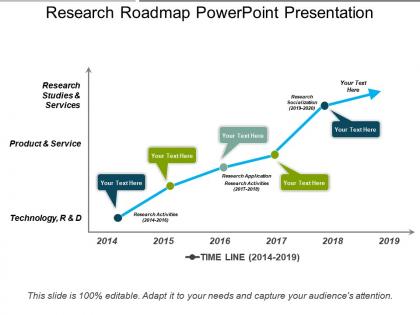
Research roadmap powerpoint presentation




Try Before you Buy Download Free Sample Product
 Impress Your
 Audience
 100%
100% Editable
 Save Hours
 of Time


Generate determination with our Research Roadmap Powerpoint Presentation. Your thoughts will have a forceful effect.
People who downloaded this PowerPoint presentation also viewed the following :
Research roadmap powerpoint presentation with all 5 slides:
Harness financial change with our Research Roadmap Powerpoint Presentation. Be at the forefront of the economic future.


FAQs for Research
Honestly, start with nailing down what you're actually trying to learn - like, what specific questions need answers? From there, figure out your game plan. Surveys? Interviews? Whatever fits your situation. Build in extra time because research is basically Murphy's Law in action - everything takes twice as long as you think. Map out what tools and people you'll need access to (this part's annoying but crucial). The goal is creating something that shows the whole path from your initial questions to useful results. Oh, and make sure other people can actually follow your plan without calling you every five minutes.
Start with your company's 3-5 year vision, then figure out which research projects actually get you there. It's basically GPS for lab work - without knowing where you're headed, you're just burning through budget randomly. Map your research priorities directly to what the organization wants to achieve. Honestly, both your roadmap and strategic goals will probably shift anyway, so review them together quarterly with leadership. Measure research outcomes against real business impact, not just whether you hit scientific milestones. That quarterly check-in thing is clutch for staying aligned.
There are tons of ways to tackle this depending on what you're working on. Start with a literature review to see what's already out there - it's boring but necessary. Expert interviews help fill in the gaps and validate your thinking. Delphi surveys are solid if you need multiple people to agree on something, though honestly they're a pain to organize. SWOT analysis keeps you realistic about what you can actually pull off. Technology forecasting spots emerging trends, and horizon scanning catches early signals before everyone else does. I'd probably do the lit review first, then bring in some expert voices to make sure you're not totally off track.
Start with a basic matrix - score each research project on revenue potential, user pain points, and how doable it actually is. High-impact + urgent stuff goes first, obviously. Dependencies are huge though - some research unlocks other projects later. Get everyone in a room to argue it out (trust me, this saves headaches). Document why you picked what you picked because priorities will definitely change and you'll need to remind people later. Oh and don't forget your team's bandwidth - there's no point planning more than you can actually handle.
Dude, stakeholder engagement is everything. Without it, your research roadmap becomes this fancy document that nobody funds or cares about. Talk to industry people, policymakers, actual end users - whoever would use your work. I've watched brilliant roadmaps just sit there because researchers never asked "does anyone actually want this solution?" Their input shows you what problems are worth tackling versus what's just cool intellectually. Map out your key people first. Then grab their thoughts through surveys, workshops, or honestly just coffee conversations work great too.
Build in review points from day one—quarterly works for most fields, maybe twice a year if things move slower. I'd make it part of your regular routine to scan for new tech and funding shifts. Honestly, too many people treat roadmaps like they're carved in granite when they should be more like... I dunno, sketches you keep updating? When something promising pops up, just ask if it gets you to your goals faster or better. The whole point is staying flexible without losing sight of what you're actually trying to accomplish.
Honestly, the biggest mistake is making your roadmap way too rigid. Research never goes according to plan - trust me on this one. Build in flexibility from the start and don't try mapping every detail months ahead. Your timelines? Keep them realistic or you'll hate yourself later. Get stakeholder input early and often, otherwise you'll end up solving problems nobody actually has. Make milestones meaningful but doable. Always pad in buffer time for when things inevitably go sideways. Oh, and review quarterly - don't treat it like it's carved in stone.
Honestly, visuals are a game changer for research roadmaps. People just zone out with dense text blocks - I learned this the hard way. Try timelines or simple flowcharts to show how phases connect. Colors work great for highlighting key milestones. Interactive stuff like clickable dashboards? Even better since folks can dig into what interests them. Oh, and Gantt charts aren't as scary as they sound if you're tracking dependencies. Start basic with just a timeline, then add complexity if needed. Your stakeholders will actually pay attention instead of pretending to read while checking email.
Honestly, there's tons of tech that'll make roadmap planning way easier. I'd start with collaborative tools like Miro or Figma - your whole team can work on timelines together instead of endless email chains. Data analytics helps spot research gaps too, which used to be such a nightmare to do by hand. For tracking everything, Notion or Asana work great. AI tools can actually scan thousands of papers now to find emerging trends (pretty wild). Survey platforms are clutch for getting stakeholder input fast. My advice? Pick whatever solves your biggest headache first, then add more tools later.
Honestly, I focus on two things - hitting deadlines AND seeing real impact. Sure, getting your research done on time matters. But what really counts? Whether people actually use your findings to make decisions or change strategy. I've watched too many teams just tick boxes without moving anything forward (super frustrating). Track weird stuff like how often people quote your work in meetings or if your research questions get better over time. Are you building skills your team'll need later? Set up quarterly check-ins to review both the tactical stuff and bigger picture value. That's where you'll actually see what's working.
Mix workshops with async stuff to get good feedback from everyone. Collaborative sessions work well - like prioritization workshops where teams can actually hash out trade-offs together. Affinity mapping's solid for clustering ideas too. Surveys are decent for collecting initial input, but honestly good luck getting people to fill those out! I'd follow up with one-on-ones with your key stakeholders. That's where you really dig into their priorities and what's holding them back. Main thing is giving each team multiple ways to weigh in. They need to feel heard throughout, not just asked once and forgotten.
Dude, funding has to be baked into your roadmap right from the start - seriously learned this one the hard way! Figure out what each phase actually costs (people, gear, lab space, whatever) and match that up with when money's coming in. Grant cycles are brutal and slow, so build in backup plans because something will definitely fall through. Oh, and make your research flexible enough to pivot when budgets get tight. You don't want to be scrambling later trying to figure out how to pay for stuff. Map out different funding sources for each milestone too - diversification is your friend here.
Don't just slap ethics on at the end - weave it into your roadmap from day one. Data privacy, consent forms, potential bias in your methods... all that needs planning upfront. Who's funding this thing? Any sketchy conflicts of interest hiding somewhere? Trust me, ignoring that stuff will absolutely come back to haunt you later. You'll also want regular ethics check-ins built into your timeline, especially with sensitive data or vulnerable populations. Schedule pause points where you can step back and reassess as things develop. Research projects have a way of evolving unexpectedly.
Honestly, comparative analysis is a lifesaver because it shows you what's already been tried and what totally bombed. You won't waste time reinventing stuff or going down routes that lead nowhere. Look for gaps where nobody's researched yet - that's your golden opportunity right there. You'll also figure out which methods actually work versus the ones that look impressive but are absolute hell to execute. I swear I always find 2-3 studies that make me go "ohhhh, that's why my original plan was doomed." Just grab 5-10 key studies in your field and make a basic spreadsheet tracking their methods, results, and what went wrong.
Think of a research roadmap as your permission slip to dream big. You've already scoped out what's coming, so why not chase those wild "what if" ideas? Short, focused experiments become way easier to sell when they connect to your bigger strategy. The real gold happens when you start linking weird, unrelated stuff together - that's honestly where most breakthroughs come from anyway. Next time you're stuck brainstorming, pull out your roadmap and use it as inspiration. You'll spot gaps and trends you missed before.
-
Easy to edit slides with easy to understand instructions.
-
Visually stunning presentation, love the content.