


Revolutionizing Supply Chain Using Blockchain Technology BCT CD




Try Before you Buy Download Free Sample Product
 Impress Your
 Audience
 100%
100% Editable
 Save Hours
 of Time


Check out our professionally designed Revolutionizing Supply Chain Using Blockchain Technology PowerPoint Presentation. It introduces the revolutionary impact of blockchain technology on the dynamics of supply chains. The presentation delves into the fundamental principles of blockchain, underscoring its ability to reshape the landscape. The Supply Chain Management PPT templates emphasize smart contracts and self-executing agreements that precisely automate processes, ensuring transparency, accuracy, and security. The presentation reveals the tangible effects of blockchain on supply chains, showcasing critical use cases that illustrate how it optimizes supply chain financing, improves product traceability, streamlines logistics management, and strengthens food supply chains. Additionally, the Blockchain Technology PPT slides demonstrate how blockchain seamlessly synergizes with emerging technologies such as IoT, AI, and Big Data. This convergence enhances supply chain systems capabilities, unlocking new efficiency levels and data-driven decision-making. Furthermore, the presentation explores sustainability, showcasing how blockchain promotes responsible sourcing, reduces waste, and minimizes environmental impact. Moreover, the PPT bundle highlights blockchain on inventory management and product traceability. Lastly, it presents case studies featuring industry leaders DeBeers and Walmart, serving as exemplars of successful blockchain integration and setting new benchmarks for supply chain efficiency and transparency. Download it now.
People who downloaded this PowerPoint presentation also viewed the following :
Content of this Powerpoint Presentation
Slide 1: This slide introduces Revolutionizing Supply Chain Using Blockchain Technology. State your company name and begin.
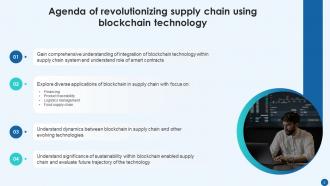
Slide 2: This is an Agenda slide. State your agendas here.
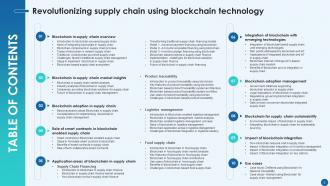
Slide 3: This slide shows Table of Content for the presentation.
Slide 4: This slide shows title for topics that are to be covered next in the template.
Slide 5: This slide provides an overview of integration of blockchain technology for effective supply chain management.
Slide 6: This slide highlights the reasons for implementing blockchain technology within supply chain for efficient management.
Slide 7: This slide mentions the key components that constitute a part of blockchain based supply chain ecosystem. It includes decentralized ledger, smart contracts etc.
Slide 8: This slide displays various types of blockchain that constitute as a part of modern supply chain processes. Types include public blockchain, private blockchain etc.
Slide 9: This slide showcases the difference in workflow between traditional supply chain system and blockchain based supply chain process.
Slide 10: This slide displays comparative analysis between traditional supply chain process and blockchain enabled supply chain processes.
Slide 11: This slide highlights challenges faced by organizations in implementing traditional supply chain management systems and how blockchain integration caters to those problems.
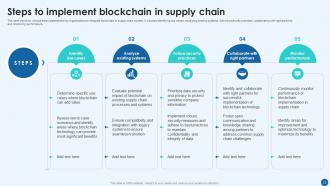
Slide 12: This slide mentions various steps implemented by organizations to integrate blockchain in supply chain system. It includes identifying use cases etc.
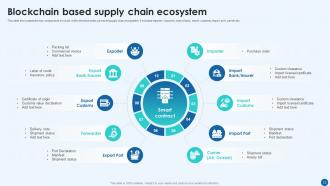
Slide 13: This slide showcases the key components involved within the blockchain powered supply chain ecosystem. It includes importer, exporter, import bank, import customs etc.
Slide 14: This slide shows title for topics that are to be covered next in the template.
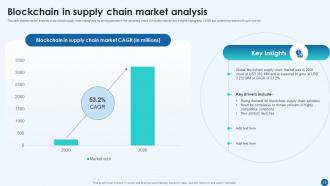
Slide 15: This slide depicts market analysis of blockchain supply chain highlighting its strong potential in the upcoming years.
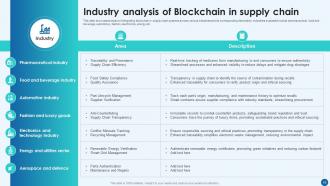
Slide 16: This slide showcases impact of integrating blockchain in supply chain systems across various industries and its corresponding description.
Slide 17: This slide mentions various organizations that provide blockchain integration solutions for efficient supply chain management.
Slide 18: This slide highlights the future advancements that can be seen in the field of blockchain enabled supply chain management.
Slide 19: This slide shows title for topics that are to be covered next in the template.
Slide 20: This slide mentions the process of integrating blockchain in supply chain management system of organizations. Steps include providing education etc.
Slide 21: This slide presents key points to be considered when designing and implementing strategy to integrate blockchain in supply chain management.
Slide 22: This slide shows title for topics that are to be covered next in the template.
Slide 23: This slide provides an introduction of smart contracts based on which blockchain enabled supply chain operates. Key uses include making payments etc.
Slide 24: This slide mentions the step by step process involved in formulating smart contracts in blockchain enabled supply chain. It includes defining use case etc.
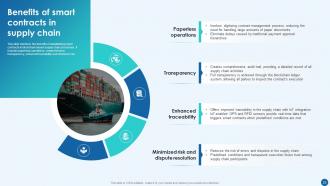
Slide 25: This slide displays the benefits of establishing smart contracts in blockchain based supply chain processes . It includes paperless operations, comprehensive transparency etc.
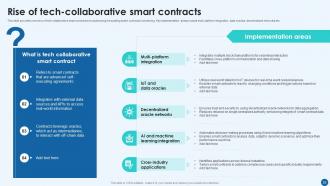
Slide 26: This slide provides overview of tech collaborative smart contracts revolutionizing the existing smart contracts functioning.
Slide 27: This slide shows title for topics that are to be covered next in the template.
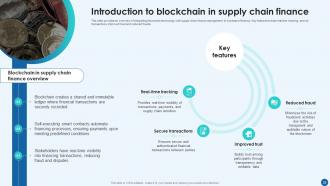
Slide 28: This slide provides an overview of integrating blockchain technology with supply chain finance management to increase efficiency.
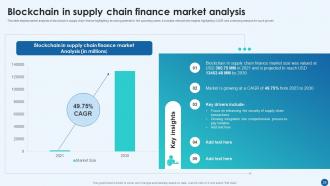
Slide 29: This slide depicts market analysis of blockchain in supply chain finance highlighting its strong potential in the upcoming years.
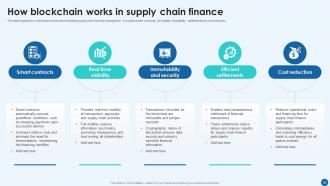
Slide 30: This slide explains how blockchain enhances the existing supply chain financial management. It includes smart contracts, full visibility, immutability etc.
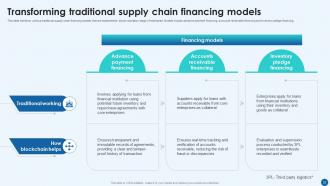
Slide 31: This slide mentions various traditional supply chain financing models that are implemented as per operation stage of enterprise.
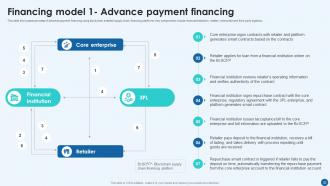
Slide 32: This slide showcases process of advance payment financing using blockchain enabled supply chain financing platforms.
Slide 33: This slide also showcases process of accounts receivable financing using blockchain enabled supply chain financing platforms.
Slide 34: This slide displays the process of inventory pledge financing using blockchain enabled supply chain financing platforms.
Slide 35: This slide mentions various newly emerging blockchain projects in trade and supply chain finance using blockchain technology.
Slide 36: This slide presents various challenges that can be faced by organizations in adopting blockchain enabled supply chain finance.
Slide 37: This slide highlight future prospects of integrating blockchain with supply chain financing systems. It includes enhanced financial inclusion, tokenization of assets etc.
Slide 38: This slide shows title for topics that are to be covered next in the template.
Slide 39: This slide provides an overview of integrating blockchain technology with product traceability in supply chain to increase efficiency.
Slide 40: This slide mention key attributes of blockchain enabled product traceability in supply chain management. It includes traceability of transactions, smart contracts etc.
Slide 41: This slide depicts blockchain based product traceability system architecture for efficient supply chain management.
Slide 42: This slide displays blockchain based product traceability system architecture for efficient supply chain management.
Slide 43: This slide mentions various areas where product traceability is applicable in terms of blockchain based supply chain management.
Slide 44: This slide displays various issues faced in implementing blockchain based product tactility and their corresponding solutions.
Slide 45: This slide shows title for topics that are to be covered next in the template.
Slide 46: This slide provides an overview of integrating blockchain technology with logistics management to ensure consistent flow of goods.
Slide 47: This slide depicts market analysis of blockchain in logistics management highlighting its strong potential in the upcoming years.
Slide 48: This slide showcases the blockchain enabled logistics management process highlighting how blockchain caters at each stage.
Slide 49: This slide mentions the various reasons companies are moving towards integrating blockchain in their logistics management needs. Reasons includes real time tracking etc.
Slide 50: This slide displays various areas in logistics management that can be improved by introducing blockchain technology. Areas include inventory tracking, better shipments etc.
Slide 51: This slide mentions various issues encountered when integrating blockchain with logistics management systems.
Slide 52: This slide shows title for topics that are to be covered next in the template.
Slide 53: This slide provides an overview of integrating blockchain technology with food supply chain to ensure transparency in food related data.
Slide 54: This slide depicts market analysis of blockchain in food supply chain highlighting its strong potential in the upcoming years.
Slide 55: This slide mentions key attributes of blockchain in food supply chain to facilitate food safety and quality management.
Slide 56: This slide showcases food supply chain architecture powered by blockchain for efficient movement of food products across the chain.
Slide 57: This slide mentions various areas where blockchain is used in managing food supply chain management to maintain quality across levels.
Slide 58: This slide presents the benefits of integrating blockchain in food supply chain to ensure efficiency. It includes continuity of information etc.
Slide 59: This slide mentions the bottlenecks faced in implementing blockchain in food supply chain management and their corresponding solutions.
Slide 60: This slide shows title for topics that are to be covered next in the template.
Slide 61: This slide mentions various upcoming technologies that can be integrated alongside blockchain for formulating efficient supply chain management.
Slide 62: This slide highlights the problems faced by companies in conducting traditional supply chain process and impact after implementing with IoT and Blockchain.
Slide 63: This slide mentions various applications of using blockchain and IoT together in supply chain management.
Slide 64: This slide showcases blockchain and internet of things based supply chain systems to navigate transport of goods.
Slide 65: This slide highlights the positive aspect of implementing blockchain and IoT in supply chain ecosystem. It includes data driven insights etc.
Slide 66: This slide shows title for topics that are to be covered next in the template.
Slide 67: This slide highlights various initiatives taken up by governments to promote usage of blockchain in supply chain management.
Slide 68: This slide mentions various legal aspects to be considered when integrating blockchain in supply chain system of an organization.
Slide 69: This slide displays various laws that overlook the transparent integration of blockchain in supply chain systems.
Slide 70: This slide highlights various concerns businesses having regarding data and privacy management in blockchain enabled supply chain and their corresponding solutions.
Slide 71: This slide shows title for topics that are to be covered next in the template.
Slide 72: This slide highlights the impact of introducing blockchain enabled supply chain management on environmental factors.
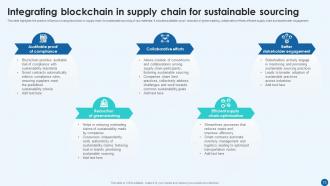
Slide 73: This slide displays the positive influence of using blockchain in supply chain for sustainable sourcing of raw materials.
Slide 74: This slide shows title for topics that are to be covered next in the template.
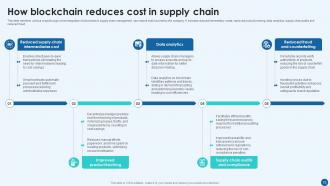
Slide 75: This slide mentions various ways through which integration of blockchain in supply chain management can reduce cost incurred by the company.
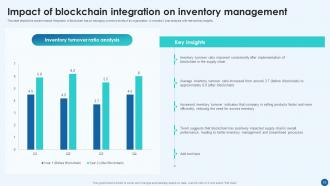
Slide 76: This slide depicts the positive impact integration of blockchain has on managing inventory levels of an organization. It includes 2 year analysis with relevant key insights.
Slide 77: This slide presents the positive impact integration of blockchain has on product traceability within supply chain ecosystem of an organization.
Slide 78: This slide depicts the positive impact integration of blockchain has on various metrics within supply chain ecosystem of an organization.
Slide 79: This slide shows title for topics that are to be covered next in the template.
Slide 80: This slide showcases case study of DeBeers leveraging blockchain technology to trace high quality diamonds with less conflicts.
Slide 81: This slide presents case study of Walmart leveraging blockchain technology to cater to its supply chain management requirements.
Slide 82: This slide is titled as Additional Slides for moving forward.
Slide 83: This slide mentions various traditional supply chain financing models that are implemented as per operation stage of enterprise.
Slide 84: This slide shows all the icons included in the presentation.
Slide 85: This is a Thank You slide with address, contact numbers and email address.
Revolutionizing Supply Chain Using Blockchain Technology BCT CD with all 93 slides:
Use our Revolutionizing Supply Chain Using Blockchain Technology BCT CD to effectively help you save your valuable time. They are readymade to fit into any presentation structure.
-
Revolutionizing Supply Chain Using Blockchain Technology
-
Agenda of revolutionizing supply chain using blockchain technology
-
Revolutionizing supply chain using blockchain technology
-
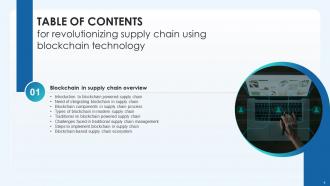
Table of Contents for revolutionizing supply chain using blockchain technology
-
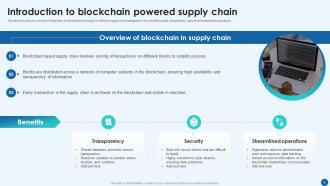
Introduction to blockchain powered supply chain
-
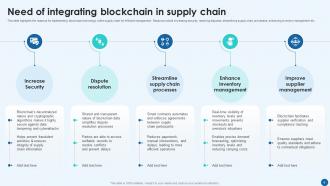
Need of integrating blockchain in supply chain
-
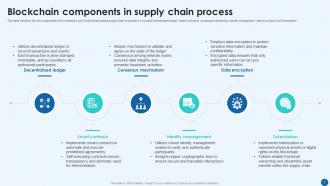
Blockchain components in supply chain process
-
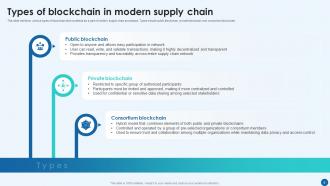
Types of blockchain in modern supply chain
-
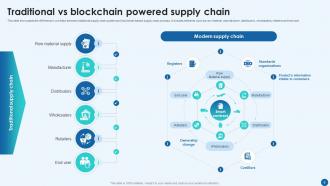
Traditional vs blockchain powered supply chain
-
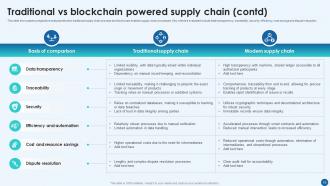
Traditional vs blockchain powered supply chain contd
-
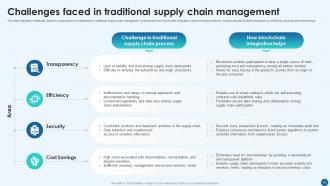
Challenges faced in traditional supply chain management
-
Steps to implement blockchain in supply chain
-
Blockchain based supply chain ecosystem
-

Table of Contents for revolutionizing supply chain using blockchain technology
-
Blockchain in supply chain market analysis
-
Industry analysis of Blockchain in supply chain
-
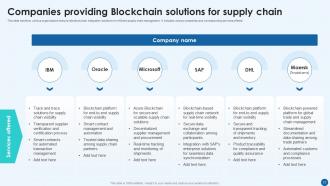
Companies providing Blockchain solutions for supply chain
-
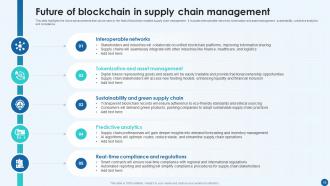
Future of blockchain in supply chain management
-
Table of Contents for revolutionizing supply chain using blockchain technology
-
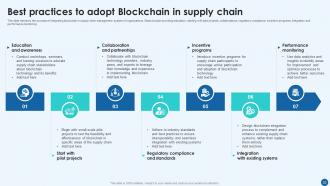
Best practices to adopt Blockchain in supply chain
-
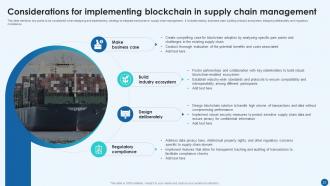
Considerations for implementing blockchain in supply chain management
-
Table of Contents for revolutionizing supply chain using blockchain technology
-
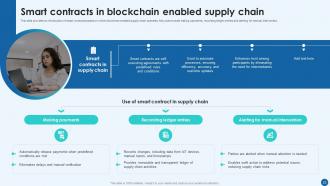
Smart contracts in blockchain enabled supply chain
-
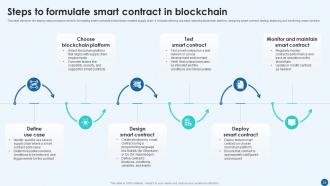
Steps to formulate smart contract in blockchain
-
Benefits of smart contracts in supply chain
-
Rise of tech collaborative smart contracts
-
Table of Contents for revolutionizing supply chain using blockchain technology
-
Introduction to blockchain in supply chain finance
-
Blockchain in supply chain finance market analysis
-
How blockchain works in supply chain finance
-
Transforming traditional supply chain financing models
-
Financing model 1 Advance payment financing
-
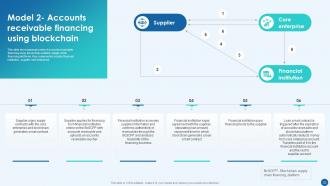
Model 2 Accounts receivable financing using blockchain
-
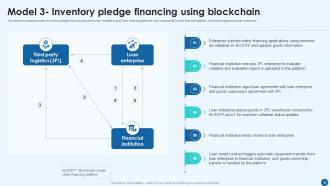
Model 3 Inventory pledge financing using blockchain
-
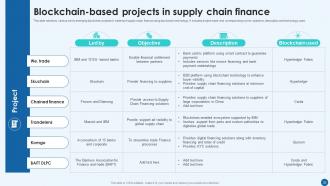
Blockchain based projects in supply chain finance
-
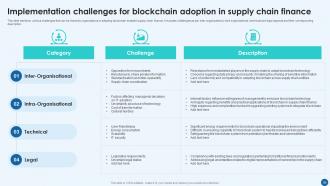
Implementation challenges for blockchain adoption in supply chain finance
-
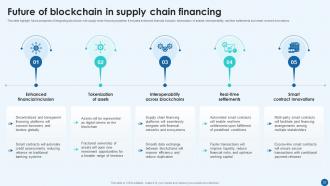
Future of blockchain in supply chain financing
-
Table of Contents for revolutionizing supply chain using blockchain technology
-
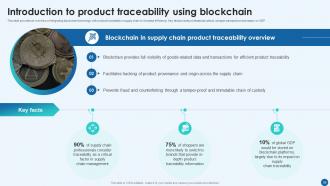
Introduction to product traceability using blockchain
-
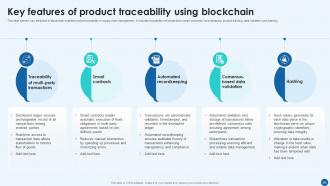
Key features of product traceability using blockchain
-
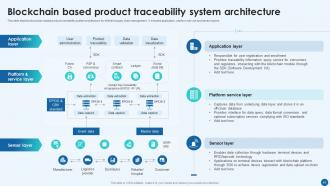
Blockchain based product traceability system architecture
-
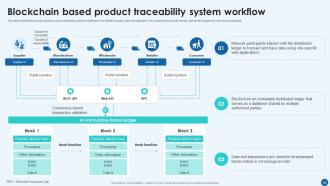
Blockchain based product traceability system workflow
-
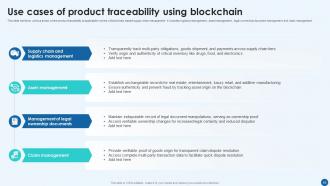
Use cases of product traceability using blockchain
-
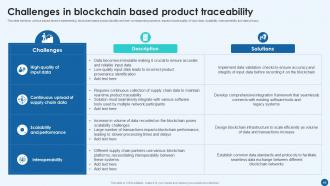
Challenges in blockchain based product traceability
-
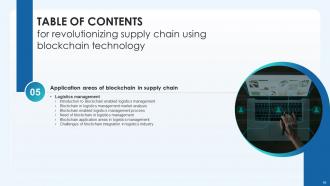
Table of Contents for revolutionizing supply chain using blockchain technology
-
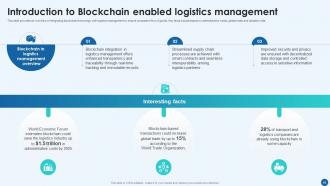
Introduction to Blockchain enabled logistics management
-
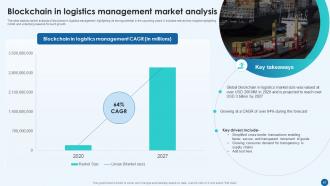
Blockchain in logistics management market analysis
-
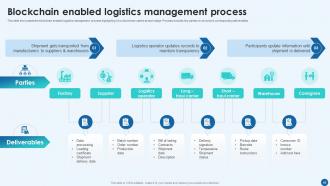
Blockchain enabled logistics management process
-
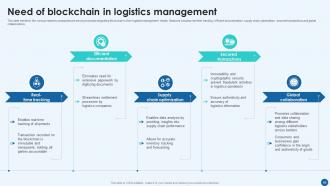
Need of blockchain in logistics management
-
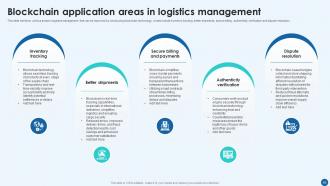
Blockchain application areas in logistics management
-
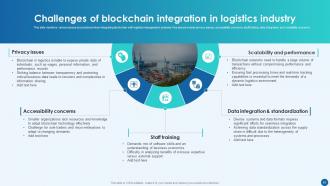
Challenges of blockchain integration in logistics industry
-
Table of Contents for revolutionizing supply chain using blockchain technology
-
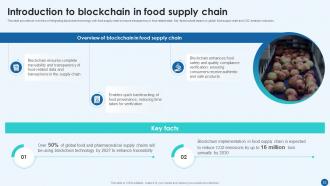
Introduction to blockchain in food supply chain
-
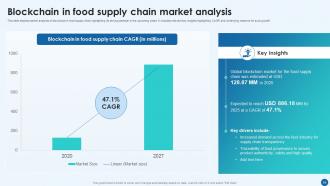
Blockchain in food supply chain market analysis
-
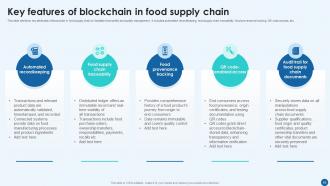
Key features of blockchain in food supply chain
-
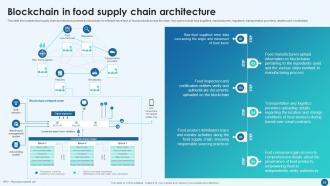
Blockchain in food supply chain architecture
-
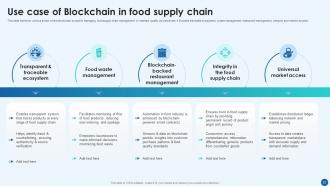
Use case of Blockchain in food supply chain
-
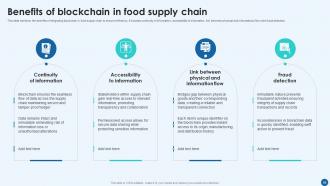
Benefits of blockchain in food supply chain
-
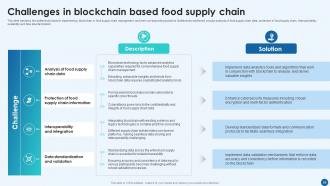
Challenges in blockchain based food supply chain
-
Table of Contents for revolutionizing supply chain using blockchain technology
-
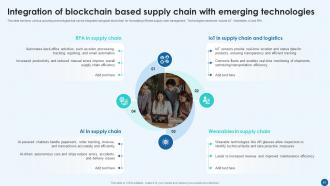
Integration of blockchain based supply chain with emerging technologies
-
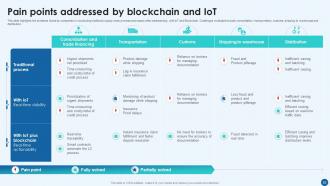
Pain points addressed by blockchain and IoT
-
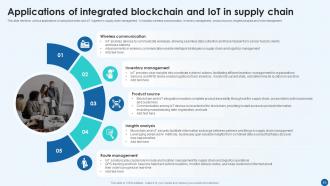
Applications of integrated blockchain and IoT in supply chain
-
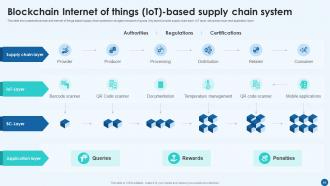
Blockchain Internet of things IoT based supply chain system
-
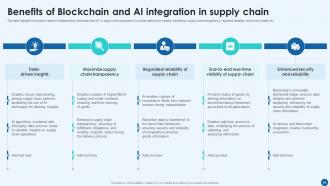
Benefits of Blockchain and AI integration in supply chain
-
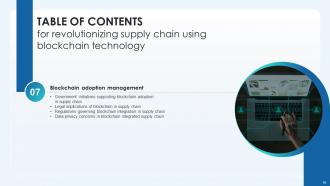
Table of Contents for revolutionizing supply chain using blockchain technology
-
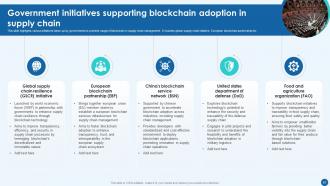
Government initiatives supporting blockchain adoption in supply chain
-
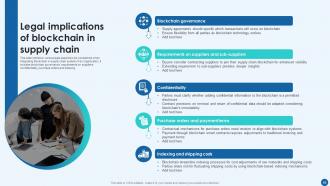
Legal implications of blockchain in supply chain
-
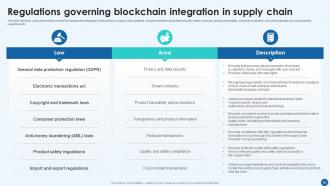
Regulations governing blockchain integration in supply chain
-
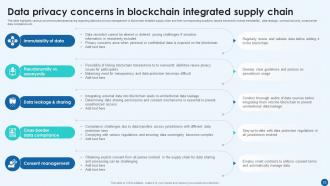
Data privacy concerns in blockchain integrated supply chain
-
Table of Contents for revolutionizing supply chain using blockchain technology
-
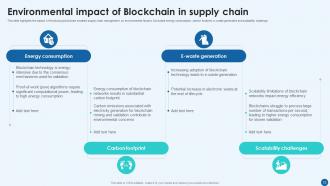
Environmental impact of Blockchain in supply chain
-
Integrating blockchain in supply chain for sustainable sourcing
-
Table of Contents for revolutionizing supply chain using blockchain technology
-
How blockchain reduces cost in supply chain
-
Impact of blockchain integration on inventory management
-
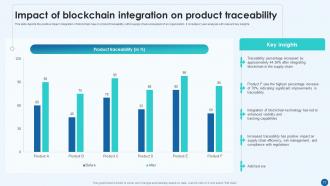
Impact of blockchain integration on product traceability
-
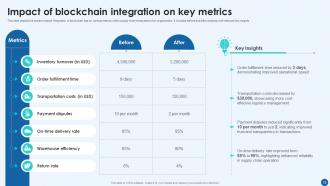
Impact of blockchain integration on key metrics
-
Table of Contents for revolutionizing supply chain using blockchain technology
-
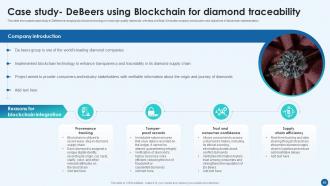
Case study DeBeers using Blockchain for diamond traceability
-
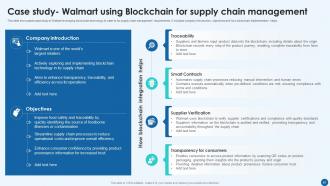
Walmart using Blockchain for supply chain management
-

Additional slides
-
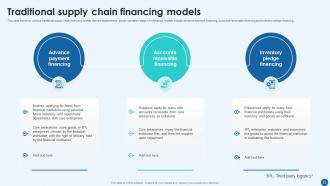
Traditional supply chain financing models
-
Icons slide for revolutionizing supply chain using blockchain technology
-

Revolutionizing Supply Chain Using Blockchain Technology Bct Cd
-

-

-

-

-

-

-

-

FAQs for Revolutionizing Supply Chain Using Blockchain
Blockchain enhances supply chain transparency by creating immutable records of each transaction, enabling real-time tracking, and providing stakeholders with complete visibility into product journeys from origin to consumer. This technology streamlines verification processes across manufacturing, logistics, and retail sectors, with companies like Walmart and Maersk finding that blockchain significantly reduces fraud, accelerates recalls, and builds consumer trust.
Blockchain technology helps reduce counterfeit products by creating immutable product records, enabling real-time tracking, and providing transparent verification at each supply chain stage. Through cryptographic verification and distributed ledgers, retailers and manufacturers can authenticate goods instantly, trace origins accurately, and eliminate fraudulent entries, with industries like pharmaceuticals and luxury goods finding significantly enhanced product integrity and consumer trust.
Key challenges include high implementation costs, complex system integration, scalability limitations, regulatory uncertainty, and resistance to change from stakeholders. While these hurdles present significant obstacles, many organizations find that strategic phased approaches, starting with pilot programs in specific supply chain segments, help minimize risks while demonstrating blockchain's transparency and traceability benefits.
Blockchain improves product traceability by creating immutable digital records at each supply chain stage, enabling real-time tracking from raw materials to final delivery. Through distributed ledgers and smart contracts, companies in food, pharmaceuticals, and luxury goods can instantly verify authenticity, reduce fraud, and enhance consumer trust, while streamlining recall processes and regulatory compliance across global operations.
Smart contracts automate supply chain processes by executing predefined agreements when conditions are met, eliminating intermediaries, reducing processing time, and minimizing human error. These blockchain-based contracts enable automatic payments upon delivery confirmation, real-time inventory updates, and seamless compliance verification, with manufacturers and retailers finding significantly enhanced operational efficiency and reduced transaction costs.
Blockchain increases collaboration by creating shared, transparent ledgers that all stakeholders can access simultaneously, eliminating information silos and enabling real-time visibility across partners, suppliers, and distributors. Through smart contracts and immutable records, companies streamline communications, automate compliance verification, and build trust, with many manufacturers and retailers finding that blockchain ultimately delivers faster dispute resolution and enhanced operational efficiency.
Blockchain in supply chains delivers cost savings through reduced intermediary fees, minimized fraud losses, decreased audit expenses, streamlined documentation processes, and lower inventory carrying costs. These efficiencies enable manufacturers and retailers to cut operational expenses by 10-30%, while enhancing transparency and reducing disputes, ultimately delivering faster transactions and improved supplier relationships across global networks.
Blockchain addresses data security concerns through cryptographic encryption, immutable record-keeping, and decentralized verification protocols that prevent unauthorized alterations or fraud. These security measures enable organizations across manufacturing, pharmaceuticals, and retail to protect sensitive transaction data, reduce counterfeiting risks, and maintain transparent audit trails, ultimately delivering enhanced trust and operational integrity throughout complex supply networks.
Food safety, pharmaceuticals, luxury goods, and automotive industries have demonstrated the most promising blockchain applications in supply chains. These sectors leverage blockchain's immutable ledger for product authentication, compliance tracking, and transparency, with companies like Walmart reducing food contamination investigation times from weeks to seconds, ultimately delivering enhanced consumer trust and operational efficiency.
Blockchain facilitates compliance by creating immutable audit trails, automated reporting through smart contracts, and real-time transparency for regulatory oversight. Financial services firms and pharmaceutical companies increasingly leverage these capabilities to streamline compliance processes, reduce documentation costs, and demonstrate adherence to regulations, ultimately delivering faster regulatory approvals and enhanced stakeholder trust.
Blockchain revolutionizes inventory management by providing real-time visibility, automated tracking through smart contracts, and immutable record-keeping across all supply chain stages. Manufacturing companies and retailers leverage these capabilities to reduce stockouts, minimize excess inventory, and streamline reorder processes, ultimately delivering cost savings and enhanced operational efficiency.
SMEs can leverage blockchain by implementing cost-effective solutions like shared consortium networks, cloud-based platforms, and phased integration starting with critical tracking points. Through strategic partnerships with blockchain providers, small manufacturers, food distributors, and retail businesses streamline verification processes, reduce counterfeiting risks, and enhance customer trust, ultimately delivering competitive transparency advantages previously available only to larger enterprises.
Companies should evaluate scalability to handle transaction volumes, interoperability with existing systems, consensus mechanisms for security needs, energy efficiency for sustainability goals, and integration capabilities with IoT devices and enterprise software. Financial services and pharmaceutical companies increasingly prioritize platforms offering robust smart contract functionality, regulatory compliance features, and real-time visibility, ultimately delivering enhanced traceability and operational transparency.
Blockchain enhances sustainability and ethical sourcing by creating immutable records of product origins, labor conditions, environmental impact, and compliance certifications throughout supply chains. This transparency enables companies in fashion, food, and manufacturing to verify fair trade practices, track carbon footprints, and demonstrate ethical sourcing to consumers, ultimately delivering competitive advantage through verified sustainability credentials.
Future blockchain-supply chain trends include AI-powered smart contracts, IoT sensor integration, cross-industry consortium networks, carbon footprint tracking, and quantum-resistant security protocols. These technologies streamline operations by automating compliance verification, enhancing real-time visibility, and enabling sustainable sourcing practices, with manufacturing and retail sectors increasingly finding that integrated blockchain solutions deliver significant competitive advantages and operational transparency.
-
I am glad to have come across Slideteam. I was searching for some unique presentations and templates for my business. There are a lot of alternatives available here.
-
Definitely recommend SlideTeam to all who need help with PowerPoint presentations. Their design team can create anything you need.