


RFID Applications Powerpoint PPT Template Bundles




Try Before you Buy Download Free Sample Product
 Impress Your
 Audience
 100%
100% Editable
 Save Hours
 of Time


Our RFID Applications Powerpoint PPT Template Bundles are topically designed to provide an attractive backdrop to any subject. Use them to look like a presentation pro.
People who downloaded this PowerPoint presentation also viewed the following :
RFID Applications Powerpoint PPT Template Bundles with all 29 slides:
Use our RFID Applications Powerpoint PPT Template Bundles to effectively help you save your valuable time. They are readymade to fit into any presentation structure.






FAQs for RFID Applications Powerpoint
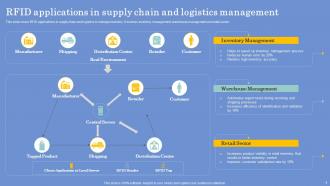
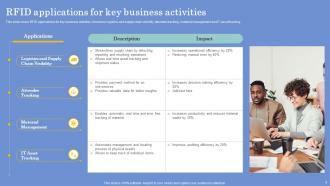
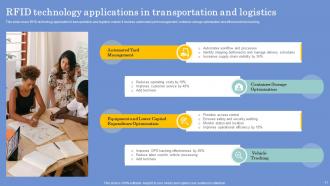
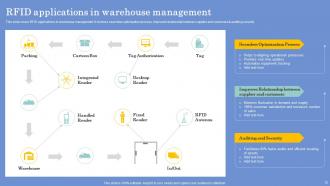
RFID technology delivers enhanced inventory visibility, automated tracking, reduced human error, faster processing times, and improved operational efficiency across supply chain networks. Through real-time data capture and seamless integration, organizations streamline warehouse operations, minimize stock discrepancies, and accelerate order fulfillment, with many logistics companies finding significantly lower costs and enhanced customer satisfaction.
RFID improves inventory accuracy by enabling real-time tracking, eliminating manual scanning errors, and providing instant visibility into stock levels across multiple locations simultaneously. Unlike barcode systems requiring line-of-sight scanning, RFID automatically captures data from hundreds of items at once, with retailers and manufacturers finding accuracy rates increase from 65% to over 95%, ultimately streamlining operations and reducing costly stockouts.
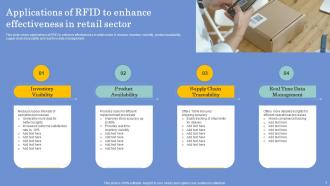
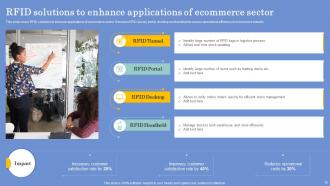
RFID enhances retail customer experiences by enabling instant inventory visibility, seamless self-checkout processes, personalized shopping recommendations, and rapid product location services. Through smart shelving and mobile integration, retailers streamline purchase journeys, minimize wait times, and deliver targeted promotions, with many fashion and electronics stores finding that RFID ultimately increases customer satisfaction and operational efficiency.
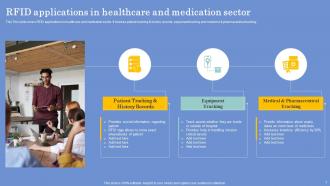
Innovative RFID healthcare applications include patient tracking systems, medication management, surgical instrument monitoring, blood bank inventory control, and asset location services. These technologies streamline hospital operations by reducing medication errors, preventing surgical complications, and enhancing patient safety protocols, with many healthcare institutions finding that RFID ultimately delivers faster care delivery and significant cost reductions.
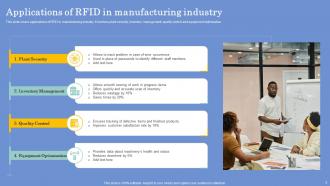
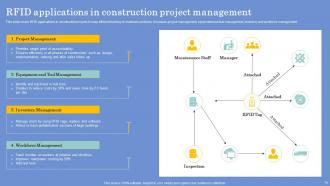
RFID revolutionizes manufacturing asset tracking by providing real-time visibility, automated data collection, and precise location monitoring of equipment, tools, and inventory throughout production facilities. Through embedded tags and strategic readers, manufacturers streamline maintenance schedules, reduce equipment downtime, and minimize asset loss, while enhancing operational efficiency and delivering significant cost savings across complex manufacturing environments.
Organizations face challenges including high implementation costs, system compatibility issues, data security concerns, employee training requirements, and infrastructure modifications when integrating RFID systems. While these hurdles can be significant, many companies in manufacturing, retail, and healthcare find that strategic phased implementation, combined with proper change management and security protocols, ultimately delivers enhanced operational efficiency and competitive advantage.
Yes, RFID technology significantly enhances security and access control by providing contactless authentication, real-time tracking, and encrypted data transmission for secure facility management. Organizations across sectors like corporate offices, hospitals, and manufacturing facilities use RFID-enabled keycards and badges to streamline employee access, monitor restricted areas, and maintain detailed audit trails, ultimately delivering enhanced security while reducing administrative overhead.
RFID enhances food safety traceability by providing real-time visibility into supply chains, enabling rapid contamination source identification, automating compliance documentation, and maintaining detailed product histories from farm to consumer. Through these capabilities, food manufacturers, retailers, and regulatory agencies can significantly reduce recall response times, minimize contaminated product distribution, and ultimately deliver safer food products while ensuring regulatory compliance.
Companies leverage RFID data analytics for business intelligence by tracking customer behavior patterns, monitoring inventory movements in real-time, and analyzing operational workflows across multiple touchpoints. Through advanced analytics platforms, organizations in retail, manufacturing, and logistics optimize supply chains, predict demand fluctuations, and enhance resource allocation, ultimately delivering improved operational efficiency and competitive market advantages.
Looking at the RFID technology roadmap, expected advancements include enhanced reading ranges, improved battery life in active tags, better integration with IoT platforms, advanced data encryption, and AI-powered analytics capabilities. These developments will revolutionize supply chain visibility, healthcare patient tracking, and smart retail experiences, with many organizations finding that next-generation RFID systems deliver unprecedented operational efficiency and real-time decision-making advantages.
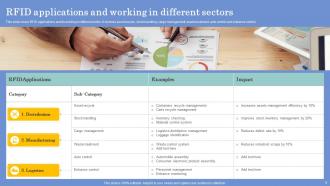
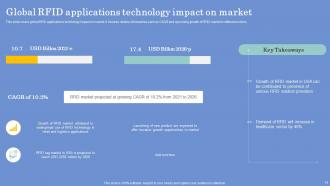
Retail, healthcare, logistics, and manufacturing have demonstrated the fastest RFID adoption rates, driven by their need for real-time inventory tracking, asset management, and operational efficiency. These industries leverage RFID technology to streamline supply chains, reduce shrinkage, enhance patient safety, and automate production processes, with many organizations finding that RFID delivers significant cost reductions and competitive advantages.
RFID implementation costs vary by scale and complexity, but most organizations find the investment delivers significant returns through reduced labor costs, improved inventory accuracy, and enhanced operational efficiency. While initial setup requires capital for tags, readers, and software integration, businesses typically see cost savings within 12-18 months through streamlined processes and better asset visibility.
RFID tags in consumer products present both environmental challenges and opportunities, including electronic waste generation, resource consumption during manufacturing, reduced packaging waste through better inventory management, and enhanced recycling efficiency. While increased electronic components raise disposal concerns, many retailers find that RFID-enabled supply chain optimization significantly reduces overall environmental impact through minimized overproduction and streamlined logistics operations.
RFID enables contactless payments by embedding microchips in cards, mobile devices, and wearables that transmit payment data to secure readers through radio waves. Banks and retailers leverage this technology to streamline checkout processes, reduce transaction times, and enhance customer experiences, with many financial institutions finding that RFID payments significantly increase operational efficiency while minimizing fraud risks.
Privacy concerns with RFID applications include unauthorized tracking of individuals, data interception during transmission, location monitoring without consent, and potential identity theft through stored personal information. These challenges can be addressed through encryption protocols, access controls, data minimization practices, and user consent mechanisms, with many organizations finding that implementing privacy-by-design frameworks ultimately delivers enhanced customer trust while maintaining operational efficiency.
-
SlideTeam is the best in the business. Their templates are engaging and customizable. You can rely on them.
-
SlideTeam offers so many variations of designs and topics. It’s unbelievable! Easy to create such stunning presentations now.