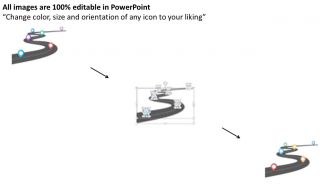
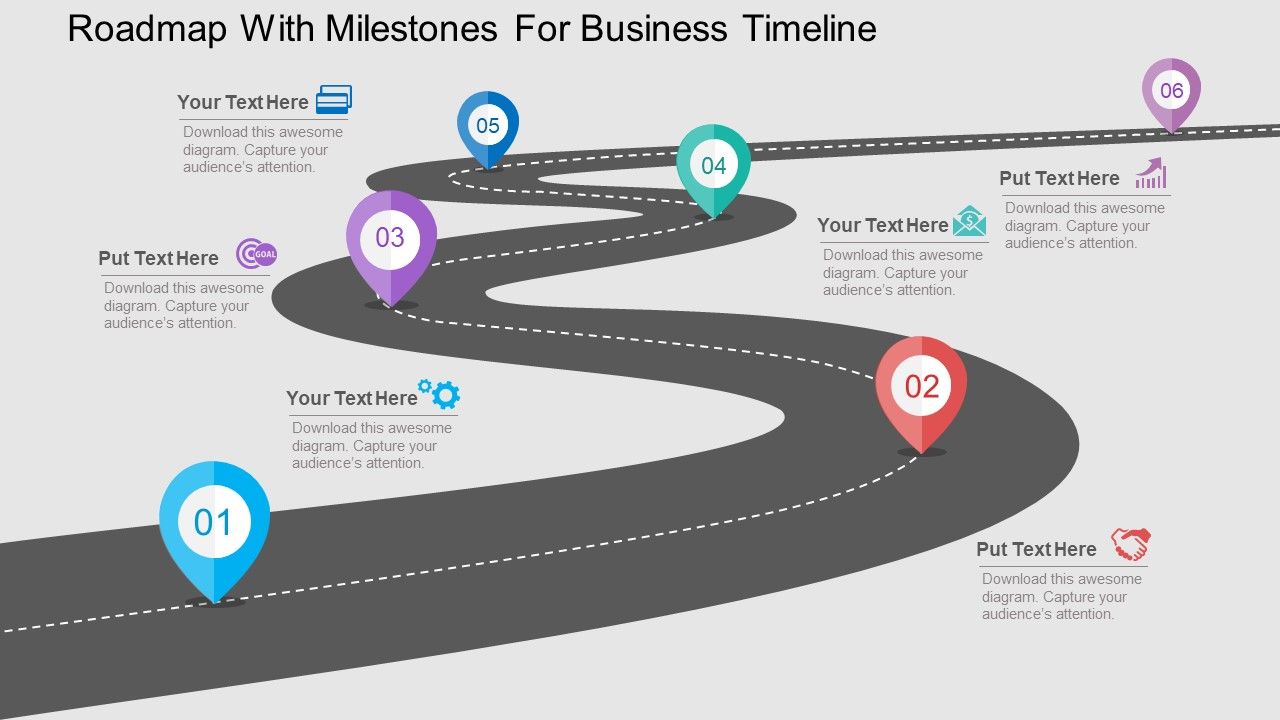
Roadmap with milestones for business timeline flat powerpoint design
Try Before you Buy Download Free Sample Product
Audience
Editable
of Time
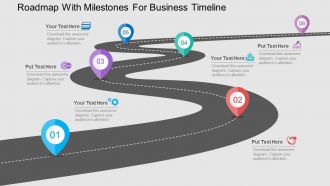
Timeline graphs are one of the most useful diagrams when it comes to business PowerPoint presentations. Therefore, we bring you a roadmap with milestones for business timeline flat PowerPoint design. Presence of roadmap graphic during any PowerPoint presentation ensures the presence of a glorious destination at the end of the journey, which keeps the enthusiasm level of audience all-time high. Given roadmap PPT model can be used to ascertain financial need for product development, to set business goals and to prioritize a streamlined process. An entrepreneur requires such business timeline PPT info graphic template, to talk about the projects undertaken or planned business strategy. Despite the presence of varied roadmap presentation templates options available online, we are confident to provide you with the best fit PPT example for your time-based business projects. So when in need of displaying the complex time based data, in the most creative manner, just customize this timeline slide design and be prepared for appreciation. Set yourself up for a date with destiny. Our Roadmap With Milestones For Business Timeline Flat PowerPoint Design assure a great future ahead.
People who downloaded this PowerPoint presentation also viewed the following :
Roadmap with milestones for business timeline flat powerpoint design with all 4 slides:
Our Roadmap With Milestones For Business Timeline Flat Powerpoint Design ensure you land with your feet on the ground. They enable you to dive headlong into the fray.
FAQs for Roadmap with milestones for business timeline
You need clear milestones with deadlines, plus figure out your resources for each phase. Success metrics are crucial too. Honestly, identifying risks upfront will save you tons of stress down the road - learned that the hard way. Always add buffer time because everything takes longer than you think. Regular stakeholder check-ins keep everyone on the same page. Oh, and make it visual! Gantt charts work great, or even just a simple timeline everyone can actually see and update. The whole team needs easy access to it or it's pretty much useless.
Honestly, visual timelines are game-changers. Everyone can see what's happening when without scrolling through a million docs or sitting in boring status meetings. Bottlenecks jump out immediately, and you'll catch potential disasters before they happen. Your stakeholders won't bug you as much either - they can check progress themselves without needing all the technical stuff explained. When things inevitably get delayed (because they always do), just update the visual and boom, everyone gets it. Oh, and make sure the whole team can access it. Trust me, it becomes like your project bible.
Oh, Microsoft Project is the beast for detailed stuff but honestly it's way too much if you just need a simple roadmap. Asana and Monday.com are my go-to picks - really easy to use and the timeline views look clean. Google Sheets with a Gantt template works fine too if you want something fast and free. Miro's solid for collaboration, and Lucidchart is decent if your team's already using it for other stuff. Actually, just check what you already have before buying anything new. No point paying for features you won't use.
Honestly, just check if your milestones actually support your main business goals first. Revenue stuff obviously comes first - that's what keeps the lights on. Then I'd do the whole impact vs effort thing to find quick wins. Dependencies are annoying but you gotta map those out too since some things literally can't happen until others are done. Foundational pieces like key hires or infrastructure probably come next. Oh and definitely review this monthly because everything changes way faster than you think it will. Each milestone should tie back to something you can actually measure, otherwise what's the point?
Market analysis is basically your reality check for timing stuff right. Without it, you're just throwing darts at a calendar and hoping something sticks. The data shows you when demand actually peaks, what your competitors are planning, and where the gaps are. I learned this the hard way when we launched right into a seasonal dip - total nightmare. You want to bake the analysis into your roadmap early, then use what you find to set dates that actually make sense. Short version: it's your GPS for knowing when to move on products, new markets, all that.
Okay so here's what I've learned the hard way - treat your roadmap like it's gonna change, because it absolutely will. Build in buffer time around big milestones and figure out what's actually critical vs what would just be cool to have. That way when stuff hits the fan (which it does), you can shift gears without panicking. I do monthly check-ins to see if my timeline still makes sense - sometimes the market moves faster than you expect. Oh and pick like three spots in your current plan where you could realistically adjust things if needed. Saves you from scrambling later.
Ugh, the timing thing gets me every single time - I'm always way too optimistic about how long stuff will take. Seriously, just add like 25% extra time to whatever you think it'll be. Dependencies are huge too - you gotta map out what has to happen before other things can even start. Oh and don't make it super rigid! Markets change, shit happens. Getting your team involved from the beginning instead of just throwing a timeline at them later? Total game changer. I learned that one the hard way lol.
Get feedback sessions going early in your planning - like way before you build anything. Surveys work, but honestly? Small workshops or one-on-ones get you way better intel than those big meetings where everyone just nods along. Ask pointed questions too - "what could totally blow up this timeline?" instead of the generic "thoughts?" nonsense. Oh, and document everything you hear. People will actually keep helping if they see their input changed something in the final roadmap. Otherwise they'll just tune out next time.
Look, realistic timelines save you from wanting to throw your laptop out the window when everything inevitably goes sideways. You've got to build in buffer time - whatever you think each phase will take, add more. Trust me on this one. Real-world stuff always pops up: team members get sick, vendors are late, requirements change mid-stream. Investors actually respect when you show you get how long things really take instead of just being overly optimistic. It keeps everyone on the same page and prevents that panic mode we've all been in. Oh, and your team won't hate you for it.
Honestly, roadmaps are clutch for this stuff. Instead of scrambling when marketing suddenly needs extra budget while product's already deep in development, you'll spot those conflicts way ahead of time. No more playing favorites or dealing with whoever complains the loudest - which, let's be real, is usually how these decisions get made. Having everything mapped out gives you actual data to point to when you need to shut down random pet projects that don't fit the bigger picture. I'd start by just writing down what you're already committed to, then layer in what's coming next. Saves you from those brutal "oops, we're broke" moments later in the year.
Look at both leading and lagging indicators for each milestone. Pipeline growth and user acquisition rates give you early warnings. Revenue and customer satisfaction show what actually happened. Honestly, conversion rates are my favorite - they cut through all the BS and show what's really working. Mix your hard numbers (sales, traffic) with feedback from customers and your team. Pick 3-5 metrics per phase that connect to your main goals, then check them monthly. That way you can adjust fast when things aren't going well. Oh, and don't get too caught up in vanity metrics - focus on what moves the needle.
Quarterly reviews are the bare minimum, but monthly is way better if your industry moves quickly. When something big hits - market shift, competitor launch, whatever - just update it right away. Don't wait around for your next scheduled check-in. I swear, half the startups I know are still following roadmaps from six months ago that make zero sense now. Set up a monthly team meeting to actually look at what's working and what isn't. Your roadmap should change as you learn stuff, not collect dust in some folder.
Show the big picture timeline first, then get into specifics. Use visuals - colors, icons, whatever makes the phases stand out. People zone out with walls of text, so bullet points and key dates are your friend. Call out dependencies and risks right away because nobody wants nasty surprises down the road. Walk through it step by step instead of just clicking through slides. Oh, and definitely bring printed copies - people love scribbling notes on paper for some reason. Leave plenty of time for questions too.
Oh man, cultural stuff will mess with your timeline in ways you don't expect. Different cultures have totally different speeds - some need forever to build consensus while others just charge ahead. Then there's the practical stuff like fiscal years not lining up, random holidays you've never heard of, and Europe basically shutting down in August (learned that one the hard way). Time zones are a nightmare when you're trying to coordinate anything global. Honestly, I'd pad your timeline by like 25% minimum and definitely check with local people first. They'll catch things you'd never think of.
Dude, you should totally try some project management tools - they make timelines so much easier to follow. Instead of staring at boring spreadsheets, you get these cool interactive charts where you can actually click around and see what's blocking what. Your team can get real-time updates too, which is clutch. No more of those weird meetings where everyone's like "uh, what are we supposed to be doing?" The visual stuff just clicks better in your brain, you know? Plus people can filter by their department or whatever they care about. I'd start with Asana or Monday.com - they're pretty user-friendly and won't overwhelm you right off the bat.
-
Designs have enough space to add content.
-
Best Representation of topics, really appreciable.