

Robotics Process Automation To Digitize Repetitive Tasks Powerpoint Presentation Slides RB





Try Before you Buy Download Free Sample Product
 Impress Your
 Audience
 100%
100% Editable
 Save Hours
 of Time


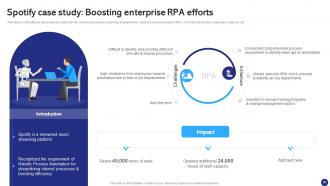
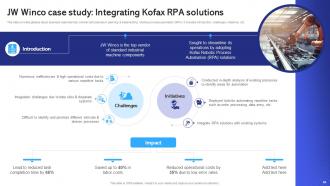
Grab our readily accessible and professionally crafted Robotics Process Automation to Digitize Repetitive Tasks PowerPoint presentation. It is a comprehensive and insightful resource that explores how RPA can bring about transformative changes across various industries. The module begins with an introductory overview, emphasizing the pivotal role of RPA in enhancing operational efficiency and explaining its fundamental components. Delving into a detailed market analysis, it explores global trends, growth drivers, and the future trajectories shaping the landscape of RPA. Furthermore, the Intelligent Automation PPT template examines the intricacies of RPA architecture, draws comparisons between manual and automated processes, and evaluates the diverse RPA tools available in the market. It also highlights practical applications of RPA across industries such as Banking, Retail, Healthcare, Customer Service, Sales and Marketing, Insurance, Telecom, and more, showcasing its integration and impact. A structured implementation process is outlined, guiding vendor selection, deployment strategies, and performance monitoring. Moreover, the Intelligent Enterprise PPT slides present the evolution of RPA, including the emergence of intelligent automation RPA 4.0, and suggests mitigation strategies. Impact assessments are conducted, and real-world case studies, such as those of Spotify and JW Winco, are presented to illustrate successful RPA adoption. Download Now.
People who downloaded this PowerPoint presentation also viewed the following :
Content of this Powerpoint Presentation
Slide 1: This slide introduces Robotics Process Automation to Digitize Repetitive Tasks. State your company name and begin.
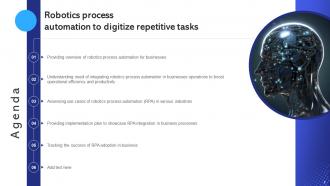
Slide 2: This is an Agenda slide. State your agendas here.
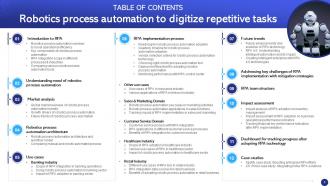
Slide 3: This slide shows Table of Content for the presentation.
Slide 4: This slide continues showing Table of Content for the presentation.
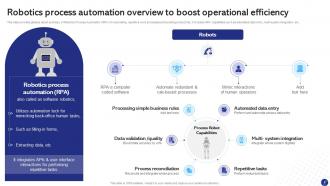
Slide 5: This slide provides glimpse about summary of Robotics Process Automation (RPA) for automating repetitive work processes and boosting productivity.
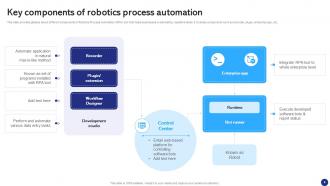
Slide 6: This slide presents different components of Robotics Process Automation (RPA) tool that helps businesses in automating repetitive tasks.
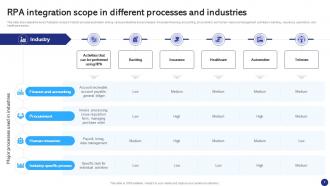
Slide 7: This slide showcases the level of adoption scope of robotic process automation among various industries and processes.
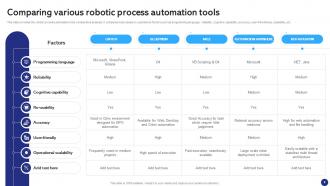
Slide 8: This slide provides the robotic process automation tools comparative analysis. It compares tools based on operational factors such as programming language etc.
Slide 9: This slide shows title for topics that are to be covered next in the template.
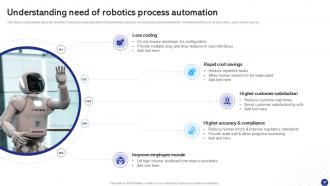
Slide 10: This slide provides glimpse about key benefits of robotics process automation that businesses in boosting accuracy and customer satisfaction.
Slide 11: This slide shows title for topics that are to be covered next in the template.
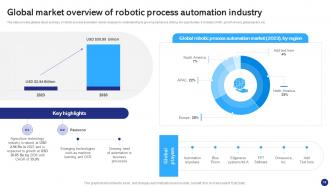
Slide 12: This slide provides glimpse about summary of robotic process automation market analysis for understanding its growing market and utilizing the opportunities. Reasons
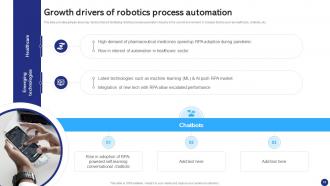
Slide 13: This slide displays key factors that are facilitating robotics process automation industry in the current environment.
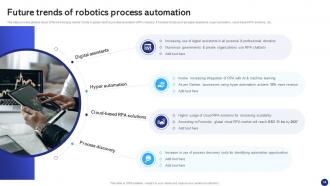
Slide 14: This slide provides glimpse about different emerging market trends in global robotics process automation (RPA) industry.
Slide 15: This slide shows title for topics that are to be covered next in the template.
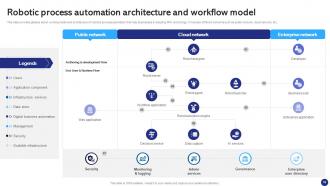
Slide 16: This slide provides glimpse about working model and architecture of robotics process automation that help businesses in adopting RPA technology.
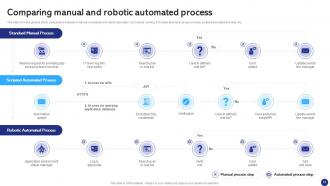
Slide 17: This slide presents comparative analysis of manual processes and robotic automation processes’ working. It includes standard manual process, scripted automated process, etc.
Slide 18: This slide shows title for topics that are to be covered next in the template.
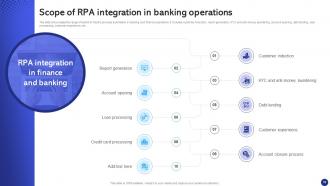
Slide 19: The slide showcases the range of extent of robotic process automation in banking and finance operations.
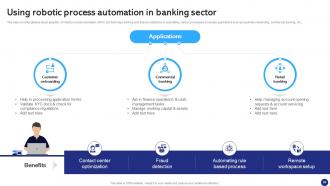
Slide 20: This slide provides glimpse about adoption of robotic process automation (RPA) tool that helps banking and finance institutions in automating various processes.
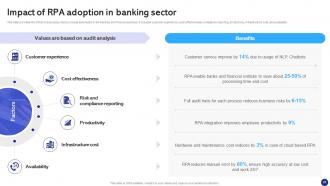
Slide 21: This slide displays the effect of executing robotic process automation in the banking and finance business. It includes customer experience, cost-effectiveness etc.
Slide 22: This slide shows title for topics that are to be covered next in the template.
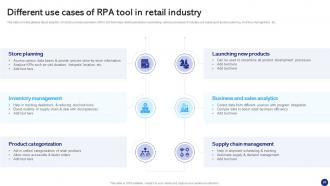
Slide 23: This slide provides glimpse about adoption of robotic process automation (RPA) tool that helps retail businesses in automating various processes.
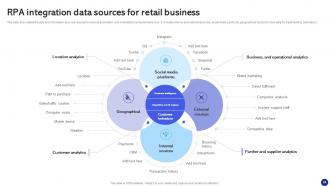
Slide 24: This slide showcases the data and information sources required to execute automation and understand consumer behaviour.
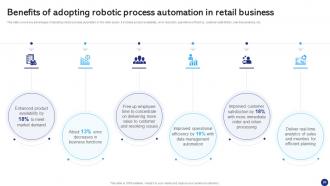
Slide 25: This slide covers key advantages of adopting robotic process automation in the retail sector. It includes product availability etc.
Slide 26: This slide shows title for topics that are to be covered next in the template.
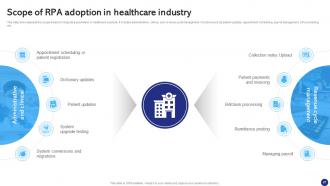
Slide 27: This slide showcases all the scope areas for integrating automation in healthcare systems. It includes administrative, clinical etc.
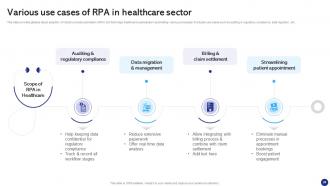
Slide 28: This slide provides glimpse about adoption of robotic process automation (RPA) tool that helps healthcare businesses in automating various processes.
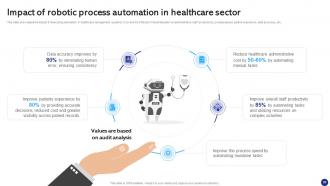
Slide 29: This slide showcases the impact of executing automation in healthcare management systems.
Slide 30: This slide shows title for topics that are to be covered next in the template.
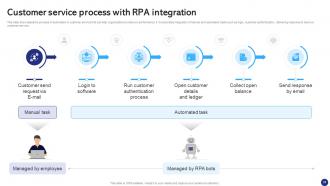
Slide 31: This slide showcases the process of automation in customer service that can help organizations to improve performance.
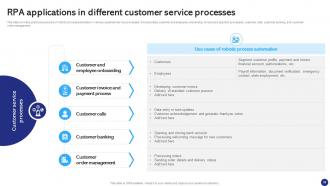
Slide 32: This slide provides practical scenarios of robotic process automation in various customer service processes. It incorporates customer and employee onboarding etc.
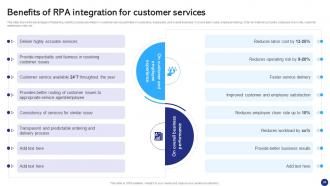
Slide 33: This slide shows the advantages of implanting robotic process automation in customer service activities on customers, employees, and overall business.
Slide 34: This slide shows title for topics that are to be covered next in the template.
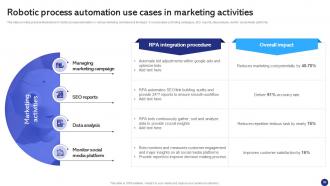
Slide 35: This slide provides practical illustrations of robotic process automation in various marketing activities and its impact.
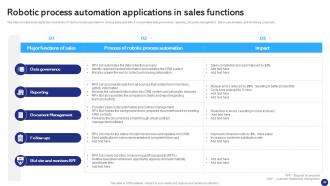
Slide 36: This slide displays some application scenarios of robotic process automation in various sales activities. It incorporates data governance, reporting etc.
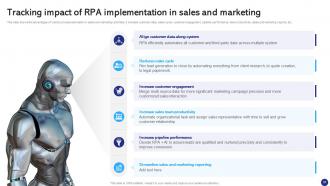
Slide 37: This slide shows the advantages of robotic process automation in sales and marketing activities. It includes customer data, sales cycle, customer engagement etc.
Slide 38: This slide shows title for topics that are to be covered next in the template.
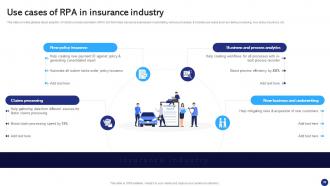
Slide 39: This slide provides glimpse about adoption of robotic process automation (RPA) tool that helps insurance businesses in automating various processes.
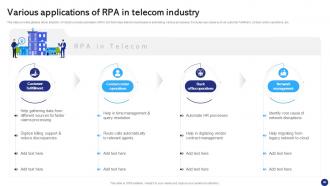
Slide 40: This slide displays glimpse about adoption of robotic process automation (RPA) tool that helps telecom businesses in automating various processes.
Slide 41: This slide shows title for topics that are to be covered next in the template.
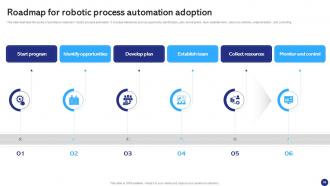
Slide 42: This slide illustrates the series of activities to implement robotic process automation. It includes milestones such as opportunity identification, plan development etc.
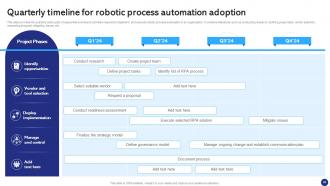
Slide 43: This slide provides the quarterly action plan of sequential events and activities required to implement and execute robotic process automation in an organization.
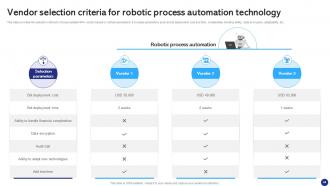
Slide 44: This slide displays the selection criteria to choose suitable RPA vendor based on certain parameters.
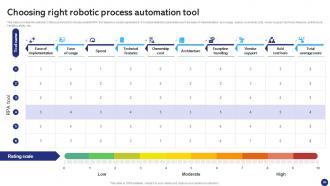
Slide 45: This slide provides the selection criteria scorecard to choose suitable RPA tool based on certain parameters.
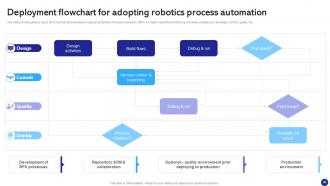
Slide 46: This slide displays glimpse about flowchart that aid businesses in deploying Robotics Process Automation (RPA) for higher operational efficiency.
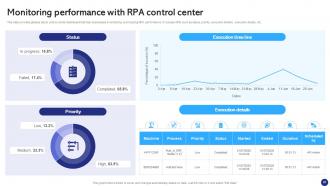
Slide 47: This slide provides glimpse about control center dashboard that help businesses in monitoring and tracking RPA performance.
Slide 48: This slide shows title for topics that are to be covered next in the template.
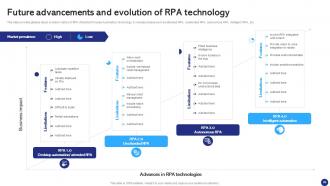
Slide 49: This slide provides glimpse about evolution history of RPA (Robotics Process Automation) technology. It includes phases such as attended RPA, unattended RPA etc.
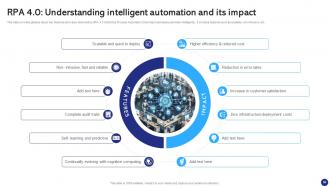
Slide 50: This slide displays glimpse about key features and value delivered by RPA 4.0 (Robotics Process Automation) that help businesses automate intelligently.
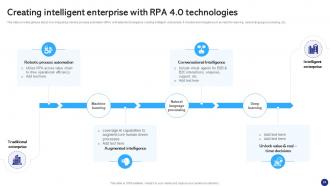
Slide 51: This slide provides glimpse about how integrating robotics process automation (RPA) with latest technologies is creating intelligent enterprises.
Slide 52: This slide shows title for topics that are to be covered next in the template.
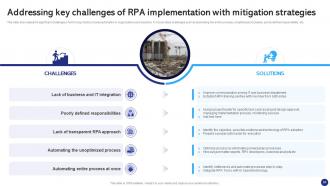
Slide 53: This slide showcases the significant challenges of enforcing robotic process automation in organizations and solutions.
Slide 54: This slide shows title for topics that are to be covered next in the template.
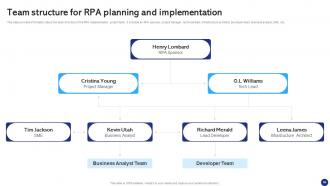
Slide 55: This slide provides information about the team structure of the RPA implementation project team. It includes an RPA sponsor, project manager etc.
Slide 56: This slide shows title for topics that are to be covered next in the template.
Slide 57: This slide provides glimpse about detailed summary of the company to provide current and background information. It includes mission, company headquarters etc.
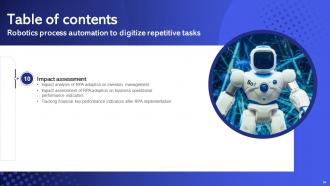
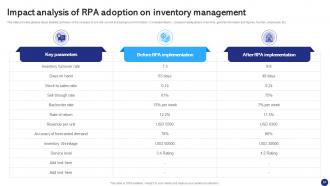
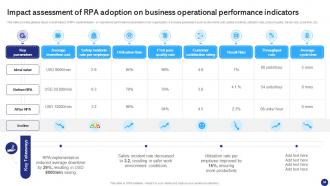
Slide 58: This slide displays glimpse about overall impact of RPA implementation on operational performance parameters of an organization.
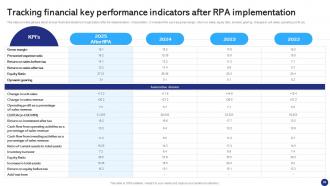
Slide 59: This slide provides glimpse about annual financial indicators of organization after the implementation of automation.
Slide 60: This slide shows title for topics that are to be covered next in the template.
Slide 61: This slide provides glimpse about detailed summary of the company to provide current and background information. It includes mission, company headquarters etc.
Slide 62: This slide shows title for topics that are to be covered next in the template.
Slide 63: This slide provides glimpse about business case that help commercial business in planning & implementing robotics process automation (RPA).
Slide 64: This slide displays glimpse about business case that help commercial business in planning & implementing robotics process automation (RPA).
Slide 65: This slide shows all the icons included in the presentation.
Slide 66: This slide is titled as Additional Slides for moving forward.
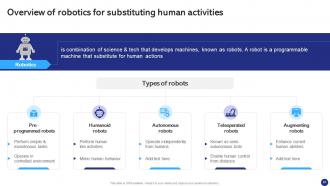
Slide 67: This slide presents overview of robotics for substituting human activities.
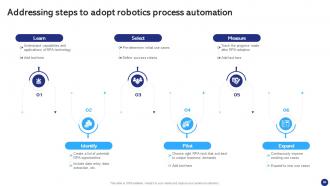
Slide 68: This slide displays addressing steps to adopt robotics process automation.
Slide 69: This is About Us slide to show company specifications etc.
Slide 70: This is Our Team slide with names and designation.
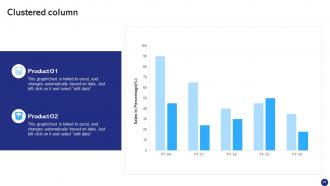
Slide 71: This slide displays Column Graph with two products comparison.
Slide 72: This is Our Vision, Mission & Goal slide. Post your Visions, Missions, and Goals here.
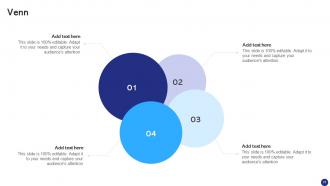
Slide 73: This slide depicts Venn diagram with text boxes.
Slide 74: This slide shows Post It Notes for reminders and deadlines. Post your important notes here.
Slide 75: This is an Idea Generation slide to state a new idea or highlight information, specifications etc.
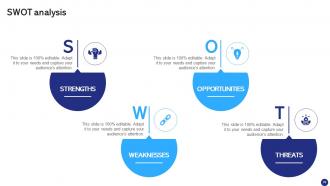
Slide 76: This slide shows SWOT analysis describing- Strength, Weakness, Opportunity, and Threat.
Slide 77: This slide presents Roadmap with additional textboxes. It can be used to present different series of events.
Slide 78: This is a Thank You slide with address, contact numbers and email address.
Robotics Process Automation To Digitize Repetitive Tasks Powerpoint Presentation Slides RB with all 86 slides:
Use our Robotics Process Automation To Digitize Repetitive Tasks Powerpoint Presentation Slides RB to effectively help you save your valuable time. They are readymade to fit into any presentation structure.














FAQs for Robotics Process Automation To Digitize Repetitive Tasks Powerpoint
Key benefits of implementing Robotic Process Automation include enhanced operational efficiency, significant cost reduction, improved accuracy, faster processing times, and better compliance management. Through RPA deployment, organizations streamline repetitive tasks, minimize human errors, and accelerate service delivery, with many financial institutions and healthcare providers finding that automation ultimately delivers competitive advantage while enabling employees to focus on strategic, value-added activities.
Robotic Process Automation differs from traditional automation by working through existing user interfaces rather than requiring backend system integration, enabling faster deployment across multiple applications simultaneously. Unlike traditional automation that demands extensive programming and infrastructure changes, RPA mimics human interactions with software, allowing organizations to automate complex workflows while maintaining existing systems and delivering quicker implementation timelines.
Banking, insurance, healthcare, manufacturing, and retail are experiencing the most significant RPA transformation through automated claims processing, loan approvals, and customer service operations. These industries leverage RPA to streamline repetitive tasks, reduce processing times, and minimize human error, with many financial institutions finding 70% faster transaction processing and enhanced regulatory compliance.
Common RPA adoption challenges include process complexity assessment, employee resistance to change, integration with legacy systems, scaling automation initiatives, and maintaining bot performance over time. While organizations initially struggle with identifying suitable processes and managing workforce concerns, many find that strategic change management, comprehensive training programs, and phased implementation approaches ultimately deliver smoother transitions and enhanced operational efficiency.
Businesses measure RPA ROI by calculating cost savings from reduced labor hours, error elimination, and faster processing speeds, alongside revenue gains from improved customer service and compliance. Financial institutions tracking loan processing automation typically see 60-80% time reduction and measurable accuracy improvements, while manufacturing companies find inventory management bots deliver significant operational cost reductions within six months.
Tasks best suited for RPA include data entry, invoice processing, customer onboarding, report generation, and compliance monitoring. These rule-based, repetitive processes enable organizations to streamline operations by reducing manual errors, accelerating transaction times, and freeing human resources for strategic work, with many financial services and healthcare institutions finding significant cost savings and improved accuracy.
Data security plays a critical role in RPA deployment by requiring encrypted data transmission, secure credential management, audit trails, and compliance with regulations like GDPR and HIPAA. Through proper security frameworks, organizations streamline automated processes while protecting sensitive information, maintaining customer trust, and avoiding costly breaches, with many financial services and healthcare institutions finding that robust security measures ultimately enable faster, more reliable automation at scale.
AI and machine learning enhance RPA by enabling intelligent document processing, predictive analytics, natural language understanding, cognitive decision-making, and adaptive learning capabilities. These technologies transform basic task automation into intelligent process automation, with financial services, healthcare, and manufacturing organizations finding that AI-powered RPA delivers faster processing, reduced errors, and ultimately enables end-to-end automation of complex workflows.
Organizations ensure effective RPA change management through comprehensive stakeholder communication, strategic employee training programs, phased implementation approaches, and clear governance frameworks. These methodologies streamline transitions by addressing workforce concerns, establishing new operational protocols, and maintaining business continuity, with many companies finding that early employee engagement and transparent communication ultimately deliver higher adoption rates and sustainable automation success.
Common RPA implementation mistakes include selecting overly complex processes initially, inadequate employee training, unrealistic ROI expectations, poor process documentation, and insufficient IT infrastructure assessment. Many organizations rush deployment without proper change management, with financial services and manufacturing companies finding that starting with simple, high-volume tasks and comprehensive stakeholder buy-in delivers significantly better adoption rates and measurable efficiency gains.
Businesses can scale RPA solutions across departments by establishing centralized governance frameworks, standardizing bot development processes, creating reusable automation components, and implementing comprehensive change management strategies. Organizations like banks and healthcare systems successfully expand RPA by identifying cross-functional processes, training department champions, and leveraging cloud-based platforms that enable seamless deployment, ultimately delivering enterprise-wide efficiency gains.
Essential RPA skills include process analysis and mapping, programming knowledge in languages like Python or VBA, understanding of automation tools such as UiPath or Blue Prism, data analytics capabilities, and strong problem-solving abilities. These competencies enable professionals to streamline workflows, reduce operational costs, and enhance accuracy across industries like finance and healthcare, ultimately delivering significant competitive advantages for organizations.
Robotic Process Automation serves as a foundational element in digital transformation by automating repetitive tasks, freeing human resources for strategic initiatives, and creating data-rich processes that enable advanced analytics. This strategic combination enhances operational efficiency across departments like finance, HR, and customer service, while establishing the digital infrastructure necessary for AI integration, ultimately delivering faster services and improved customer experiences in an increasingly automated business landscape.
Organizations should monitor intelligent automation combining RPA with AI and machine learning, cloud-based RPA platforms, citizen development tools, process mining integration, and hyperautomation strategies. These trends enable businesses to automate complex decision-making processes, reduce infrastructure costs, and empower non-technical staff to build automation solutions, ultimately delivering enhanced operational efficiency and competitive advantage.
RPA enhances compliance and regulatory reporting by automating data collection, standardizing processes, and ensuring consistent documentation across all transactions. Through intelligent automation, organizations streamline audit trails, minimize human errors in financial reporting, and accelerate regulatory submissions, with many financial services and healthcare institutions finding that automated compliance processes deliver faster reporting cycles and significantly reduced regulatory risk.
-
It makes easy work of my work presentations. I’ve never had to be nervous about my presentations for meetings.
-
Eye-catching PPT designs, outstanding team, and best customer service. I’m a super satisfied customer here!