


Romania country powerpoint flags




Try Before you Buy Download Free Sample Product
 Impress Your
 Audience
 100%
100% Editable
 Save Hours
 of Time


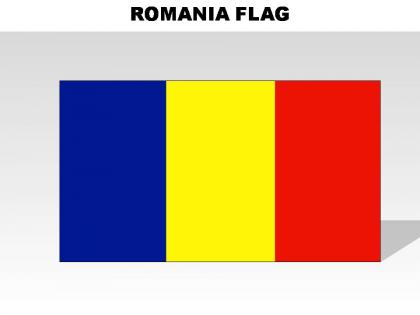
Enhance the stature of your presentation with our Romania Country Powerpoint Flags. Adorn the beauty of your thoughts with their colourful backgrounds.
People who downloaded this PowerPoint presentation also viewed the following :
Romania country powerpoint flags with all 11 slides:
Add drama to your thoughts with our Romania Country Powerpoint Flags. Your ideas will take centrestage.
FAQs for Romania
The Romanian flag's design reflects historical influences from French revolutionary ideals, pan-Slavic movements, and regional Wallachian-Moldovan traditions, with blue symbolizing liberty, yellow representing justice, and red signifying fraternity. These colors ultimately emerged through 19th-century unification movements and revolutionary periods, with many Eastern European nations finding that similar tricolor designs effectively communicate national identity and democratic aspirations.
Romania's flag colors symbolize the nation's core values, with blue representing liberty and endless skies, yellow signifying justice and abundant wheat fields, and red embodying fraternity and the courage of its people. These colors reflect Romania's agricultural heritage, democratic aspirations, and strong community bonds, with many cultural ceremonies and national celebrations incorporating these symbolic elements to reinforce national identity and shared values.
Romanian flag display in public spaces requires adherence to specific protocols including proper positioning above or equal to other flags, correct proportions, appropriate lighting during nighttime display, and respectful handling without touching the ground. These regulations ensure dignified representation in government buildings, schools, and ceremonial venues, with many institutions finding that proper flag etiquette enhances civic pride and demonstrates respect for national sovereignty.
The Romanian flag serves as a central element in national celebrations, military parades, Independence Day ceremonies, Constitution Day observances, and cultural festivals throughout the country. During major events like National Day celebrations and Olympic ceremonies, the tricolor enhances patriotic unity and national identity, with many institutions finding that prominent flag displays strengthen civic engagement and cultural pride in Romania's heritage.
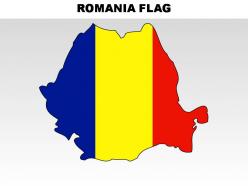
The modern Romanian flag features three equal vertical stripes of blue, yellow, and red, while historical variants included different proportions, coat of arms additions, and horizontal orientations during various periods. Throughout Romania's history, the flag underwent modifications reflecting political changes, with the communist era adding state emblems and earlier periods featuring different stripe arrangements, ultimately evolving into today's simplified tricolor that emphasizes national unity and democratic values.
Many national flags share Romania's blue, yellow, and red colors but with different symbolic meanings—France's tricolor represents liberty, equality, and fraternity, while Chad's identical arrangement symbolizes hope, sun, and progress. Romania's blue signifies freedom, yellow represents justice, and red embodies fraternity, with these Pan-European colors appearing across multiple nations, each culture ultimately delivering its own historical narrative and national identity through similar visual elements.
The Romanian flag serves as a powerful symbol of national identity, representing shared history, cultural values, sovereignty, and collective pride among citizens. Through its tricolor design of blue, yellow, and red, the flag unites Romanians across regions and generations, fostering patriotic sentiment during national celebrations, sporting events, and official ceremonies, ultimately strengthening social cohesion and national consciousness.
The Romanian flag has evolved from a monarchist symbol to representing democratic values, undergoing modifications during communist rule and restoration after 1989. While maintaining its blue, yellow, and red tricolor design, the flag's symbolism has shifted from royal heritage to national unity, territorial integrity, and European integration, with modern Romania increasingly emphasizing its role in NATO and EU contexts.
Common misconceptions about the Romanian flag include confusion with Chad's identical tricolor, beliefs that colors represent specific regions rather than symbolic values, and assumptions about historical origins during communist era. Many presenters incorrectly explain the blue-yellow-red sequence without recognizing that these colors symbolize liberty, justice, and fraternity, while the current design actually predates the 1989 revolution by decades.
The Romanian flag's three colors carry deep historical meaning: blue represents liberty and justice, yellow symbolizes the country's abundant wheat fields and natural resources, and red signifies the courage and blood of those who fought for independence. These colors, adopted in 1848 during revolutionary movements, ultimately reflect Romania's national values of freedom, prosperity, and sacrifice, with many Eastern European nations finding that such symbolic representations enhance cultural identity and patriotic unity.
The Romanian flag conveys national pride through strategic placement as backgrounds, slide headers, subtle watermarks, and accent elements that complement key messaging. When presenting Romanian achievements, cultural celebrations, or national initiatives, incorporating the flag's blue, yellow, and red colors creates visual cohesion while honoring heritage, ultimately enhancing audience connection and patriotic resonance.
The Romanian flag appears prominently in works by national artists like Nicolae Grigorescu and Theodor Aman, historical novels by Liviu Rebreanu, and patriotic poetry during independence movements. These artistic representations enhance cultural identity and national pride across creative mediums, with many cultural institutions finding that flag imagery strengthens audience connection to heritage and fosters deeper appreciation for Romanian history.
Romanian expatriates incorporate the flag through cultural festivals, traditional celebrations, sports events, and community gatherings that maintain connections to their homeland. These displays enable diaspora communities to preserve cultural heritage, strengthen social bonds, and share Romanian traditions with host countries, while many finding that flag symbolism helps bridge generational gaps and foster collective identity.
The Romanian flag enhances national branding by creating visual recognition and emotional connection with the country's heritage, culture, and identity. Through strategic placement in tourism campaigns, cultural events, and international marketing materials, Romania leverages its distinctive blue, yellow, and red symbolism to strengthen destination appeal, ultimately delivering enhanced global visibility and competitive advantage in increasingly crowded tourism markets.
The Romanian flag can be integrated through historical timeline presentations, cultural heritage displays, national holiday commemorations, civics lessons, and interactive geography modules. These educational approaches enhance student engagement by connecting visual patriotism with cultural understanding, historical context, and national identity, while many schools find that flag-centered materials foster deeper appreciation for Romanian heritage and democratic values.
-
Innovative and Colorful designs.
-
Illustrative design with editable content. Exceptional value for money. Highly pleased with the product.