

RTE Food Industry Report Part 1 Powerpoint Presentation Slides





Try Before you Buy Download Free Sample Product
 Impress Your
Audience
 100%
Editable
 Save Hours
of Time


Gain valuable insights into the thriving ready to eat food industry with our comprehensive RTE Food Industry Report template. This expertly crafted presentation provides a detailed overview of the global ready to eat industry, including statistics, market size in European countries, and market segmentation. Delve into market share, drivers, challenges, and future growth opportunities, and gain a deep understanding of key players such as Nomad, ConAgra, General Mills, Bakkavor, and Greencore Group with their 5 year financial summaries. Explore Porters 5 forces model, SWOT analysis, consumer behavior towards ready to eat food, go to market strategies, and customer demographic based market strategies. The report also covers promotional activities, pricing and growth strategies, business models, and risk mitigation strategies. Whether youre a market researcher, industry professional, or business owner, this industry report is an invaluable resource. Download the RTE Food Industry Report template now and stay ahead in the rapidly growing ready to eat food market.
People who downloaded this PowerPoint presentation also viewed the following :
Content of this Powerpoint Presentation
Slide 1: This slide introduces RTE Food Industry Report. State your company name and begin.
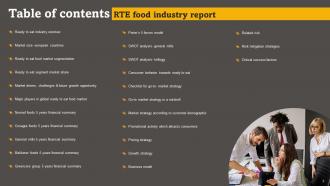
Slide 2: This slide shows Table of Content for the presentation.
Slide 3: This slide displays Ready to eat industry overview.
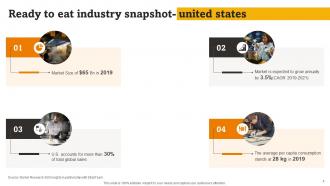
Slide 4: This slide presents Ready to eat industry snapshot - United States.
Slide 5: This slide represents Ready to eat market size- european countries.
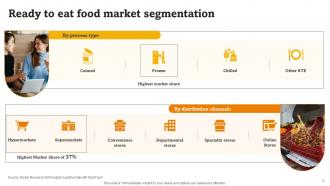
Slide 6: This slide showcases Ready to eat food market segmentation.
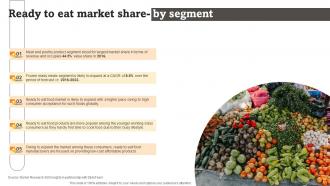
Slide 7: This slide shows Ready to eat market share - By segment.
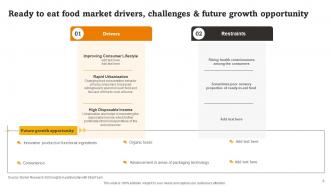
Slide 8: This slide presents Ready to Eat Food Market Drivers, Challenges & Future Growth Opportunity.
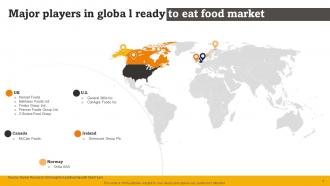
Slide 9: This slide presents Major players in global ready to eat food market.
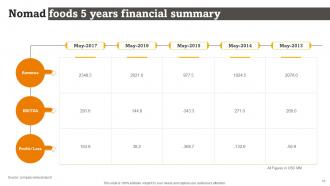
Slide 10: This slide displays Nomad foods 5 years financial summary.
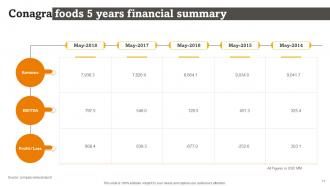
Slide 11: This slide represents Conagra foods 5 years financial summary.
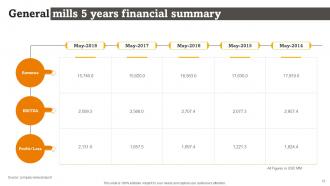
Slide 12: This slide showcases General mills 5 years financial summary.
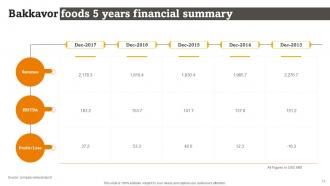
Slide 13: This slide shows Bakkavor foods 5 years financial summary.
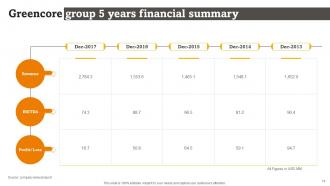
Slide 14: This slide presents Greencore group 5 years financial summary.
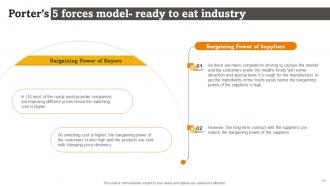
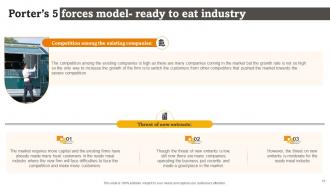
Slide 15: This slide displays Porter’s 5 forces model - Ready to eat industry.
Slide 16: This slide represents Porter’s 5 forces model - Ready to eat industry.
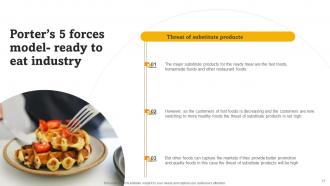
Slide 17: This slide showcases Porter’s 5 forces model - Ready to eat industry.
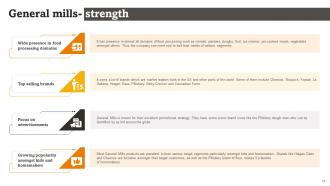
Slide 18: This slide shows Wide Presence in food Processing Domains.
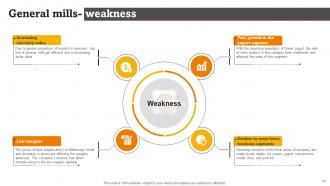
Slide 19: This slide shows Weakness of General mills.
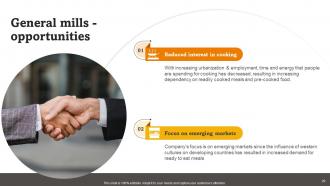
Slide 20: This slide shows Opportunities of General mills.
Slide 21: This slide shows Threats of General mills.
Slide 22: This slide shows Strength of Kellogg.
Slide 23: This slide shows Weakness of Kellogg.
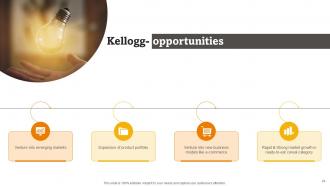
Slide 24: This slide shows Opportunities of Kellogg.
Slide 25: This slide shows Threats of Kellogg.
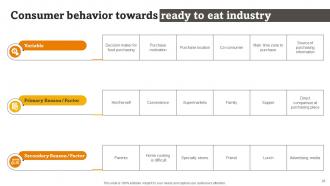
Slide 26: This slide presents Consumer behavior towards ready to eat industry.
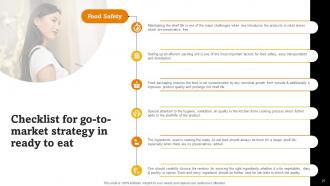
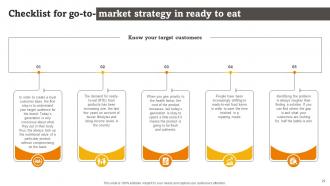
Slide 27: This slide displays Checklist for go-to- market strategy in ready to eat.
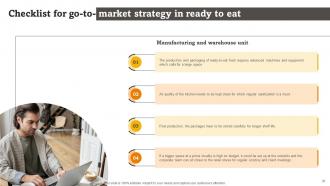
Slide 28: This slide represents Checklist for go-to- market strategy in ready to eat.
Slide 29: This slide showcases Checklist for go-to- market strategy in ready to eat.
Slide 30: This slide shows Checklist for go-to- market strategy in ready to eat.
Slide 31: This slide presents Checklist for go-to- market strategy in ready to eat.
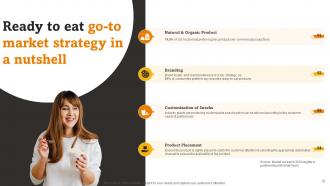
Slide 32: This slide displays Ready to eat go-to market strategy in a nutshell.
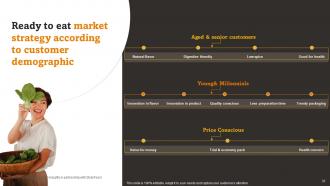
Slide 33: This slide represents Ready to eat market strategy according to customer demographic.
Slide 34: This slide showcases Promotional activity which attracts consumers the most in ready to eat market.
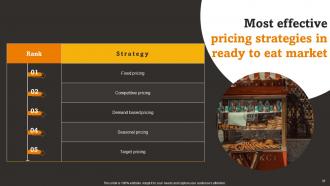
Slide 35: This slide shows Most effective pricing strategies in ready to eat market.
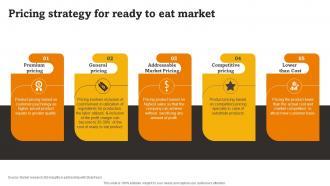
Slide 36: This slide presents Pricing strategy for ready to eat market.
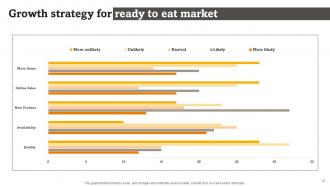
Slide 37: This slide displays Growth strategy for ready to eat market.
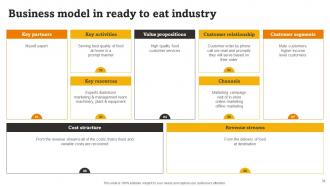
Slide 38: This slide represents Business model in ready to eat industry.
Slide 39: This slide showcases Risk & Risk Mitigation.
Slide 40: This slide showcases Risk associated with ready to eat industry.
Slide 41: This slide shows Risk mitigation in ready to eat industry.
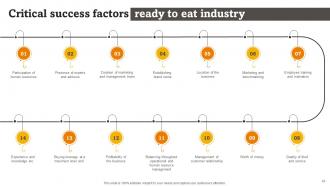
Slide 42: This slide presents Critical success factors in ready to eat industry.
RTE Food Industry Report Part 1 Powerpoint Presentation Slides with all 47 slides:
Use our RTE Food Industry Report Part 1 Powerpoint Presentation Slides to effectively help you save your valuable time. They are readymade to fit into any presentation structure.

















FAQs for RTE Food Industry Report Part 1
Key trends shaping the RTE food industry include plant-based alternatives, clean label ingredients, premium convenience options, sustainable packaging solutions, and personalized nutrition targeting. These innovations streamline consumer choices by addressing health consciousness, environmental concerns, and lifestyle demands, with major retailers and food manufacturers finding that strategic combinations of convenience and wellness ultimately deliver competitive advantage in an increasingly crowded marketplace.
Consumer behavior has shifted significantly toward convenience-focused purchasing, increased online ordering, health-conscious ingredient scrutiny, and preference for longer shelf-life products. Post-pandemic consumers increasingly prioritize contactless delivery options, transparent nutritional labeling, and immunity-boosting ingredients, with many households finding that ready-to-eat solutions streamline meal planning while delivering safety and convenience in an increasingly health-aware marketplace.
Sustainability and eco-friendliness drive significant innovation in the RTE food sector through biodegradable packaging, reduced food waste initiatives, locally-sourced ingredients, carbon footprint reduction, and circular economy practices. These approaches enable companies to meet growing consumer environmental expectations while achieving cost efficiencies, regulatory compliance, and competitive differentiation, with many food manufacturers finding that sustainable practices ultimately enhance brand loyalty and market positioning.
Millennials and Gen Z consumers are driving RTE demand through busy lifestyles, urbanization, and convenience preferences, alongside working professionals, dual-income households, and health-conscious individuals seeking nutritious options. These demographic segments increasingly prioritize time-saving meal solutions, with many food manufacturers finding that targeted marketing to urban professionals and younger consumers delivers significant market growth and competitive advantage.
Pricing strategies significantly reshape the RTE food market by enabling premium positioning, value-based differentiation, and market penetration tactics. Through competitive pricing, subscription models, and bulk offerings, companies like meal kit services and frozen food brands capture diverse consumer segments while driving brand loyalty, ultimately delivering market share growth and sustainable revenue streams in an increasingly price-sensitive landscape.
Emerging packaging innovations for RTE foods include smart sensors for freshness monitoring, biodegradable materials from plant-based sources, modified atmosphere packaging systems, antimicrobial coatings, and temperature-controlled containers. These technologies enhance product safety and sustainability by extending shelf life, reducing food waste, and delivering better consumer experiences, with many retailers finding that innovative packaging drives competitive advantage.
Online grocery shopping significantly transforms the RTE food industry by expanding market reach, enabling direct-to-consumer sales, and accelerating product discovery through digital platforms. This shift delivers enhanced convenience for consumers, streamlined distribution for manufacturers, and data-driven insights into purchasing patterns, with many food companies finding that e-commerce channels increasingly drive growth and competitive advantage.
New entrants in the RTE food market face significant challenges including establishing brand recognition, securing retail distribution networks, meeting stringent food safety regulations, competing with established players' economies of scale, and navigating complex supply chain logistics. These barriers require substantial capital investment, regulatory compliance expertise, and strategic partnerships with distributors, with many startups finding that focusing on niche markets or innovative product categories helps establish initial market presence before scaling operations.
Health and nutrition trends significantly influence RTE food development by driving demand for clean labels, plant-based alternatives, reduced sodium content, functional ingredients, and allergen-free options. Manufacturers respond by reformulating existing products and creating new lines, with many food companies finding that incorporating superfoods, probiotics, and organic ingredients delivers competitive advantage while meeting increasingly health-conscious consumer expectations.
RTE food manufacturers face stringent FDA labeling requirements, HACCP compliance protocols, allergen management standards, shelf-life validation processes, and varying international regulatory frameworks. These challenges create complex operational demands, especially for companies scaling globally, with many food manufacturers finding that strategic regulatory partnerships and automated compliance systems help streamline processes while ensuring consumer safety and market access.
AI and IoT are revolutionizing RTE food supply chains through predictive analytics for demand forecasting, real-time temperature monitoring during transport, automated inventory management, and quality control sensors throughout production. These technologies enable manufacturers to reduce food waste by up to 30%, optimize delivery routes, and ensure product freshness, with major brands like Nestlé and Unilever finding that integrated systems deliver faster distribution and enhanced consumer satisfaction.
Global sourcing in the RTE food market enables cost reduction, expanded ingredient variety, seasonal availability, and access to specialized suppliers worldwide. While this approach delivers competitive pricing and diverse product portfolios, it also presents supply chain complexity and quality control challenges, with many food manufacturers finding that strategic sourcing partnerships ultimately enhance operational efficiency and market responsiveness.
Cultural preferences fundamentally drive RTE food innovation through localized flavors, dietary restrictions, traditional cooking methods, and regional taste profiles. Companies like Nestlé and Unilever adapt their product portfolios by incorporating spice levels for Asian markets, plant-based options for health-conscious regions, and familiar comfort foods for specific demographics, ultimately delivering market relevance and competitive differentiation.
Effective RTE food marketing strategies include digital advertising targeting busy consumers, influencer partnerships with food bloggers, in-store sampling programs, convenience-focused messaging, and social media campaigns emphasizing quick preparation. These approaches streamline brand awareness by highlighting time-saving benefits, targeting specific demographics, and demonstrating product quality, with many food manufacturers finding that multi-channel campaigns ultimately deliver higher customer acquisition and brand loyalty.
Companies leverage consumer feedback through social media monitoring, surveys, focus groups, online reviews analysis, and direct customer interactions to identify preferences and pain points. This data enables food manufacturers to reformulate products, develop new flavors, improve packaging convenience, and enhance nutritional profiles, ultimately delivering better taste experiences and stronger market positioning.
-
It saves your time and decrease your efforts in half.
-
Fantastic collection. Loved how we can personalize these templates as per the requirements.