Saas funding elevator pitch deck ppt template
Try Before you Buy Download Free Sample Product
Audience
Editable
of Time
This deck covers software as a service SaaS PowerPoint templates. It includes in depth instructions on the ways you can build a great pitch deck for your SaaS solution. This investor pitch deck PPT presentation also includes important metrics in SaaS businesses, as there are many public benchmarks an investor can compare you with. The title slide creates the first impression and makes clear what your SaaS solution is all about. Further, it includes specific business related problems that SaaS companies offer to solve. Next, it provides products offered by SaaS companies as a solution to the problem. Additionally, this presentation covers the business model to showcase how the monetization process would be for the SaaS product or software and the target customers. This PPT also includes SaaS software competitors and provides traction slides covering SaaS metrics such as CAC, Churn, MRR or ARR, CLTV, Customer Retention Rate, Lead to Customer Conversion Rate. Lastly, this PPT presentation covers team members, significant milestones, and contact us templates.
People who downloaded this PowerPoint presentation also viewed the following :
Content of this Powerpoint Presentation
Slide 1: This slide introduces SaaS Funding Elevator Pitch Deck. State Your Company Name and begin.
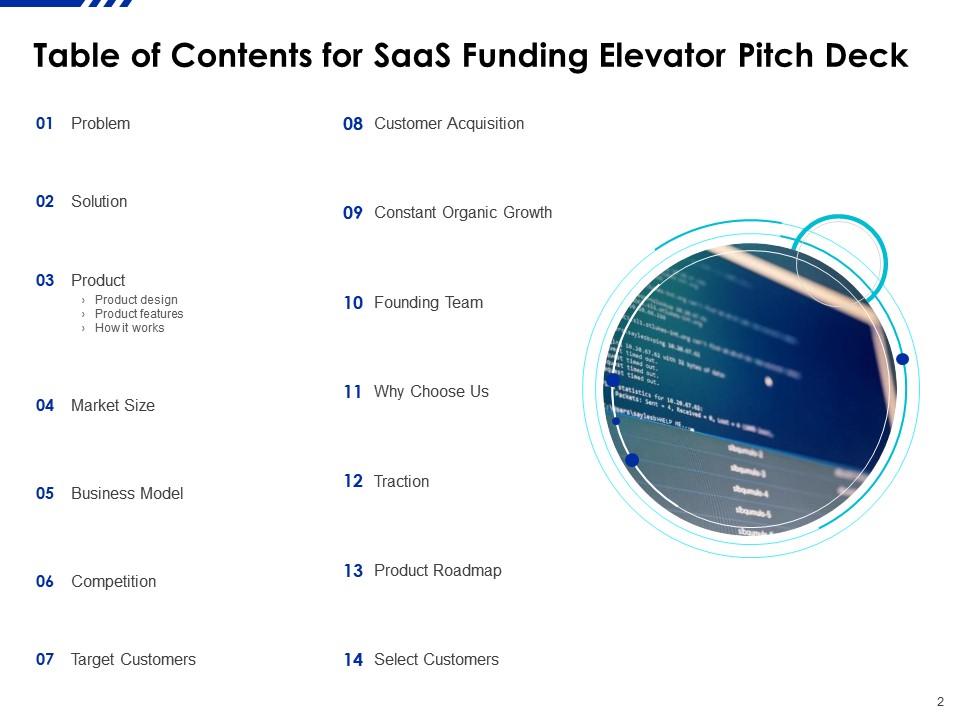
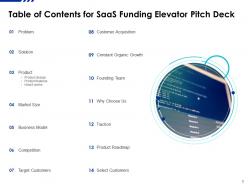
Slide 2: This slide shows Table of Content for the presentation.
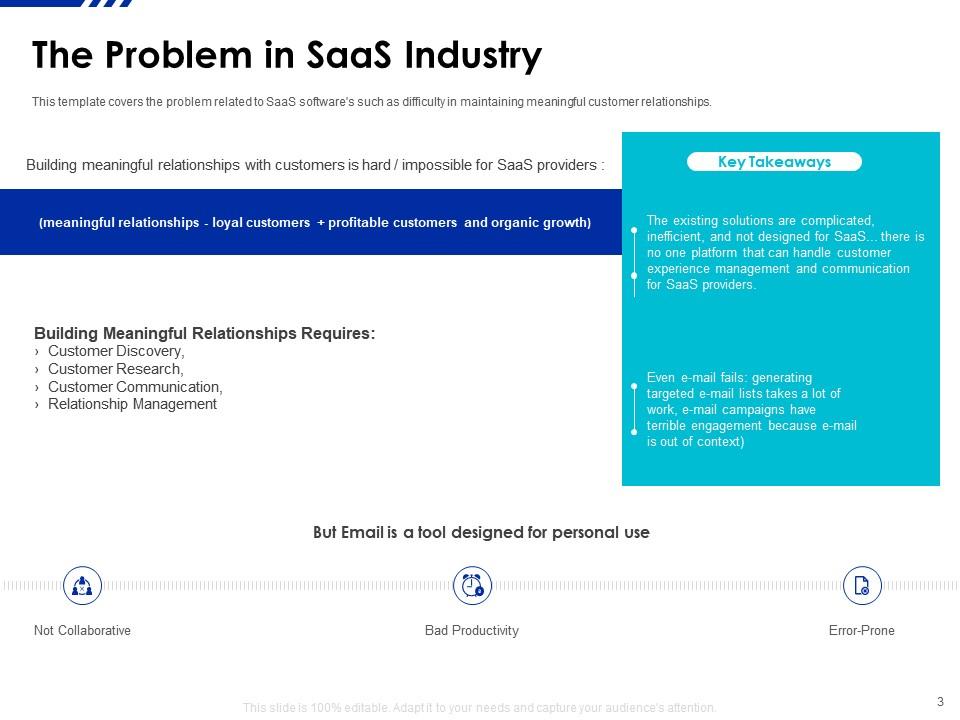
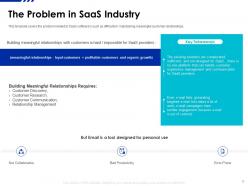
Slide 3: This template covers the problem related to SaaS software's such as difficulty in maintaining meaningful customer relationships.
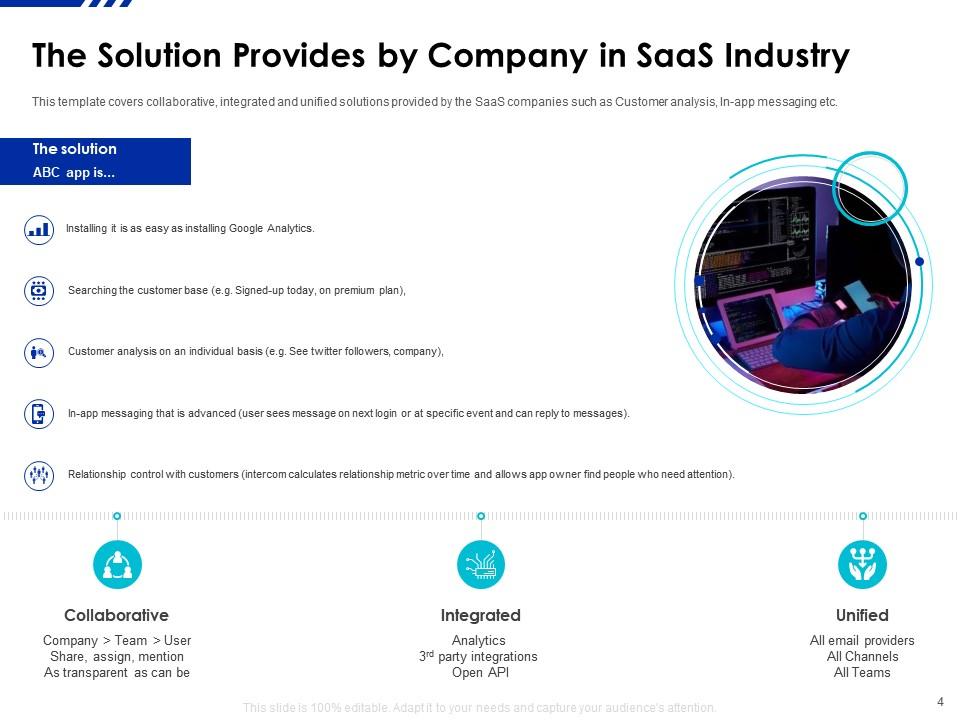
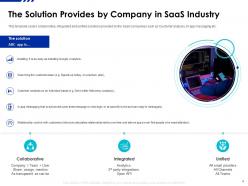
Slide 4: This template displays collaborative, integrated and unified solutions provided by the SaaS companies such as Customer analysis, In-app messaging etc.
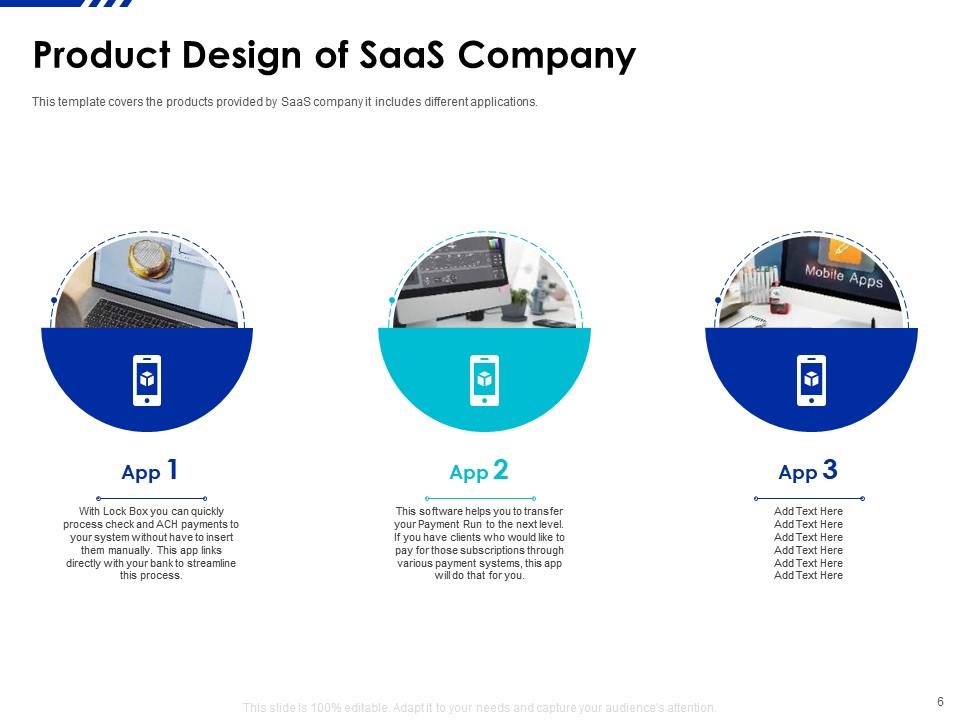
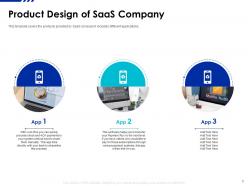
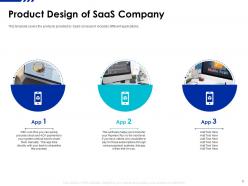
Slide 5: This template presents the products provided by SaaS company it includes different applications.
Slide 6: This slide shows Product Design of SaaS Company.
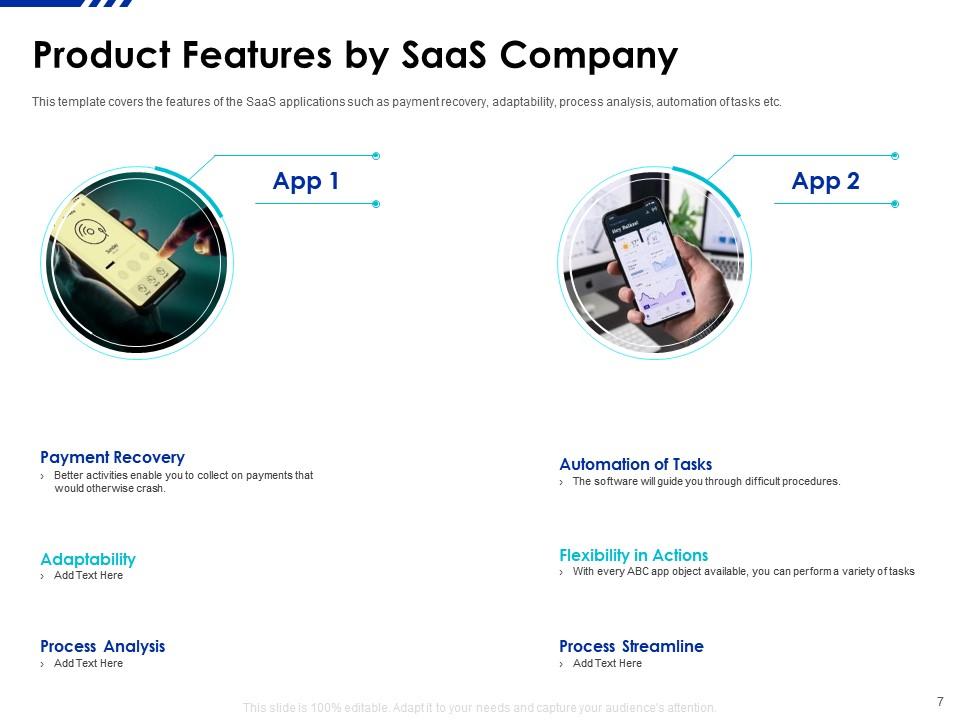
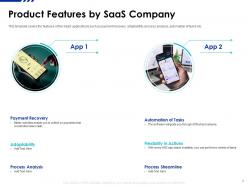
Slide 7: This template covers the features of the SaaS applications such as payment recovery, adaptability, process analysis, automation of tasks etc.
Slide 8: This template displays the demos for working of the applications
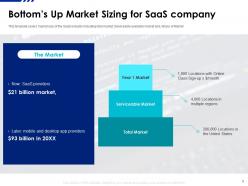
Slide 9: This slide shows Bottom’s Up Market Sizing for SaaS company.
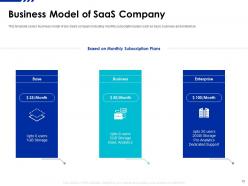
Slide 10: This template covers business model of any SaaS company including monthly subscription plans such as base, business and enterprise
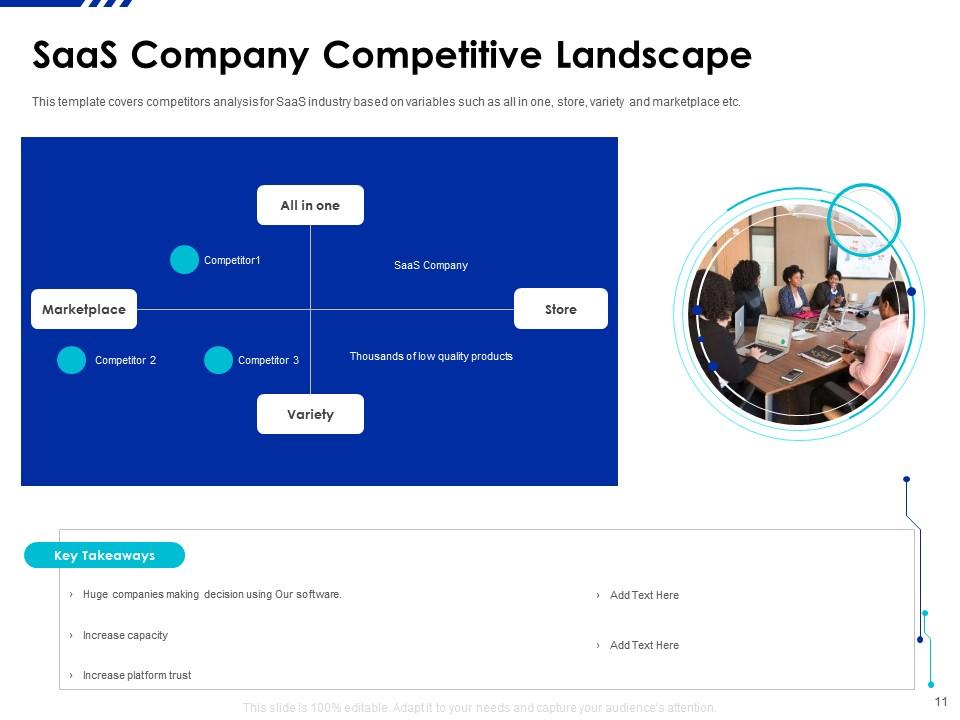
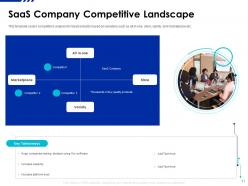
Slide 11: This template presents competitors analysis for SaaS industry based on variables such as all in one, store, variety and marketplace etc.
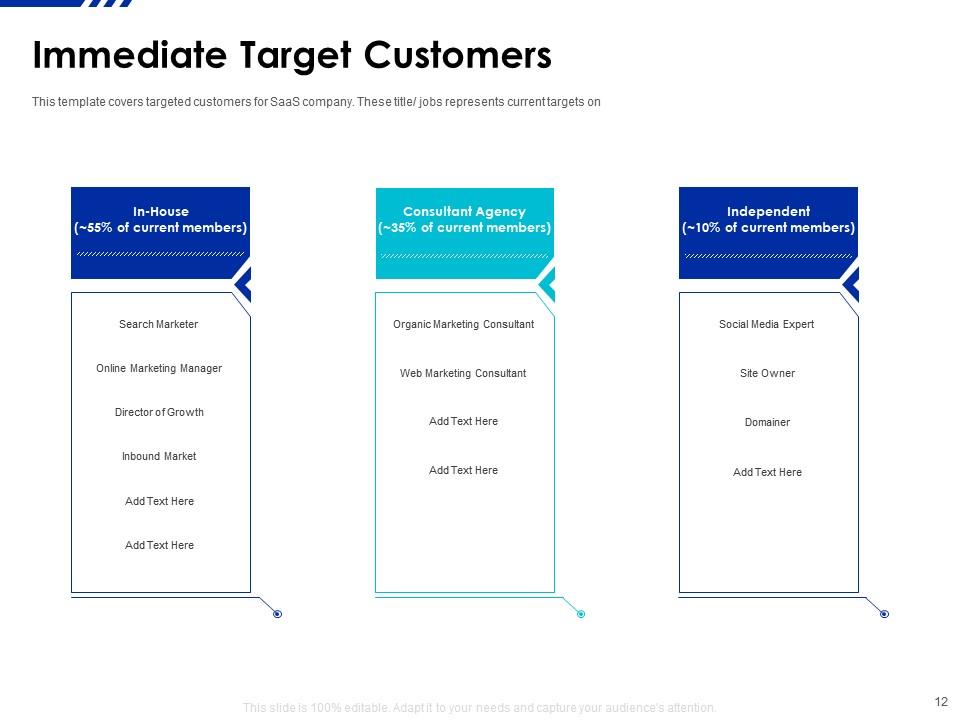
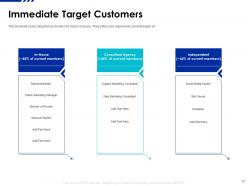
Slide 12: This template covers targeted customers for SaaS company.
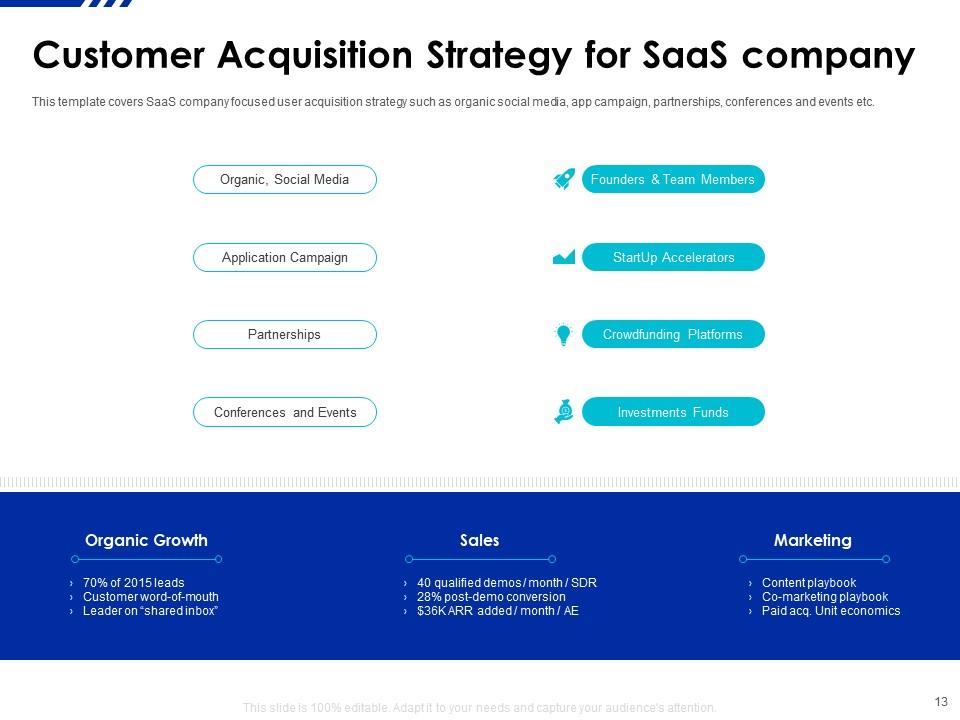
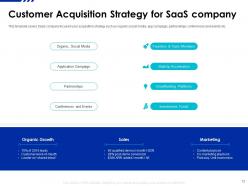
Slide 13: This slide shows Customer Acquisition Strategy for SaaS company.
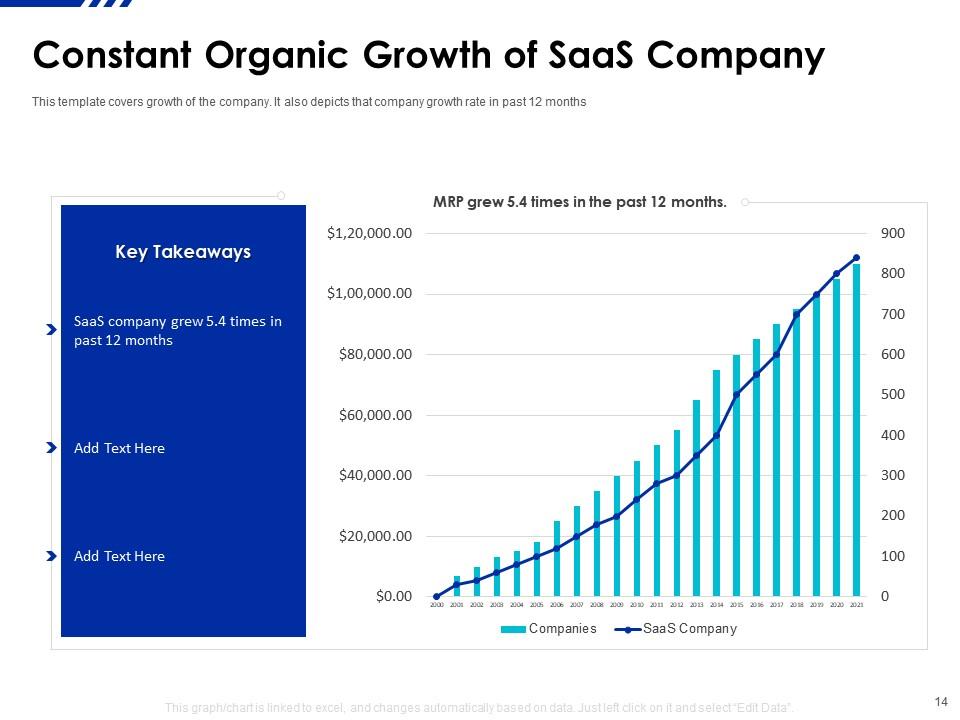
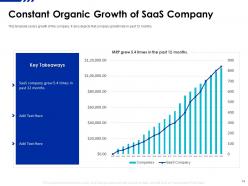
Slide 14: This slide displays Constant Organic Growth of SaaS Company.
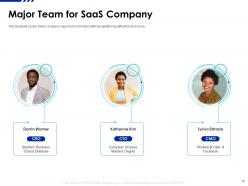
Slide 15: This template covers SaaS company major team members with designation qualification and name.
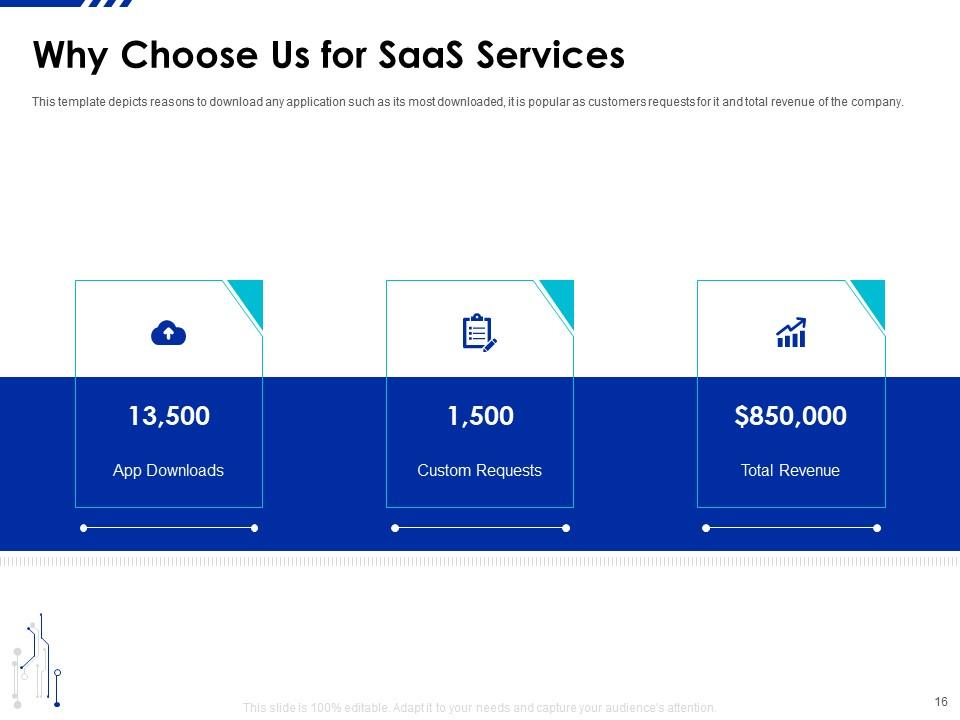
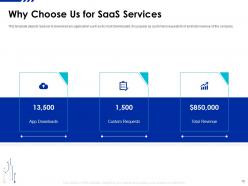
Slide 16: This template depicts reasons to download any application.
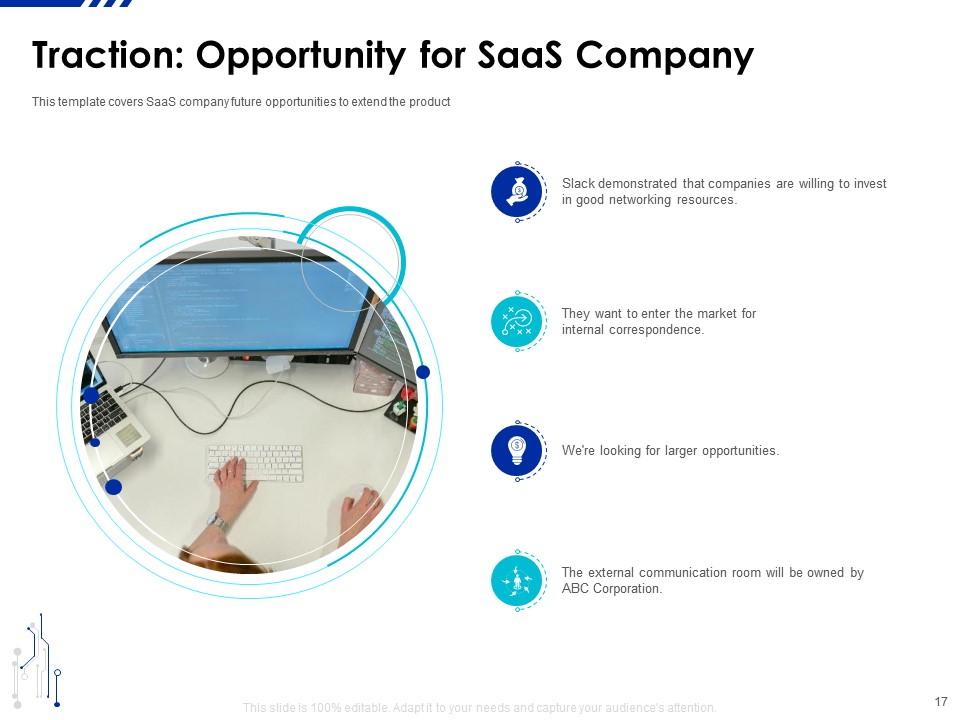
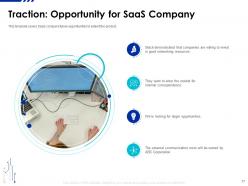
Slide 17: This template presents SaaS company future opportunities to extend the product
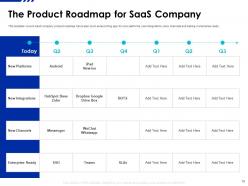
Slide 18: This slide shows The Product Roadmap for SaaS Company.
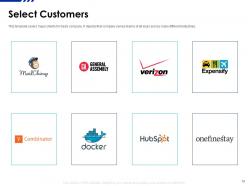
Slide 19: This template covers major clients for SaaS company.
Slide 20: This slide shows Icons for SaaS Funding Elevator Pitch Deck.
Slide 21: This slide is titled as Additional Slides for moving forward.
Slide 22: This is Our Team slide with names and designation.
Slide 23: This slide shows Roadmap with text boxes.
Slide 24: This slide displays 30 60 90 Days Plan with text boxes.
Slide 25: This slide shows Post It Notes. Post your important notes here.
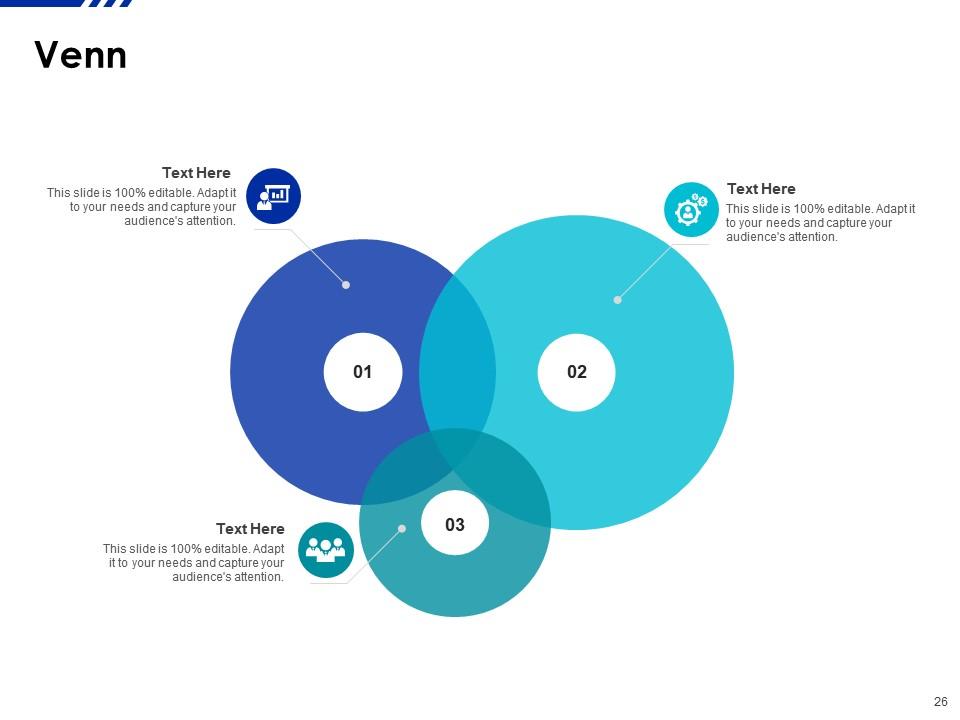
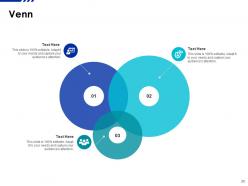
Slide 26: This slide represents Venn diagram with text boxes.
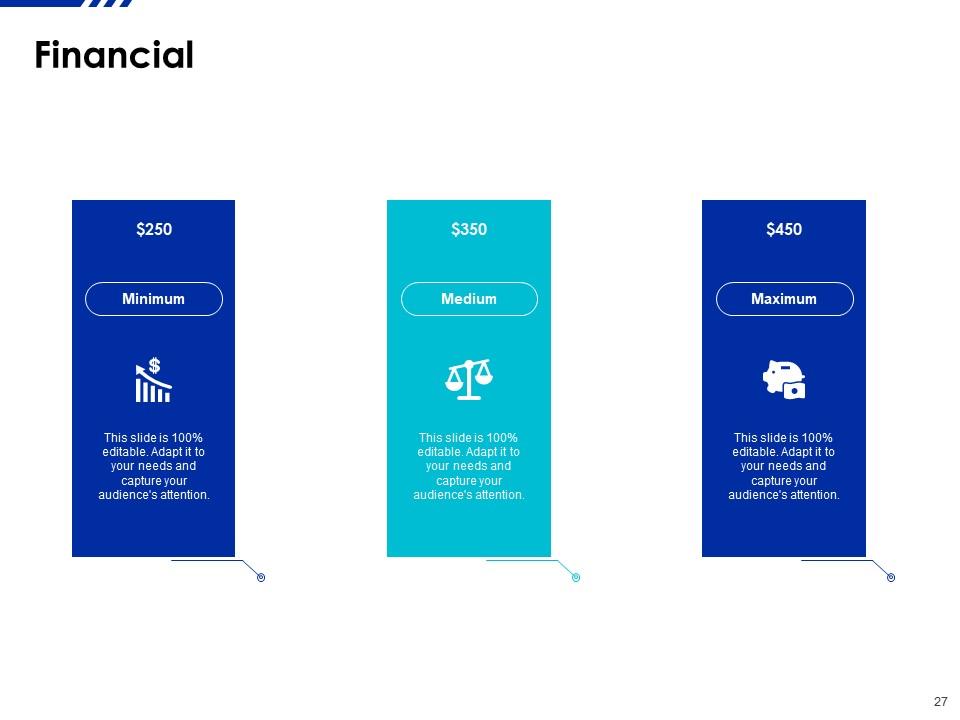
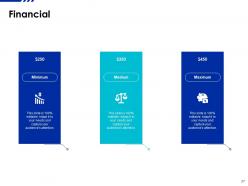
Slide 27: This is a Financial slide. Show your finance related stuff here.
Slide 28: This is Our Goal slide. State your firm's goals here.
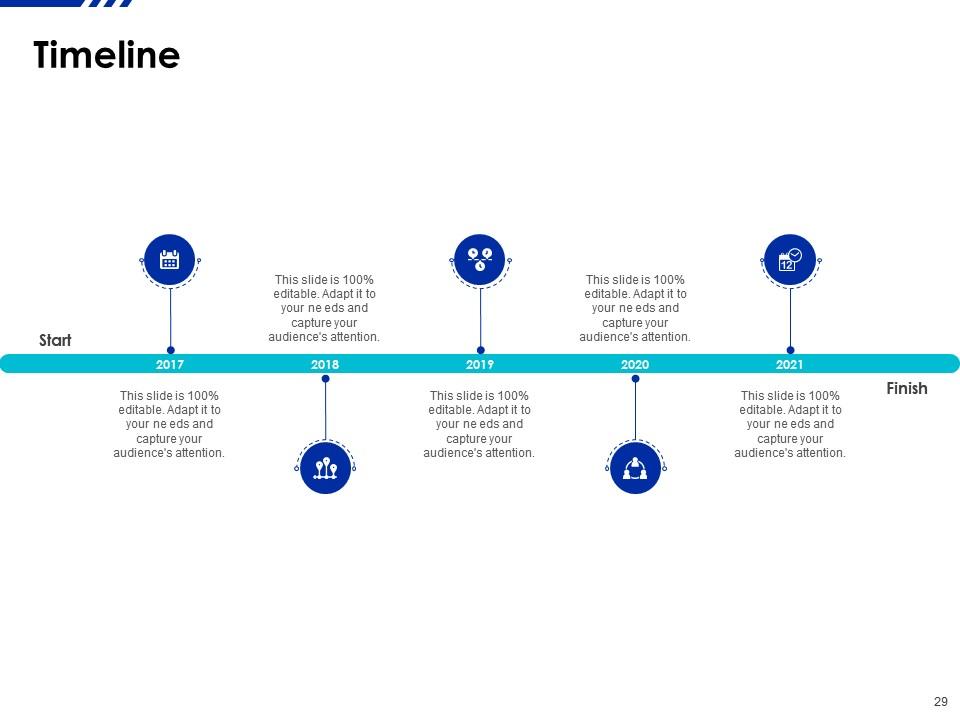
Slide 29: This is a Timeline slide. Show data related to time intervals here.
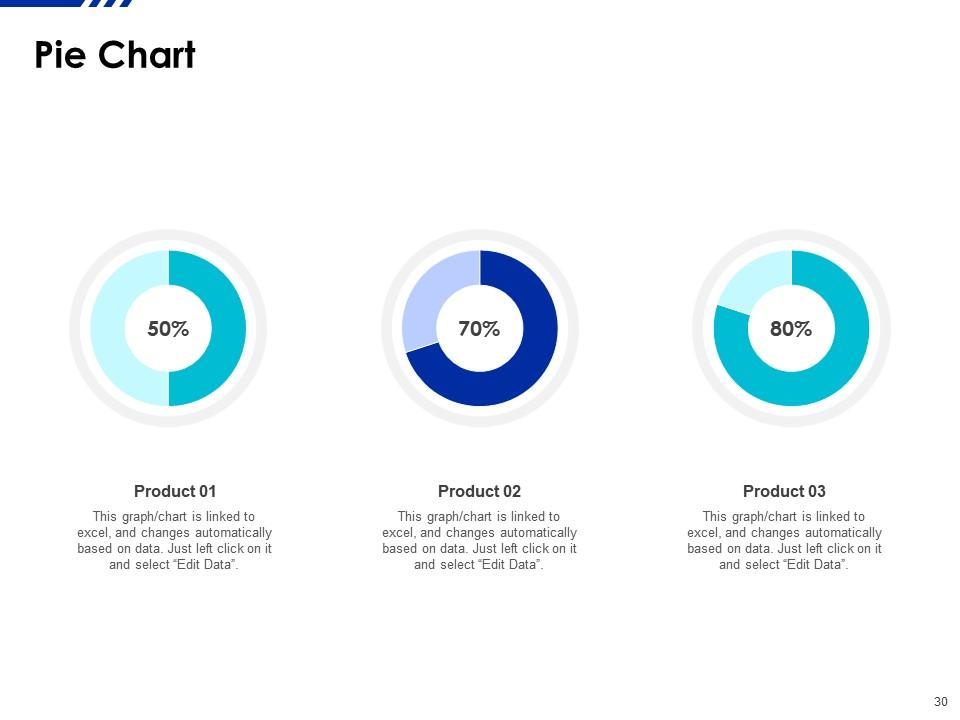
Slide 30: This slide shows Pie Chart with three products comparison.
Slide 31: This slide shows Puzzle with related icons and text.
Slide 32: This is a Thank You slide with address, contact numbers and email address.
Saas funding elevator pitch deck ppt template with all 32 slides:
Use our SaaS Funding Elevator Pitch Deck Ppt Template to effectively help you save your valuable time. They are readymade to fit into any presentation structure.
FAQs for Saas funding elevator pitch
Honestly, investors care most about your recurring revenue growth and whether customers actually stick around. Low churn is everything. They'll want to see your MRR/ARR numbers and that your customer acquisition costs make sense compared to lifetime value. Product-market fit is obvious but critical - you need real proof people will keep paying for this thing. Your team's ability to execute matters just as much as the metrics, maybe more. Get those fundamentals dialed in first. Oh and they hate fancy dashboards - show them clear growth trends instead.
Dude, you gotta nail your numbers first. MRR growth, net revenue retention (shoot for 110%+), and show your customer acquisition costs aren't spiraling. That hockey stick graph looks sexy, but honestly? Steady 15-20% monthly growth usually impresses investors more than crazy spikes. Churn rate is everything though - if you're keeping customers AND they're spending more over time, that's pure gold. Throw together a decent pitch deck with cohort breakdowns and some realistic projections. Oh, and your unit economics better be rock solid because they'll definitely dig into those. Practice explaining them without stumbling around.
MRR growth, churn rate, and your CAC to LTV ratio - those are the holy trinity investors care about. Get your CAC payback under 12 months if you can. LTV needs to be at least 3x your CAC, though honestly some VCs are pickier than that now. Don't forget gross revenue retention and net dollar retention either. Oh, and definitely prep explanations for any weird dips in your data beforehand - like actual reasons, not just "COVID happened" or whatever. Investors will grill you on the messy months way more than the good ones.
SaaS funding is totally different from regular businesses - you're not chasing one-time sales anymore. Investors go crazy for that predictable monthly revenue and lifetime value stuff. Your burn rate becomes way more manageable too since you're not starting from scratch every month hunting for customers. Honestly, being able to forecast revenue accurately is such a game changer when you're pitching for bigger rounds. Focus hard on MRR growth and churn rates - like, track those numbers obsessively before you even think about raising. It's wild how much easier the whole process becomes when you can show consistent growth patterns.
Dude, retention rates are huge for SaaS funding. Investors look at them to figure out if your product actually sticks - like, will people keep paying or bounce after a month? If you're hitting 90%+ annually, that's solid gold because it shows predictable revenue streams. Low retention though? Total nightmare. You're basically pouring water into a bucket with holes in it, doesn't matter how many customers you bring in the front door. Try to get your net revenue retention above 100% - that's when existing customers start spending more over time, which honestly makes investors lose their minds in a good way.
Look, investors will absolutely grill you on this - they need proof you can actually get customers and make money doing it. Map out exactly which channels you'll use, your pricing, sales process, all that stuff. Don't be vague here because I've watched great products tank just because the founder couldn't explain how they'd reach people. You need real data backing up your assumptions, even if it's just early customer interviews or whatever validation you can get. Show them the customer journey and your acquisition costs. Honestly, this is where a lot of pitches fall apart - sounds boring but it's make-or-break.
Your SaaS will hit the usual funding stages - pre-seed through Series C and beyond. But here's the thing: investors obsess over completely different numbers than other businesses. MRR growth matters way more than one-time revenue spikes. They'll dig deep into your churn rates and want to see solid LTV/CAC ratios (honestly, get ready to explain those metrics in your sleep). The upside? That recurring revenue model makes VCs drool since it's predictable cash flow. Downside is they'll nitpick every retention detail. Get your product-market fit dialed in first, then nail those SaaS KPIs before each round.
Yeah, so recurring revenue is basically what makes VCs go crazy for SaaS companies. They love predictable money coming in every month. Your MRR and ARR numbers? That's what they'll use to figure out your valuation - usually somewhere between 5x to 15x your ARR depending on how fast you're growing. Pretty nuts when you think about it. They'll dig deep into your growth rate, churn, and customer lifetime value. The magic combo is consistent MRR growth with low churn rates. Get those two things right and you'll see way better valuations when you're raising money.
Honestly, it's a mess. Legal stuff varies wildly between countries - securities laws, taxes, regulations, the whole nine yards. Most international investors don't get your local market either. They're clueless about your competition and how customers actually behave there. Currency swings make everything worse, and everyone values companies differently. The pizza analogy was spot on though - some concepts just don't translate. You'll need lawyers who actually know cross-border deals (not just any corporate lawyer). Also prepare to educate investors extensively about your market. Like, really spell it out for them.
Focus on the metrics that actually matter - cohort retention, net revenue retention, and LTV trends. VCs eat this stuff up. But don't just throw spreadsheets at them (trust me on this one). Pick specific customer wins that show real traction, like how one client went from 10 to 500 seats in 18 months. That's the kind of story that gets investors excited. Build a clean dashboard showing your unit economics and growth trajectory. Honestly, if you can prove your revenue is predictable and growing, you'll have them hooked. Connect those data points to future potential - that's where the magic happens.
VCs are absolutely obsessed with SaaS right now - they're throwing money at anything with recurring revenue because the math just works so well. Most of them specialize too, like some only do fintech while others focus on healthcare tools. Competition's fierce which is great for you if your numbers look good. Get your unit economics figured out first though - that LTV/CAC ratio thing is what they'll drill you on immediately. Oh and they're way more picky about growth efficiency than they used to be, probably because of all the overfunding drama from a couple years back. Series A through late-stage, they're everywhere.
Bootstrapping can definitely help you later - investors actually dig seeing that you've proven demand and built stuff efficiently on your own dime. You'll probably get better valuations too since you're not desperate for cash. The catch is you might grow slower than competitors who raised early and could miss timing windows. Though honestly, I've noticed bootstrapped SaaS companies usually have way healthier numbers when they finally do raise. My take? Keep bootstrapping as long as you can hit decent growth targets. Then raise when you've got solid strategies that just need more fuel to scale up.
Yeah, angels are still doing SaaS deals but they're being super picky now. Gone are the days of getting funded just on a decent pitch deck - they want to see actual numbers upfront. Your ARR, churn rates, that whole CAC/LTV thing. Unit economics matter way more than they used to. Growth-at-all-costs is basically dead (which honestly, good riddance). Before you even think about reaching out, you better have real traction to show. Like, sustainable stuff that proves you're not just burning cash for vanity metrics. The bar's definitely higher than it was a couple years ago.
Here's the deal - equity for big growth stuff, debt for the predictable boring expenses. Honestly, I'd go with equity first if you need flexibility and don't care about giving up a slice of control. Perfect for hiring or product development. Debt's better for equipment purchases or when cash flow gets tight (and hey, tax deductible interest). Wait until your revenue's steady enough to handle monthly payments before taking on debt though. Oh, and try keeping those debt payments under 20% of your monthly recurring revenue - learned that one the hard way.
AngelList is your go-to here - it's literally built for connecting startups with investors. Gust is solid too, lots of VCs browse there for deals. FounderSuite and Visible are newer but they've got more tools beyond just matching. LinkedIn actually works better than you'd think if you're strategic about it. Here's the thing though - don't go crazy trying every platform out there. Pick maybe 2-3 max and actually put effort into your profiles. I'd start with AngelList, get that dialed in first, then expand from there.
-
Colors used are bright and distinctive.