

Safety Guidelines For Handling Power Tools Safety Operations And Procedures





Try Before you Buy Download Free Sample Product
 Impress Your
Audience
 100%
Editable
 Save Hours
of Time


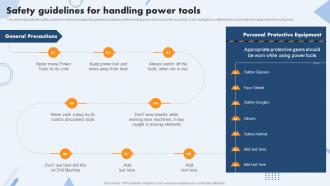
This slide highlights the safety guidelines which showcases the general precautions while handling power tools to prevent accidents. It also highlights on different personal protective equipment while using tools.
People who downloaded this PowerPoint presentation also viewed the following :
Safety Guidelines For Handling Power Tools Safety Operations And Procedures with all 6 slides:
Use our Safety Guidelines For Handling Power Tools Safety Operations And Procedures to effectively help you save your valuable time. They are readymade to fit into any presentation structure.





FAQs for Safety Guidelines For Handling Power Tools Safety
Essential personal protective equipment (PPE) when using power tools includes safety glasses, hearing protection, gloves, and appropriate footwear, with respirators often needed for dust-heavy tasks. These safeguards minimize risks across manufacturing, construction, and woodworking, streamlining operations by preventing injuries and ensuring compliance. Ultimately delivering a safer work environment and reduced operational costs, with many organizations finding that proactive PPE use significantly enhances employee wellbeing and productivity.
Proper maintenance of power tools prevents accidents by ensuring optimal functionality, consistent performance, and extended tool life through regular inspections, cleaning, and lubrication. While diligent upkeep requires time and resources, it also minimizes malfunctions, reduces risks in manufacturing, construction, and healthcare, ultimately delivering a safer work environment and reduced operational costs.
Power tool hazards vary significantly, encompassing electrical shocks from improperly grounded saws, lacerations from circular saw blades, and projectile injuries from nail guns and grinders. These tools present both challenges and opportunities, requiring diligent adherence to safety protocols, with many construction and manufacturing firms finding that comprehensive training minimizes incidents. Ultimately delivering enhanced worker protection and reduced operational downtime, streamlined safety practices enable a more productive and secure work environment.
Power tool storage should involve a dry, locked location, separated by type, with guarding to prevent accidental activation, and clear labeling for quick identification. While secure storage minimizes theft and damage, it also prevents unauthorized use by untrained personnel, especially crucial in construction and manufacturing. These practices enhance workplace safety, ultimately delivering reduced incidents and improved operational efficiency with many institutions finding that consistent protocols streamline safety compliance.
Modern power tools incorporate features like blade guards, safety switches, and overload protection, alongside ergonomic designs for enhanced control. These technologies streamline operations by minimizing risks during use, enhancing operator safety, and facilitating quicker job completion, with many manufacturing and construction firms finding that proactive safety measures deliver significant cost reductions and improved project timelines.
Power tool noise management involves hearing protection, tool selection, and workspace design, presenting both challenges and opportunities. While earmuffs and earplugs significantly reduce decibel levels, it also requires regular fit checks and proper maintenance for optimal effectiveness. Manufacturing facilities, construction sites, and woodworking shops increasingly utilize noise-dampening materials and enclosures, ultimately delivering enhanced worker safety and reduced compliance risks.
Training plays a crucial role in power tool safety, encompassing proper usage, hazard identification, and emergency procedures, while also covering personal protective equipment selection and maintenance schedules. These programs enhance operational efficiency across manufacturing, construction, and healthcare, with many institutions finding that comprehensive training significantly minimizes workplace accidents and associated costs, ultimately delivering a safer work environment and increased productivity.
Electrical hazards with power tools can be identified through frayed cords, damaged insulation, and working in damp environments, necessitating diligent pre-use inspections. Implementing Ground Fault Circuit Interrupters (GFCIs) helps minimize shock risks, while proper grounding and avoiding contact with water streamlines safe operation across construction, manufacturing, and maintenance. Ultimately delivering enhanced worker safety and reduced downtime with many organizations finding that proactive hazard mitigation significantly lowers incident rates.
Using power tools in confined spaces requires meticulous planning, including comprehensive hazard assessments, proper ventilation, and continuous air monitoring for combustible gases. These precautions streamline workflows by preventing accidents, enhancing worker safety, and ensuring regulatory compliance, with many construction and manufacturing firms finding that proactive safety measures minimize downtime and liability. Ultimately delivering a safer work environment and increased operational efficiency, adherence to these guidelines enables projects to proceed seamlessly and strategically.
Outdoor power tool use requires diligent safety measures, including wearing personal protective equipment like eye and face shields, hearing protection, and sturdy gloves. These tools, when operated correctly, enhance landscaping, construction, and property maintenance, but present both challenges and opportunities regarding environmental factors and potential hazards. With many contractors finding that consistent pre-use inspections and secure footing ultimately deliver minimized risk and increased operational efficiency.
Proper ventilation when using fume-producing power tools involves utilizing local exhaust systems, opening windows, and employing respirators, ensuring airborne contaminants are minimized. While natural ventilation helps, dedicated systems are crucial in environments like manufacturing plants and construction sites, with many professionals finding that consistent air exchange enhances worker safety and minimizes long-term health risks, ultimately delivering a healthier workspace and improved operational efficiency.
Power tool malfunctions require immediate shutdown, disconnection from power, and thorough inspection for damage, alongside reporting the issue to a qualified technician. While ensuring operator safety is paramount, it also necessitates understanding potential causes—like worn parts or electrical faults—across manufacturing and construction. These steps streamline maintenance, prevent further incidents, ultimately delivering enhanced workplace safety and minimized downtime with many facilities finding that proactive repair schedules significantly reduce operational risks.
Reading the manufacturer’s manual before power tool use is critically important, detailing safe operation, potential hazards, and proper maintenance procedures for optimal performance. While seemingly tedious, it also ensures users understand specific safety features, like blade guards or emergency stops, with many organizations finding that adherence minimizes workplace accidents and liability.
Using power tools without appropriate supervision presents both challenges and opportunities for workplace safety, potentially leading to accidents, injuries, and decreased productivity. While offering speed and efficiency, it also introduces risks like improper usage, equipment malfunction, and a lack of adherence to safety protocols. With many manufacturing and construction firms finding that consistent oversight enhances operational efficiency, proper training and monitoring ultimately deliver a safer environment and reduced liability.
Power tool sharing requires diligent inspection before each use, comprehensive training for all operators, and a robust system for tracking maintenance and repairs. While convenient, it also necessitates clear accountability protocols, ensuring each user understands proper operation and safety features. These practices streamline workflow by minimizing downtime, enhance operational efficiency, and ultimately deliver a safer, more productive workshop environment with many institutions finding that consistent enforcement minimizes accidents and extends tool lifespan.
-
This design is not only aesthetically pleasing but it has many uses making the cost worthwhile. The graphics look stunning, and you can edit them as per your needs.
-
They helped us design the pamphlets for our church’s food drive! The people loved the design, and I’m happy to say it was successful. Thank you, SlideTeam!