


Sales CRM Cloud Implementation Powerpoint Presentation Slides
CRM Implementation is the procedure of deploying and installing a Customer Relationship Management Tool to streamline the process and improve the overall organizational performance. Check out our professionally designed presentation on Sales CRM Cloud implementation. The key objective of introducing this module is to track leads and evaluate customer interactions efficiently. The module also discusses the need for CRM in an organization, showcasing the efficiency indicators and features like marketing automation, data security, remote work, and order fulfillment. The given module incorporates a comparison chart and identifies the best CRM in the current market scenario. The critical components of the implementation strategy include setting up an account, adding roles, and enabling security. Other such elements are process automation, data transmission, and CRM deployment. After implementation, there is always a need for CRM optimization. This module includes challenges faced while installing CRM and its mitigation strategies and a training program for employees to acquaint them with CRM usability. At last, CRM future development projections help the organization track and monitor the overall business process. Get access now.

































-

- Google Slides is a new FREE Presentation software from Google.
- All our content is 100% compatible with Google Slides.
- Just download our designs, and upload them to Google Slides and they will work automatically.
- Amaze your audience with SlideTeam and Google Slides.
-

Want Changes to This PPT Slide? Check out our Presentation Design Services
-

- WideScreen Aspect ratio is becoming a very popular format. When you download this product, the downloaded ZIP will contain this product in both standard and widescreen format.
-

- Some older products that we have may only be in standard format, but they can easily be converted to widescreen.
- To do this, please open the SlideTeam product in Powerpoint, and go to
- Design ( On the top bar) -> Page Setup -> and select "On-screen Show (16:9)” in the drop down for "Slides Sized for".
- The slide or theme will change to widescreen, and all graphics will adjust automatically. You can similarly convert our content to any other desired screen aspect ratio.
Compatible With Google Slides

Get This In WideScreen
You must be logged in to download this presentation.


Do you want to remove this product from your favourites?
PowerPoint presentation slides
Deliver this complete deck to your team members and other collaborators. Encompassed with stylized slides presenting various concepts, this Sales CRM Cloud Implementation Powerpoint Presentation Slides is the best tool you can utilize. Personalize its content and graphics to make it unique and thought-provoking. All the sixty one slides are editable and modifiable, so feel free to adjust them to your business setting. The font, color, and other components also come in an editable format making this PPT design the best choice for your next presentation. So, download now.

People who downloaded this PowerPoint presentation also viewed the following :
Content of this Powerpoint Presentation
Slide 1: This slide introduces Sales CRM Cloud Implementation. State Your Company Name and begin.
Slide 2: This is an Agenda slide. State your agendas here.
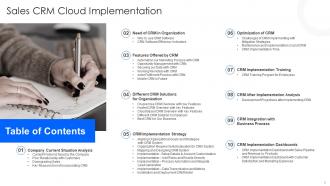
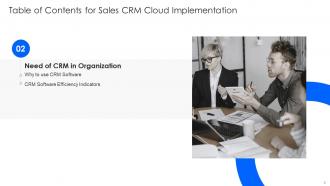
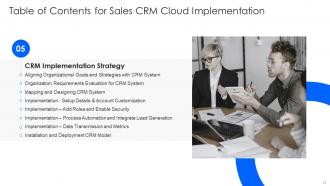
Slide 3: This slide presents Table of Content for the presentation.
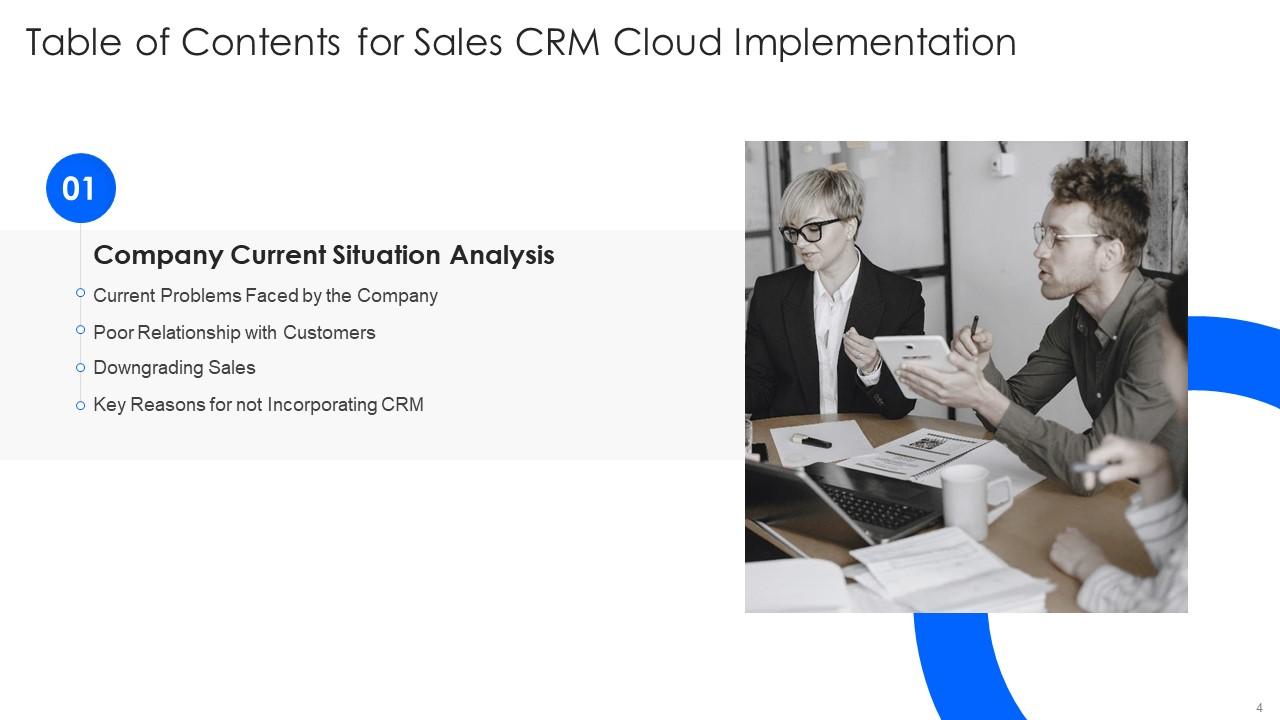
Slide 4: This slide highlights title for topics that are to be covered next in the template.
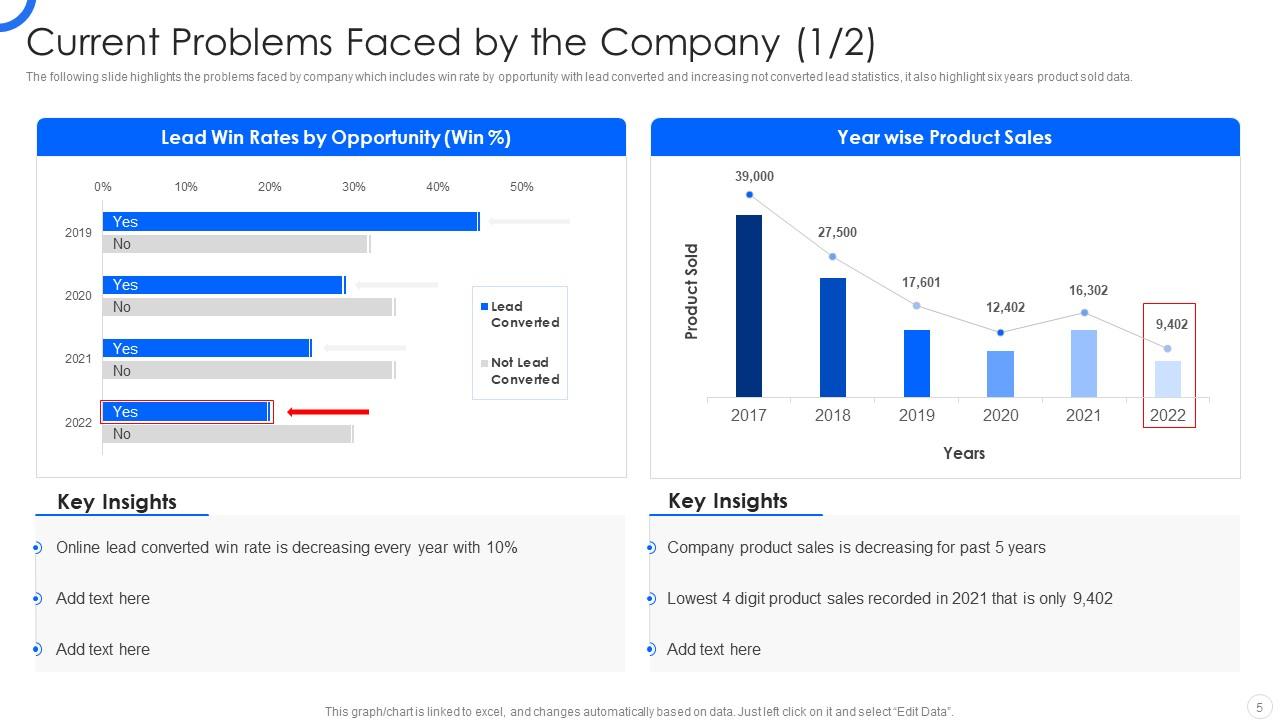
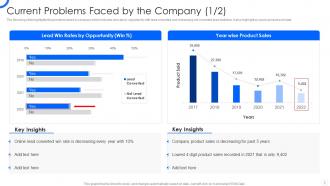
Slide 5: This slide presents Current Problems Faced by the Company.
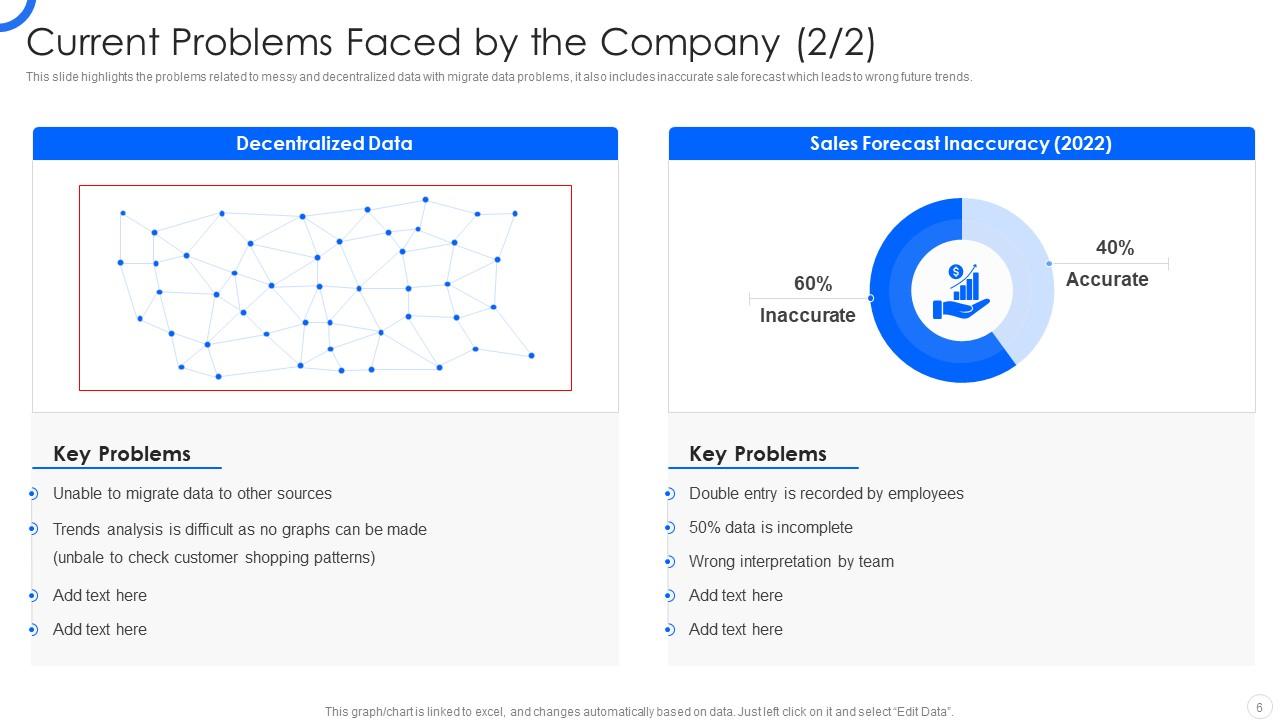
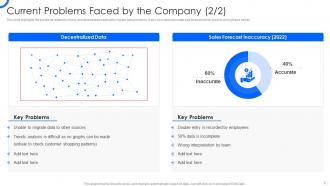
Slide 6: This is another slide continuing Current Problems Faced by the Company.
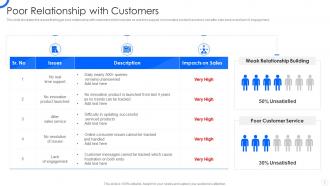
Slide 7: This slide illustrates the issues that trigger poor relationship with customers.
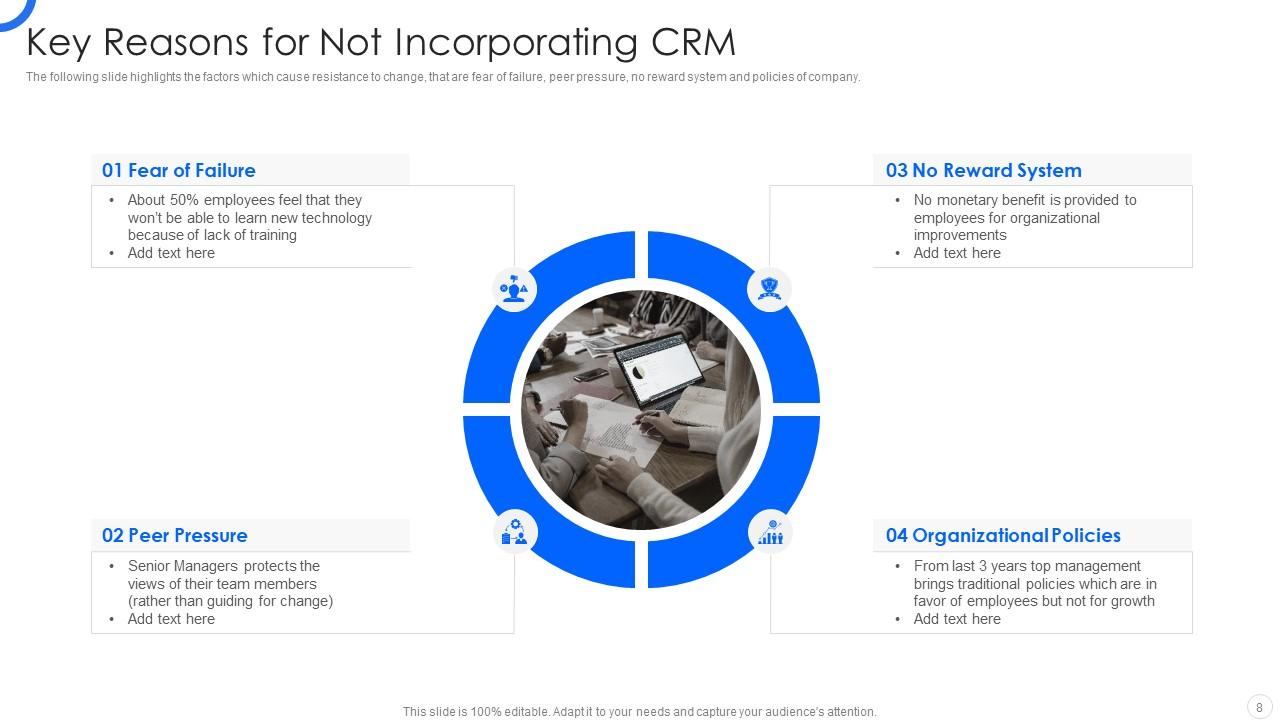
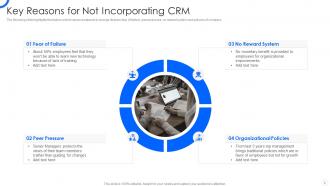
Slide 8: This slide displays Key Reasons for Not Incorporating CRM.
Slide 9: This slide highlights title for topics that are to be covered next in the template.
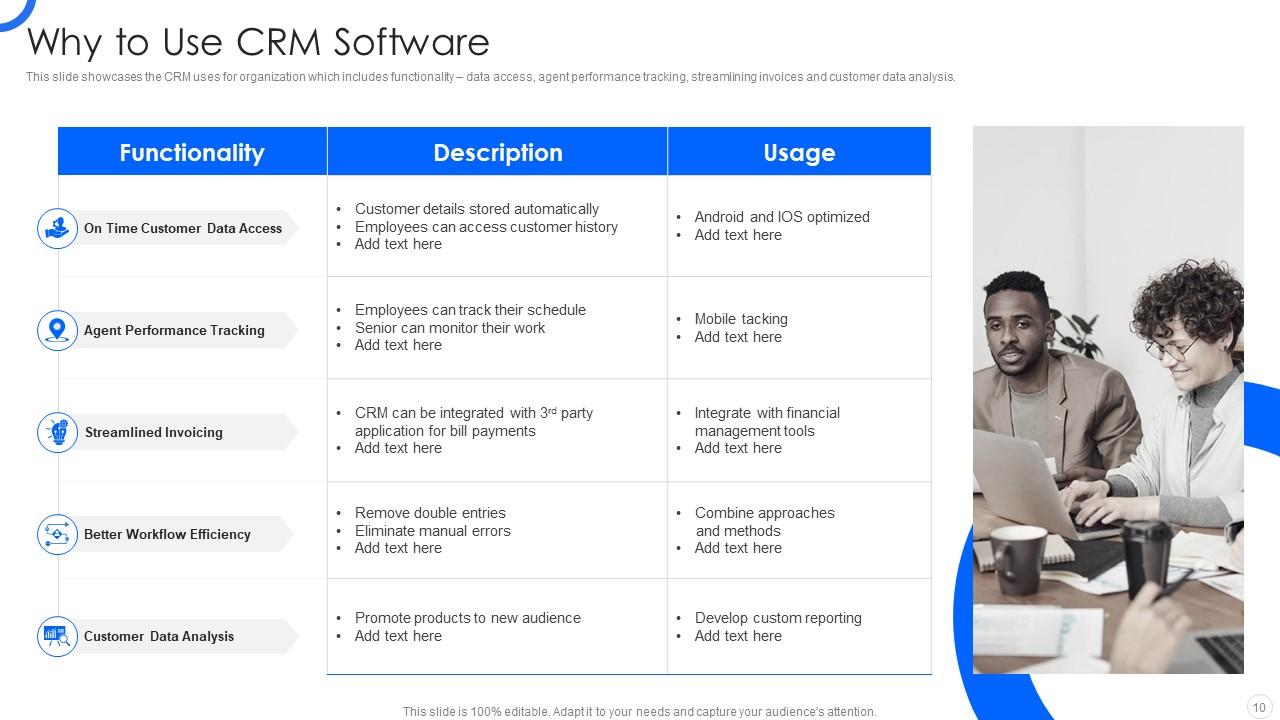
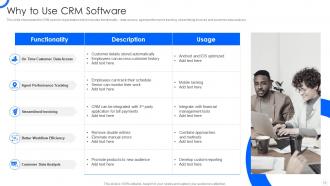
Slide 10: This slide showcases the CRM uses for organization which includes functionality data access, agent performance tracking, etc.
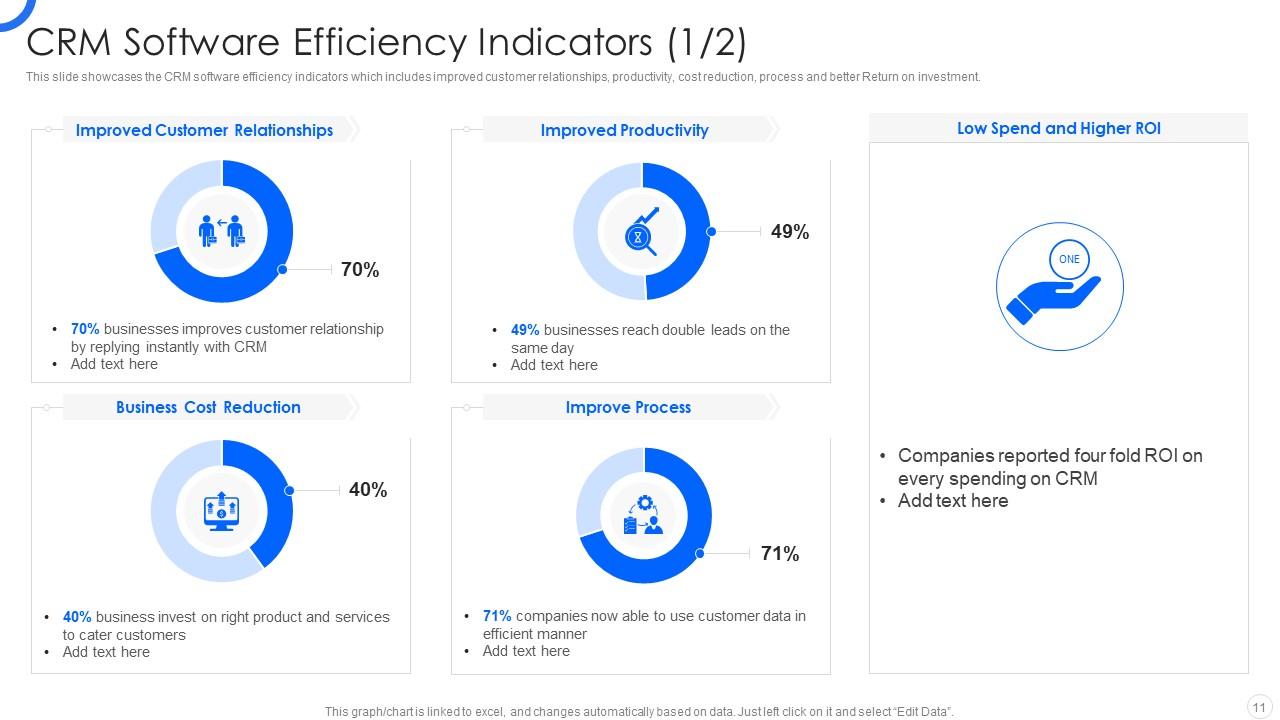
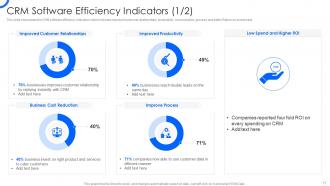
Slide 11: This slide showcases the CRM software efficiency indicators.
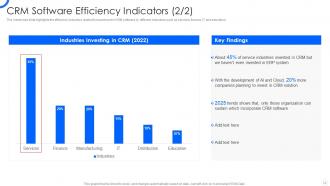
Slide 12: This is another slide continuing CRM Software Efficiency Indicators.
Slide 13: This slide highlights title for topics that are to be covered next in the template.
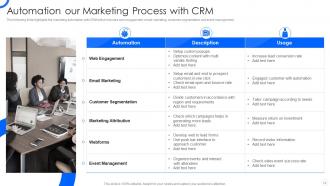
Slide 14: This slide represents Automation our Marketing Process with CRM.
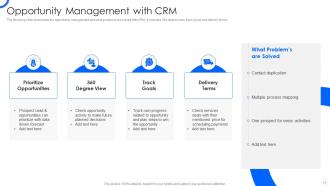
Slide 15: This slide displays opportunity management and what problems are solved with CRM.
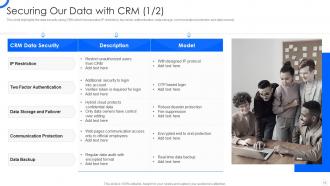
Slide 16: This slide highlights the data security using CRM which incorporates IP restriction.
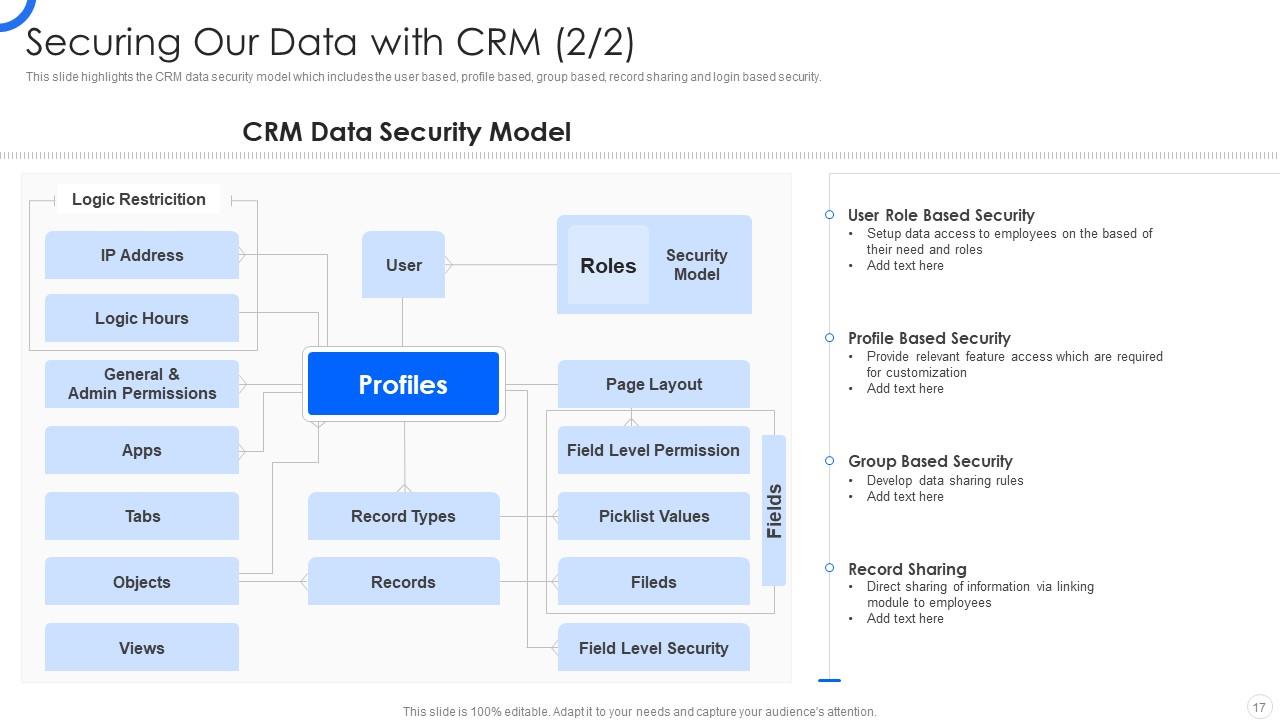
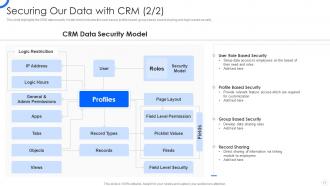
Slide 17: This slide showcases CRM data security model which includes the user based, record sharing and login based security.
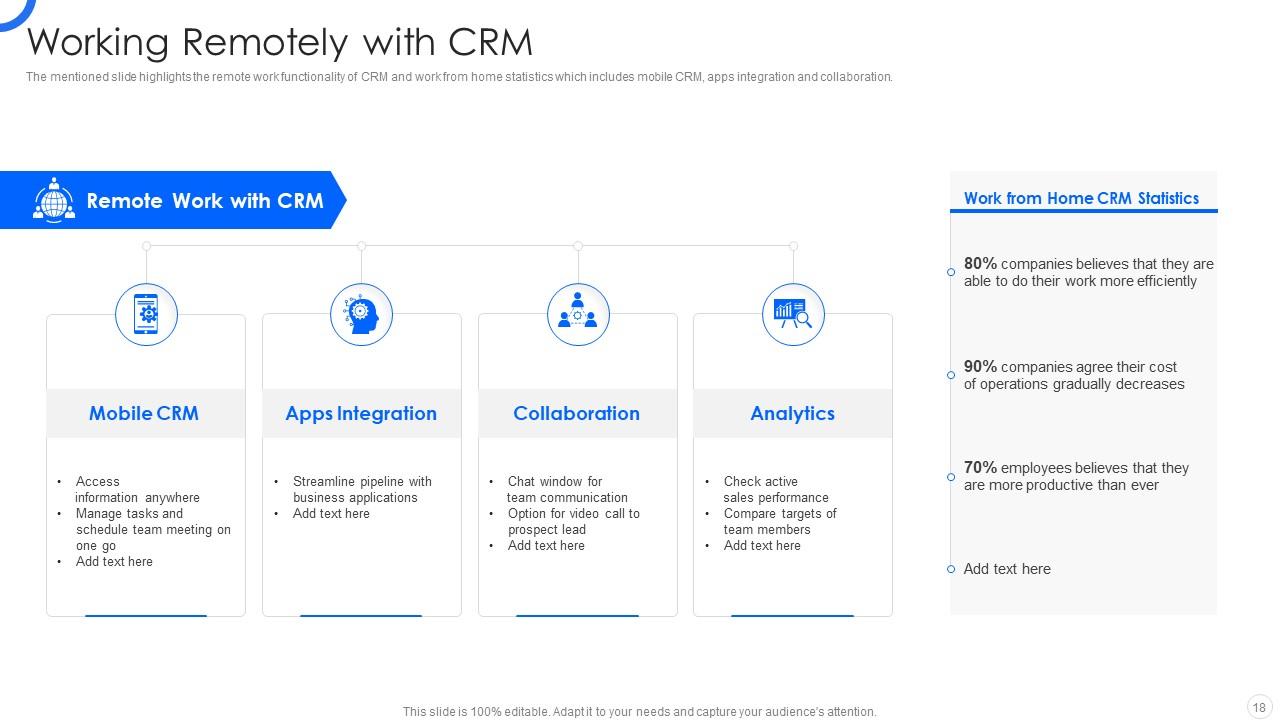
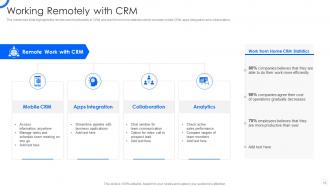
Slide 18: This slide shows remote work functionality of CRM and work from home statistics.
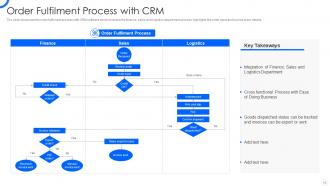
Slide 19: The slide showcase the order fulfilment process with CRM software.
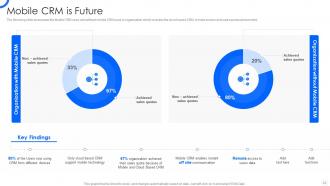
Slide 20: This slide presents Mobile CRM uses and without mobile CRM uses in organization.
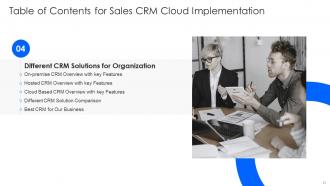
Slide 21: This slide highlights title for topics that are to be covered next in the template.
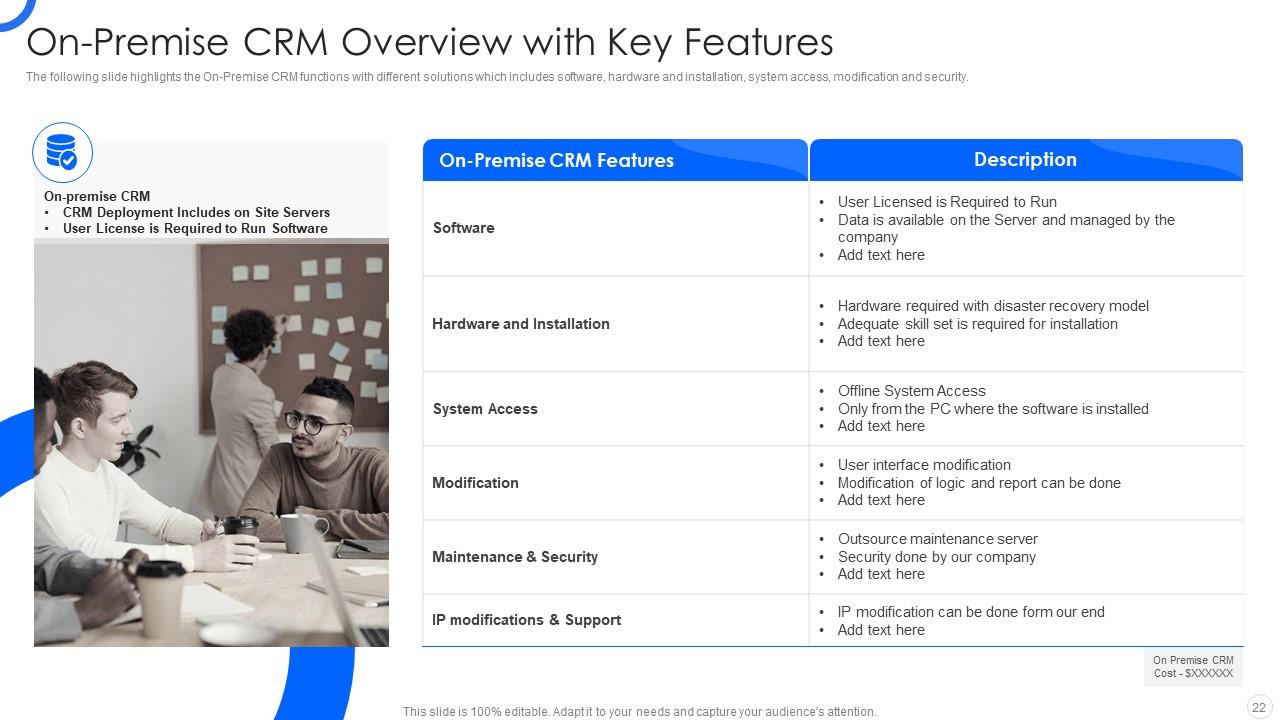
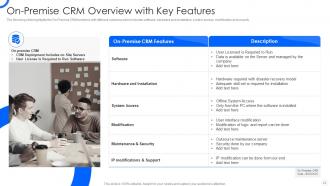
Slide 22: This slide represents On-Premise CRM Overview with Key Features.
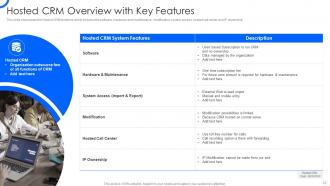
Slide 23: This slide showcases the Hosted CRM functions which includes the software, hardware and maintenance, modification, etc.
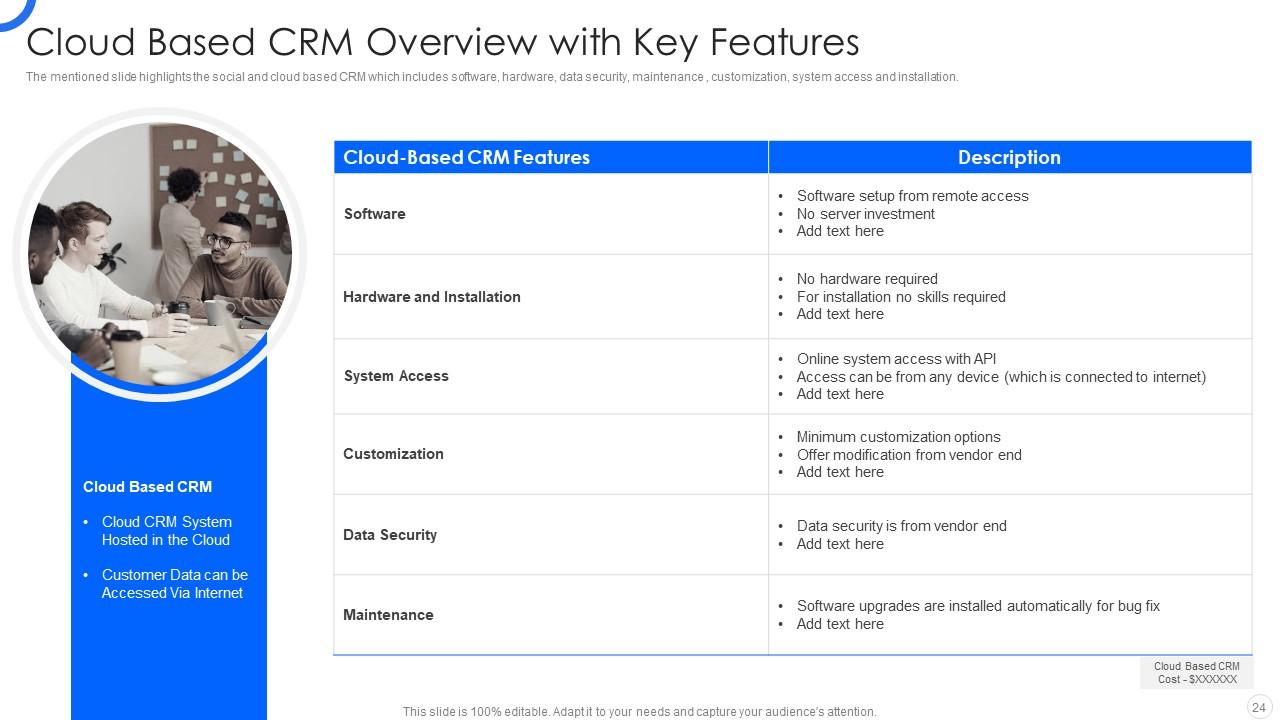
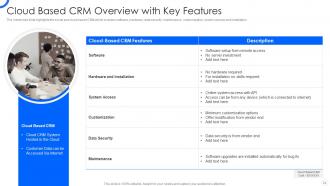
Slide 24: This slide shows Cloud Based CRM Overview with Key Features.
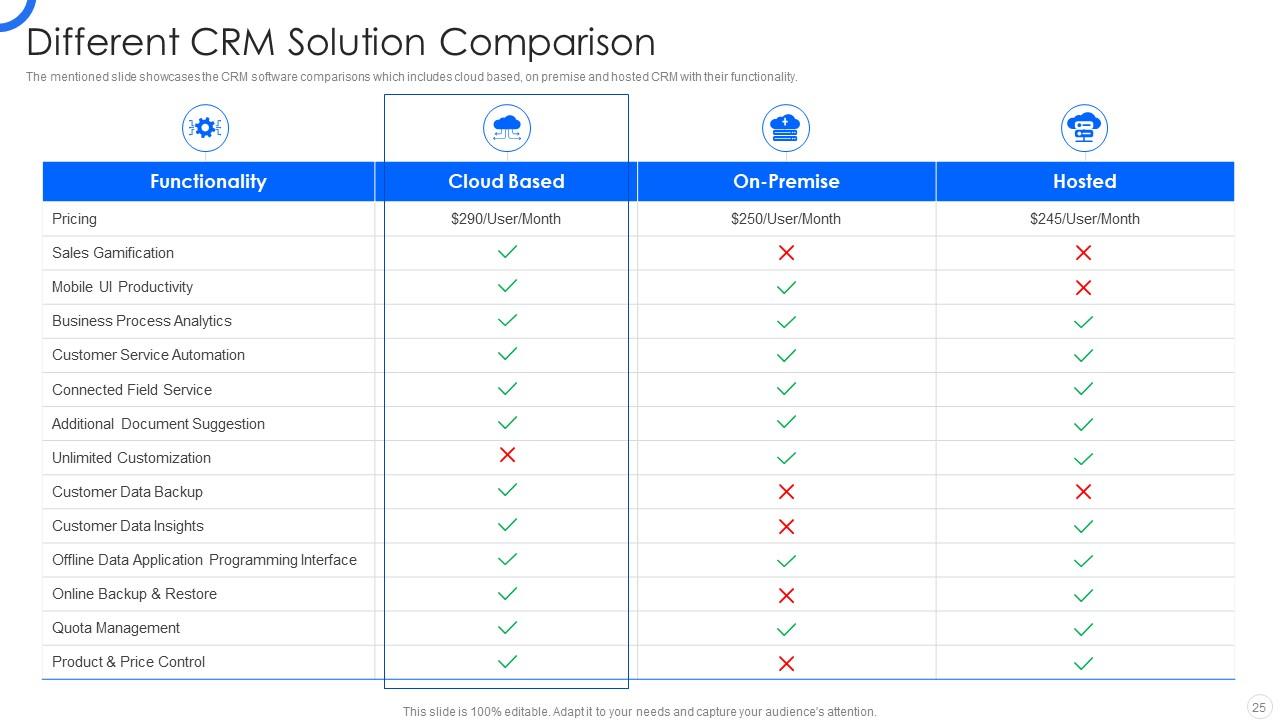
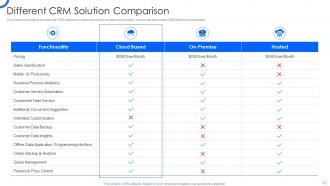
Slide 25: The mentioned slide showcases the CRM software comparisons.
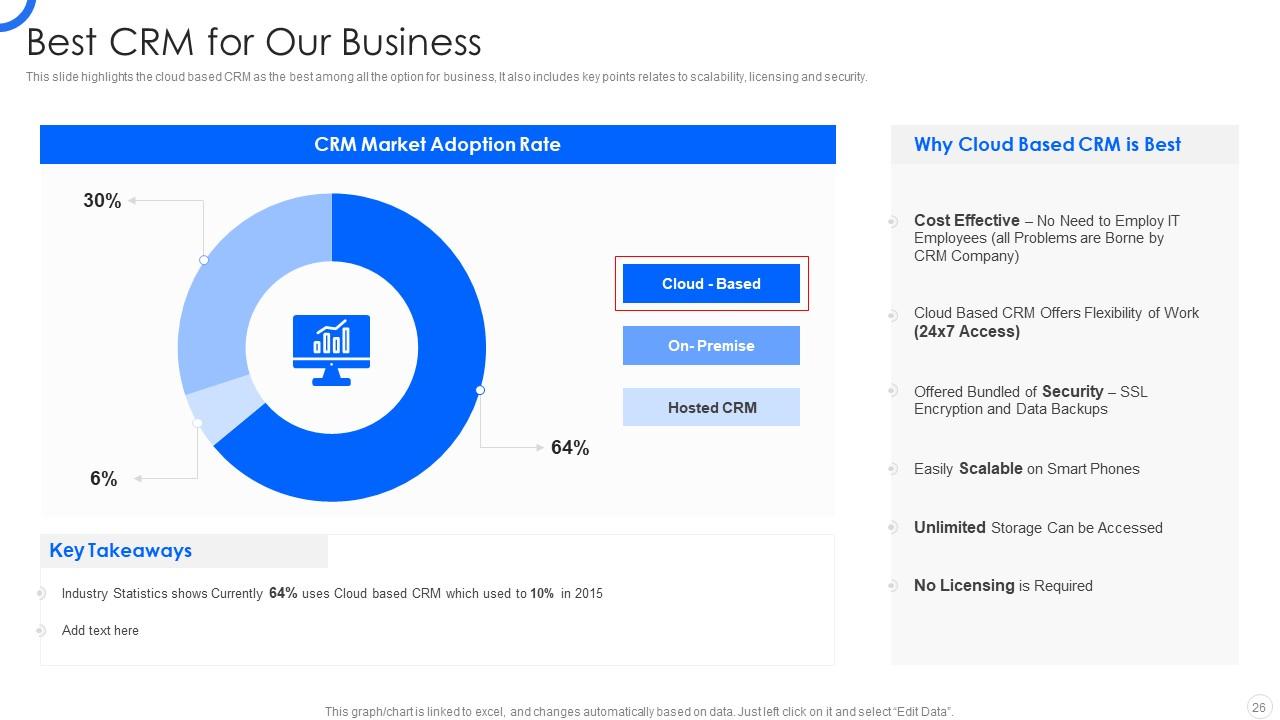
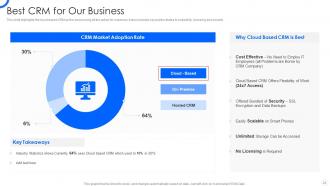
Slide 26: This slide highlights the cloud based CRM as the best among all the option for business.
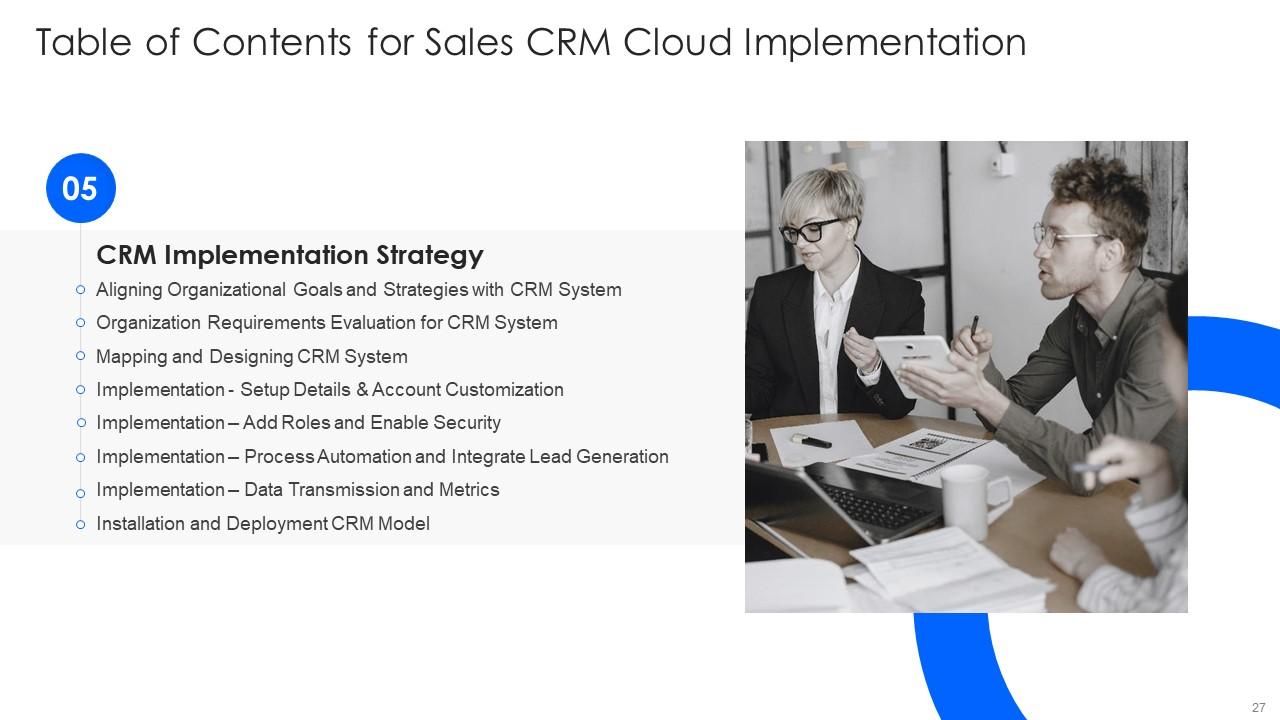
Slide 27: This slide highlights title for topics that are to be covered next in the template.
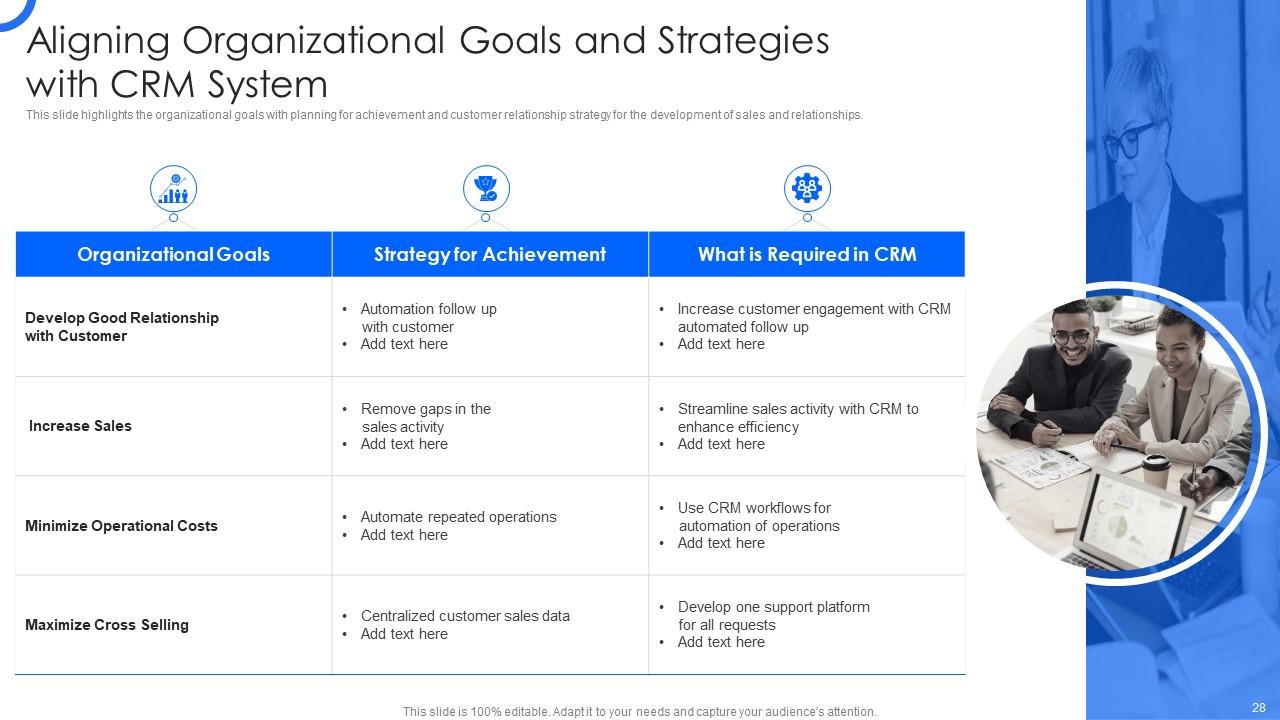
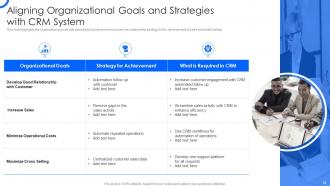
Slide 28: This slide shows Aligning Organizational Goals and Strategies with CRM System.
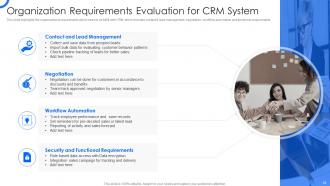
Slide 29: This slide presents Organization Requirements Evaluation for CRM System.
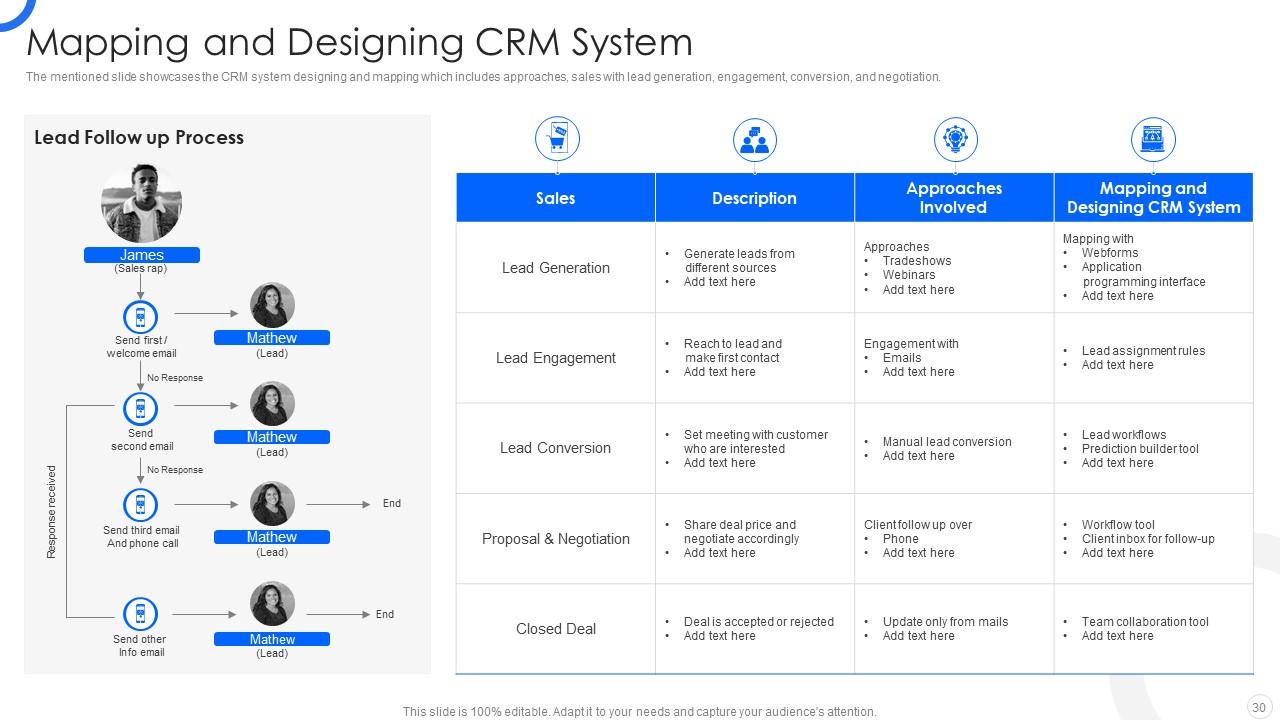
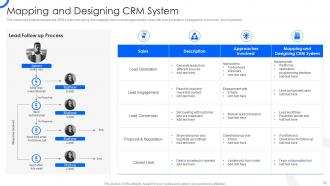
Slide 30: This slide displays Mapping and Designing CRM System.
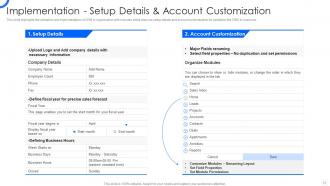
Slide 31: This slide represents Implementation Setup Details & Account Customization.
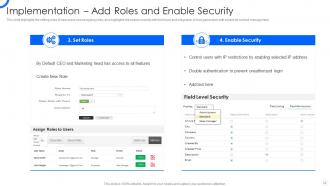
Slide 32: This slide showcases Implementation to Add Roles and Enable Security.
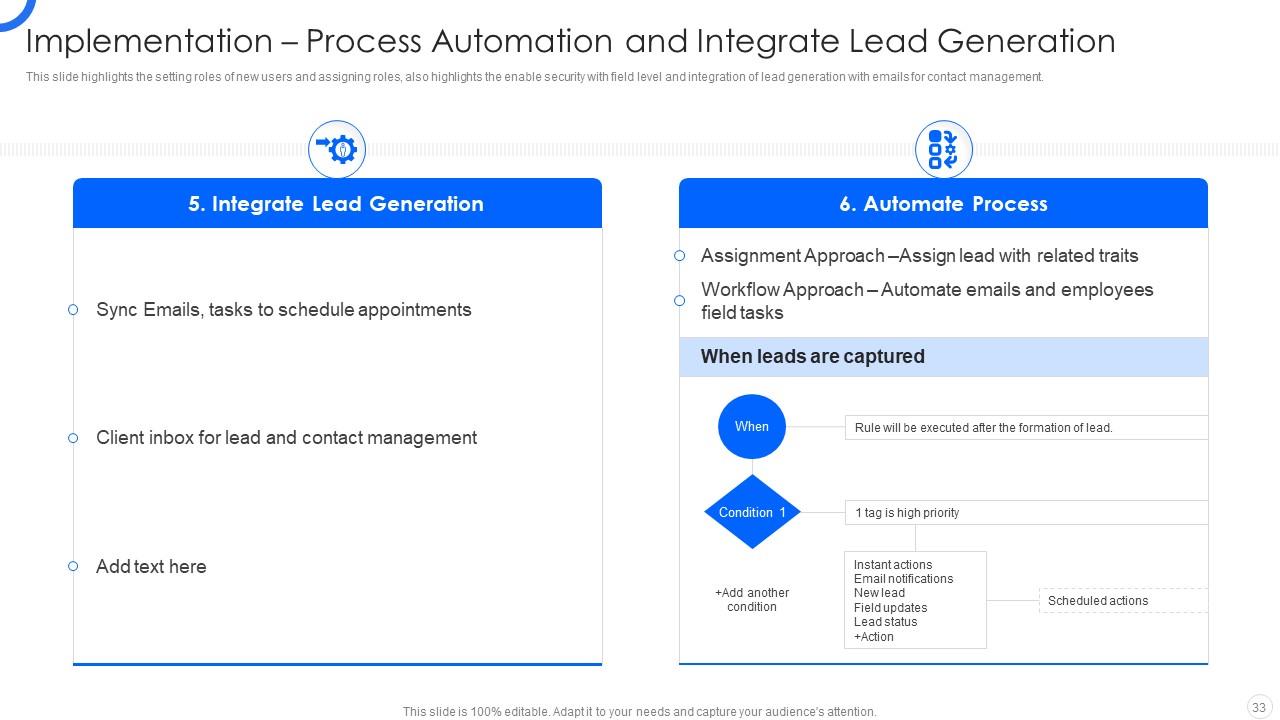
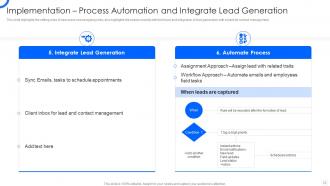
Slide 33: This slide shows Implementation for Process Automation and Integrate Lead Generation.
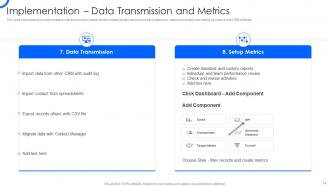
Slide 34: This slide presents Implementation with process automation.
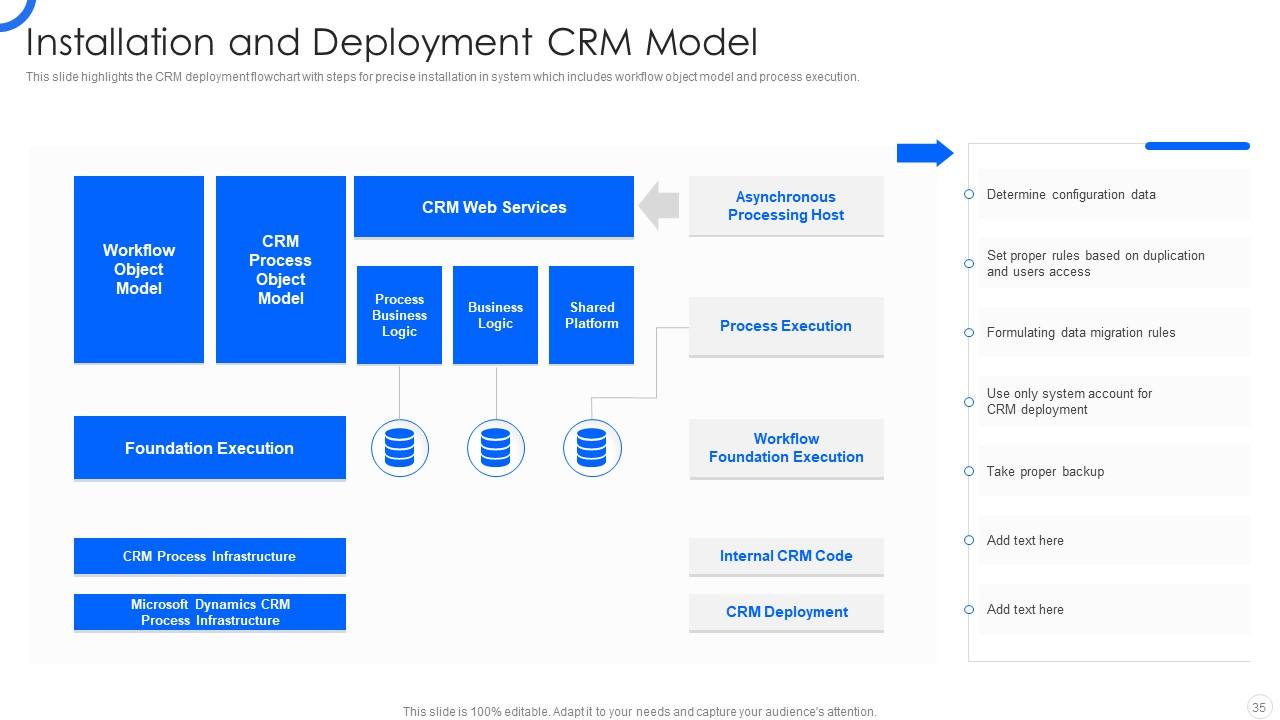
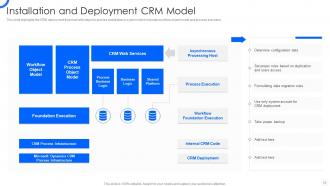
Slide 35: This slide displays CRM deployment flowchart with steps for precise installation.
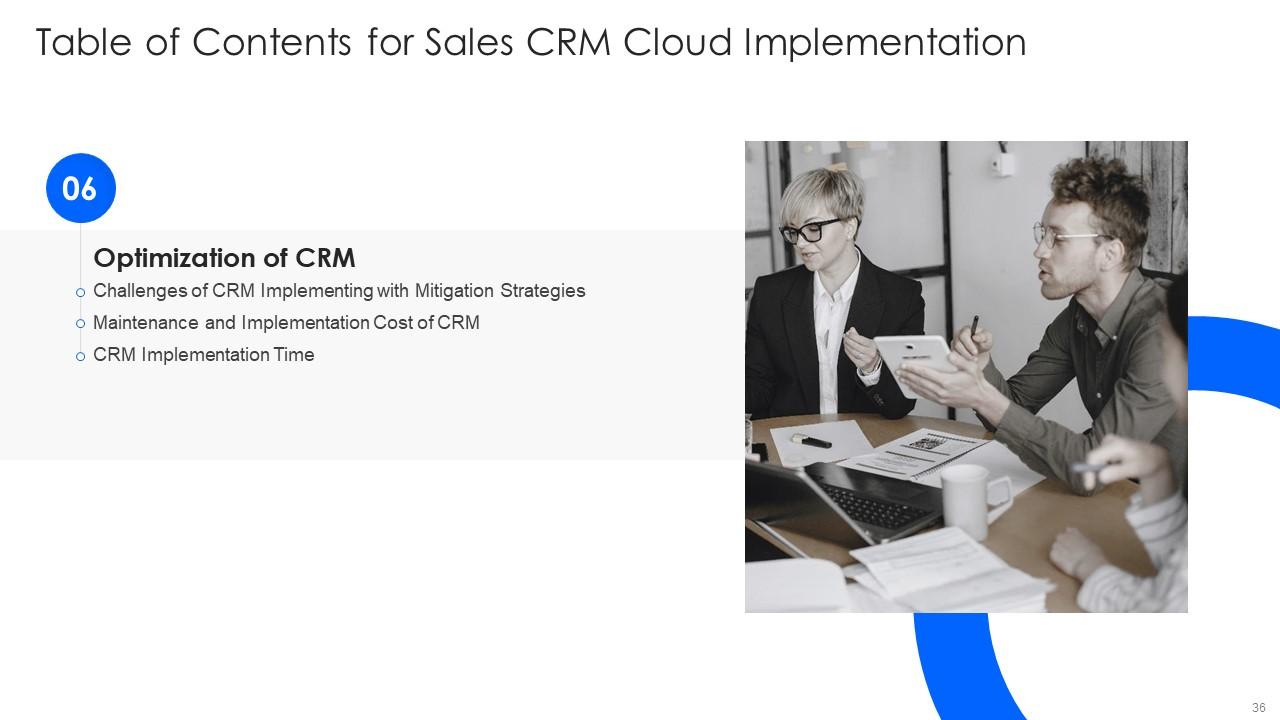
Slide 36: This slide highlights title for topics that are to be covered next in the template.
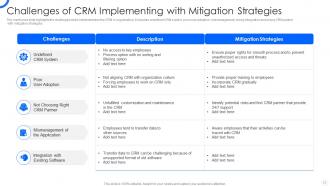
Slide 37: This slide represents Challenges of CRM Implementing with Mitigation Strategies.
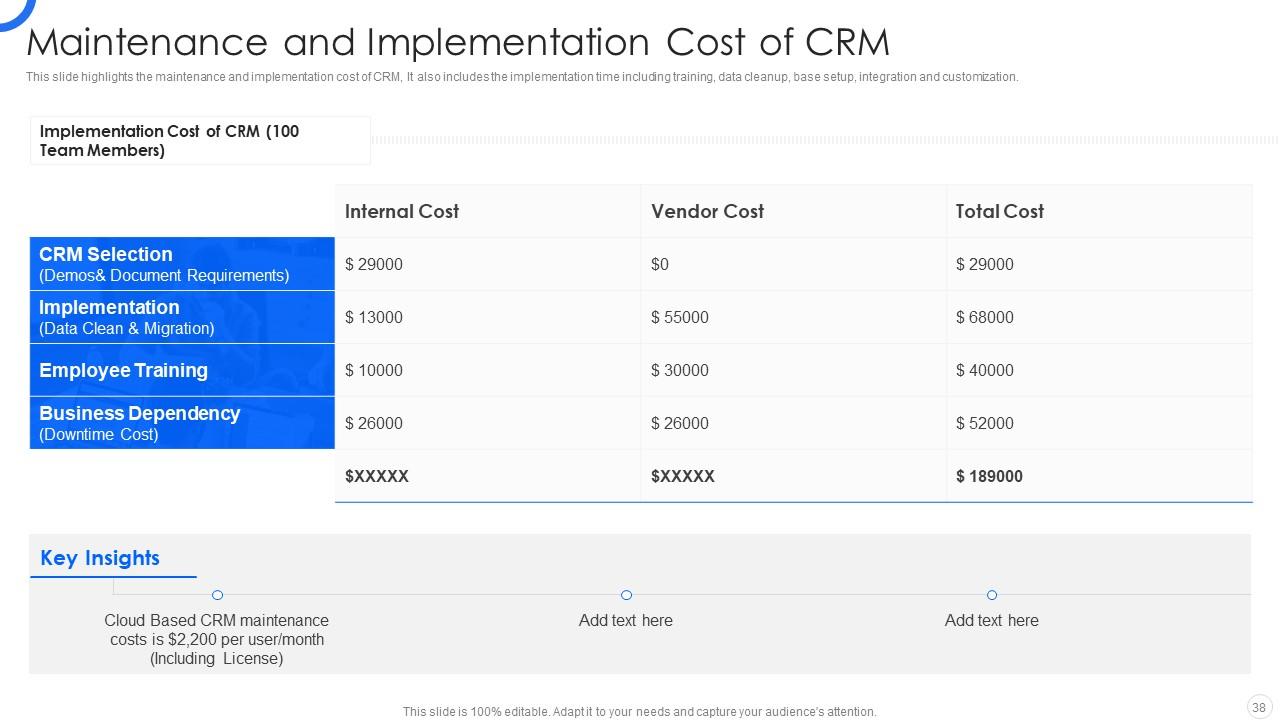
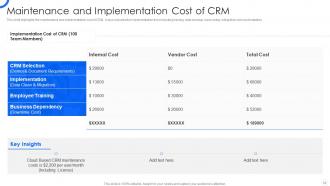
Slide 38: This slide showcases Maintenance and Implementation Cost of CRM.
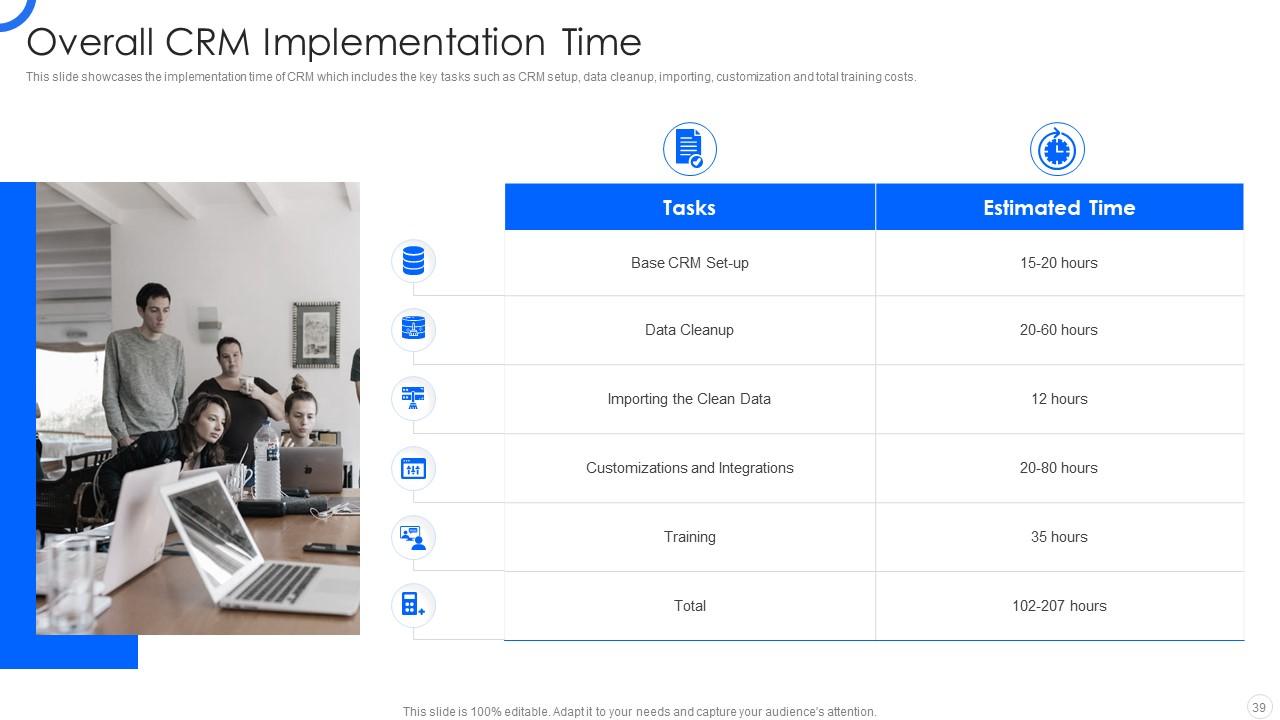
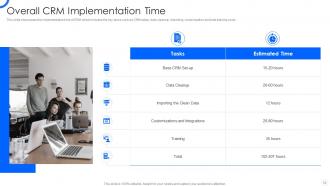
Slide 39: This slide shows implementation time of CRM which includes the key tasks.
Slide 40: This slide highlights title for topics that are to be covered next in the template.
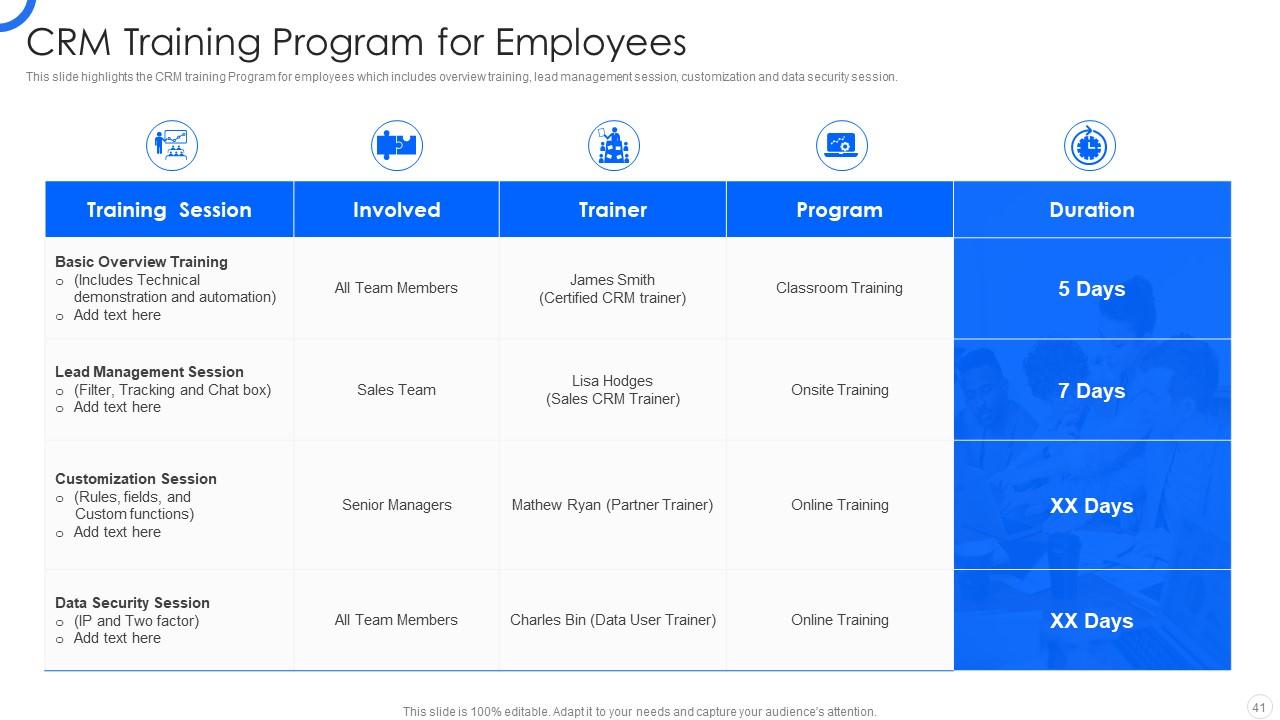
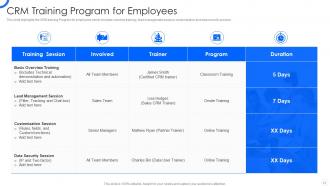
Slide 41: This slide presents CRM Training Program for Employees.
Slide 42: This slide highlights title for topics that are to be covered next in the template.
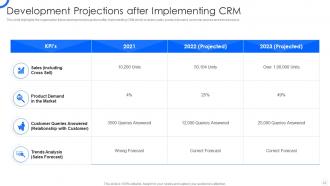
Slide 43: This slide displays Development Projections after Implementing CRM.
Slide 44: This slide highlights title for topics that are to be covered next in the template.
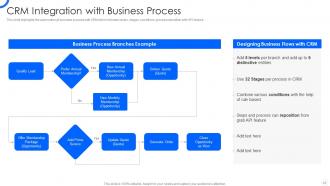
Slide 45: This slide represents automation of business process with CRM which includes levels, stages, conditions, etc.
Slide 46: This slide highlights title for topics that are to be covered next in the template.
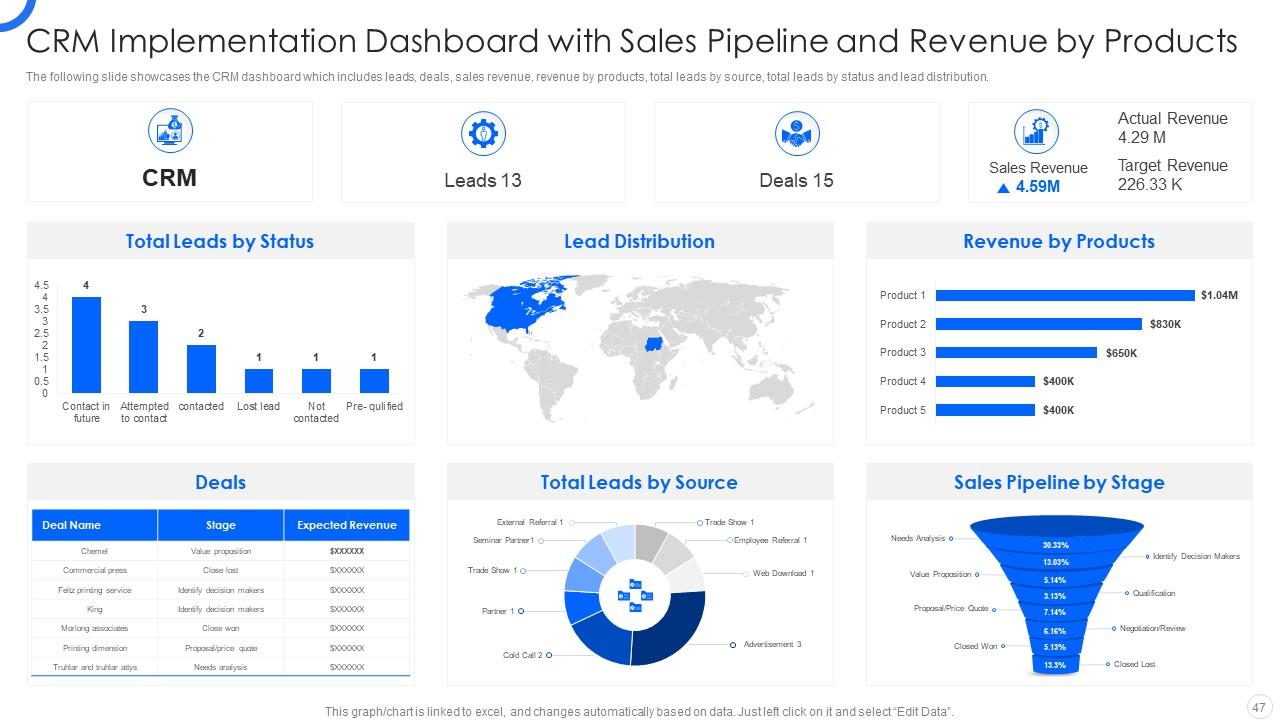
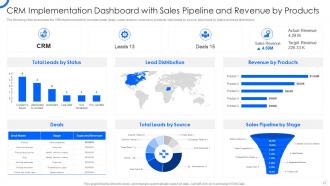
Slide 47: This slide showcases CRM Implementation Dashboard with Sales Pipeline and Revenue by Products.
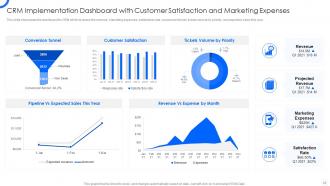
Slide 48: This slide shows CRM Implementation Dashboard with Customer Satisfaction and Marketing Expenses.
Slide 49: This slide displays Icons for Sales CRM Cloud Implementation.
Slide 50: This slide is titled as Additional Slides for moving forward.
Slide 51: This is About Us slide to show company specifications etc.
Slide 52: This is Our Mission slide with related imagery and text.
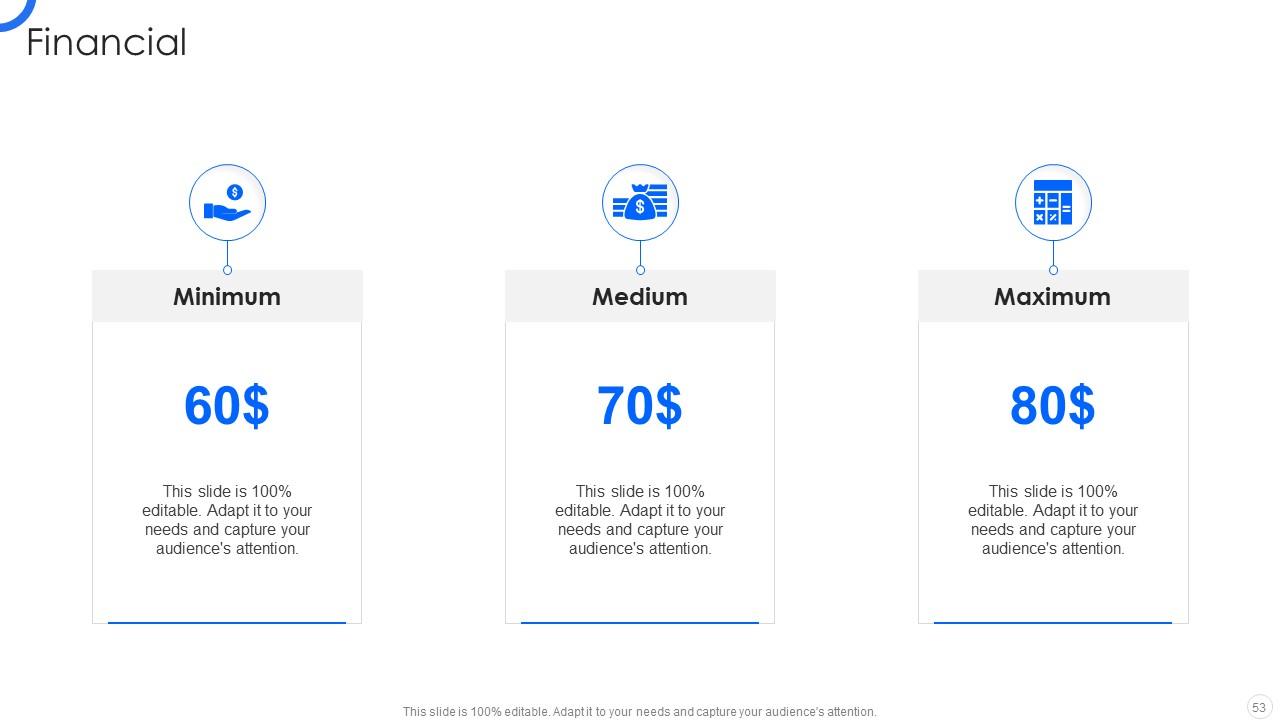
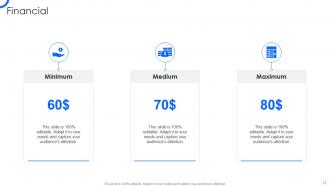
Slide 53: This is a Financial slide. Show your finance related stuff here.
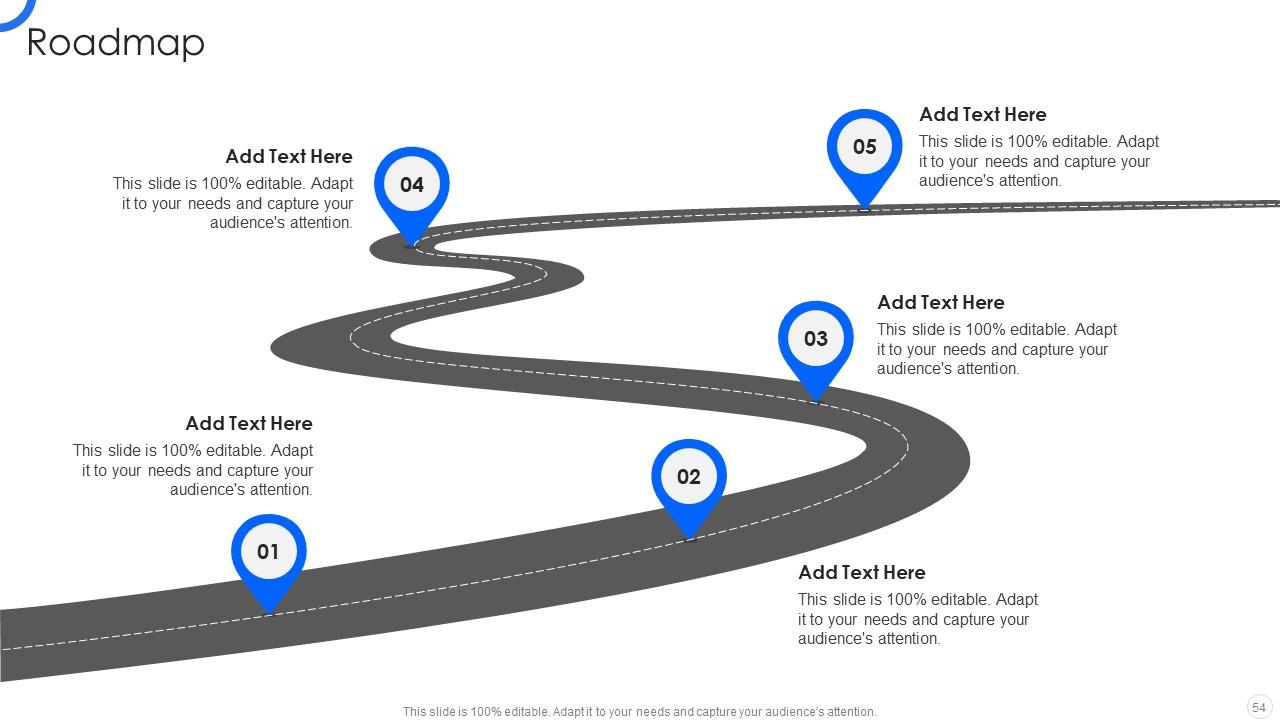
Slide 54: This slide presents Roadmap with additional textboxes.
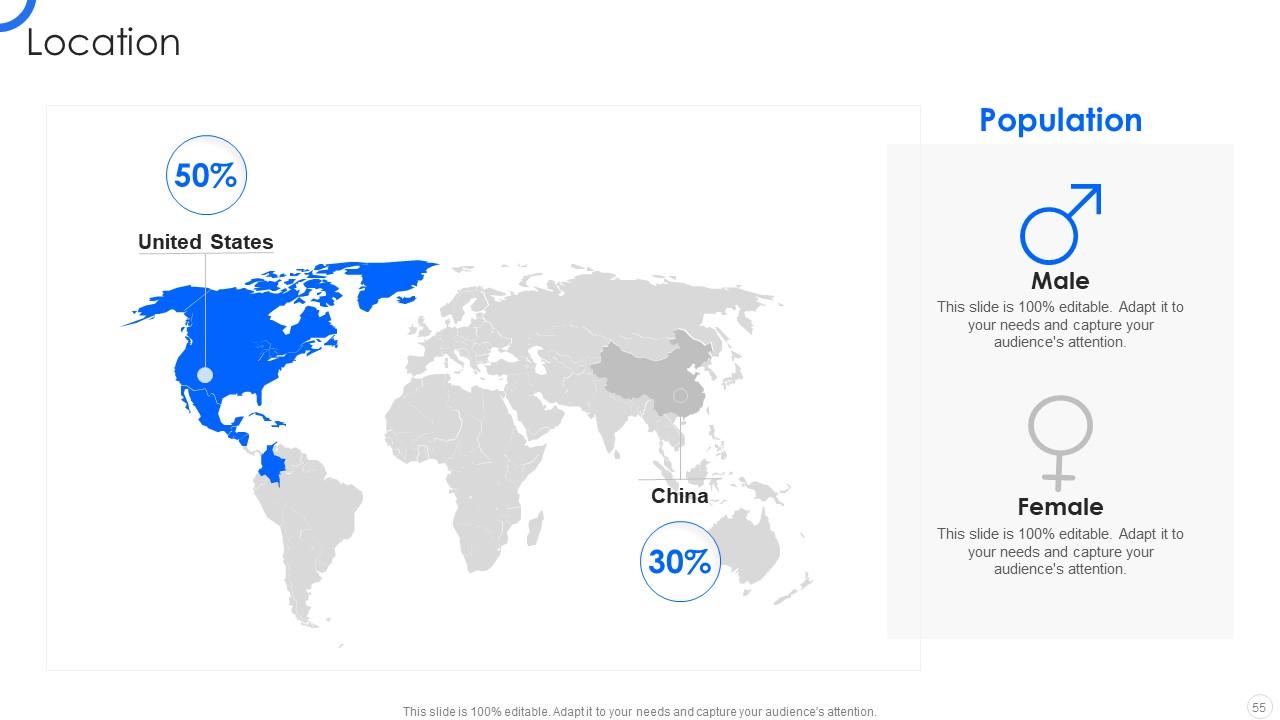
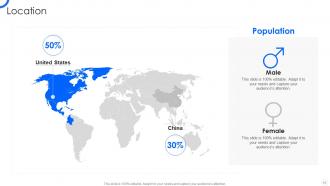
Slide 55: This is a Location slide with maps to show data related with different locations.
Slide 56: This slide provides 30 60 90 Days Plan with text boxes.
Slide 57: This slide depicts Venn diagram with text boxes.
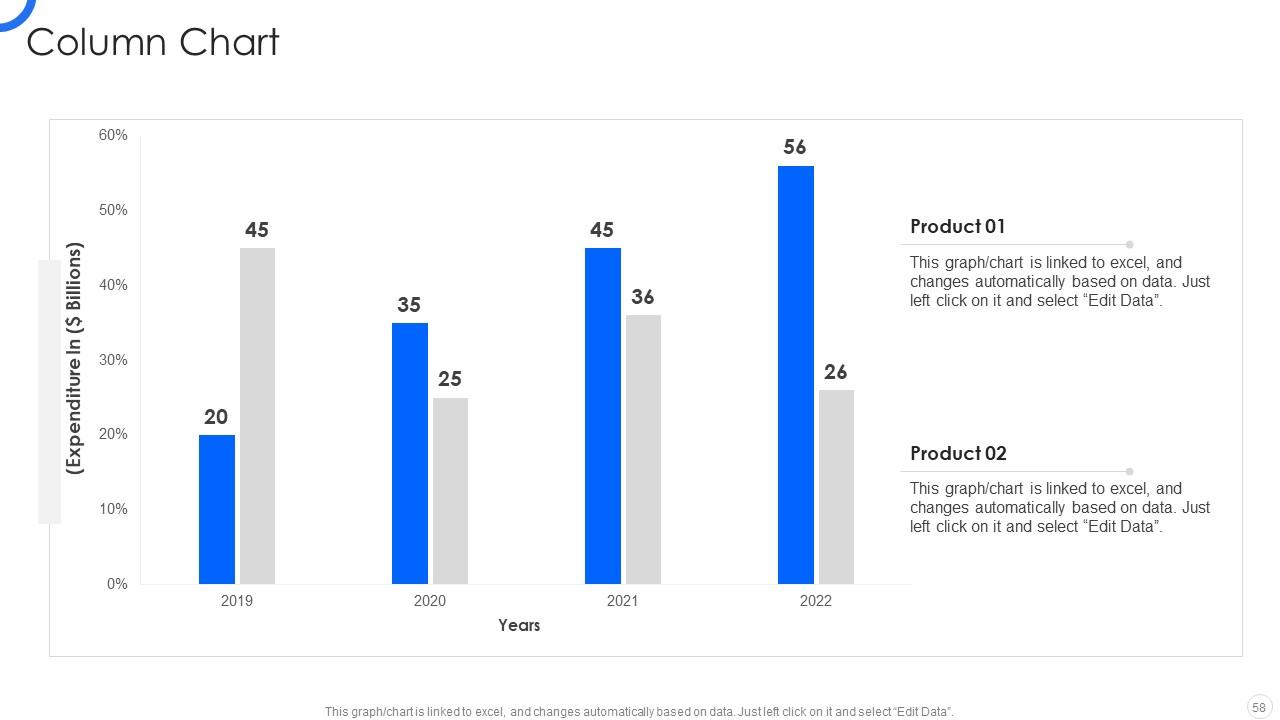
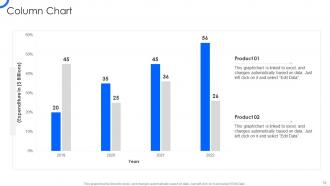
Slide 58: This slide displays Column chart with two products comparison.
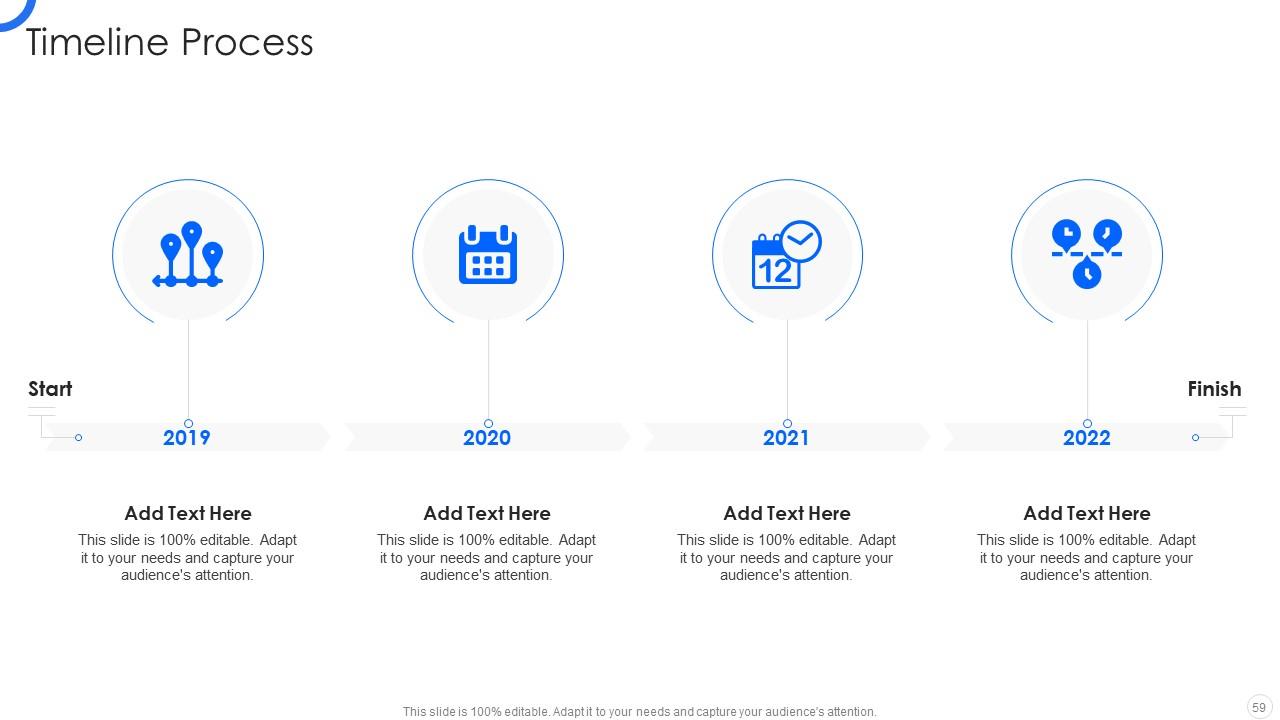
Slide 59: This is a Timeline slide. Show data related to time intervals here.
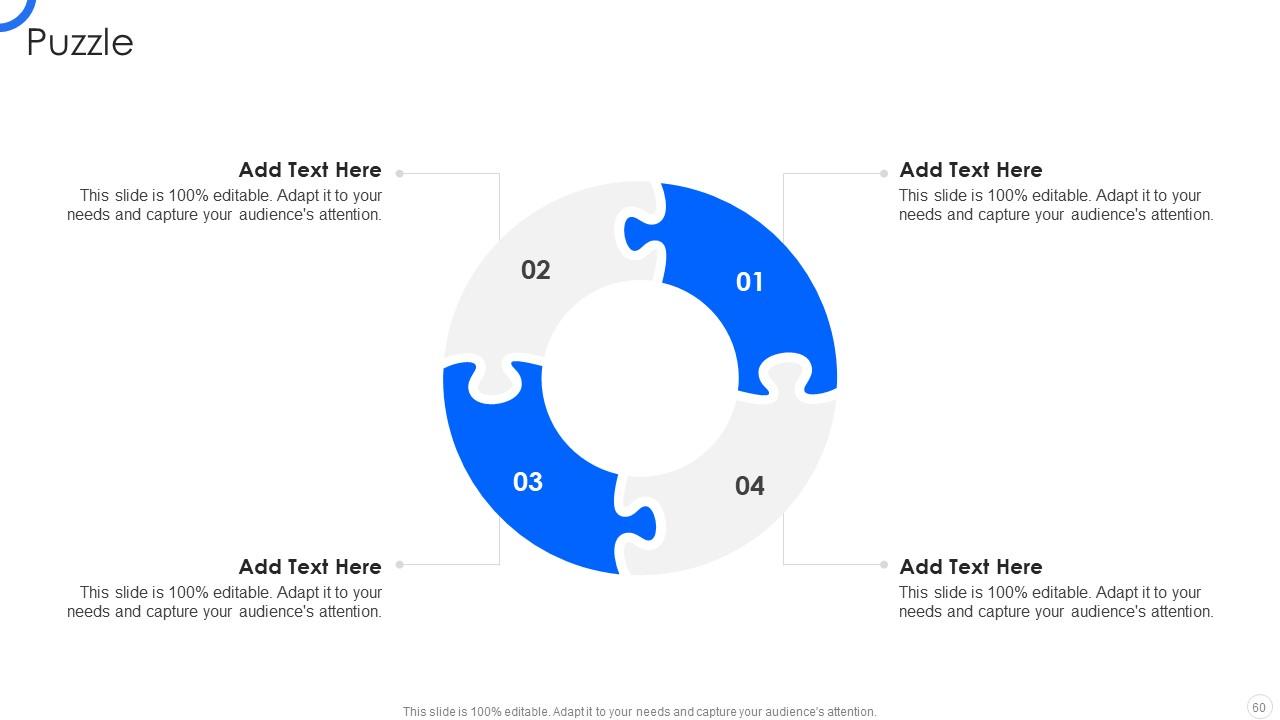
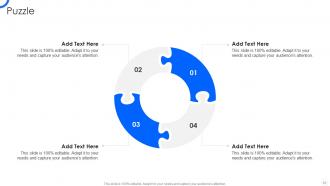
Slide 60: This slide contains Puzzle with related icons and text.
Slide 61: This is a Thank You slide with address, contact numbers and email address.
Sales CRM Cloud Implementation Powerpoint Presentation Slides with all 66 slides:
Use our Sales CRM Cloud Implementation Powerpoint Presentation Slides to effectively help you save your valuable time. They are readymade to fit into any presentation structure.
-
Out of the box and creative design.
-
Innovative and creative templates with high-quality designs. Helped me with my presentation as the slides were easy to edit.
