


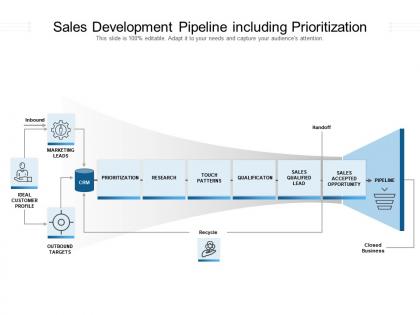
Sales development pipeline including prioritization





Try Before you Buy Download Free Sample Product
 Impress Your
 Audience
 100%
100% Editable
 Save Hours
 of Time


Our Sales Development Pipeline Including Prioritization are explicit and effective. They combine clarity and concise expression.
People who downloaded this PowerPoint presentation also viewed the following :
Sales development pipeline including prioritization with all 2 slides:
Give your audience a fulfilling experience. They will find our Sales Development Pipeline Including Prioritization elevating.
FAQs for Sales development
So the main stages are lead gen, qualification, needs assessment, proposal/demo, negotiation, and closing. Most industries stick pretty close to this flow with minor tweaks. Honestly? Qualification is where people screw up the most - they waste forever on prospects who'll never buy. Each stage needs clear criteria for advancing deals plus specific actions for your reps. I'd map out your current process first, then figure out where deals usually die. Oh and make sure each stage has actual exit criteria, not just vague guidelines.
Dude, get a CRM - it's like having one dashboard for your entire pipeline instead of juggling random spreadsheets (which honestly makes me want to scream). You'll see exactly where each lead stands and can set reminders so nothing falls through the cracks. The reporting part is what really blew my mind though. You can actually spot which stages drag on forever and where deals usually die. Map out your current process first, then just start plugging everything in. Way better than guessing what's working based on gut feeling.
Dude, focus on conversion rates between pipeline stages first - that's where you'll spot the real problems. Track your average deal size and how long deals take to close too. Honestly, pipeline velocity is the metric that actually matters because it rolls everything together. You need like 3x your quota sitting in pipeline to hit numbers reliably. Win rates tell the story of where stuff dies. Pull this data weekly though, not daily - checking every day will make you neurotic and the numbers bounce around too much anyway. Oh, and time spent per stage shows exactly where deals get stuck.
Honestly, pull reports from your last quarter first - that'll give you your baseline. Then start watching conversion rates between each stage. Like if your demos only convert 30% to proposals, boom, there's your issue. Time-to-move matters way more than overall deal speed too. Check your CRM weekly for stages where deals just... sit there forever. I swear it becomes weirdly addictive tracking this stuff once you get into it. Short deals closing fast while others drag for months? That pattern tells you exactly where things break down. Focus on the stages with the worst conversion rates - that's where you'll find your real bottlenecks.
BANT criteria is your friend here - Budget, Authority, Need, Timeline. Basically you want to know if they have actual money set aside, if you're talking to the decision maker (or someone who can introduce you), whether there's a real problem you can solve, and if they're working on a realistic timeline. I just ask "what's your budget range?" pretty early in the conversation. Honestly saves so much time for everyone. Also dig into what their current situation looks like and what happens if they don't change anything. Make sure you're documenting all this stuff in your CRM so your team knows where things stand. Way better to be thorough upfront than to chase dead leads for months.
Honestly, it's mostly about timing and who you're dealing with. B2C moves super quick - people decide fast, buy online, done. B2B is a whole different beast though. You're waiting months (sometimes feels like forever) while like 5 different people weigh in on every decision. With B2C you can focus on volume and quick conversions. But B2B? You need detailed notes on everyone involved because the CFO cares about totally different stuff than the IT guy. Your CRM setup should reflect this - B2C needs simple lead scoring, while B2B requires way more stages to track all those endless meetings and approvals.
So forecasting is like trying to predict which deals you'll actually close and when. You look at everything in your pipeline, check what stage each deal's at, then guess the probability it'll happen. Deals drop off constantly though - that's just reality. But it helps you see patterns and plan ahead. The trick is being brutally honest about your percentages instead of hoping for the best. I'd start by checking your old close rates at each stage. That'll make your guesses way more realistic going forward.
Honestly, just get everyone talking regularly - like weekly pipeline reviews where your reps actually update deal statuses and call out where they're stuck. Your CRM needs to be current too (I swear, most collab issues come from crappy data in there). Marketing should know which leads are actually converting so they're not wasting time on garbage prospects. Sales ops needs visibility into process problems. Oh, and set up those alerts for deals sitting stagnant too long. Make pipeline health everyone's problem, not just individual reps hitting their numbers. Works way better when the whole team owns it.
Look at your funnel and find where people keep dropping off - that's where you start. I'd bet money most reps don't qualify hard enough upfront, so you waste time on prospects who were never gonna buy anyway. Build content for each stage - case studies work great for decision-makers, ROI calculators for the budget talks. Don't give up after like 3 follow-ups either (drives me crazy how quickly people quit). Every conversation needs clear next steps. Your CRM probably has tons of data showing what winning deals look like. Pick your worst stage and test improvements there for a month.
Check your pipeline weekly at minimum, but daily is way better if you've got hot deals moving. Consistency matters more than frequency though - whatever schedule you pick, actually stick to it. Stale data will wreck your forecasts every single time. Update deal stages right when stuff happens, not weeks later when you're panicking before the forecast meeting (we've all been there). I'd block out like 15-30 minutes weekly to clean house - kill dead opps, fix those overly optimistic close dates, double-check your weighted numbers. Trust me, your future self will thank you when quota planning doesn't feel like pure guesswork.
So automation just takes care of all those tedious tasks that kill your productivity - deal updates, follow-up emails, contact changes, that stuff. When someone opens your proposal, boom - it can auto-schedule your next task or bump them to negotiation stage. Lead scoring is where it really shines though, plus you won't be manually entering every single interaction anymore (thank god). I'd start basic with email sequences and deal stage stuff first. Once you're comfortable, add more features. It's honestly night and day once you figure it out.
Customer feedback is pure gold for fixing your sales process. Listen to what almost made people bail versus what sealed the deal. You'll spot exactly where your pipeline's broken. Quick example - one team I know discovered their demos were happening way too early, so they added a whole nurturing phase first. Made a huge difference. Don't just collect feedback when deals close though. That's missing half the story. Set up brief calls with both your wins AND losses. The patterns you'll see are honestly eye-opening, and you can restructure your whole qualification approach based on what people actually tell you.
Skip the boring PowerPoint stuff and jump straight into their actual CRM. Walk through real deals together - show them how to qualify leads properly and update stages without being overly optimistic about close dates. You'll want to role-play those awkward check-in calls because that's honestly where most people fall apart. Pipeline value vs realistic forecasting? Huge difference they need to get. Weekly one-on-ones are clutch for reviewing pipeline health and unsticking dead deals. Oh, and give them some simple hygiene checklist they'll actually use - nothing too complicated or it'll just get ignored.
Try HubSpot, Salesforce, or Pipedrive first - their visual dashboards are pretty solid for tracking deals through stages. Monday.com actually works great too if your team likes customizing stuff. Look, I've seen people make spreadsheets work with conditional formatting, but honestly that gets chaotic once you have more than like 3 people using it. The real trick is finding something everyone will actually use instead of ignoring. My buddy's team switched tools three times because half the sales guys just wouldn't log in. Start with free versions to test what fits your workflow before spending money.
Look, flexibility is everything with pipeline stages - you gotta review your data constantly to catch trends before they bite you. Market shifts? Time to tweak your qualifying criteria and lead scoring. Sometimes you'll need to add or kill entire stages. Teams get stupidly attached to their original setup (guilty of this myself tbh). Track conversion rates and sales cycles like crazy since they're always changing. Monthly pipeline reviews are clutch for spotting what works. Small tweaks beat massive overhauls every time.
No Reviews