

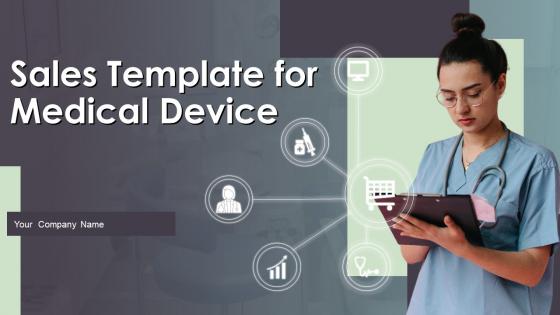
Sales Template For Medical Device Powerpoint Ppt Template Bundles




Try Before you Buy Download Free Sample Product
 Impress Your
 Audience
 100%
100% Editable
 Save Hours
 of Time


Our Sales Template For Medical Device Powerpoint Ppt Template Bundles are topically designed to provide an attractive backdrop to any subject. Use them to look like a presentation pro.
People who downloaded this PowerPoint presentation also viewed the following :
Sales Template For Medical Device Powerpoint Ppt Template Bundles with all 22 slides:
Use our Sales Template For Medical Device Powerpoint Ppt Template Bundles to effectively help you save your valuable time. They are readymade to fit into any presentation structure.

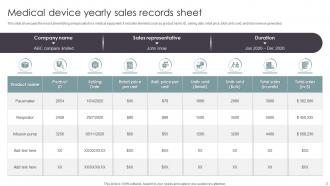
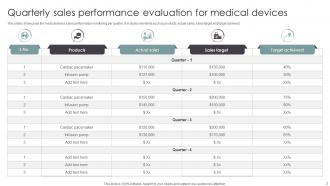
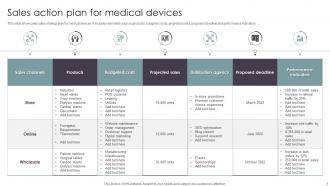






FAQs for Sales Template For Medical Device Powerpoint
A medical device sales template should include clinical evidence and outcomes data, regulatory compliance certifications, cost-benefit analysis, implementation timelines, and training support details. These elements enable healthcare professionals to evaluate patient safety, operational efficiency, and ROI considerations, with many hospitals and clinics finding that comprehensive templates streamline procurement decisions while demonstrating clear value propositions.
**INPUT**: How can storytelling be integrated into a sales presentation for medical devices to enhance engagement and retention? **OUTPUT**: Storytelling enhances medical device sales presentations by incorporating patient success stories, clinical case studies, problem-solution narratives, and outcome-focused scenarios that demonstrate real-world impact. These narrative approaches enable healthcare professionals to visualize practical applications, connect emotionally with patient outcomes, and retain technical information more effectively, ultimately delivering stronger engagement and improved decision-making confidence.
Critical regulatory considerations include FDA approval status, clinical trial data, safety profiles, labeling requirements, and compliance documentation for your target markets. These elements strengthen credibility by demonstrating regulatory adherence, addressing safety concerns, and providing evidence-based efficacy claims, with many medical device companies finding that transparent regulatory communication ultimately accelerates sales cycles and builds lasting healthcare partnerships.
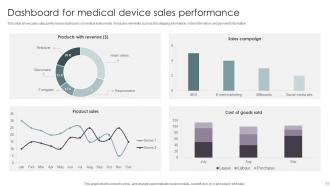
Visual aids and data visualization enhance medical device sales templates by simplifying complex technical specifications, illustrating clinical outcomes through charts and graphs, and demonstrating ROI through comparative cost analyses. These visual elements enable healthcare professionals to quickly grasp device benefits, streamline decision-making processes, and facilitate stakeholder presentations, with many medical sales teams finding that visual-heavy templates reduce sales cycles and improve client comprehension significantly.
Market research plays a foundational role in medical device sales presentations by identifying target audience needs, competitive landscape dynamics, regulatory requirements, and clinical evidence priorities that shape messaging effectiveness. Through comprehensive market analysis, sales teams can customize presentations with relevant case studies, address specific pain points like cost containment or patient outcomes, and emphasize differentiators that resonate most with healthcare decision-makers, ultimately delivering more persuasive and clinically relevant content.
A sales template addresses healthcare provider objections by incorporating evidence-based responses, clinical outcome data, regulatory compliance documentation, cost-benefit analyses, and peer testimonials from similar institutions. These structured elements enable medical device sales teams to systematically counter concerns about safety, efficacy, implementation costs, and workflow disruption, ultimately delivering credible reassurance and accelerating adoption decisions across hospitals and healthcare systems.
Clinical efficacy metrics should emphasize patient outcomes, safety profiles, clinical trial results, regulatory approvals, and comparative effectiveness studies. These data points enable healthcare providers to demonstrate improved treatment success rates, reduced complication rates, and enhanced patient satisfaction scores, while ultimately delivering measurable clinical value and competitive differentiation in increasingly evidence-based healthcare environments.
Testimonials can be effectively incorporated through dedicated case study sections, credibility-building header quotes, outcome-focused statistics, and peer validation statements from respected healthcare professionals. These elements work best when strategically placed throughout the template to address specific concerns, with many medical device companies finding that authentic testimonials from similar healthcare settings significantly enhance trust and accelerate decision-making processes.
Healthcare sales presentations can be tailored by customizing value propositions for specific audiences, emphasizing relevant clinical outcomes, addressing budget constraints, and highlighting regulatory compliance benefits. Hospitals prioritize cost-effectiveness and patient outcomes, while private practices focus on workflow efficiency and revenue generation, with many medical device companies finding that segmented approaches ultimately deliver higher conversion rates and stronger client relationships.
Understanding the competitive landscape informs medical device sales template development by identifying key differentiators, pricing strategies, and unmet market needs that shape messaging priorities. This analysis enables sales teams to position their devices against established competitors, highlight unique clinical benefits, and address specific pain points that rival solutions don't adequately solve, ultimately delivering more targeted presentations and stronger value propositions to healthcare decision-makers.
**INPUT**: What design principles should be prioritized when creating a professional-looking sales template for medical devices? **OUTPUT**: Professional medical device sales templates should prioritize clean layouts, regulatory compliance visuals, credible data presentation, consistent branding, and clear value propositions. These design principles enhance credibility by incorporating clinical evidence seamlessly, streamlining complex technical information, and delivering compelling narratives that resonate with healthcare decision-makers, ultimately accelerating sales cycles.
A sales template accommodates both formats by incorporating flexible visual elements, interactive components, and scalable content modules that work seamlessly across platforms. Through hybrid-ready designs, medical device sales teams can deliver engaging presentations whether demonstrating equipment in hospital conference rooms or conducting virtual product showcases, while maintaining consistent messaging and professional impact that drives decision-making.
Best practices for incorporating product demonstrations in medical device sales presentations include live device operation, interactive hands-on experiences, clinical scenario simulations, comparative feature analysis, and safety protocol demonstrations. These approaches enhance credibility by allowing healthcare professionals to experience functionality firsthand, evaluate clinical applications directly, and assess integration potential, with many medical institutions finding that tangible demonstrations significantly accelerate purchasing decisions and implementation confidence.
The sales template can highlight long-term cost-effectiveness through detailed ROI calculations, comparative cost analyses against alternatives, operational efficiency metrics, and patient outcome improvements that reduce overall healthcare expenses. By incorporating real-world case studies from hospitals and clinics, maintenance cost projections, and quantified benefits like reduced procedure times, the template demonstrates tangible financial value, ultimately enabling healthcare decision-makers to justify capital investments through measurable returns.
**INPUT**: What follow-up strategies can be outlined in a sales template to maintain engagement with potential clients after the presentation? **OUTPUT**: Follow-up strategies include personalized clinical outcome summaries, demonstration scheduling, trial period arrangements, stakeholder meeting coordination, and ROI analysis presentations. These approaches streamline engagement by addressing specific medical facility needs, providing hands-on evaluation opportunities, and delivering compelling financial justifications, with many healthcare organizations finding that structured follow-up sequences ultimately accelerate purchasing decisions and strengthen long-term partnerships. **Word count: 60 words**
-
The information is visually stunning and easy to understand, making it perfect for any business person. So I would highly recommend you purchase this PPT design now!
-
Easily Editable.