

SAP Company Profile Powerpoint Presentation Slides CP CD





Try Before you Buy Download Free Sample Product
 Impress Your
Audience
 100%
Editable
 Save Hours
of Time


A company profile provides an overview of the most essential points about an organization which helps the investors and stakeholders to evaluate the business value and performance. Check out our professionally designed SAP Company Profile PowerPoint presentation. Firstly, the Business Solutions profile covers the executive summary, company introduction, purpose, core values, timeline, offered products and services. Additionally, the Software PPT includes major industries served, innovations, global presence, employee base, and competitor analysis. Moreover, this Business Tools PowerPoint outlines business financials such as revenue, profit and loss statistics, assets and liabilities, research and development expenses, cash flow, etc. It also outlines adopted business strategies with future plans. Furthermore, this CRM Deck illustrates business performance evaluation with competitor analysis and SWOT analysis. Lastly, our Financial Management Module exhibits various real-life examples of SAP working. Download our 100 percent editable and customizable template, which is also compatible with Google Slides.
People who downloaded this PowerPoint presentation also viewed the following :
Content of this Powerpoint Presentation
Slide 1: This slide introduces SAP Company Profile. State Your Company Name and begin.
Slide 2: This slide shows a Table of Contents for the presentation.
Slide 3: This slide is in continuation with the previous slide.
Slide 4: This slide provides executive summary of business.
Slide 5: This slide puts information about company.
Slide 6: This slide entails information about company guiding principles and core values. It includes values such as our purpose, vision and core values.
Slide 7: This slide provides information about company key statistics.
Slide 8: This slide includes information about company growth journey.
Slide 9: This slide contains information about products offered by SAP solution company to customers.
Slide 10: This slide elaborates information about services provided by company comprising foundation support, success plan & services, premium engagement, and other additional services.
Slide 11: This slide outlines various industries served by company.
Slide 12: This slide depicts detailed insights into companies business model.
Slide 13: This slide details business office locations worldwide.
Slide 14: This slide highlights experience centers located across global.
Slide 15: This slide entails information about company leadership team.
Slide 16: This slide displays organizational chart of SAP company.
Slide 17: This slide puts information about companies and brands acquired by SAP company over the year.
Slide 18: This slide provides information about key partners of company.
Slide 19: This slide contains business partnerships by global technology.
Slide 20: This slide marks information about company top shareholders.
Slide 21: This slide projects information about company subsidiary businesses.
Slide 22: This slide highlights information about company product innovations.
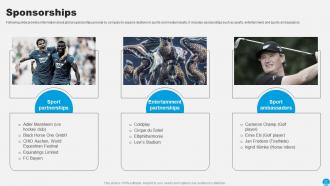
Slide 23: This slide illustrates information about global sponsorships provide by company to expand relations in sports and media industry.
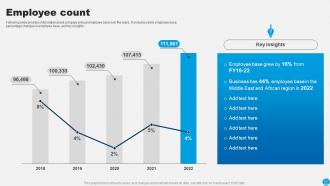
Slide 24: This slide elucidates information about company annual employee base over the years.
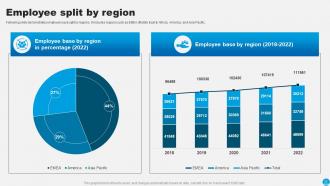
Slide 25: This slide demonstrates employee base split by regions.
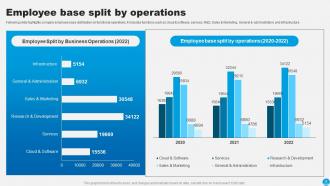
Slide 26: This slide highlights company employee base distribution on functional operations.
Slide 27: This slide presents information about SAP customer base.
Slide 28: This slide puts information about customer reviews related SAP services and solutions.
Slide 29: This slide includes information about company major competitors.
Slide 30: This slide provides information about company major competitors.
Slide 31: This slide elucidates information about software solutions offering company financial comparison.
Slide 32: This slide caters to information about company historical revenue over the years.
Slide 33: This slide contains information about business revenue split by various revenue sources.
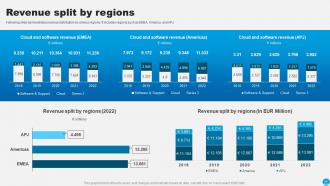
Slide 34: This slide demonstrates revenue distribution by various regions.
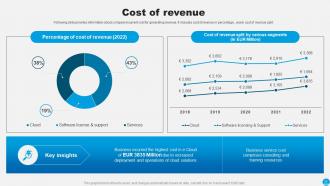
Slide 35: This slide denotes information about company incurrent cost for generating revenue.
Slide 36: This slide contains information about gross profits earned by company over the years.
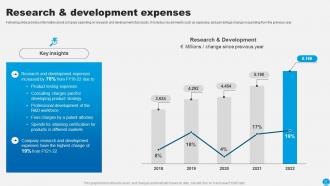
Slide 37: This slide elaborates on the information about company spending on research and development of products.
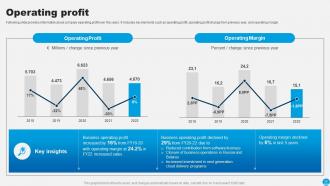
Slide 38: This slide provides information about company operating profit over the years.
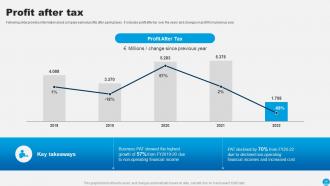
Slide 39: This slide mentions information about company earned profits after paying taxes.
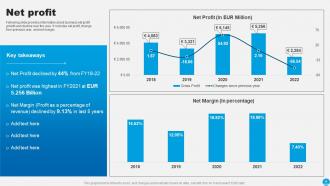
Slide 40: This slide projects information about business net profit growth and decline over the year.
Slide 41: This slide pertains to the information about company earnings per share over the year.
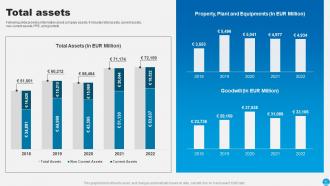
Slide 42: This slide shows information about company assets.
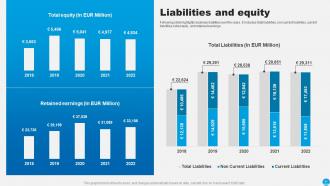
Slide 43: This slide highlights business liabilities over the years.
Slide 44: This slide showcases insights into cash flow from various business activities.
Slide 45: This slide marks information about company strategic objectives achieved by company in 2022.
Slide 46: This slide provides information about company to be achieved in future year.
Slide 47: This slide matters to information about company strategies.
Slide 48: This slide outlines business solutions offered by company to support industry 4.0 strategic initiative.
Slide 49: This slide provides information about company internal analysis based on following parameters such as strengths and weaknesses.
Slide 50: This slide puts information about company external analysis based on the following parameters such as opportunities and threats.
Slide 51: This slide pertains to the information about company planned innovations.
Slide 52: This slide includes information about company corporate social responsibility based initiatives.
Slide 53: This slide puts information about company CSR engagement and its impact on employees, businesses, and society.
Slide 54: This slide elucidates information about company’s Corporate Social Responsibility partners across the globe.
Slide 55: This slide outlines case study of Molton Brown cosmetic company.
Slide 56: This slide provides information about Accenture case study.
Slide 57: This is a Contact Us slide. Add your Email Address, Contact, Social Media Handles, and Address.
Slide 58: This slide shows all the icons included in the presentation.
Slide 59: This slide is titled Additional Slides for moving forward.
Slide 60: This slide is a Timeline slide. Show data related to time intervals here.
Slide 61: This slide is Our Target slide. State your targets here.
Slide 62: This slide depicts a Venn diagram with text boxes.
Slide 63: This slide displays Mind Map with related imagery.
Slide 64: This slide presents a Roadmap with additional text boxes.
Slide 65: This slide is a Quotes slide to convey messages, beliefs, etc.
Slide 66: This slide shows Post-It Notes. Post your important notes here.
Slide 67: This slide is an Idea Generation slide to state a new idea or highlight information, specifications, etc.
Slide 68: This slide is a thank-you slide with address, contact numbers, and email address.
SAP Company Profile Powerpoint Presentation Slides CP CD with all 76 slides:
Use our SAP Company Profile Powerpoint Presentation Slides CP CD to effectively help you save your valuable time. They are readymade to fit into any presentation structure.
-

SAP Company Profile
-
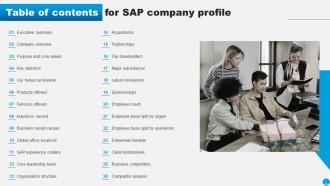
Table of contents for SAP company profile
-
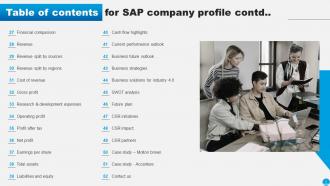
Table of contents for SAP company profile contd
-

Executive summary
-
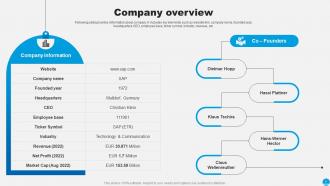
Company overview
-
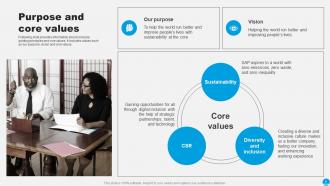
Purpose and core values
-
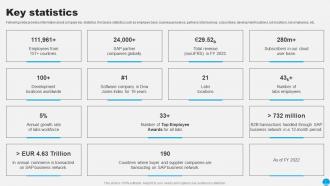
Key statistics
-
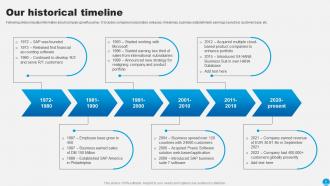
Our historical timeline
-

Products offered
-

Services offered
-
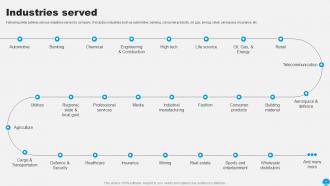
Industries served
-
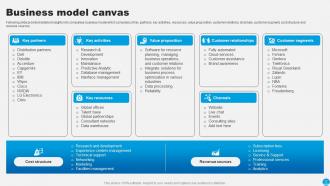
Business model canvas
-
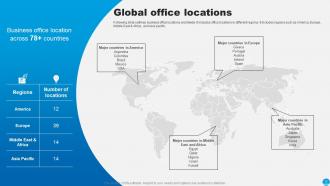
Global office locations
-

SAP experience centers
-
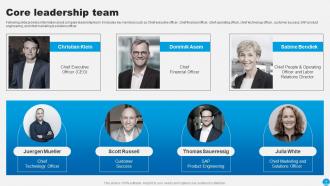
Core leadership team
-
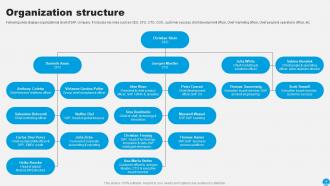
Organization structure
-

Major acquisitions
-
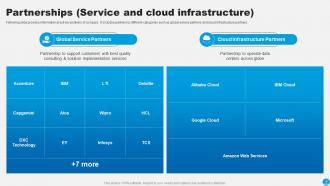
Partnerships Service and cloud infrastructure
-
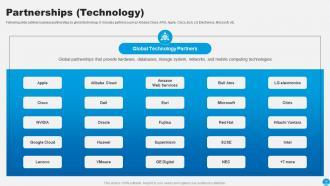
Partnerships Technology
-
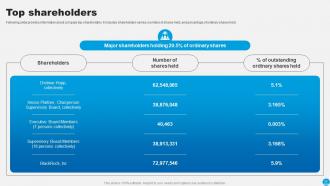
Top shareholders
-
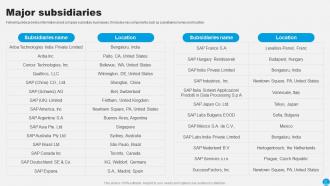
Major subsidiaries
-
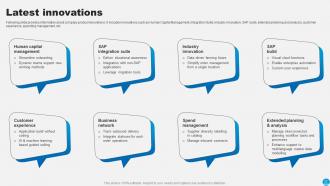
Latest innovations
-
Sponsorships
-
Employee count
-
Employee split by region
-
Employee base split by operations
-

Esteemed clientele
-
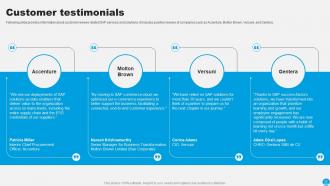
Customer testimonials
-
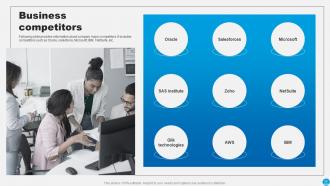
Business competitors
-

Competitor analysis
-
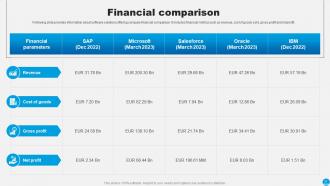
Financial comparison
-
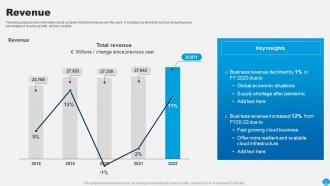
Revenue
-

Revenue split by sources
-
Revenue split by regions
-
Cost of revenue
-

Gross Profit
-
Research development expenses
-
Operating Profit
-
Profit after tax
-
Net Profit
-

Earning per share
-
Total assets
-
Liabilities and equity
-
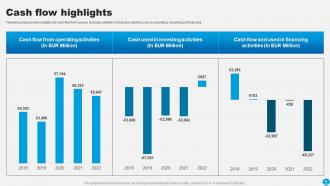
Cash flow highlights
-

Current performance outlook
-
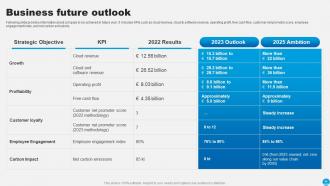
Business future outlook
-

Business strategies
-

Business solutions for industry 4 0
-
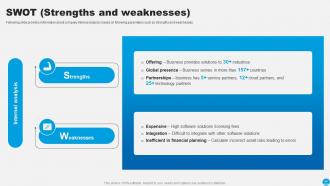
SWOT Strengths and weaknesses
-
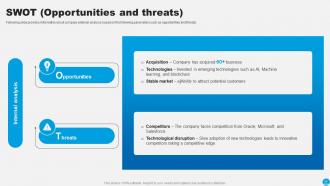
SWOT Opportunities and threats
-
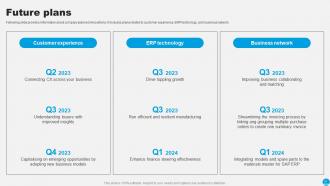
Future plans
-
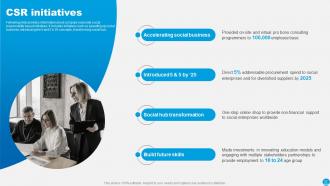
CSR initiatives
-
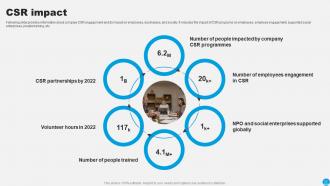
CSR impact
-

CSR partners
-
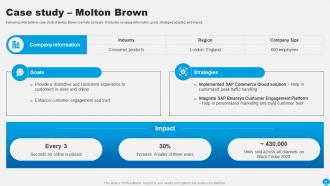
Case study Molton Brown
-

Case study Accenture
-

Contact us
-
Icons slide SAP company profile
-

Additional slides
-
Timeline
-
Our target
-
Venn diagram
-
Mind map
-

Roadmap
-

Quotes
-

Post it notes
-
Idea generation
-
Thanks for watching
-

-

-

-

-

-

-

-

FAQs for SAP Company Profile Powerpoint Presentation
So SAP basically invented modern ERP back in the '70s with their R/1 system. What made them huge was getting all your business stuff to actually talk to each other - finance, HR, supply chain, the works. No more data silos everywhere. Their newer S/4HANA runs on this crazy fast in-memory database that processes tons of data instantly. Plus they've got AI features now through Leonardo (weird name, I know). The cloud migration has been pretty smooth too. Honestly, if you're shopping for ERP, SAP's integration game is still unmatched. Worth checking out how other systems stack up against that.
So SAP basically built AI right into their main stuff - S/4HANA, SuccessFactors, all that through their Leonardo platform. Pretty smart move honestly. Your ERP can now predict when machines need maintenance or forecast demand without you doing anything. The HANA database makes everything run crazy fast too. Finance gets automated, HR gets smart recommendations, supply chain gets predictive analytics. Oh and you don't need separate AI tools since it's already in whatever SAP products you're using. Makes things way simpler than buying a bunch of different solutions.
So SAP is basically the digital backbone for companies trying to modernize. They make cloud platforms and enterprise software that moves your business processes online and automates everything. All your departments get connected - sales talks to finance talks to HR, data flows everywhere. It's like plumbing but for tech (sounds boring, I know, but it actually works). Their AI tools and analytics help you make smarter decisions instead of just winging it. Honestly, if you're looking to upgrade systems, S/4HANA is probably where you'd want to start.
So SAP's doing the whole three-tier thing - SaaS, PaaS, IaaS. SuccessFactors and Ariba are their big SaaS wins, then there's the Cloud Platform for development stuff. They won't shut up about "intelligent enterprise" lately, which honestly just means they're cramming AI into everything. You can go public, private, or hybrid depending on what compliance headaches you're dealing with. The Business Technology Platform ties it all together so your on-premise and cloud data actually talks to each other. My advice? Figure out what you want to move first before diving in.
Yeah, SAP's actually pretty solid on security. They do end-to-end encryption and regular audits, plus they're compliant with all the big standards - GDPR, SOX, ISO 27001. Your data sits in certified centers with backup layers and access controls. What's cool is their Trust Center lets you see real-time compliance reports and certifications. Most enterprise companies aren't that transparent about it. You can set up role-based permissions too, so only the right people access stuff. Definitely worth checking out their Trust Center dashboard - you'll find whatever compliance frameworks your industry needs.
Honestly, SAP works best for big complicated industries - manufacturing, retail, healthcare, finance. Manufacturing companies use it for supply chain stuff and production planning. Retail? Inventory and customer data mostly. Healthcare organizations are obsessed with it because of all the compliance headaches they deal with (regulations are brutal in that field). Banks and financial services need it for risk management. The thing is, all these industries have the same problem - their systems don't talk to each other. That's where SAP really helps. If you're thinking about it, just look at what systems you have that can't communicate. Start there.
So SAP's actually going pretty hard on sustainability - they want carbon neutrality by 2030. What's cool is they're not just talking about their own emissions, they want to help customers cut way more than SAP even produces. Their cloud tools let you track environmental impact, which honestly makes a huge difference since you can't improve what you can't measure, right? They're also into circular economy stuff and responsible AI development. Oh and definitely ask about their sustainability reporting features when you're shopping around - that's where they can actually help you hit those green targets your company's probably stressing about.
So S/4HANA is SAP's complete rewrite that runs in-memory - your reports actually load fast now instead of taking forever like the old ECC days. Everything's real-time rather than waiting around for overnight batch jobs. The interface got a major upgrade too with Fiori, though honestly it took them long enough to make it look decent. You can run it cloud, on-premise, whatever works for your setup. Finance teams love seeing actual live numbers instead of stale data from yesterday. Just make sure your current processes will play nice with S/4HANA before you migrate - that part can get messy if you're not prepared.
So SAP basically connects all your supply chain stuff in one place - procurement, inventory, logistics, the whole mess. You'll get real-time visibility from raw materials to delivery, which is clutch when disasters hit. Their AI predicts demand and spots problems before they become your problem. Honestly, the automation alone saves so much time your team will thank you. I know it sounds like typical enterprise software BS, but their SCM tools actually show you where things are breaking down. Worth checking out if you're constantly putting out supply chain fires.
So SAP BTP is like having all your development tools in one place - you can build apps, connect systems, and even throw in some AI stuff without dealing with ancient legacy nightmares. What's cool is you're not stuck learning weird proprietary languages either. You can use frameworks you already know and tap into SAP's APIs for data access. Honestly, it beats switching between different platforms constantly. You can either extend what you've got or build something totally fresh. Oh, and they have a free tier if you want to mess around with it first.
So basically SAP takes all your messy business data and makes it actually useful. Real-time dashboards show what's happening right now, plus their predictive stuff helps you see what's coming. You can track your KPIs without bugging IT every time you need a report - which is honestly such a relief. The cool part? It connects everything - finance, sales, operations - so you're not working with random disconnected spreadsheets anymore. You'll get automated suggestions for inventory, customer targeting, all that good stuff. Makes decision-making way faster and you're actually basing choices on real data instead of gut feelings.
Oh man, SAP implementations are brutal. Cost overruns and delays happen constantly - I've watched projects meant for 6 months stretch into 2+ years. People absolutely hate learning new workflows, so getting buy-in is rough. Data migration from your old messy systems? Total headache. Then you'll realize SAP's default setup doesn't match how you actually work, so customization costs explode. I'm probably being pessimistic but honestly, add 30% to whatever timeline and budget you're thinking. The whole thing's just more complex than anyone expects going in.
So SAP basically gives you this complete picture of every customer - what they've bought, how they behave, all their touchpoints. Pretty cool actually. Real-time personalization is where it shines though. Your sales, marketing, and service teams all work from the same data, so customers get consistent experiences whether they're browsing your site or calling support. I'd honestly start by looking at your current customer journey first - figure out where you're losing people or where things feel disconnected. That'll show you exactly where SAP's tools would make the biggest difference. Usually leads to way better retention rates.
Yeah so SAP's got this huge partner network - they work with all the big cloud players like Microsoft, AWS, Google. Plus tons of consulting firms like Accenture and Deloitte who do the actual implementations. There's literally thousands of software vendors making add-ons too, which is cool but also kinda messy to navigate. You'll find resellers, tech companies, industry specialists - the whole nine yards. My advice? Hit up their partner finder tool first. Find someone local who's done work in your industry before. Way better than going in blind and hoping for the best.
So SAP totally stepped up their game after COVID hit. Their SuccessFactors platform handles everything now - onboarding, reviews, the whole deal. Before 2020? Honestly wasn't that great. But they've integrated way better collaboration tools and analytics that actually help managers without being weird surveillance-y about it. The cool part is they switched focus from boring HR admin stuff to employee experience. Oh and their Employee Central features are surprisingly user-friendly now - like, actually intuitive for once. If you're looking at workforce tools, definitely worth checking out.
-
I'm happy to discover your PowerPoint presentations and templates. They met my expectations precisely. Very innovative!
-
SlideTeam makes creating presentations easy. Unlimited products, premium quality designs and affordable.