

Scrum certificate training in organization powerpoint presentation slides




Try Before you Buy Download Free Sample Product
 Impress Your
 Audience
 100%
100% Editable
 Save Hours
 of Time


Our Scrum Certificate Training In Organization Powerpoint Presentation Slides are topically designed to provide an attractive backdrop to any subject. Use them to look like a presentation pro.
People who downloaded this PowerPoint presentation also viewed the following :
Content of this Powerpoint Presentation
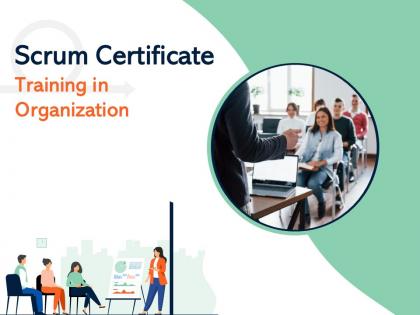
Slide 1: This slide introduces Scrum Certificate Training in Organization. State Your Company Name and begin.
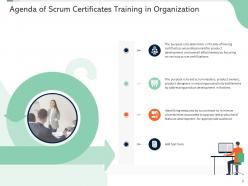
Slide 2: This slide shows Agenda of Scrum Certificates Training in Organization.
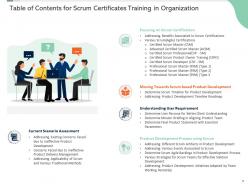
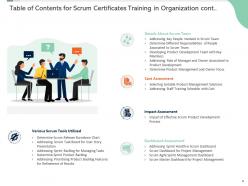
Slide 3: This slide presents Table of Contents for Scrum Certificates Training in Organization.
Slide 4: This is another slide continuing Table of Contents for Scrum Certificates Training in Organization.
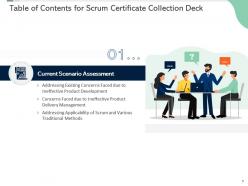
Slide 5: This slide displays Table of Content highlighting Current Scenario Assessment.
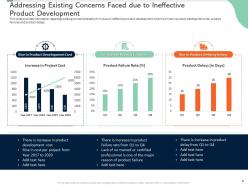
Slide 6: This slide provides information regarding existing concerns faced by firm due to ineffective product development.
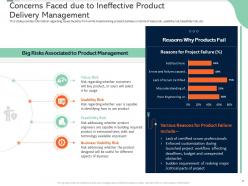
Slide 7: This slide shows issues faced by firm while implementing product delivery in terms of value risk, usability risk, feasibility risk, etc.
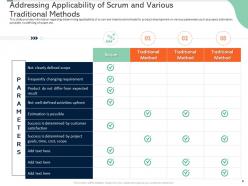
Slide 8: This slide presents Addressing Applicability of Scrum and Various Traditional Methods.
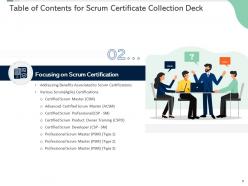
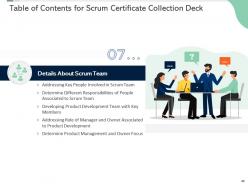
Slide 9: This slide shows Table of Contents for Scrum Certificate Collection Deck.
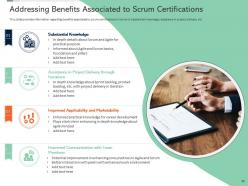
Slide 10: This slide displays benefits associated to scrum certifications in terms of substantial knowledge, assistance in project delivery, etc.
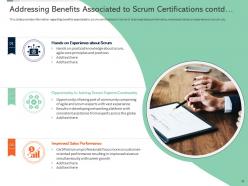
Slide 11: This slide represents scrum certifications in terms of improved sales performance, enhanced hands on experience on scrum, etc.
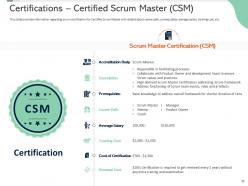
Slide 12: This slide shows scrum certification for Certified Scrum Master with details about career path, prerequisites, average salary, training cost, etc.
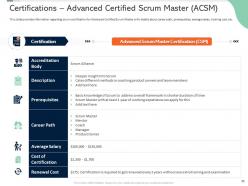
Slide 13: This slide presents scrum certification for Advanced Certified Scrum Master with details about career path, prerequisites, average salary, training cost, etc.
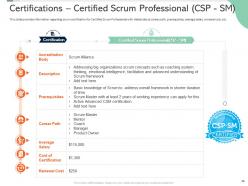
Slide 14: This slide shows scrum certification for Certified Scrum Professional with details about career path, prerequisites, average salary, etc.
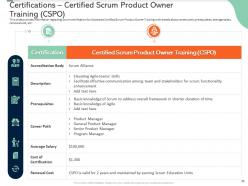
Slide 15: This slide displays scrum certification for Advanced Certified Scrum Product Owner Training with details about career path, prerequisites, average salary, renewal cost, etc.
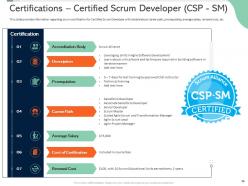
Slide 16: This slide represents scrum certification for Certified Scrum Developer.
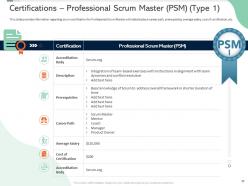
Slide 17: This slide shows information regarding scrum certification for Professional Scrum Master.
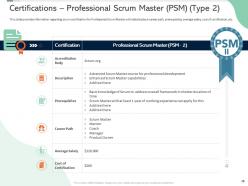
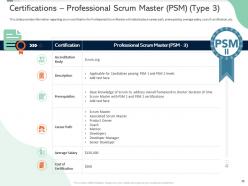
Slide 18: This slide presents Certifications – Professional Scrum Master.
Slide 19: This slide shows information regarding scrum certification for Professional Scrum Master with details.
Slide 20: This slide displays Table of Content for the presentation.
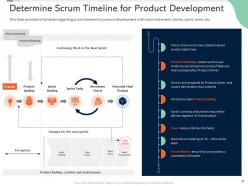
Slide 21: This slide represents Determine Scrum Timeline for Product Development.
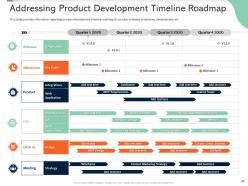
Slide 22: This slide shows Addressing Product Development Timeline Roadmap.
Slide 23: This slide presents Table of Content for the presentation.
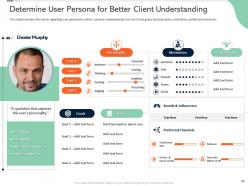
Slide 24: This slide shows user persona for better customer understanding in terms of user goals, bio description, motivation, preferred channel, etc.
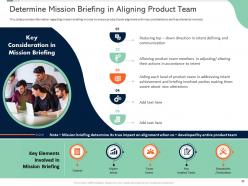
Slide 25: This slide displays mission briefing in order to ensure product team alignment with key considerations and key elements involved.
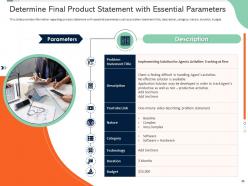
Slide 26: This slide represents product statement with essential parameters such as problem statement title, description, category, nature, duration, budget.
Slide 27: This slide shows Table of Content for the presentation.
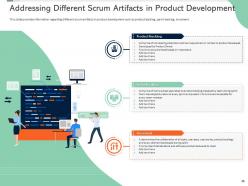
Slide 28: This slide presents Addressing Different Scrum Artifacts in Product Development.
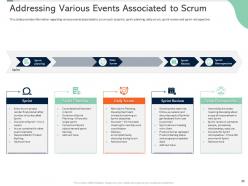
Slide 29: This slide shows various events associated to scrum such as sprint, sprint planning, daily scrum, sprint review and sprint retrospective.
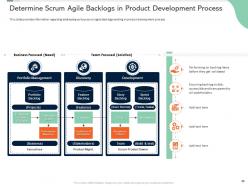
Slide 30: This slide displays Determine Scrum Agile Backlogs in Product Development Process.
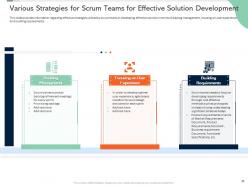
Slide 31: This slide represents Various Strategies for Scrum Teams for Effective Solution Development.
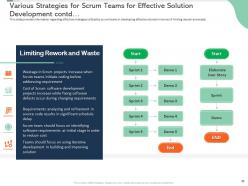
Slide 32: This slide shows effective strategies utilized by scrum teams in developing effective solution in terms of limiting rework and waste.
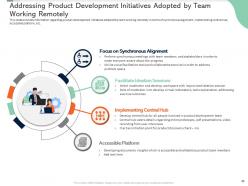
Slide 33: This slide presents product development initiatives adopted by team working remotely in terms of synchronous alignment, implementing central hub, accessible platform, etc.
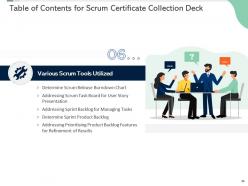
Slide 34: This slide shows Table of Contents for Scrum Certificate Collection Deck.
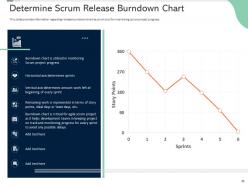
Slide 35: This slide displays release burndown chart as scrum tool for monitoring scrum project progress.
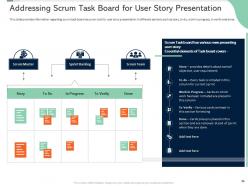
Slide 36: This slide represents scrum task board as scrum tool for user story presentation in different sections such as story, to do, work in progress, to verify and done.
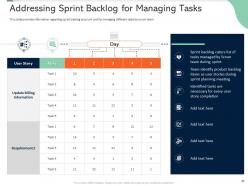
Slide 37: This slide shows sprint backlog as scrum tool for managing different tasks by scrum team.
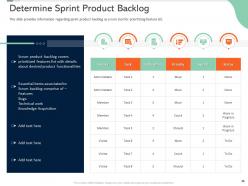
Slide 38: This slide presents sprint product backlog as scrum tool for prioritizing feature list.
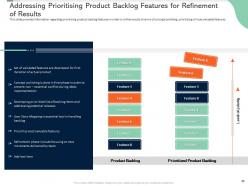
Slide 39: This slide shows information regarding prioritizing product backlog features in order to refine results in terms of concept polishing, prioritizing of most valuable features.
Slide 40: This slide displays Table of Contents for Scrum Certificate Collection Deck.
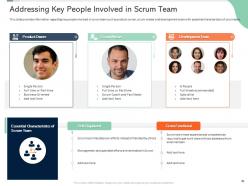
Slide 41: This slide represents key people involved in scrum team such as product owner, scrum master and development team with essential characteristics of scrum team.
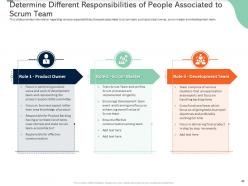
Slide 42: This slide shows Determine Different Responsibilities of People Associated to Scrum Team.
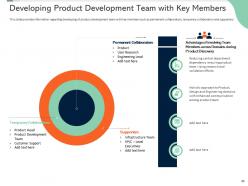
Slide 43: This slide presents developing of product development team with key members such as permanent collaborators, temporary collaborators and supporters.
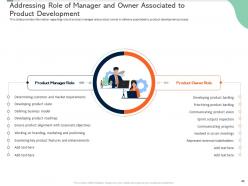
Slide 44: This slide shows Addressing Role of Manager and Owner Associated to Product Development.
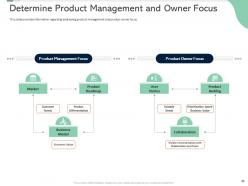
Slide 45: This slide displays Determine Product Management and Owner Focus.
Slide 46: This slide represents Table of Contents for Scrum Certificate Collection Deck.
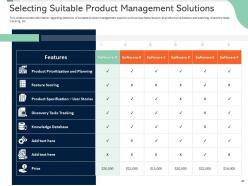
Slide 47: This slide shows selection of suitable product management solution with various features such as product prioritization and planning, discovery tasks tracking, etc.
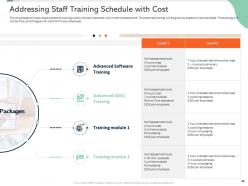
Slide 48: This slide presents Addressing Staff Training Schedule with Cost.
Slide 49: This slide shows Table of Contents for Scrum Certificate Collection Deck.
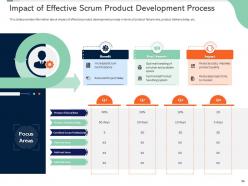
Slide 50: This slide displays Impact of Effective Scrum Product Development Process.
Slide 51: This slide represents Table of Contents for Scrum Certificate Collection Deck.
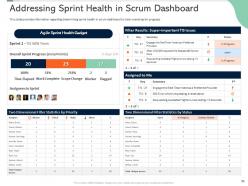
Slide 52: This slide shows Addressing Sprint Health in Scrum Dashboard.
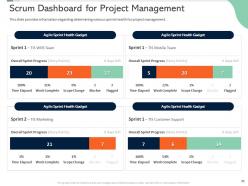
Slide 53: This slide presents Scrum Dashboard for Project Management.
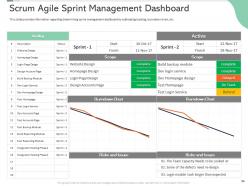
Slide 54: This slide shows sprint management dashboard by addressing backlog, burndown chart, etc.
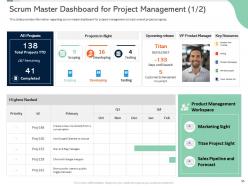
Slide 55: This slide displays Scrum Master Dashboard for Project Management.
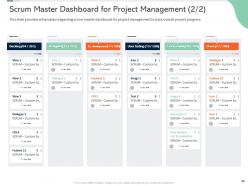
Slide 56: This slide represents scrum master dashboard for project management to track overall project progress.
Slide 57: This slide shows Scrum Certificate Training in Organization Icons.
Slide 58: This slide is titled as Additional Slides for moving forward.
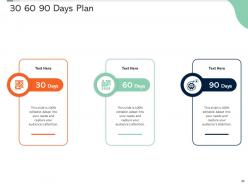
Slide 59: This slide shows 30 60 90 Days Plan with text boxes.
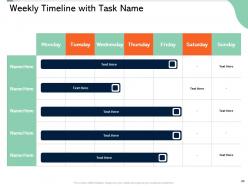
Slide 60: This slide displays Weekly Timeline with Task Name.
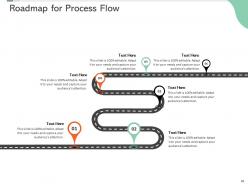
Slide 61: This slide represents Roadmap for Process Flow.
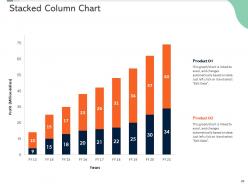
Slide 62: This slide shows Stacked Column Chart with two products comparison.
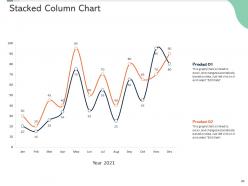
Slide 63: This slide presents Stacked Column Chart with two products comparison.
Slide 64: This slide shows Post It Notes. Post your important notes here.
Slide 65: This is About Us slide to show company specifications etc.
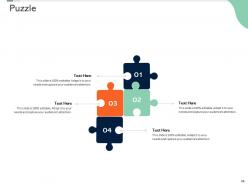
Slide 66: This slide shows Puzzle with related icons and text.
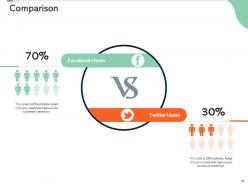
Slide 67: This is a Comparison slide to state comparison between commodities, entities etc.
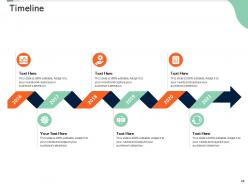
Slide 68: This is a Timeline slide. Show data related to time intervals here.
Slide 69: This is Our Team slide with names and designation.
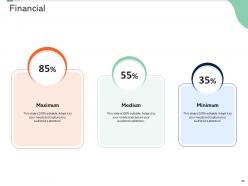
Slide 70: This is a Financial slide. Show your finance related stuff here.
Slide 71: This is Our Target slide. State your targets here.
Slide 72: This slide shows Venn diagram with text boxes.
Slide 73: This is a Thank You slide with address, contact numbers and email address.
Scrum certificate training in organization powerpoint presentation slides with all 73 slides:
Use our Scrum Certificate Training In Organization Powerpoint Presentation Slides to effectively help you save your valuable time. They are readymade to fit into any presentation structure.




FAQs for Scrum certificate training in organization
Core Scrum principles include empirical process control, self-organization, collaboration, value-based prioritization, time-boxing, and iterative development, while foundational values encompass commitment, courage, focus, openness, and respect. These principles and values work together by enabling teams to adapt quickly, deliver consistent value, and maintain transparency throughout development cycles, with many organizations finding that proper understanding of these fundamentals significantly enhances project success rates and team productivity.
Obtaining a Scrum certification significantly enhances career prospects by validating expertise in agile methodologies, increasing marketability to employers, and opening doors to higher-paying roles like Scrum Master or Product Owner. These credentials demonstrate commitment to professional development and agile best practices, with many organizations in technology, finance, and healthcare prioritizing certified professionals for project leadership positions, ultimately delivering faster career advancement and competitive advantage in today's increasingly agile-focused marketplace.
Scrum certifications differ in methodology, training requirements, renewal processes, and organizational backing, with CSM requiring mandatory training courses through Scrum Alliance while PSM allows independent study through Scrum.org. These certifications enhance career prospects by validating agile expertise, streamlining project delivery, and enabling professionals to lead high-performing teams, with many organizations finding that certified practitioners accelerate product development cycles significantly.
Individuals can prepare effectively for Scrum certification exams through comprehensive study guides, practice tests, hands-on project experience, official training courses, and peer study groups. Many professionals find that combining theoretical knowledge with practical application in real workplace scenarios, alongside consistent practice with sample questions, ultimately delivers higher pass rates and deeper understanding of Scrum methodologies.
Hands-on experience is crucial in Scrum certification training, providing practical application of theoretical frameworks, real-world problem-solving scenarios, team collaboration exercises, and sprint simulation activities. Through interactive workshops and case studies, participants develop essential skills like backlog management, sprint planning, and stakeholder communication, with many organizations finding that experiential learning significantly enhances certification success rates and workplace implementation effectiveness.
Scrum certification training addresses team dynamics challenges through collaborative frameworks, conflict resolution techniques, cross-functional communication strategies, and role clarity methodologies. These approaches streamline team interactions by establishing clear accountability structures, facilitating transparent daily standups, and promoting iterative feedback loops, with many organizations finding that certified teams deliver faster project outcomes and enhanced workplace cohesion.
Common misconceptions include believing Scrum eliminates all documentation, works only for software development, guarantees faster delivery, or removes the need for project management. Certification training clarifies that Scrum values working documentation, applies across industries like manufacturing and marketing, focuses on value delivery over speed, and requires disciplined facilitation, with many organizations finding that proper understanding significantly enhances team productivity and project outcomes.
The choice of training provider significantly impacts Scrum certification quality through experienced instructors, comprehensive curricula, hands-on learning opportunities, and ongoing support resources. Reputable providers deliver interactive workshops, real-world case studies, and post-certification mentoring, while lesser providers often rely on theoretical content, ultimately affecting knowledge retention, practical application skills, and career advancement opportunities for professionals.
Virtual Scrum certification training offers flexibility, cost-effectiveness, and accessibility from anywhere, while in-person courses provide direct interaction, hands-on collaboration, and immediate feedback. Many organizations find that virtual formats enable broader team participation and reduced travel expenses, while in-person sessions enhance team dynamics and practical application, ultimately delivering certified professionals equipped for agile project management success.
Scrum certification training materials typically get updated every 1-2 years to align with evolving Scrum Guide revisions and industry best practices, though individual training providers may refresh content more frequently. These updates ensure professionals stay current with methodologies like scaled frameworks, remote collaboration techniques, and digital transformation approaches, with many organizations finding that recently updated certifications deliver more relevant skills and enhanced team performance in increasingly agile business environments.
Best practices for implementing Scrum principles in non-IT industries include adapting sprint lengths to industry cycles, customizing ceremonies for operational workflows, training cross-functional teams on Agile mindset, establishing clear product ownership roles, and integrating Scrum with existing compliance requirements. Manufacturing, healthcare, and financial services organizations find that starting with pilot projects, emphasizing iterative delivery, and focusing on customer collaboration delivers improved operational efficiency and faster market responsiveness.
Scrum certification training emphasizes stakeholder engagement through structured ceremonies like sprint reviews, daily standups, and retrospectives, while teaching communication frameworks that ensure transparency and continuous feedback. Through these practices, organizations streamline project alignment, enhance collaboration between development teams and business stakeholders, and ultimately deliver products that better meet customer needs, with many companies finding that improved stakeholder communication reduces project delays and increases customer satisfaction.
Scrum certification courses typically include case studies from software development projects, product launches, marketing campaigns, financial services implementations, and healthcare system improvements. These real-world scenarios help participants understand how Scrum frameworks adapt across different industries, with many finding that diverse case studies enhance their ability to apply agile methodologies effectively in their own organizational contexts.
Scrum certification workshops facilitate collaboration through interactive exercises, team-based simulations, cross-functional group discussions, and peer-to-peer learning sessions that mirror real Agile environments. These structured activities enable participants to share diverse industry experiences, learn from varied perspectives, and build professional networks, ultimately delivering enhanced problem-solving skills and deeper Scrum understanding.
Post-certification resources include advanced certification paths, Scrum community forums, agile coaching workshops, industry conferences, and continuous learning platforms offering specialized courses. These resources enhance expertise by providing real-world case studies, peer networking opportunities, and updated methodologies, with many professionals finding that ongoing education strengthens their facilitation skills and delivers greater project success rates.
-
Professional and unique presentations.
-
Colors used are bright and distinctive.
-
Top Quality presentations that are easily editable.
-
Presentation Design is very nice, good work with the content as well.
-
Commendable slides with attractive designs. Extremely pleased with the fact that they are easy to modify. Great work!
-
It saves your time and decrease your efforts in half.
-
Excellent products for quick understanding.
-
Best Representation of topics, really appreciable.
-
Very unique, user-friendly presentation interface.
-
It saves your time and decrease your efforts in half.
-
Page:
- You're currently reading page 1
- Page 2
-
