

Scrum development powerpoint presentation slides





Try Before you Buy Download Free Sample Product
 Impress Your
 Audience
 100%
100% Editable
 Save Hours
 of Time


Scrum enables an iterative and incremental process for development wherein each step is called a sprint. Scrum is required for the project, which focuses on defining roles, procedures, tools, techniques for efficient and effective project delivery. Check out our competently designed template on Scrum Development that focuses on the scrum overview, the scope of lifecycles, and the phases of the scrum model. In the scrum overview, we have covered the scrum design and features, advantages and disadvantages of scrum software development methodology, Scrum roles, and benefits of implementing the model. In the scope of lifecycles, we have focused on scrum construction lifecycle, agile system development, disciplined agile delivery, continuous lifecycle, and agile software development lifecycle. Steps involved in scrum model software, scrum product backlog creation, sprint planning, daily scrum meeting, the follow-up process, product increment and sprint review, retrospective, and next sprint planning and daily tracking are covered in phases of the scrum model. This PowerPoint template ensures the possibility of continually increasing product value by maintaining flexibility in further iterations. Customize this 100 percent editable template now.
People who downloaded this PowerPoint presentation also viewed the following :
Content of this Powerpoint Presentation
Slide 1: This slide introduces Scrum Development. State Your Company Name and begin.
Slide 2: This is an Agenda slide. State your agendas here.
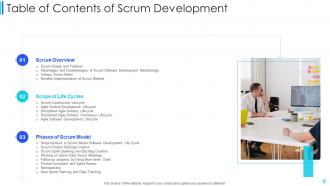
Slide 3: This slide presents Table of Content for the presentation.
Slide 4: This slide shows title for topics that are to be covered next in the template.
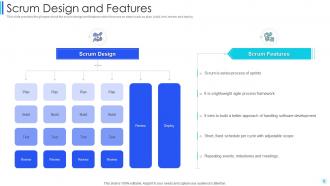
Slide 5: This slide presents scrum design and features which focuses on steps such as plan, build, test, etc.
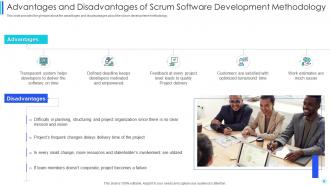
Slide 6: This slide displays advantages and disadvantages about the scrum development methodology.
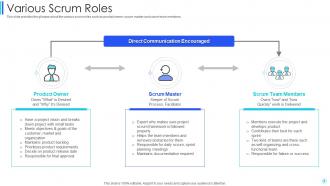
Slide 7: This slide represents various scrum roles such as product owner, scrum master and scrum team members.
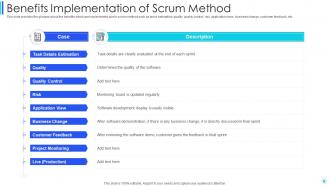
Slide 8: This slide represents benefits which are implemented due to scrum method such as tasks estimation, quality, quality control, etc.
Slide 9: This slide shows title for topics that are to be covered next in the template.
Slide 10: This slide showcases scrum construction lifecycle which focuses on product backlog, priority requirements, etc.
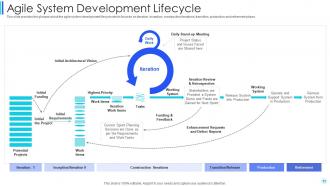
Slide 11: This slide displays agile system development lifecycle which focuses on iteration, inception, construction iterations, etc.
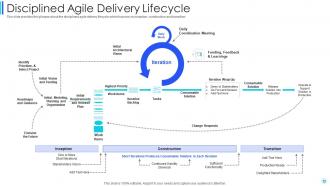
Slide 12: This slide represents disciplined agile delivery lifecycle which focuses on inception, construction and transition.
Slide 13: This slide showcases continuous DAD lifecycle which focuses on new features, work, learning, etc.
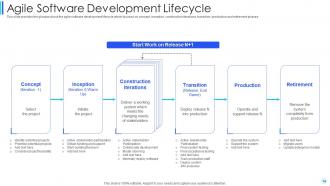
Slide 14: This slide shows agile software development lifecycle which focuses on concept, inception, etc.
Slide 15: This slide shows title for topics that are to be covered next in the template.
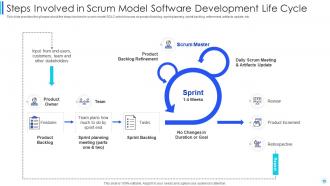
Slide 16: This slide represents steps involved in scrum model SDLC which focuses on product backlog, sprint planning, sprint backlog, etc.
Slide 17: This slide showcases scrum product backlog creation which focuses on daily scrum, sprint review, retrospective, etc.
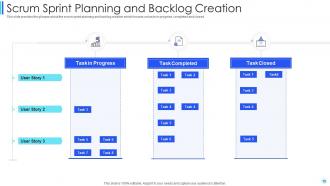
Slide 18: This slide shows scrum sprint planning and backlog creation which focuses on tasks in progress, completed and closed.
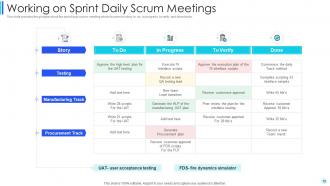
Slide 19: This slide presents sprint daily scrum meeting which focuses on story, to do, in progress, to verify and done tasks.
Slide 20: This slide displays Follow-up Progress by Using Burn-Down Chart.
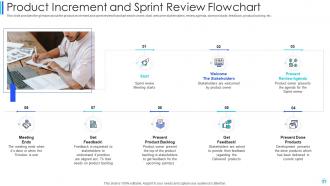
Slide 21: This slide provides the glimpse about the product increment and sprint review flowchart.
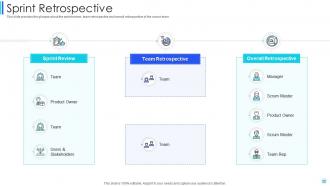
Slide 22: This slide provides the glimpse about the sprint review, team retrospective and overall retrospective of the scrum team.
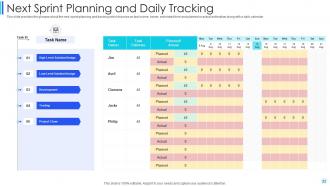
Slide 23: This slide represents next sprint planning and tracking which focuses on task name, owner, estimated time, etc.
Slide 24: This slide is titled as Additional Slides for moving forward.
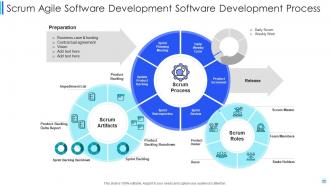
Slide 25: This slide showcases Scrum Agile Software Development Software Development Process.
Slide 26: This slide displays Icons for Scrum Development.
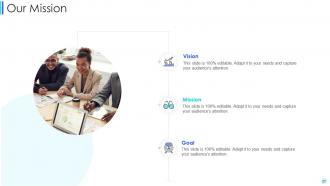
Slide 27: This is Our Mission slide with related imagery and text.
Slide 28: This is Our Team slide with names and designation.
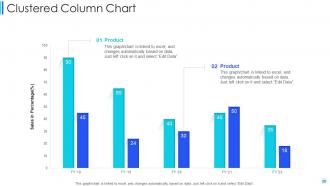
Slide 29: This slide displays Clustered Column chart with two products comparison.
Slide 30: This is About Us slide to show company specifications etc.
Slide 31: This is Our Target slide. State your targets here.
Slide 32: This is a Financial slide. Show your finance related stuff here.
Slide 33: This slide depicts Venn diagram with text boxes.
Slide 34: This is a Location slide with maps to show data related with different locations.
Slide 35: This slide shows Post It Notes. Post your important notes here.
Slide 36: This slide contains Puzzle with related icons and text.
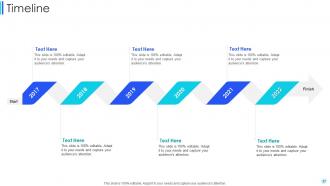
Slide 37: This is a Timeline slide. Show data related to time intervals here.
Slide 38: This is a Thank You slide with address, contact numbers and email address.
Scrum development powerpoint presentation slides with all 46 slides:
Use our Scrum Development Powerpoint Presentation Slides to effectively help you save your valuable time. They are readymade to fit into any presentation structure.




















FAQs for Scrum development
Key Scrum roles include Product Owner, Scrum Master, and Development Team members, each contributing distinct expertise to streamline project delivery. The Product Owner defines requirements and prioritizes features, the Scrum Master facilitates processes and removes obstacles, while Development Team members design, build, and test solutions, with many organizations finding that this collaborative structure accelerates delivery timelines and enhances product quality.
The Scrum framework facilitates effective communication through daily stand-ups, sprint planning sessions, retrospectives, and review meetings that create structured touchpoints for collaboration. These ceremonies enable teams to share progress updates, identify blockers, align on priorities, and gather feedback continuously, with many development organizations finding that this regular cadence significantly reduces miscommunication and enhances project transparency.
The primary Scrum artifacts include the Product Backlog, Sprint Backlog, and Product Increment, each serving critical roles in maintaining transparency and progress tracking. These artifacts streamline development by prioritizing features, organizing sprint work, and delivering functional software increments, with many software teams finding that this structured approach enhances collaboration, reduces miscommunication, and ultimately accelerates time-to-market while maintaining quality standards.
Teams effectively conduct Sprint Planning by establishing clear sprint goals, prioritizing backlog items based on business value, accurately estimating story points, and ensuring all team members understand task requirements and dependencies. Through collaborative capacity planning and detailed task breakdown, development teams can commit to realistic deliverables while identifying potential blockers early, ultimately delivering consistent sprint outcomes and maintaining sustainable development velocity.
**INPUT**: What strategies can be employed to handle changes in requirements during a Sprint? **OUTPUT**: Effective strategies include maintaining a flexible Sprint backlog, conducting regular stakeholder communication, implementing change impact assessments, establishing clear change approval processes, and leveraging daily standups for transparency. These approaches enable development teams to adapt seamlessly while protecting Sprint goals, with many organizations finding that structured change management delivers faster project delivery, improved stakeholder satisfaction, and enhanced team productivity. [Word count: 60 words]
Common Scrum implementation challenges include resistance to change, inadequate training, unclear roles, poor stakeholder communication, and insufficient time for sprint planning. Teams overcome these obstacles by investing in comprehensive training, establishing clear role definitions, maintaining regular stakeholder engagement, and allowing adequate time for ceremonies, with many organizations finding that consistent coaching and gradual adoption ultimately delivers improved collaboration and faster delivery cycles.
The Product Backlog serves as a prioritized roadmap that aligns development efforts with business objectives, ensuring teams focus on high-value features while maintaining flexibility for changing requirements. Through continuous refinement and stakeholder input, organizations streamline resource allocation, reduce scope creep, and deliver customer-centric solutions faster, with many software companies finding that well-managed backlogs significantly improve project success rates.
Scrum ceremonies enhance collaboration through daily standups, sprint planning, reviews, and retrospectives, creating structured communication touchpoints that align team priorities and identify blockers early. These regular interactions foster transparency, enable rapid problem-solving, and maintain project momentum, with many development teams finding that consistent ceremony practices ultimately streamline workflows and accelerate delivery timelines.
Teams ensure continuous improvement through Sprint Retrospectives by systematically analyzing what worked well, identifying obstacles, and implementing actionable changes for future sprints. These structured sessions enable development teams to enhance collaboration, streamline processes, and optimize delivery cycles, with many organizations finding that regular retrospectives significantly boost team performance and product quality.
Key Scrum metrics include sprint burndown charts, velocity, cycle time, lead time, and team satisfaction scores. These measurements enhance project visibility by tracking story point completion, identifying bottlenecks, and monitoring delivery predictability, with many development teams finding that consistent metric analysis streamlines sprint planning and ultimately delivers faster product iterations and improved stakeholder confidence.
Organizations scale Scrum effectively through frameworks like SAFe, LeSS, or Scrum of Scrums, which coordinate multiple teams while maintaining agile principles, clear communication channels, and standardized practices. These approaches enable enterprises to streamline development across departments, enhance cross-team collaboration, and deliver complex products faster, with many technology companies finding significantly improved time-to-market and operational efficiency.
Scrum development tools include Jira, Azure DevOps, Trello, Monday.com, and ClickUp for project management, alongside Slack and Microsoft Teams for communication. These platforms streamline sprint planning, backlog management, and team collaboration by automating workflow tracking, enhancing transparency, and facilitating real-time updates, ultimately delivering faster project cycles and improved team productivity.
Scrum principles align with Agile methodologies by emphasizing iterative development, continuous feedback, and adaptive planning, creating frameworks that prioritize customer collaboration and responding to change. Through sprint-based delivery cycles, cross-functional teams, and regular retrospectives, organizations in software development, financial services, and healthcare streamline project timelines, enhance product quality, and ultimately deliver greater customer value while maintaining competitive responsiveness.
Teams can foster accountability through daily stand-ups with specific commitments, sprint retrospectives for continuous improvement, transparent task boards, peer code reviews, and clear Definition of Done criteria. These practices create visibility and shared responsibility, with many development teams finding that combining regular check-ins with collaborative problem-solving ultimately delivers higher quality deliverables and stronger team cohesion.
The "Definition of Done" establishes clear, shared quality criteria that all team members must meet before considering any work complete, ensuring consistent standards across sprints, reducing defects, and preventing technical debt accumulation. This standardized approach enables teams to deliver reliable, production-ready increments consistently, with many organizations finding that well-defined completion criteria significantly streamline their release processes and enhance overall product quality.
-
Very unique and reliable designs.