


Security for internet of things iot presentation visual aids




Try Before you Buy Download Free Sample Product
 Impress Your
Audience
 100%
Editable
 Save Hours
of Time


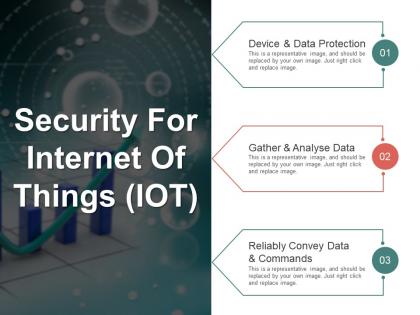
Create stunning presentations to focus on protecting your internet enabled devices with our security for internet of things IOT presentation visual aids. This cyber security in IOT PPT can be used to display components tied to the internet enabled devices that connect to each other on wireless networks. You can display various security concerns e.g. device and data protection, gather and analyze data, reliably convey data and commands with this IOT security PPT template. You can also highlight major privacy and security issues, security challenges in the internet of things with this pre designed PPT template. PPT is useful for system design, engineering, embedded system monitoring and control related presentations. IT managers, engineering, network and security professionals use this design to highlight security and privacy for internet of things. The design layout is powerful and sufficient enough to attract your viewers. So, don’t give a second thought, download this cyber security in IOT PPT design template and share with your team members. Explain the instrument with our Security For Internet Of Things Iot Presentation Visual Aids. Highlight the function of different constituent elements.
People who downloaded this PowerPoint presentation also viewed the following :
Security for internet of things iot presentation visual aids with all 5 slides:
Facilitate better coordination with our Security For Internet Of Things Iot Presentation Visual Aids. Create the desire to act cohesively.


FAQs for Security for internet of things iot
Key IoT security vulnerabilities include weak authentication protocols, inadequate encryption, insecure network communications, poor device management, and insufficient software update mechanisms. These vulnerabilities expose organizations to data breaches, unauthorized access, and operational disruptions, with manufacturing, healthcare, and smart building sectors increasingly investing in comprehensive security frameworks, regular firmware updates, and network segmentation to protect critical infrastructure and maintain customer trust.
Companies implement effective IoT authentication through multi-factor verification, certificate-based protocols, biometric integration, device-specific credentials, and encrypted communication channels. These security mechanisms streamline network protection by establishing trusted device identities, preventing unauthorized access, and maintaining data integrity, with many financial services and healthcare organizations finding that layered authentication approaches ultimately deliver enhanced operational security and regulatory compliance.
Encryption serves as the primary defense mechanism for IoT communications by scrambling data during transmission, ensuring only authorized devices can access sensitive information, and preventing interception by malicious actors. Through advanced encryption protocols, organizations across healthcare, manufacturing, and smart city infrastructure can secure device-to-device communications, protect customer data, and maintain operational integrity, ultimately delivering enhanced trust and regulatory compliance.
Organizations can monitor IoT traffic anomalies through network behavior analysis, machine learning algorithms, real-time traffic inspection, device authentication protocols, and automated threat detection systems. These security measures enable companies to identify unusual data patterns, unauthorized access attempts, and suspicious device communications, with many financial institutions and healthcare providers finding that proactive monitoring significantly reduces breach risks while enhancing overall network security.
Best practices for secure firmware updates in IoT devices include cryptographic signing, encrypted transmission channels, rollback protection, staged deployment, and secure boot verification. These security measures streamline update processes by preventing unauthorized modifications, ensuring data integrity, and maintaining device functionality, with many manufacturers in automotive, healthcare, and smart home sectors finding that robust update protocols ultimately deliver enhanced customer trust and reduced vulnerability exposure.
IoT ecosystem complexity significantly challenges security strategies by creating multiple attack vectors, interconnected vulnerabilities, and diverse device management requirements that traditional security frameworks struggle to address comprehensively. This complexity forces organizations to adopt layered security approaches, implement continuous monitoring across all connected devices, and develop specialized protocols for different IoT components, ultimately requiring more sophisticated and resource-intensive security investments.
Organizations must consider GDPR for data protection, HIPAA for healthcare devices, PCI DSS for payment systems, SOX for financial reporting, and industry-specific standards like NIST frameworks. These regulations streamline security protocols by establishing encryption requirements, access controls, and audit procedures, with many enterprises finding that comprehensive compliance ultimately delivers enhanced customer trust and competitive advantage.
Businesses can secure accessible IoT devices through tamper-resistant hardware, strategic placement in monitored areas, physical access controls, environmental enclosures, and regular security audits. Manufacturing facilities and retail environments increasingly deploy encrypted communication protocols, anti-theft mounting systems, and surveillance integration, ultimately protecting critical infrastructure while maintaining operational accessibility and reducing vulnerability to physical tampering.
Manufacturers can integrate security by implementing secure-by-design principles, conducting threat modeling during planning phases, establishing secure coding standards, performing regular penetration testing, and creating robust update mechanisms. These practices enable companies to identify vulnerabilities early, reduce post-deployment risks, and maintain customer trust, with many tech manufacturers finding that proactive security integration ultimately delivers competitive advantage and regulatory compliance.
Machine learning and AI enhance IoT security by detecting anomalous behaviors, predicting potential threats, and automating real-time responses across connected devices. These technologies enable organizations to identify unusual patterns in network traffic, automatically isolate compromised devices, and continuously learn from emerging attack vectors, ultimately delivering proactive protection and reducing response times in increasingly complex IoT environments.
Consumer data privacy in IoT security presents challenges including unauthorized access, data breaches, regulatory compliance requirements, user consent management, and cross-device tracking vulnerabilities. These concerns drive organizations to implement stronger encryption protocols, transparent data policies, and privacy-by-design frameworks, ultimately delivering enhanced customer trust and competitive advantage in an increasingly regulated marketplace.
Secure IoT interoperability requires standardized communication protocols, robust authentication frameworks, encrypted data exchange channels, and centralized device management platforms. Through API security gateways and zero-trust architectures, organizations can ensure seamless device integration while maintaining data integrity, with manufacturing and healthcare sectors finding that proper interoperability management reduces vulnerabilities while enabling scalable operations.
A security operations center (SOC) serves as the centralized hub for monitoring, detecting, and responding to IoT security threats across connected device networks. Through continuous surveillance and automated threat detection, SOCs enable organizations to identify vulnerabilities, analyze unusual device behavior, and coordinate rapid incident response, with many enterprises finding that dedicated IoT monitoring significantly reduces breach response times and enhances overall network security.
Device manufacturers can balance innovation with security by implementing security-by-design principles, conducting regular vulnerability assessments, establishing secure development lifecycles, and integrating encryption protocols from initial design phases. Through strategic partnerships with cybersecurity firms, companies like smart home manufacturers and industrial sensor producers streamline compliance requirements while accelerating time-to-market, ultimately delivering innovative products with robust protection and competitive advantage.
Emerging IoT security technologies include AI-powered threat detection, blockchain-based device authentication, zero-trust network architectures, quantum-resistant encryption, and edge computing security frameworks. These innovations enhance protection by automating threat response, securing device identities, and minimizing attack surfaces, with manufacturing and healthcare sectors increasingly finding that integrated approaches deliver stronger resilience against evolving cyber threats.
-
Use of different colors is good. It's simple and attractive.
-
Unique design & color.