

See global business plan ppt example




Try Before you Buy Download Free Sample Product
 Impress Your
Audience
 100%
Editable
 Save Hours
of Time


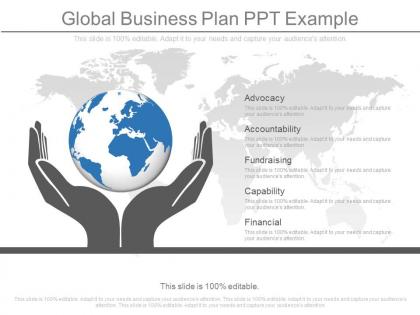
Do you want to represent your business plan strategies in more entreating style? Then you should download our pre designed see global business plan PPT example to gain the strong competitive advantage in the global business market. This PPT slide design will help you to explain the key factors which are already described in the PPT template for your ready reference. In addition you can describe the various stages though our PowerPoint template as planning, budgeting, organizing, positioning, promoting your products by establishing a powerful and impeccable organizational plan with an efficient strategies with the only aim to eradicate the global competition and to meet your international business goals. Further you can use this PPT slide to explain that it will also improve the overall adequacy and performance of your goods and services in the global market and reduces the sales and marketing cost and expense though the use of an effective internet marketing techniques .Start using this PPT design.Our See Global Business Plan Ppt Example get you that bit further ahead. They give you that edge over others.
People who downloaded this PowerPoint presentation also viewed the following :
See global business plan ppt example with all 7 slides:
Our See Global Business Plan Ppt Example help handle it with ease. Comfortably complete any assignment.


FAQs for See global business
Honestly, you need five main things sorted out. Market research comes first - dig into demographics, competition, and all the regulatory stuff for each country you're eyeing. Figure out how you'll actually get in there (partnerships, direct investment, whatever makes sense). Operations are huge too - supply chains, logistics, finding the right local people to work with. Currency swings can totally screw you over, so get your financial projections and risk stuff locked down early. Oh, and don't underestimate how much you'll need to adapt your products and marketing for different cultures. Trust me, start with just one or two test markets first - going everywhere at once is a nightmare.
Honestly, cultural stuff will make or break your global plans. Marketing campaigns that work here? They'll totally bomb somewhere else - I've seen it happen so many times. You've got to dig deep into each market's values, how people communicate, their buying habits, all of it. Even weird details matter. Like, certain colors are bad luck in some places, or showing up early to meetings is actually rude (who knew?). Research the hell out of each region first. Build your strategy so it can bend and adapt from the start.
Honestly, market research is make-or-break for going global. Too many companies think they can just copy-paste their home strategy abroad - spoiler alert, that rarely works out. You've gotta dig into local consumer habits, see who you're up against, understand pricing, and figure out the regulatory stuff before making any big moves. Secondary research first to narrow things down, then go deeper with primary research on your top 2-3 markets. I mean, it sounds boring but it's literally what determines if you prioritize the right markets and position yourself correctly. Skip it and you're basically flying blind.
Definitely start with solid market research - check out the political situation, economy, and what regulations you're dealing with. Currency swings can absolutely wreck your profits, so watch that closely. Cultural stuff matters way more than people think, plus you need to scope out the competition and infrastructure. Legal protections are sketchy in some places too, especially for IP and contracts. Honestly, I'd make a simple risk chart ranking everything, then figure out how to handle the biggest threats. Maybe try a small test run or find a local partner first? Going full scale right away seems pretty risky.
Okay so language barriers - definitely get professional translators for your important stuff and maybe hire some multilingual people if you can swing it. Visual tools are huge too, like infographics and videos work way better than you'd think. Language training for your team helps, but honestly just getting everyone to write clearer, simpler English makes a massive difference. Oh and start by figuring out where you're actually losing money because of communication issues - that'll show you which markets to tackle first. Sometimes it's not as bad as it seems once you map it out.
Look, you can't beat locals at being local - that's their turf. Instead, figure out what you bring that they don't have. Maybe it's your global experience or a totally different way of doing business. Partner up with people who already know the market inside and out, seriously this saves so much headache with regulations and stuff. If your brand has international street cred, go premium. Otherwise, hunt for gaps they're missing. I'd spend time figuring out what local competitors nail, then find where your outside perspective actually matters. Don't try to out-local them - play your own game.
Ugh, regulatory stuff will totally flip your business strategy upside down. Each country basically forces you to run things differently - some are obsessed with data privacy, others hammer you on labor laws. Then there's taxes which is... yeah, good luck with that maze. Honestly the worst thing you can do is figure this out later. Map out the big regulatory differences in your target markets first so you're not blindsided by compliance costs. It's a pain but at least you'll know what you're walking into instead of scrambling to fix things after.
Track your revenue growth and market share by region - that's the obvious stuff. But seriously, watch your customer acquisition costs in each market too. Some regions just burn through cash faster than others. Brand recognition surveys are clutch since what works in one culture might totally flop elsewhere. Oh, and don't forget partnership success rates and compliance scores - boring but they'll bite you if ignored. Monthly dashboard reviews keep you from waiting too long to course-correct when things go sideways.
Honestly, tech is what holds everything together when you're dealing with global teams. Cloud platforms keep everyone on the same page across time zones - super clutch. Data analytics help you catch market trends in different regions before your competitors do. I'd probably lose my mind trying to coordinate without Slack or Teams, real talk. CRM systems track how customers behave in each market, which is gold. Project management tools stop things from getting lost in translation (literally sometimes). Oh, and automation standardizes your processes so Tokyo isn't doing things completely different from Berlin. First step? Figure out where your current tech is failing you.
Dude, supply chain is like the make-or-break thing for going global. You've gotta figure out sourcing, manufacturing, shipping - all across different countries with their own weird rules and costs. I swear, half the startups I know totally bombed because they didn't think about shipping eating up their profits until it was too late. It directly hits your pricing and how fast you can deliver stuff. Also affects whether you can actually grow in new markets without everything falling apart. My advice? Start hunting for suppliers and shipping partners in your target areas right now, before you need them.
Honestly, don't look for companies just like yours - find ones that cover what you're terrible at. Local partners with solid distribution or regulatory connections? Gold mine. They've got market access, you bring the tech - that's a win-win JV right there. But here's the thing (learned this the hard way) - nail down who does what from the start. Too many partnerships crash because nobody knew their lane. Set up clear communication, agree on success metrics, and yeah... have an exit plan ready. Oh, and test things out small first before you go crazy with it.
Dude, currency swings will absolutely wreck your forecasts if you don't bake them in early. We got burned so bad last year when the euro crashed. Build out those best/worst case scenarios for each market - trust me on this one. Regulatory stuff changes everything too since compliance costs are all over the place. Your local finance people are honestly your best resource here, they know the weird market quirks that corporate never picks up on. Oh and start conservative with your assumptions. Quarterly check-ins are a lifesaver when things go sideways fast.
First thing - pick like 2-3 markets max and really get to know them. Don't spread yourself thin trying to customize for everyone right away. Research how people communicate and what they actually care about in each place. Germany vs Brazil? Totally different worlds (trust me on this one). Your messaging and visuals need to fit local vibes, but keep your brand recognizable. Never just translate stuff directly - it sounds weird and awkward. Also, check what social platforms people actually use there since it's all over the map. Oh, and colors mean different things in different cultures, which honestly I didn't realize until way too late.
Okay so global business ethics - there's a bunch to think about here. Labor standards are huge - don't be that company exploiting workers or cutting safety corners. Environmental stuff matters too, especially since some countries basically let you get away with anything (which is tempting but terrible). Cultural sensitivity is tricky because what's totally normal in one place might seriously offend people elsewhere. Anti-corruption policies are absolutely essential - bribery laws are all over the place between countries and "I didn't know" won't save you. Oh, and data privacy rules like GDPR. Honestly, just research each market's expectations upfront and bake those standards into everything you do.
Don't treat sustainability like some side project - build it right into how you actually run things. Map out your supply chain first to see where you're causing damage, then set real targets you can measure. Honestly, nobody cares unless there's money in it, so focus on the profitable stuff like cutting manufacturing waste and buying local when it makes sense. Circular economy principles work great across different markets too. Just make sure whatever you're doing fits with local rules and what people actually value in each country. Oh, and start with one market as a test run - way easier than going everywhere at once.
-
Awesome use of colors and designs in product templates.
-
Unique and attractive product design.