


Services Positioning Powerpoint Presentation Slides





Try Before you Buy Download Free Sample Product
 Impress Your
Audience
 100%
Editable
 Save Hours
of Time


Establish a unique identity of your brand with the help of Services Positioning PowerPoint Presentation Slides. Take the assistance of this market positioning PPT slideshow to depict the positioning strategies including category, user, application, quality, and attribute. Take advantage of the brand management PowerPoint templates to showcase ways of gaining a competitive advantage such as cutting-edge technology, cost, etc. Utilize our content ready brand positioning PPT slides to portray the competitors, market leaders, challengers, and niche competitors. Take the help of these business positioning PPT infographics to unveil the importance of market segmentation, targeting, and positioning. Undertake a thorough analysis of your customer base before selecting your target market. You can also represent positioning tools such as price, reliability, convenience, trustworthiness, industry-specific elements and many more. Thus download the market positioning PPT graphics and provide a seamless experience to current as well as prospective clients.
People who downloaded this PowerPoint presentation also viewed the following :
Content of this Powerpoint Presentation
Slide 1: This slide introduces Services Positioning. State your Company name and begin.
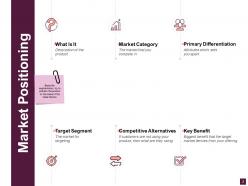
Slide 2: This slide describes Market Positioning. Basis the segmentation, try to position the product on the basis of the listed factors
Slide 3: This slide depicts Positioning Strategies - Consumer Durable Sector. Its a framework for analyzing the level of competition within an industry and business strategy development to derive five forces that determine the competitive intensity and therefore the attractiveness of an industry
Slide 4: This slide displays Positioning Strategies Services Sector
Slide 5: This slide depicts Product Positioning. Its a framework for analyzing the level of competition within an industry and business strategy development to derive five forces that determine the competitive intensity and therefore the attractiveness of an industry
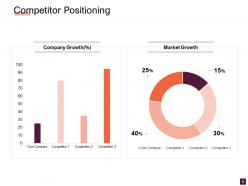
Slide 6: This slide shows Competitor Positioning with Market Growth Company Growth in percentage.
Slide 7: This slide showcases Competitive Landscape.
Slide 8: This slide displays Strategic Positioning.
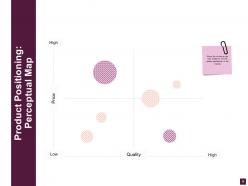
Slide 9: This slide describes Product Positioning: Perceptual Map. Move the circles as per your product’s price & quality positioning in the market.
Slide 10: This slide is titled as Additional Slides for moving forward.
Slide 11: This is Services Positioning Icon Slide.
Slide 12: This slide displays Column Chart with two products comparison.
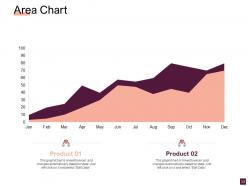
Slide 13: This slide shows Area Chart with product comparison.
Slide 14: This is Financial slide. Showcase Finance related stuff here.
Slide 15: This is About Us slide to showcase Company specifications.
Slide 16: This is Our Team slide with Names and Designations.
Slide 17: This is Our Mission slide with Vision and Goal.
Slide 18: This slide describes SWOT Analysis.
Slide 19: This is Quotes slide to convey message, beliefs etc.
Slide 20: This is Thank You slide with Address, Email address and Contact number.
Services Positioning Powerpoint Presentation Slides with all 20 slides:
Use our Services Positioning Powerpoint Presentation Slides to effectively help you save your valuable time. They are readymade to fit into any presentation structure.









FAQs for Services Positioning
Effective service positioning includes clear value differentiation, target audience identification, competitive advantage articulation, emotional connection building, and consistent messaging across touchpoints. These components work by distinguishing services from competitors, addressing specific customer pain points, and communicating unique benefits, with many organizations finding that strategic positioning in crowded markets ultimately delivers stronger customer loyalty and premium pricing opportunities.
Businesses identify their unique value proposition through comprehensive market research, competitor analysis, customer feedback assessment, internal capability audits, and value chain mapping. This strategic combination enables organizations to pinpoint differentiation opportunities across industries like healthcare, financial services, and retail, ultimately delivering competitive advantages that resonate with target audiences and drive sustainable growth.
Customer perception forms the foundation of service positioning strategies, directly influencing brand differentiation, market positioning, competitive advantage, and customer loyalty outcomes. Through strategic messaging, experience design, and value communication, organizations shape perceptions by aligning service delivery with target expectations, ultimately delivering enhanced market positioning and sustainable competitive differentiation across diverse customer segments.
Service positioning significantly impacts brand loyalty by creating clear differentiation, establishing emotional connections, and consistently delivering on promised value propositions that resonate with target audiences. When companies strategically position their services around unique benefits, convenience, or premium experiences, consumers develop stronger attachments and trust, with many retail and hospitality brands finding that well-defined positioning reduces customer churn while enhancing long-term retention.
Common pitfalls include targeting too broad an audience, failing to differentiate from competitors, making unrealistic promises, and neglecting customer feedback during development. Many businesses also struggle with inconsistent messaging across channels, inadequate market research, and positioning based on internal assumptions rather than actual customer needs, ultimately weakening their competitive advantage and market penetration.
Market research informs service positioning by revealing customer needs, competitive gaps, market segments, and value perceptions through surveys, focus groups, and competitive analysis. Through these insights, organizations can identify underserved segments, differentiate from competitors, and align messaging with customer priorities, ultimately delivering more targeted positioning strategies and stronger market resonance.
Effective service positioning communication techniques include targeted messaging campaigns, content marketing strategies, customer testimonials, strategic partnerships, and consistent brand storytelling across multiple channels. These approaches enhance market visibility by demonstrating clear value propositions, showcasing real-world success stories, and building credibility, with many organizations finding that integrated communication delivers stronger customer engagement and competitive differentiation.
Service positioning adapts to cultural contexts through localized messaging, culturally relevant value propositions, region-specific communication styles, and tailored service delivery methods. Companies successfully navigate cultural differences by researching local preferences, adjusting brand positioning for cultural values, and modifying service approaches, with many global organizations finding that culturally-sensitive positioning significantly enhances market acceptance and competitive advantage.
Product positioning focuses on tangible features, specifications, and physical attributes that customers can evaluate before purchase, while service positioning emphasizes intangible benefits, experiences, and relationship-building elements. Service positioning presents unique challenges through its intangibility and variability, with many organizations finding that emotional connection, trust-building, and outcome-focused messaging ultimately deliver stronger competitive advantage than feature-based approaches.
Digital transformation influences service positioning by enabling data-driven personalization, omnichannel customer experiences, and automated service delivery that differentiates offerings in competitive markets. Through cloud platforms, AI analytics, and mobile technologies, organizations streamline operations, enhance customer touchpoints, and deliver faster, more responsive services, ultimately creating strategic positioning advantages based on convenience, efficiency, and superior customer experiences.
**INPUT**: What metrics can be used to evaluate the effectiveness of service positioning? **OUTPUT**: Service positioning effectiveness can be measured through brand awareness scores, customer perception surveys, market share growth, competitive differentiation metrics, and customer acquisition costs. These measurements enable organizations to track positioning success by monitoring message clarity, target audience resonance, and market penetration, with many companies finding that consistent tracking ultimately delivers stronger competitive advantage and optimized marketing investments.
Service positioning directly influences pricing strategies by establishing perceived value, market tier placement, and competitive differentiation, which determines whether premium, competitive, or value pricing approaches are viable. When services are positioned as high-quality solutions for specific customer segments, organizations can command higher prices while enhancing consumer acceptance through clear value propositions, ultimately delivering stronger margins and market differentiation.
Storytelling transforms service positioning by creating emotional connections, differentiating offerings from competitors, simplifying complex value propositions, and making abstract benefits tangible for customers. Through compelling narratives, organizations enhance brand recall, build trust with target audiences, and communicate their unique positioning more effectively, with many finding that story-driven positioning significantly improves customer engagement and conversion rates.
Businesses can reposition their services by analyzing customer feedback, identifying emerging market trends, adjusting pricing strategies, enhancing service features, and targeting new customer segments. This strategic repositioning enables organizations to maintain competitive advantage during market shifts, with many companies in retail and financial services finding that proactive adaptation ultimately delivers improved customer satisfaction and revenue growth.
Customer testimonials reinforce service positioning by providing authentic validation of your brand promises, building credibility through real customer experiences, and demonstrating tangible outcomes that prospects can relate to. These powerful endorsements help potential clients visualize success scenarios, reduce purchase anxiety, and differentiate your services from competitors, ultimately accelerating decision-making processes and strengthening market positioning.
-
Use of different colors is good. It's simple and attractive.