

Setting media objectives determining media strategy concept testing




Try Before you Buy Download Free Sample Product
 Impress Your
 Audience
 100%
100% Editable
 Save Hours
 of Time


Increase the amount of attention you draw with our Setting Media Objectives Determining Media Strategy Concept Testing. It will enhance the force of attraction.
People who downloaded this PowerPoint presentation also viewed the following :
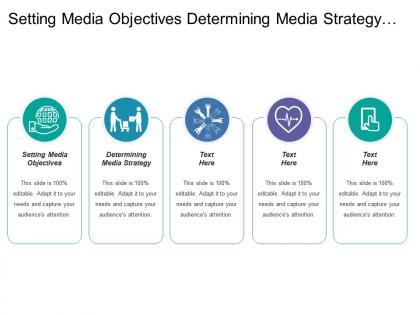
Setting media objectives determining media strategy concept testing with all 5 slides:
Compete with the best with our Setting Media Objectives Determining Media Strategy Concept Testing. Establish that you are as good as any.



FAQs for Setting media objectives determining media
An effective media strategy includes clear audience segmentation, compelling content creation, strategic channel selection, consistent brand messaging, and measurable performance metrics. These components work together by maximizing reach across digital and traditional platforms, optimizing resource allocation, and delivering targeted messaging that resonates with specific demographics, ultimately enabling businesses to build stronger customer relationships and achieve measurable ROI.
Target audience demographics significantly influence media selection by determining platform preferences, consumption patterns, content formats, and messaging approaches that resonate with specific age groups, income levels, and lifestyle segments. Through demographic analysis, marketers strategically align their media mix with audience behaviors, ensuring campaigns reach the right people through preferred channels like social media for younger audiences or traditional media for older demographics, ultimately maximizing engagement and ROI.
Social media serves as a central distribution channel, audience engagement platform, and real-time feedback mechanism in modern media strategies. It enables brands to reach targeted demographics, build community relationships, and amplify content across multiple touchpoints, with companies in retail, entertainment, and financial services finding that integrated social approaches deliver enhanced customer loyalty, broader market reach, and measurable ROI.
Media campaign success is measured through key performance indicators including reach, engagement rates, conversion metrics, return on ad spend, and brand awareness lift. Through advanced analytics platforms, organizations track click-through rates, cost per acquisition, and attribution modeling across channels, with many companies finding that multi-touch attribution delivers comprehensive insights, ultimately enabling data-driven optimization and improved ROI.
Best practices for integrating traditional and digital media include unified messaging across channels, cross-platform content repurposing, synchronized timing strategies, shared audience data insights, and consistent brand positioning throughout all touchpoints. These approaches streamline campaign effectiveness by amplifying reach, reducing costs, and creating seamless customer experiences, with many organizations finding that strategic integration delivers significantly higher engagement and competitive advantage.
Media strategies adapt to rapidly changing consumer behavior by leveraging real-time analytics, embracing multi-channel approaches, and implementing agile content creation processes. Through advanced data tracking and consumer insight tools, brands in retail, entertainment, and financial services can pivot messaging quickly, personalize experiences across platforms, and ultimately deliver more relevant engagements that drive competitive advantage.
Media effectiveness analysis should prioritize reach and frequency, engagement rates, conversion metrics, cost per acquisition, and return on ad spend (ROAS). These metrics enable organizations to optimize budget allocation, refine targeting strategies, and maximize campaign performance, with many marketing teams finding that balanced measurement across awareness and performance indicators ultimately delivers stronger competitive positioning and sustainable growth.
Budget constraints significantly impact media strategy by limiting channel selection, reducing campaign frequency, and requiring more strategic resource allocation across platforms. Organizations must prioritize high-impact channels, focus on cost-effective digital platforms over traditional media, and leverage data analytics to optimize spending, with many companies finding that constraints actually enhance strategic focus and deliver better ROI.
Legal considerations in media buying include contract compliance, intellectual property rights, advertising standards regulations, data privacy laws, and disclosure requirements for sponsored content. These frameworks protect businesses by ensuring transparent partnerships, avoiding regulatory penalties, and maintaining brand credibility, with many organizations finding that proactive legal compliance ultimately delivers competitive advantage and consumer trust.
Storytelling enhances media strategy by creating emotional connections, increasing audience engagement, and making content more memorable across multiple channels. Through narrative-driven campaigns, brands can communicate complex messages more effectively, build stronger customer relationships, and differentiate themselves in competitive markets, ultimately delivering higher conversion rates and sustained audience loyalty.
Partnerships and collaborations significantly amplify media effectiveness by expanding reach, sharing resources, and creating cross-promotional opportunities that enhance audience engagement. Through strategic alliances, organizations access new customer segments, leverage complementary expertise, and reduce costs, with many brands finding that collaborative campaigns deliver greater impact and measurability than standalone efforts.
Data analytics enhances media targeting by analyzing audience demographics, behavioral patterns, engagement metrics, purchase history, and platform preferences to identify optimal customer segments. Through predictive modeling and real-time campaign optimization, marketers can deliver personalized content across channels, reduce ad spend waste, and increase conversion rates, with many brands finding that data-driven targeting delivers significantly higher ROI than traditional approaches.
Timing is crucial in media strategy execution because it determines audience availability, maximizes message impact, and optimizes resource allocation across channels. Strategic timing enables organizations to capitalize on seasonal trends, align with consumer behavior patterns, and coordinate multi-channel campaigns, ultimately delivering higher engagement rates and cost efficiency while maintaining competitive advantage in increasingly dynamic markets.
Brands can leverage influencer marketing by integrating authentic partnerships into their broader media strategy, selecting influencers whose audiences align with target demographics, and creating collaborative content that feels genuine rather than promotional. This approach enables companies to reach niche markets, build trust through peer recommendations, and amplify campaign messages across multiple touchpoints, ultimately delivering enhanced brand credibility and measurable engagement rates.
Digital transformation, personalized content delivery, data-driven decision making, omnichannel integration, and artificial intelligence automation are revolutionizing media strategy development. These trends enable organizations to streamline audience targeting, enhance customer experiences, and optimize resource allocation across platforms, with many brands finding that strategic AI implementation delivers significantly faster campaign adjustments and improved ROI.
-
Really like the color and design of the presentation.
-
Innovative and attractive designs.